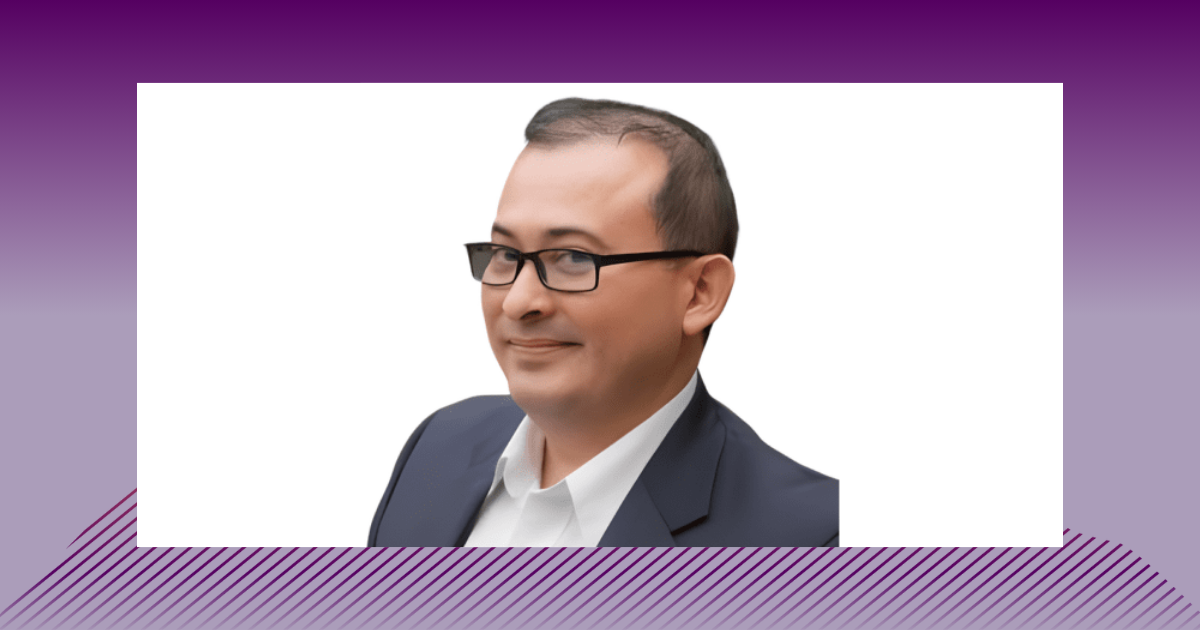
PGLS Appoints Gilberto Segura as VP of Technology, Expanding Leadership Team

Arlington, VA – Piedmont Global Language Solutions (PGLS), a leading Language Service Provider, is pleased to announce the appointment of Gilberto Segura as the new Vice President of Technology. With a wealth of experience as a technology leader both inside and outside the language services industry, Gilberto will play a pivotal role in advancing PGLS’s commitment to delivering strategic language solutions to its clients.

“We are delighted to welcome Gilberto to our executive team. Our industry is rapidly evolving, and PGLS is well-positioned to be a strategic technology and services leader. Gilberto’s insights and leadership will be instrumental in advancing our efforts in that area.”

As technological developments continue to impact how language service companies should operate, Gilberto Segura’s appointment comes at a critical juncture. The speed of innovation has never been greater, and under Gilberto’s leadership, PGLS will accelerate its product development roadmap which aims to deliver holistic, robust and secure solutions, while remaining attuned to the ever-changing communications landscape.

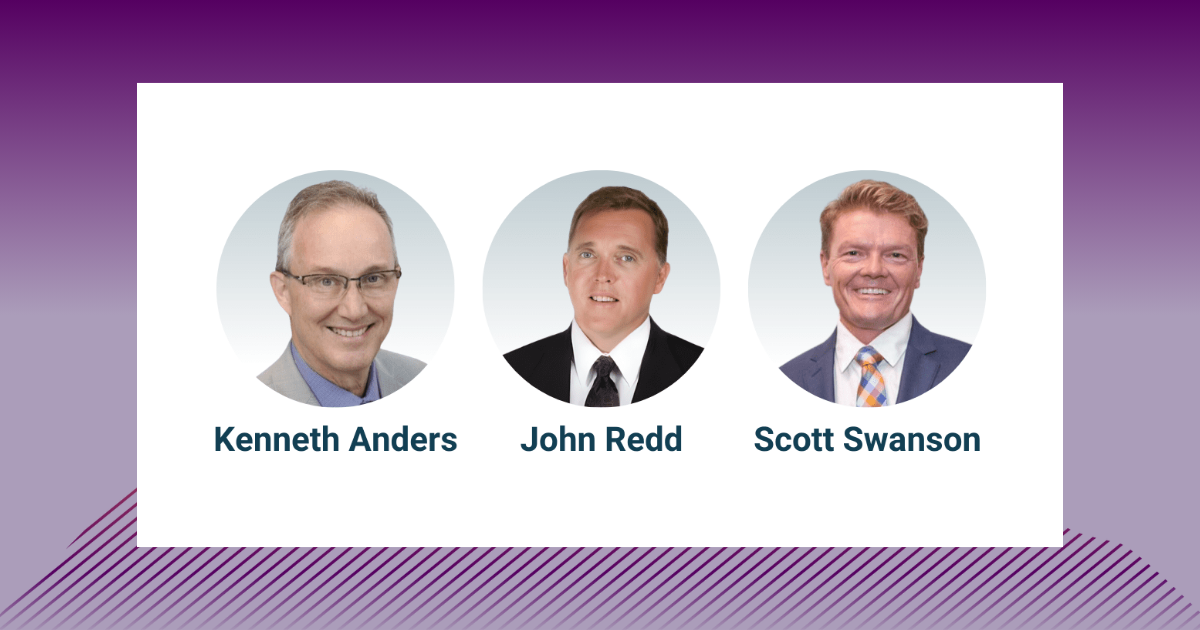
Earlier this year, PGLS already announced the appointment of three new VPs to its executive team: Kenneth Anders, John Redd, and Scott Swanson. Gilberto Segura now joins the executive team as the fourth Vice President as part of the company’s ongoing growth strategy and commitment to expanding its language solutions offerings.

PGLS is a leading provider of global language and business solutions dedicated to unlocking the full potential of communication – empowering our clients to achieve growth, enhance experiences, and transform information into actionable insights. Committed to innovation and excellence, PGLS offers a range of services designed to meet the evolving needs of our diverse clientele. From language and communication solutions to market intelligence, staff augmentation, and growth advisory, PGLS is redefining the landscape of global business and communication, empowering organizations to succeed in a dynamic world. 
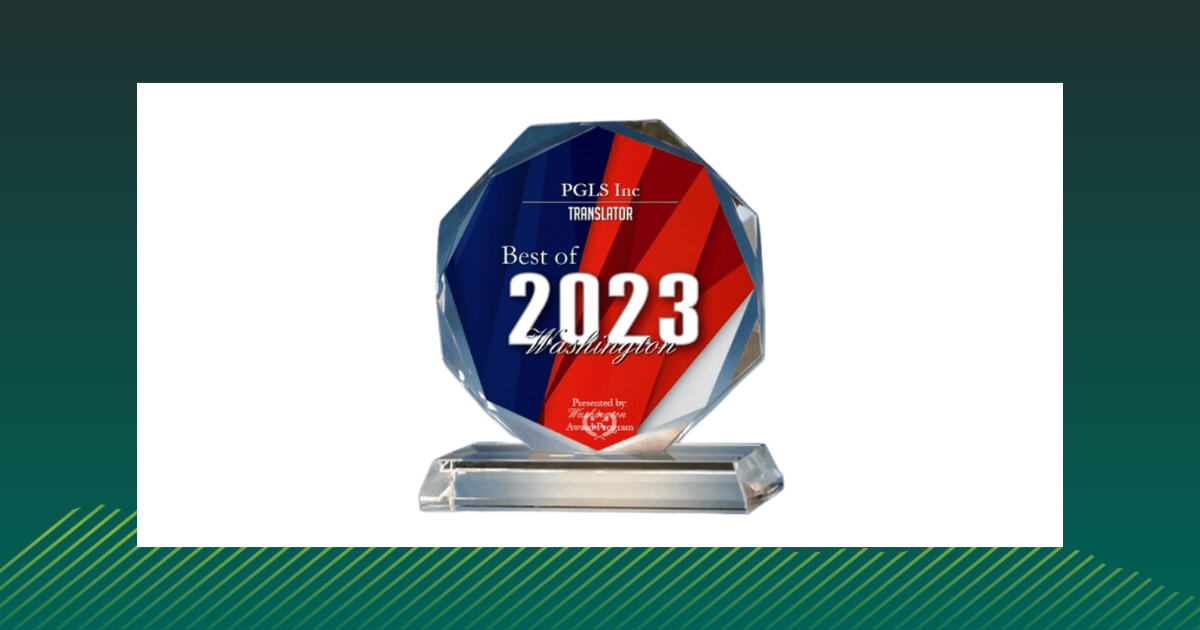
PGLS Receives 2023 Best of Washington Award

WASHINGTON August 28, 2023 — PGLS Inc has been selected for the 2023 Best of Washington Award in the Translator category by the Washington Award Program.

Each year, the Washington Award Program identifies companies that we believe have achieved exceptional marketing success in their local community and business category. These are local companies that enhance the positive image of small business through service to their customers and our community. These exceptional companies help make the Washington area a great place to live, work and play.

Various sources of information were gathered and analyzed to choose the winners in each category. The 2023 Washington Award Program focuses on quality, not quantity. Winners are determined based on the information gathered both internally by the Washington Award Program and data provided by third parties.

PGLS is a leading provider of global language and business solutions dedicated to unlocking the full potential of communication – empowering our clients to achieve growth, enhance experiences, and transform information into actionable insights. Committed to innovation and excellence, PGLS offers a range of services designed to meet the evolving needs of our diverse clientele. From language and communication solutions to market intelligence, staff augmentation, and growth advisory, PGLS is redefining the landscape of global business and communication, empowering organizations to succeed in a dynamic world. 
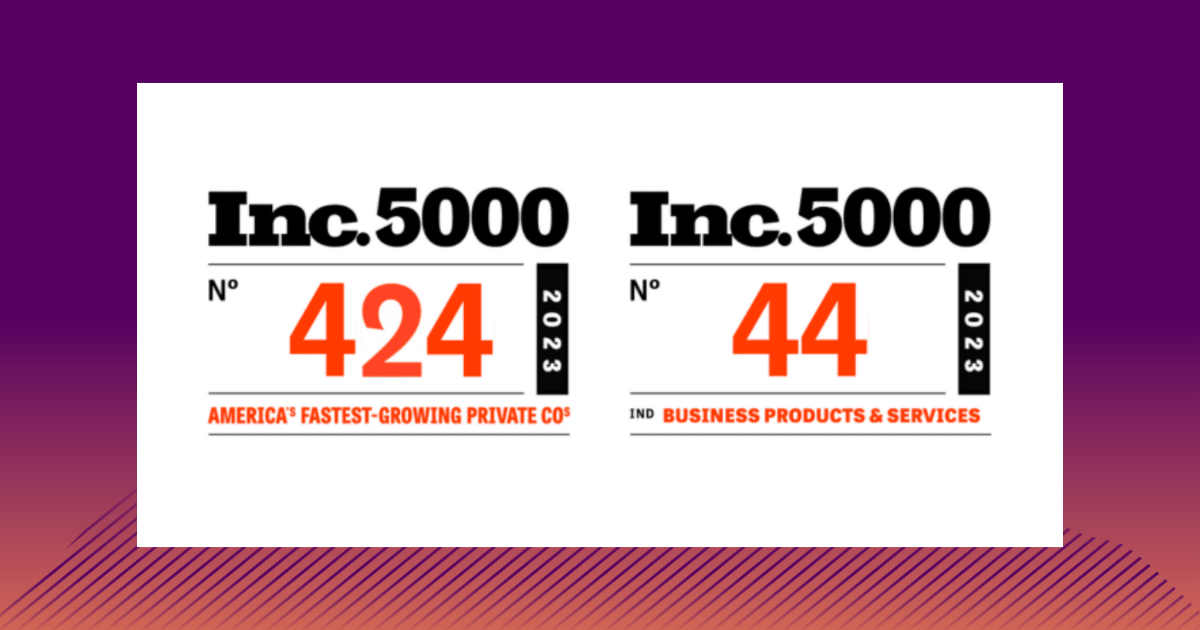
PGLS Makes Inc. 5000 List for Second Consecutive Year

Among America’s Fastest Growing Companies, PGLS Ranks No. 424 Overall and No. 44 in the Business Products and Services Industry

Piedmont Global Language Solutions (PGLS), a leading Language Service Provider, is being recognized on the prestigious Inc. 5000 list for the second year in a row. The Inc. 5000 list is renowned for showcasing the fastest-growing private companies in the United States across various sectors. Inc has ranked PGLS at No. 424 overall, at No. 44 in Business Products & Services, and at No. 23 in the state of Virginia.

“It is an incredible honor to not only make the Inc. 5000, but for PGLS to be ranked in the top 10% in back-to-back years. It is a testament to the culture of talent, teamwork, and trust we have fostered at PGLS. We are on an exciting trajectory, and we are eager to continue this journey of growth while embracing the challenges that come with it.”

The fastest-growing Language Service Provider in the world in 2022, PGLS’s growth was reaffirmed by moving even further up the Inc. 5000 list in 2023. The company’s success can be attributed to its commitment to quality, innovation, and client satisfaction. Unlike many language service companies, PGLS offers a full range of language solutions, including translation, localization, interpretation, and language training.

As PGLS celebrates this remarkable achievement, the company remains committed to providing quality language services, expanding language access, and fostering cross-cultural connections for organizations around the world. PGLS continues to be focused on growth and innovation while ensuring its clients receive the utmost value in their global endeavors.

PGLS is a leading provider of global language and business solutions dedicated to unlocking the full potential of communication – empowering our clients to achieve growth, enhance experiences, and transform information into actionable insights. Committed to innovation and excellence, PGLS offers a range of services designed to meet the evolving needs of our diverse clientele. From language and communication solutions to market intelligence, staff augmentation, and growth advisory, PGLS is redefining the landscape of global business and communication, empowering organizations to succeed in a dynamic world. 

How to Find the Right Phone Interpreter Services for Your Business

Over-the-phone interpretation is a type of interpretation in which an interpreter provides their services via a three-way call, through a speaker phone, or on a dual-set phone. This type of interpretation removes the need for an in-person interpreter, enabling international business to be more easily conducted.

In this article, we discuss what over-the-phone interpretation is, why a business might need it, and how to go about finding the right phone interpreter services for your business.

Keep reading to learn why Piedmont Global could be the right language services provider for you.

What is Interpretation?

Interpretation is the process of converting one spoken language into another. It is used for many purposes, from allowing communication between two people to providing a real-time voiceover for a live event, speech, or performance.

The skill of interpretation is hard to master, as there are many factors to consider when interpreting languages in real-time for clients. For instance, an interpreter must not only be fluent in a language but also have an adept skill for listening that allows them to not just read but audibly comprehend a language.

If an interpreter does not have equally as good listening skills as they do reading skills in terms of language comprehension, they cannot provide an excellent interpretation in real-time.

Moreover, depending on who the interpreter is listening to, their speech may use a specific dialect, speech pattern, or mixture of languages that is necessary for the interpreter to understand.

Spoken language contains a lot more nuance and potential for grammatical or linguistic errors compared to written language. Thus, an interpreter needs the ability to be able to make adjustments and corrections that make sense while still honoring the true meaning of the original speaker’s words.

What is Over-the-Phone Interpretation?

Over-the-Phone Interpretation — or OPI for short — is a specific type of interpretation that happens, as the name suggests, over the phone.

Picture this: two businessmen from companies in different countries. Their respective companies form a business partnership together and the two businessmen are instructed to work together on a new project. The problem is, however, that the two men speak different first languages and both are not fluent in the language of the other.

Being in different countries from one another, the two businessmen can not easily meet with each other with an interpreter present to facilitate business dealings. Instead, these meetings must happen over the phone, including an interpreter providing their services over the phone as well.

This can work in a number of ways. For instance, if one of the businessmen already has a trusted interpreter on-site, they may have that interpreter sit in on the call with them and speak through either a speakerphone or dual-handset phone.

Alternatively, a professional interpreter hired and agreed upon by both parties can connect to the call as a third party, forming a three-way call.

Hiring an interpreter for OPI has many advantages, with one of the biggest being the ability to provide interpretation on-demand, rather than having to wait for an interpreter to have the time to attend a meeting in person.

Other Types of Interpretation

Though OPI is a highly useful form of interpretation, it is far from the only form. Different types of interpretations serve a variety of purposes and are well-suited to specific situations.

Here’s a quick breakdown of the other types of interpretation:

  • Whispered Interpretation Services: Whispered interpretation is a type of service where an on-site interpreter is present to provide live interpretation throughout the day. For instance, if a foreign ambassador from another country was visiting the U.S., an escort interpreter could stay with them through the duration of various business meetings to ensure no language barriers are met.
  • Consecutive Interpretation: Consecutive interpretation is when there is a minor gap present between the time when the original speaker speaks and when the interpreter provides their live interpretation. This allows for more specific and nuanced interpretations that give the interpreter more time to think and adjust as needed and is perfect for meetings and trainings.
  • Simultaneous Interpretation: Simultaneous interpretation — also called conference interpreting — is one of the hardest forms of live interpretation, as it requires the interpreter to speak simultaneously with the original speaker (such as during a national or international address where both the speaker and interpreter are given a teleprompter). With no delays, the interpreter must be able to continuously speak without becoming confused or losing their place in a speech.
  • Video Remote Interpretation: Video Remote Interpretation (VRI) is very similar to OPI except that the parties involved use video conferencing technology rather than phones. VRI can provide a more professionally intimate setting for a virtual or long-distance meeting, as it allows the speakers and interpreters to look at one another as well as hear each other.

Why Might a Business Need Over-the-Phone Interpretation?

OPI can be beneficial for businesses for many reasons, with one of the biggest being the ability to work and create new business opportunities internationally.

With OPI, businesses can easily connect with partners, customers, and investors who may not be fluent in the same language as them. The support of an interpreter over the phone allows businesses to form such connections quickly and with the ability to reconnect at a moment’s notice.

How to Find the Right Phone Interpreter Services for Your Business

If you are considering global expansion or if you work in a region that is culturally and linguistically diverse, working with a professional interpreter can be majorly beneficial.

Finding the right phone interpreter service for your business comes down to three key factors:

  • Regional Specialties: Across the globe, there are thousands of different languages and each one can be broken down into smaller sub-categories of regional dialects and language variations that are specific to one region or group of people. Finding an interpreter that is fluent not just in standardized languages but also in regional dialects is key to working internationally.
  • Language Localization: When it comes to keeping an interpretation true to its original meaning, there is a lot of in-depth knowledge about the specific culture a language comes from to properly convey meaning. Word-for-word interpretations don’t always do the original meaning justice — thus, localization services that make small adjustments to retain a truer meaning are essential.
  • Industry Knowledge: Finally, if you are looking for an interpreter for business purposes, find one that has specialized knowledge in your specific industry. Each industry has its own jargon that requires an understanding of in more than one language to be properly interpreted.

Partner with Piedmont Global for Specialized Interpretation Services

Here at Piedmont Global, our interpretation experts are fluent in more than 200 languages, including a wide variety of regional varieties and specialties.

We provide all of the standard types of interpretation services — including OPI, simultaneous, consecutive, and video remote interpretation — and we work with businesses in a vast range of different industries including government, legal, healthcare, technology, and more.

Along with interpretation services, we also offer translations, language training programs, and many other crucially important language solutions.

Get started with Piedmont Global today by contacting our team to learn more about our custom solutions.

What is the Difference Between a Translator and an Interpreter?

Translators refer to professionals who can convert written content from one language to another, while interpreters refer to professionals who can convert spoken words from one language to another. Though there are many similarities between the two, key differences make the skills of translation and interpretation unique.

In this article, we offer clarity on the differences between translation and interpretation, as well as discuss what role translators and interpreters play in business.


What is a Language Services Professional?

language services professional is a person who specializes in the conversion of one language into another. This person will be fluent in two or more languages, though many language service professionals are fluent in far more than two.

Though there are many different types of language services professionals, most can be categorized into one of two types: translators or interpreters. Some will have both of these skills, as both play a key role in understanding and converting languages.

With this in mind, let’s take a closer look at what translators and interpreters do.


What is a Translator?

translator is a type of language services professional that converts written content from one language into another. Any type of written content can be translated, with popular types including:

  • Official or legal documents
  • Applications and forms
  • Emails and letters
  • Website content (landing pages, blogs, etc.)
  • Social media content
  • Instruction manuals
  • Scientific research reports and studies

Depending on where and from whom a written document or piece of content is coming, it may use a more standardized version of a language or a more regionally-specific dialect.

For example, an official document coming from a government agency will use very standardized language that is easier to translate from one language to another. This ensures that there are no miscommunications or unintentional conflicts between different international entities.

By contrast, a hand-written letter sent from one region of the world to another may contain a much less-standardized version of a language, even including colloquial words and phrases not included in the standardized version.

As such, it is incredibly important for professional translators to have specialized knowledge not just of standardized languages and their various grammatical rules but also of regional dialects and how they differ from their standardized counterparts.


What is an Interpreter?

An interpreter is a type of language services professional that converts spoken words from one language to another. This involves many of the same skills used in translation, as well as fluency in both standardized languages and various regional dialects.

However, interpretation involves listening to a language rather than reading. In turn, interpreters must have excellent listening skills, as well as specialized knowledge in exact pronunciations, regional accents, colloquial words, and more.

Interpretation tasks can include:

  • In-person interpretation (in which interpretation occurs face-to-face)
  • Simultaneous interpretation (in which an interpreter converts the language in real-time as a person speaks — this form of interpretation is often used in political speeches and live events)
  • Consecutive interpretation (in which a person speaks and then the interpreter converts the language, often used in trainings or meetings)
  • Over-the-phone (OPI) interpretation (in which interpretation happens over the phone, rather than in person)
  • Video remote interpretation (VRI) (in which interpretation happens via video conferencing technology)


How Do Translators & Interpreters Differ?

Although translation and interpretation hold many similarities — such as the need for fluency in regional dialects — the two skills also differ in many ways as well.

For example, a professional translator may be given many days, weeks, or months with a particular document, allowing them to take their time with a translation. This gives them the time to proofread and double-check their work, as well as take breaks while carrying out the translation.

By contrast, most professional interpreters are expected to perform the language conversion in real time and in front of other people. Many consider interpretation to be the more difficult of the two skills, as it also requires excellent listening and comprehension, as well as precise pronunciation on behalf of the professional interpreter.

However, both translation and interpretation can be highly complex in their own right, making it necessary for both professional translators and professional interpreters to have a high skill level and excellent fluency in order to serve in their positions.


What Role Do Translators & Interpreters Play in Business?

As we have discussed, there are many ways translation and interpretation can be applied in a professional setting — from converting official documents to offering different types of interpretation depending on what event or activity is occurring.

For businesses in all industries, translators and interpreters play a key role in global expansion. Without the support of these language professionals, it can be near-impossible to conduct business abroad successfully, as the need for language conversions is often needed in all corners of a business.

To better understand this, let’s imagine an E-commerce business that started out by shipping products to only the U.S. and Canada, but now wants to expand to Europe, Central America, and South America. For this business to expand in this way, it will need translators and interpreters to help:

  • Attract New Customers: First and foremost, this company will need to convert its marketing materials to the localized languages of the regions it plans to expand to. In order to avoid embarrassing mistakes, the company must rely on talented translators to ensure these marketing materials are accurate to the languages found in the regions they are being sent off to.
  • Work with Suppliers: Suppliers play a huge role in international business, especially for any business dealing with physical products. Having local suppliers in international regions is a necessity, as it can lower shipping costs and other inventory-related expenses. To effectively work with suppliers in other regions, language professionals are vital.
  • Sign Deals with Foreign Businesses: As a business grows globally, it may find itself in deals and partnerships with other businesses and corporations. Depending on where these businesses are located, the company is likely to need language professionals who can facilitate official correspondence, virtual meetings, and more.


What is a Language Services Provider?

language services provider is a company or organization that specializes in providing translation, interpretation, and other language services to its clients.

While you can certainly choose to work with freelance translators or interpreters, acquiring the help of these talented experts through a language service provider ensures you are receiving the assistance of vetted and highly-trained professionals.

Additionally, working with a language service provider makes it easier to find translators and interpreters who are specialized in the exact languages and regional dialects you require.

Here are 3 key factors to look for when researching various language service providers:

  1. Regional Specialities: As mentioned, you always want to work with language professionals and providers who are not only fluent in the standard versions of your target languages but also the regional dialects found in various parts of the world. This will ensure that all of your written and verbal communication does not lose its cultural context in the long run.
  2. Industry Expertise: In addition to regional expertise, you should also seek out a provider that has specialized experience in your exact industry. Whether you work in healthcare, government, engineering, pharma, or any other industry, it is of the utmost importance to find a language services provider who knows the nuances of your field.
  3. Language Training Programs: Any business conducting business abroad or with customers of different linguistic backgrounds should have a strong language access plan in place. Language service providers that offer language training programs can help your business develop an excellent language access plan that ensures you have all your bases covered when it comes to working with people and businesses from around the world.


Gain the Advantage of Piedmont Global’s Language Services

Here at Piedmont Global, our dedicated team of language experts includes translators and interpreters who are fluent in more than 200 different languages and regional dialects.

Our award-winning company is committed to providing the best possible language services and solutions customized to your exact needs. With specialized expertise in a wide range of industries, Piedmont Global has the experts you need for global expansion, developing a language access plan, and everything in between.

To get started with Piedmont Global, contact our team today.

Dominican Translation: How to Find a Spanish Translator Who Understands Dominican Dialects

For anyone working, living, or visiting the Dominican Republic, it is crucial to be able to communicate effectively with other people in the region.

While the primary language spoken in the Dominican Republic is Spanish, there are many regional dialects and language variants that must be accounted for within the country. Finding a translator who understands these dialects is crucial for achieving accurate and high-quality translations.

In this article, we discuss everything you need to know about finding the ideal translator to help you understand Dominican dialects more clearly.


What is a Dialect?

dialect or regional variety is a version of a language that has key differences from the standardized version that is specific to a geographical region or group of people.

One of the most popular examples of a dialect is the American Southern dialect, which is a derivative of the English language but contains many slang words and phrases seen almost exclusively within this dialect — such as y’all, over yonder, and the ever-famous phrase, “bless your heart.”

When it comes to why understanding dialects is important, the answer is communication.

Without a proper understanding of regional dialects, language professionals would only be able to translate and interpret words written or spoken in the most grammatically-correct, standardized version of a language. With a deep understanding of different dialects associated with a language, however, a language professional can take a more nuanced approach to maintain the original meaning of a text.


How Many Languages are Spoken in the Dominican Republic

The Dominican Republic is found in the Caribbean region, with Spanish as the official national language.

In the Dominican Republic, a variation of Spanish is spoken known as Dominican Spanish. This version of Spanish is seen widely not just in its home country but also in the diaspora of Dominican immigrants living along the U.S. east coast in New York City, New Jersey, Boston, Philadelphia, and Miami.

An estimated 90% of the Dominican Republic’s population is believed to speak and/or understand Spanish — both the standardized version and the Dominican Spanish dialect.

Aside from Spanish and Dominican Spanish, two additional languages are spoken natively in the country — Haitian Creole and Samana English. Haitian Creole is spoken as a first language by more than 160,000 people, while Samana English is a variant of the English language spoken by roughly 12,000 Dominicans.

The Dominican Republic has also undergone quite a bit of colonization throughout the centuries, leading to several foreign languages becoming prominent in the country as well. These include English, French, Chinese, Italian, and Japanese.

English and French are both mandatory and taught in schools in certain parts of the Dominican Republic.


How are Dominican Dialects Translated?

Translating a Dominican dialect can be tricky, as it can be an off-shoot of a more standardized language that does not account for certain regional differences in dialect. In terms of how Dominican dialects are translated, there are a few main options to choose from.

These include:

  • Professional Translation Services: Professional translation services are almost always your best option when trying to translate a specific regional dialect. Unlike basic translation services or programs, a professional translation service can provide you with the target language fluency and regional dialect expertise needed to obtain a highly accurate translation. As such, professional translation services are recommended for all business-related translations.
  • Smart Voice Portable Translators: Smart voice portable translators are often used by international travelers and students studying abroad to help them communicate in real time with locals. With this device, a recording device records a person’s voice in one language, converts that recording into text, translates the text to a second language, and then reads back the final translation in the target language selected.
  • Online Translation Programs: Online translation programs are popular for super quick translations of single words or simple sentences. One of the most popular examples of an online translation program is Google Translate. Though these types of automated translators can offer great convenience, they do not offer the same accuracy that a professional translator can.


What is Language Localization & How Does it Relate to Dominican Dialects?

Language localization is a term used to describe the process of adjusting a translation to retain the meaning and cultural context of an original piece of text.

When performing a translation, there are several moving parts to consider. For instance, if a piece of text is written in a regional dialect, the word-for-word translation into a target language may not convey the same meaning, as certain slang words or phrases from the dialect may need different equivalent words in the target language.

Without paying careful attention to these kinds of details, a translation can end up distorted from its original meaning. To illustrate this, let’s imagine a translation is converting a Dominican Spanish document to English.

In this document — which is a business letter — the original writer includes a joke that uses keywords and phrases known to be used within a joking manner in the Dominican language. Yet, once translated to English, this joke loses some of its original meaning and ends up sounding like an insult.

A language localization expert’s job is to identify these types of details within a translation and adjust them in minor ways so that the translation is still accurate but better conveys original meaning and intent.


What to Look for in a Professional Language Translator

As mentioned, the best option for translating Dominican languages and dialects is through a partnership with a professional language translator. By working with a professional, you can achieve translations that are much more accurate and meaningful than anything a computer program could produce.

However, it is equally important to perform due diligence and research different professionals and companies before deciding on one. If you are going to pay for professional translation services, you want to be assured that the results you receive will be high quality.

Here are three key characteristics to look for in a professional language translator:

  • Regional Specialties: Regional specialties refer to a translator’s specialized areas of expertise when it comes to regional dialects and language variances. Right off the bat, one of the first things to look for is a professional translator who promotes their ability to work in specific regional specialties, as this will ensure you find someone who understands the nuances of the Dominican dialect you are working with.
  • Language Localization: As we have covered, language localization is incredibly important for conveying the right meaning through translation. When looking for a translation services professional, make sure to look for one who has experience with language localization and has taken the time to learn about the cultures whose languages they translate.
  • Language Training: In many cases, a translator or the company they work for may offer language training solutions. These can be important to take advantage of, especially if you plan to continue working in international regions, as it will give your business team the strong foundational knowledge needed to increase their fluency in specific languages.


Partner with Piedmont Global for Top-Class Language Solutions

At Piedmont Global, our team is not only fluent in more than 200 languages and regional varieties, but we are also highly experienced in working in a wide range of industries and regions all over the world.

By working with Piedmont Global, you can receive customer language solutions  — including translation, interpretation, language training, and more — that meet the exact needs of your business and team. Whether you need to communicate with clients or ensure international business partnerships run smoothly, Piedmont Global has you covered.

To get started with Piedmont Global language localization, contact us today.

Language Access in Education

We’ve all felt it before. The stress of being misunderstood, the unease of not understanding, the worry that something will go wrong because the person listening isn’t really hearing you. That feeling is an everyday reality for millions of students and their parents across America. From understanding teachers and school nurses to navigating medical emergencies and reading paperwork, school can quickly become a language minefield for anyone not fluent in English.

So, how important is language access for students in America, and how far do we have left to go before we can consider the American education system equally accessible to all?


Language Access Prioritization

The need for educational institutions to prioritize language access is growing. According to the National Center for Education Statistics, the number of English Language Learners (ELLs) has grown to more than five million over the past decade.

While 77% of ELL students speak Spanish, there are still a wide variety of language needs across the US. According to Pew Research, “in five states, a language other than Spanish was most commonly spoken at home among English learners. In Maine, for example, Somali was the most common language spoken at home. In Vermont, Nepali was.” Pew Research goes on to say, “Arabic was the second-most common language spoken at home by ELL students in 16 states and was among the five most common languages in 39 states.” The stats continue to make it clear that each institution, region, and state requires a unique approach to tackle language access difficulties.

While there is still a substantial disparity in language access in schools in the US, there is a simple solution that any school, university, or government branch responsible for education can quickly implement. But first, how do barriers to language access impact education? We explore two example scenarios below.


Epidemics & State-Wide Emergencies

While COVID-19 improved the state of multi-language communication in many ways, it also brought to light an array of painful gaps in language access across America. For example, in Virginia, an error in the government’s translation process resulted in Spanish readers being told they don’t need to vaccinate. Had a Spanish speaker familiar with medical terminology been involved in the writing or proofreading of the website, the mistake may not have occurred. Technology has provided tremendous leaps in language access. Still, for something as important as the community’s collective health during a pandemic, it’s essential governments and schools seek the input of professional translators and interpreters.

The same is true for other emergencies. While the pandemic required medical terminology, each disaster brings its complications. For example, 120 hurricanes hit Florida between 1851 and 2018, and according to Data US, 30% of Florida’s citizens are speakers of a non-English language. Schools have a duty of care to the students they’re entrusted with and must ensure they’re communicating the correct actions to each child in the case of a hurricane and other natural disasters. Communication starts with advanced preparation and strong partnerships with critical translators.


Language Service Solutions in Schools

Communication is part of daily life for students, parents, educators, and school staff. When language is a barrier, schools are unable to reach their primary goal of helping students succeed. All school’s need a trusted language services provider that offers experienced interpreters, quality translations, on-demand resources, and access to many languages.

There are countless situations when language services are needed in schools. Some common examples are:

  • Interpreters at events, conferences, and meetings
  • Translation of important documents like progress reports, calendars, and syllabi
  • Translation and interpretation through individualized education programming
  • Everyday ASL interpretation
  • Emergency situations

Whether they work in K-12, higher education, or beyond, we’ve found our clients come to us with three main difficulties that prevent them from addressing the negative impacts of poor language access:

1) They often find it challenging to find a translation and interpretation provider that speaks the languages they need. Many schools are language melting pots, and interpretation providers must talk a variety of languages to ensure students aren’t being left out. At the same time, each scenario carries its own nuances, and providers must have the training required to convey medical, educational, or scientific information correctly when the moment strikes.

2) They find it challenging to find an interpreter when they need one. Some of our current clients have struggled in the past when they’ve worked with a single interpreter, as they may not be available at a moment’s notice. When emergencies happen, it’s essential educational institutions can provide their students with interpretation or translation quickly and effectively.

3) They’ve found providers who address all their needs to be expensive. Education budgets can sometimes be tight, which is why we help all our clients find a solution that gets their students the best without going over budget.


Language Solutions for Education with Piedmont Global

At PGLS, we’re proud to offer translationinterpreting, and language training services to schools and other educational institutions in over 200 languages. We understand that each student is unique, so we pay special attention to offering services in the correct regional variety and providing subject matter experts where necessary.

Get in touch with our team to bring true language equality to your students.

FSI Awards PGLS Foreign Language Training Contract

PGLS Will Provide Language Training and Testing in over 70 Languages to DOS Employees and Other Government Agencies.

We are proud to announce that Piedmont Global Language Solutions (PGLS) has been awarded a prime contract with The School of Language Studies (SLS) at the U.S. Department of State’s (DOS) Foreign Service Institute (FSI) in partnership with Diplomatic Language Services (DLS).

PGLS will provide language training and testing in over 70 foreign languages to DOS employees and other government agency employees. We’re excited to leverage our experience and expertise to deliver best in class language training services. Congratulations to the PGLS team for this tremendous accomplishment!

Language instructors, curriculum developers and mock testers; we would be thrilled to have you join our team of expert language instruction professionals. Reach out to our dedicated recruiter Alina Moore at amoore@pgls.com to work with us and for more information about upcoming hiring events.

PGLS is a leading provider of global language and business solutions dedicated to unlocking the full potential of communication – empowering our clients to achieve growth, enhance experiences, and transform information into actionable insights. Committed to innovation and excellence, PGLS offers a range of services designed to meet the evolving needs of our diverse clientele. From language and communication solutions to market intelligence, staff augmentation, and growth advisory, PGLS is redefining the landscape of global business and communication, empowering organizations to succeed in a dynamic world. 
Scaling For Success: PGLS Welcomes Three New VPs

Arlington, VA – Piedmont Global Language Solutions (PGLS), a leading Language Service Provider, has announced the appointment of three new Vice Presidents to its executive team. These new appointments are a part of the company’s ongoing growth strategy and commitment to expanding its language solutions offerings.

The three new Vice Presidents are Scott Swanson, who will serve as the Vice President of Sales and Marketing, Ken Anders, who will serve as the Vice President of Operations, and John Redd, who will serve as the Vice President of Finance. Each of these new VPs brings a wealth of experience and expertise to their respective roles, which will enable PGLS to continue providing exceptional language services to its clients.

“We are thrilled to welcome Scott, Ken, and John to our executive team. Their extensive experience and leadership skills will help us to achieve our goals and objectives as we continue to grow and expand our language solutions offerings.”

Scott Swanson, who will lead the Sales and Marketing teams, brings over 20 years of experience in the language services industry. As the Vice President of Operations, Ken Anders will oversee PGLS’s operational unit and ensure that the company continues to help its partners meet their mission-critical needs. John Redd, who will serve as the Vice President of Finance, will be responsible for leading the organization’s financial planning, investment strategies, and risk mitigation.

PGLS is a leading provider of global language and business solutions dedicated to unlocking the full potential of communication – empowering our clients to achieve growth, enhance experiences, and transform information into actionable insights. Committed to innovation and excellence, PGLS offers a range of services designed to meet the evolving needs of our diverse clientele. From language and communication solutions to market intelligence, staff augmentation, and growth advisory, PGLS is redefining the landscape of global business and communication, empowering organizations to succeed in a dynamic world. 
Why Organizations Value Asian Translation Services from a Native Speaker

The globalization of commerce has seen countries like China rise in recent years to become some of the most powerful economies in the world. Manufacturing, for example, has shifted East in a big way.

The rise of the middle class in these countries has created new markets for Western businesses and seized opportunities for organizations to enter joint ventures and other collaborative relationships with Asian companies.

The following examines the value of Asian language translation services and the importance of working with native speakers.


The Benefits of Asian Language Translation Services

There are several reasons why organizations value translation services. We’ve listed a few of the most important benefits below:


Over 200 Languages

Some companies choose to work with an individual freelancer who is a native speaker of the language they need. However, this can be risky because you’re putting all your eggs in one basket.

It is unlikely that a single person will be a native speaker of all the languages you might need. This is where working with a company that specializes in Asian language translation can be beneficial.

At Piedmont Global, we have a team of native speaker experts and can offer over 200 languages. We can help you source materials in Taiwan while helping you navigate the complexities of doing business in Japan.


Reliability

The first and most apparent benefit is reliability. When working with translations, it’s crucial to trust the person or organization you’re working with.

There are many moving parts in any translation project. Things can easily go up in smoke if the people you’re working with don’t have a strong understanding of the source language. Likewise, if the translator you’re working with doesn’t have a strong understanding of the target audience, they might not be able to properly convey the message you’re trying to communicate.


Increased Accuracy in Translations

Native speakers have a better understanding of the subtleties and nuances of their home languages. This increased understanding leads to improved accuracy in translations.

This is important because the meaning of sentences or paragraphs can easily get lost in translation. When you’re dealing with something as crucial as business communications, you can’t afford to have any inaccuracies in your translations.

As a bonus, increased accuracy can also lead to stronger relationships with your Asian business partners.


Localization

A better understanding of regional dialects is another benefit of working with a native speaker. In many countries, there can be a significant difference in the way people speak in different regions. Linguistically, some countries are considered to have many languages with a common writing system.

In the same vein, you want to respect the different cultures you’re working with and use the appropriate language when addressing them. For example, extended eye contact in the west might be seen as a sign of respect, but in some cultures in Asia, it might be interpreted as disrespectful.


Industries That Rely on Asian Translation Services

Many industries rely on Asian language translation services. Working with Piedmont Global offers numerous benefits to many different industries including education, healthcare, legal services, and more.


Manufacturing

The globalization of the manufacturing industry has led to an increased need for accurate and timely translations of technical documents. Manufacturers frequently generate complex technical documents that include manufacturing terminology, scientific information, and technical descriptions. Additionally, translations of such technical documents generate text that exceeds specified character limits. At Piedmont Global, we have a team of experienced translators familiar with the specific jargon and terminology used in the manufacturing industry. We can accommodate your specifications without compromising quality.

From MSDS/SDSs to marketing materials, our team understands the importance of accuracy in tone, meaning, and technical details. You can be confident that the translated text will convey your message effectively.  Learn more about our translation services for manufacturing.


Education

One industry that relies heavily on translation and interpretation services is education. Communication is part of daily life for students, parents, educators, and school staff. When language is a barrier, schools are unable to reach their primary goal of helping students succeed. Learn more about language access in schools.

Additionally, there has been an increase in the number of US, Canadian and European teachers moving abroad to teach English in Asia. However, these teachers often don’t have any training in the local language, which can make it difficult to communicate with their students properly. Here’s where language services come in.

We can help these teachers by providing them with translations of the key phrases and concepts they need to teach their classes. We can also help them to better understand their students by translating student work and essays. Learn more about our language services for education.


Healthcare

Another area that has come to rely heavily on translation services is the healthcare industry. There are valid reasons for this. First, there has been an increase in medical tourists going to Asia for treatment. These medical tourists often don’t speak the local language. Hospitals and clinics need to be able to communicate with them in their native language.

Another reason why the healthcare industry has come to rely on translation services is the rise of telemedicine. With telemedicine, doctors and patients can consult from different parts of the world. However, this consultation can only be effective if there is a good understanding between the doctor and the patient. Learn more about our medical and healthcare language services.


Legal

The legal industry is another field that has come to rely on Asian language translation services. That’s because there is a growing need for legal documents to be translated into Asian languages, from business contracts to artistic licenses. Immigrants who have been charged with a crime also need to understand the legal documents they are being asked to sign.


Other Industries

These are just a few industries that now rely on Asian language translation services. As you can see, there is a growing need for these services in many different fields. Governmentmedia, and the nonprofit sector are also among the many industries that have come to need these services.

We’ve also seen a growing demand for these services in the financial sector. In recent years, there has been an increase in fintech startups in Asia. These startups often need help translating their products and services into the local language.


Getting Started with Piedmont Global’s Asian Language Translation Services

Now that you know more about the benefits of working with a native speaker, you may be wondering how to get started.

If you’re looking for a reliable and experienced company to provide you with these services, we can help. From translation to interpreting and language training training, we’re here to support all of your language needs.

The first step is to request a quote and let us know what languages you need. We will then match you with one of our expert translators. Contact us today to get started.