Why Human-in-the-Loop AI Is the New Standard for Localization

AI has transformed localization more in the past two years than in the previous twenty. What once took days can now take minutes. What required extensive workflows now launches in a single click. Teams are moving faster, content volumes are exploding, and leaders are rightfully asking the big question: 

When is AI enough, and when does a human need to step in? 

Across every regulated industry we serve — healthcare, legal, insurance, manufacturing — executives are looking for clarity. Not hype. Not fear. A framework. Something that helps them balance speed with safety, efficiency with compliance, automation with accountability. 

That’s where Human-in-the-Loop (HITL) comes in: a governance-driven approach where AI accelerates the work, and humans secure the outcome. 

It’s quickly becoming the localization standard, and the standard we’re perfecting as your partner in Strategic Globalization. 


Why Organizations Are Moving Toward HITL 

Early conversations around AI in localization were dominated by replacement narratives. 

“AI will eliminate translators.”
“AI will automate entire workflows.”
“AI will make localization instant and free.” 

Today, the organizations we advise are asking a different and more strategic question: 

“How do we integrate AI responsibly, with guardrails that protect quality, cultural accuracy, and compliance?” 
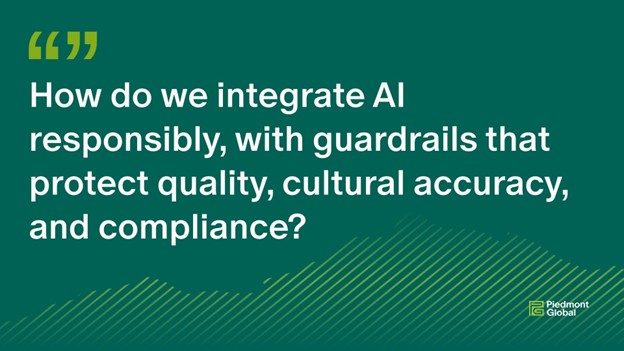
Graphis that reads How do we integrate AI responsibly, with guardrails that protect quality, cultural accuracy, and compliance?

Enterprises aren’t rejecting AI. They’re operationalizing it. They’re formalizing HITL frameworks because the risks of LLM-only localization models are too significant to ignore: 

  • Undetected hallucinations 
  • Cultural misinterpretations 
  • Missing legal terminology 
  • Inconsistent tone or style 
  • Data privacy concerns 
  • Regulatory exposure

In industries where a single mistranslation can lead to patient harm, legal liability, safety failures, or financial risk, fully autonomous AI simply isn’t an option. HITL is safer, more scalable, and ultimately more cost-efficient. 


The “Right Touch” Model: Calibrating Human Involvement by Risk Level 

One of Piedmont Global’s principles around AI is simple: 

Not all content needs the same level of human involvement, but all content needs the right level of human involvement. 

We help organizations evaluate content through a Right Touch Framework across four dimensions:


1. Content Risk 

Is the content informational, instructional, legal, or safety-critical?


2. Audience Risk 

Could misunderstandings impact patient health, financial decisions, legal outcomes, or public safety?


3. Cultural Risk 

Does the content require cultural nuance, lived experience, or contextual understanding?


4. Compliance Requirements 

Is certified translation required? Does the content support regulated workflows? 

From here, we calibrate human involvement.
Some content is AI-first, human-verified.
Some is human-edited AI.
Some is human-led, AI-assisted.
And some remains human-only. 

This is the operational clarity leaders are asking for, and the foundation of future-ready language programs. 


Where AI Fails and Why Humans Still Matter 

LLMs are extraordinary pattern-recognizers. But culture is not a pattern; it’s context, identity, lived experience, and interpretation. 

AI struggles with: 

  • Humor and idioms 
  • Taboo language 
  • Sensitive topics 
  • Emotionally charged content 
  • Region-specific norms 
  • Social values and beliefs 
  • Industry-specific cultural expectations 
  • And more 

Humans don’t just translate words. They interpret meaning. 

That’s why we integrate cultural subject matter experts (SMEs) as quality governors inside AI systems, training models to reflect real-world nuance. It’s why we rely on human oversight to catch errors AI can’t see. And it’s why, ultimately, HITL is an upgrade and not a compromise. 


Post-Editing Maturity: How Teams Evolve with AI 

Most global organizations are somewhere on a post-editing maturity path:


1. AI Curiosity 

Teams experiment in pockets with generative AI, but usage is inconsistent.


2. AI Adoption 

Machine translation and post-editing enter the workflow, often without governance.


3. AI Alignment 

Teams create formal guidelines for post-editing, quality, risk, and review.


4. AI Embedding 

Enterprises develop custom HITL workflows, quality frameworks, and escalation paths.


5. AI Optimization 

Data, cultural insights, and human feedback loops train models to improve over time. 

Wherever you sit on this path, one principle remains the same:  

AI requires professional human oversight to achieve enterprise-grade accuracy. 


HITL in Regulated Industries: Where It Matters Most 

Healthcare 

  • Clinical accuracy 
  • Patient safety 
  • Informed consent 
  • Certified medical translations 
  • Multilingual patient communication 

Legal 

  • Legal terminology 
  • Case evidence 
  • Contracts & compliance 
  • Certified translations for court 

Insurance 

  • Policy accuracy 
  • Claim adjudication 
  • Regulatory alignment 
  • Customer rights & responsibilities 

Manufacturing & Government 

  • Safety documentation 
  • Technical manuals 
  • Recall notices 
  • Public communication 

In these sectors, quality is not a preference. It’s a legal requirement. HITL ensures organizations meet those obligations without sacrificing speed. 


How AI Is Reshaping Localization Teams 

Modern localization teams look different than they did even a year ago. 

Leaders are restructuring around: 

  • AI quality managers 
  • Culturally fluent SMEs 
  • AI-assisted project managers 
  • Data governance and compliance leads 
  • Tech + human hybrid workflows 
  • New escalation paths and review loops 

The future isn’t “AI vs. human.” The future is AI + human, integrated into a system where each strengthens the other. 

Graphic that reads The future isn't AI vs Human. The future is AI + human, integrated into a system where each strengthens the other.

The Future Standard: Human-in-the-Loop AI 

HITL is no longer a trend. It’s a strategic imperative for organizations that operate globally, responsibly, and at scale. 

It delivers: 

  • Faster workflows 
  • Higher accuracy 
  • Better cultural alignment 
  • Stronger governance 
  • Reduced risk 
  • Increased confidence 
  • Clearer compliance paths 
  • Improved customer experiences 

Organizations need clarity, calibration, and a partner who understands both the possibilities of AI and the realities of global communication. 

That’s why Piedmont Global exists. To help you lead globally, fluently, and confidently. 

If you’re evaluating how to integrate AI into your global workflows, we can help you design a Human-in-the-Loop model that accelerates your operations while protecting what matters most.
Explore Piedmont Global’s custom solutions → 

How to Prepare for CMS Test Calls: Boost Language Access & Star Ratings

Are your customer service representatives ready to assist limited English proficient (LEP) callers properly? Each year, the Centers for Medicare & Medicaid Services (CMS) conducts test calls that directly influence your Star Rating and your bottom line. Preparation isn’t optional. It’s essential to maintain compliance, build member trust, and maximize incentive payments and your CMS Star Rating.


What Is CMS and Why Does It Matter

The Centers for Medicare & Medicaid Services (CMS) oversees Medicare and works with states to manage Medicaid, the Children’s Health Insurance Program (CHIP), and health insurance portability standards. For health plans, CMS is both a regulator and a gatekeeper, shaping how benefits are delivered and evaluated.


Understanding CMS Star Ratings

CMS rates Medicare plans on a 1–5 star scale to assess quality and help beneficiaries make informed choices. This star rating system was established by CMS to evaluate the quality of the plans and help seniors select the most suitable option. Even so, ratings influence more than reputation. They also play a crucial role in CMS’s decisions on whether plans can continue to bill Medicare for their services. In addition:

  • Plans with 4+ stars receive a 5% quality bonus from CMS.
  • In 2023, these bonuses totaled $12.8 billion for Medicare Advantage plans.
  • Yet, average ratings have declined in recent years, reflecting the lingering effects of COVID-19 and a new methodology for calculating ratings..

A higher rating means stronger member acquisition, retention, and financial performance.


How the CMS Accuracy and Accessibility Study Impacts You

Every fall, the CMS publishes its annual Accuracy and Accessibility Study, which measures performance in assisting limited English proficient (LEP) callers. The result of this annual study plays a big role in determining the star rating a plan receives. If your team struggles to connect callers with interpreters quickly or provides inaccurate information, then the consequences are immediate: lower ratings, reduced bonuses, and potential reputational risk. This is why it is crucial to partner with a Strategic Globalization Organization like Piedmont Global. We ensure your customer service representatives are equipped with the resources they need to assist your LEP patient population.


What Happens During a CMS Test Call

CMS measures performance by conducting test calls. Test calls are made by “secret shoppers” who are limited English proficient (LEP) individuals posing as patients or family members of patients seeking information about their insurance plan benefits and coverage. A typical test call follows strict benchmarks:

  • Step 1: The caller must reach a live representative within 10 minutes (including hold time).
  • Step 2: Once connected with an interpreter, the first of three survey questions must begin within 8 minutes.
  • Step 3: Each survey question must be answered within 7 minutes, using information pulled from CMS publications (like Medicare & You 2024) and plan-specific details.

These calls are conducted annually, from February through June. During the testing period (conducted annually from February through June), any inbound call could be a test call. As an insurance provider, it is crucial to prepare your customer service team for these calls and to make sure they have quick and easy access to the appropriate resources.


CMS Test Call Assessment Criteria

The test calls conducted by CMS evaluate a number of criteria, including: 

  • Ease of navigating automated phone systems
  • Speed of reaching a live representative
  • Accuracy and completeness of answers provided
  • Availability and accuracy of interpreters in key languages: Spanish, Mandarin, Cantonese, French, Vietnamese, and Tagalog

For LEP callers, interpreter connection and communication quality are often the deciding factors.


Preparing Your Customer Service Team

Your customer service team needs to be prepared when the next test call season comes around. They need to know what metrics CMS evaluates, and more importantly, they need to know how to quickly access the appropriate resources to support LEP members effectively. Key steps include:

  • Staff Awareness: Ensure representatives are aware of the CMS test call season to plan and staff accordingly.
  • Assessment Familiarity: Educate your team on the CMS assessment criteria and the weight they carry in Star Ratings.
  • Interpreter Access: Train representatives on how to quickly connect with professional phone or video interpreters.
  • Simulation Practice: Run mock test calls so your team can practice how to interact with a professional interpreter under realistic conditions and conduct test calls of your own.

With preparation, your staff won’t just pass CMS evaluations; they’ll provide a consistently higher level of service for every member, year-round.


Final Thought: Preparation Shapes Performance

CMS test calls are not simply a compliance hurdle; they are a reflection of how well you serve your diverse member population. Plans that prioritize language access earn stronger ratings, higher incentive payments, and greater member satisfaction.

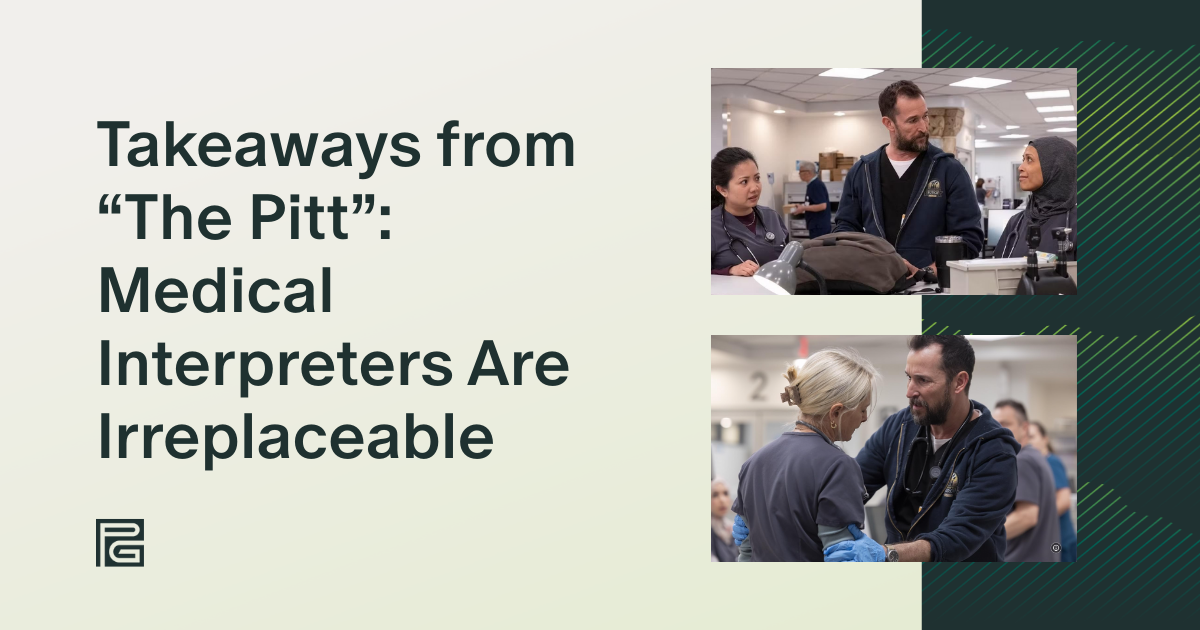
Takeaways from “The Pitt”: Medical Interpreters in Emergency Departments Are Irreplaceable

The 2025 breakout medical drama, The Pitt, received overwhelmingly positive reviews from healthcare workers for its realistic portrayal of an emergency department (ED) over a tumultuous 15-hour shift. Among the important, real-world issues presented by the show was one common scenario that every ED provider in the United States recognized.

In the series premiere, a patient arrives in an ambulance with a life-threatening injury. After Dr. Robby, a courageous attending physician played by ER’s Noah Wyle, and his team stabilize the patient, they quickly determine that no one knows what language she is speaking.

Patients with limited English proficiency (LEP) interact with healthcare systems differently than their English-speaking peers, often experiencing delayed access and worse outcomes. Medical interpreters are an integral part of the lifesaving work in EDs across the country, providing vital bridges to communication that enable providers to deliver the best possible patient care.

As linguists and partners in language access, we were thrilled to see The Pitt bring visibility to the needs of LEP patients and offer a window into the dynamic challenges faced by emergency department providers. Their commitment is nothing short of heroic. Here, we examine the impact of this LEP patient’s storyline and explore what it takes to ensure LEP patients receive support when they visit the emergency room.


There Are More Than 25 Million LEP Patients in the United States

According to the U.S. Census Bureau’s 2022 American Community Survey, more than 25 million people in the United States are limited English proficient. This population is growing, yet studies continue to show that LEP patients experience worse health outcomes on average.

Between lower rates of healthcare coverage among immigrant populations, language barriers with healthcare providers, and challenges with managing chronic conditions, LEP patients are vulnerable. When we work together to uplift the care and experiences of LEP patients in times of crisis, our neighborhoods and communities benefit exponentially.

Other studies have shown the impact of language barriers on hospital resources. Providers may feel more comfortable ordering additional tests or observing LEP patients over longer stays. These additional measures (and costs) may not be necessary if a qualified medical interpreter is available to assist with communication.


Language Access Supports LEP Patients in Emergency Rooms

Viewers and critics of The Pitt witness compassion and competence unfold in the fictional Pittsburgh Trauma Medical Center, and real-world healthcare workers say the portrayal rings true. It is the providers’ persistence and dedication that impressed audiences, while physicians and nurses found the medicine, pace, and colleague relationships to reflect their lived experiences in the ED.

Supporting LEP patients in emergency rooms requires close coordination and a clear process for locating interpreters. From our perspective, The Pitt handles this sensitive matter accurately. There isn’t much else Dr. Robby and his team can do to identify this LEP patient’s spoken language sooner, who arrives with a level one triage injury and a pain level that makes communication next to impossible. The language barrier likely goes unnoticed during the ambulance ride.

Once the patient’s condition is better managed, Dr. Robby leaves to contact language services—the correct action to take on behalf of an LEP patient. Later in the series, viewers discover that she speaks Nepali, and our heroic providers have activated a tried-and-true solution, especially for less commonly spoken languages: video remote interpreting (VRI). Viewers see the patient and providers communicate with the help of a Nepali-speaking interpreter through a portable, video-enabled device. The patient is on the road to recovery.

According to the Pew Research Center, there may be as many as 5,000 Nepali-speaking individuals in Pittsburgh, or less than 0.02% of the city’s population. While the numbers tell one story, the reality is altogether different. Regardless of national origin or size, every community needs access to emergency healthcare services. Language access significantly reduces harm, suffering, and loss of life, especially considering that VRI can provide coverage for most major languages.


Language Access in Hospitals Helps Providers Focus on the Medicine

The Pitt also reminds audiences to consider the vital role of nurses in hospital operations. Pittsburgh Trauma Medical Center clearly could not run without them.

Princess (Kristin Villanueva) and Perlah (Amielynn Abellera) perform challenging, hands-on tasks over their 15-hour shift, often sidebarring in Tagalog in moments of reprieve. Princess and Perlah offer a window into the experiences of the more than 150,000 Filipino nurses who have immigrated to the United States since 1960.

While nurses are an irreplaceable addition to any emergency department team, even multilingual nurses cannot replace the role of language access in hospitals. Between intakes and discharges, medicine management, coordinating with other departments, and plenty of other tasks, nurses’ obligations are nonstop. There is hardly room for on-call interpretation. Instead, the most effective way to support emergency department staff communication with LEP patients is through dedicated language access professionals.

Even as emotions run high and interpersonal disagreements simmer beneath the surface, The Pitt’s Dr. Robby and his staff function like a well-oiled machine. Small actions, such as calling an interpreter, can make all the difference to a patient who cannot communicate with doctors and nurses. This positive patient outcome was no accident. Viewers can assume that Pittsburgh Trauma Medical Center has a language access plan that explains how to deploy language services, lays out staff protocols, analyzes LEP patient feedback, and identifies opportunities for improvement.

In the case of their Nepali-speaking patient, Dr. Robby or Dana might consider asking the hospital’s language access manager to explore strategies for language identification before a patient reaches the ED. Perhaps the local paramedic team would benefit from a refresher training. Also, new technologies are emerging that can recognize spoken languages, reducing confusion and enabling providers to call on the right interpreter at the right time. This type of forethought streamlines patient experiences, allowing providers to remain focused on the medicine and saving lives.


Improving patient experiences with Piedmont Global interpreters

If you want to explore opportunities to support LEP patients in emergency rooms, our free eBook details the processes and considerations of building a comprehensive language access plan. As a strategic partner to hospital networks, Piedmont Global provides valuable planning assistance and VRI services in over 100 languages and regional varieties. Get in touch to learn more.

Language Access and Health Equity: How Working with Medical Interpreters Uplifts LEP Patient Care

When considering the intersection of language access and health equity, the American Medical Association (AMA) attests that addressing cultural and ethnic disparities in healthcare uplifts LEP experiences, contributing to better patient outcomes.  As language barriers are a compounding factor, the AMA endorses the use of interpreting services to mitigate known disparities.

Accurate communication in healthcare serves to improve quality of life and morbidity outcomes for patients. As a result, even in the face of current uncertainty, language access services in healthcare remain essential for serving multilingual or non-English-speaking patients safely, effectively, and efficiently.

Medical interpreters help bridge communication differences, and by doing so, uplift and support better outcomes for historically marginalized patients. To improve language access and health equity in your care network, it’s imperative to collaborate with a partner who shares your same passion for uplifting our communities most in need, which in turn, uplifts us all.


How Working with Medical Interpreters Improves LEP Patient Outcomes

Clinical uncertainty driven by language barriers is a common root cause of misdiagnoses, which lead to unnecessary testing and longer hospital stays. One meta-analysis of 189,119 patient records from 220 case mix groups found LEP patients experienced a 6 percent longer length of stay (LOS) than their English-proficient peers.

In contrast, when working with medical interpreters, providers can gain the clarity needed to collect symptoms, complete patient histories, and medication lists, resulting in more streamlined care.

Poor communication impacts patient outcomes and drives up costs in other ways. Prescription medication nonadherence, for example, is estimated to cost the U.S. healthcare system between $100 billion and $300 billion in direct and indirect costs each year. Trust and communication are key mitigations to patient nonadherence; when language barriers are involved, the necessity of qualified interpreters cannot be overstated.

When a health system, hospital network, or private practice collaborates effectively with medically trained linguists, administrators and providers can count on enhanced patient understanding and compliance, as well as fewer unnecessary costs.

While a language service provider (LSP) supplies medical interpreters, they also serve as cultural advisors, helping healthcare institutions address patient communication needs more comprehensively. Organizations like PGLS partner with those in healthcare to navigate state and federal requirements, meet compliance obligations, streamline costs, and augment patient care with customizable language access plans, HIPAA-compliant language access services, and expert guidance. The following are a few of our leading recommendations when working with hospitals and healthcare providers. 


Recommendations for Working with Medical Interpreters

When working with medical interpreters, process optimization and education go a long way towards better patient care. If you aim to not only meet compliance obligations but to also improve language access and health equity for LEP patients, we have three key recommendations:


#1: Language Access Mapping

Mapping the journey of an LEP patient through the healthcare system helps ensure a high standard of care across every interaction. The idea is to support language access continuity from consideration and intake all the way through post-visit care and insurance/billing.

As outlined in our healthcare language solutions, mapping helps you identify the touchpoints before, during, and after patient care that require language access. From building signage, kiosk content, and consent form translations, to follow-up appointment messaging and payments, there is often plenty of opportunity for optimization to be uncovered through this process. Wherever possible, solicit LEP patient feedback on their experiences to identify trends or frequent issue areas.


#2: Staff Training

All staff–from front desk receptionists to attending physicians—must receive training on how to meet the needs of LEP patients. This training should help establish the stakes of why language access is important, and how it helps drive health equity.

Staff training ought to cover how to identify an LEP patient’s preferred language, where relevant language access resources are located (such as translated consent forms), and how to reach an interpreter. Providers should know to notify other providers about language access needs before every new interaction, whether for a blood test, MRI, or transfer to another division. All processes need to be standardized across departments for continuity of care to help improve outcomes and decrease visits for LEP patients. 


#3: Video Remote Interpreting

Video interpreter services are an increasingly common solution in hospital settings for a number of reasons. When a patient speaks a language that is not staffed on-site, video remote interpreting (VRI) fills the gap with on-demand language access. Video interpreter services often reduce costs related to scheduling, downtime, and travel, elevating efficiency and affordability. Also, non-verbal communication can be accounted for, which improves comprehension between patient and provider as compared to over-the-phone Interpreting (OPI).

It is also worth noting that each plan has their own unique requirements for on-site interpretation, including minimum billable encounter duration, making virtual interpretation a meaningfully more affordable option, in many cases.

No matter whether your hospital opts for video or phone-based interpreting, it’s important to remind providers to use clear language to minimize confusion. Also, they will need to pause more frequently to allow for interpretation.


Overcoming Common Misconceptions about Language Access

To mitigate disparities for patients with limited English proficiencyyour staff needs to know how to activate resources and identify avoidable mistakes. Addressing common misconceptions associated with language access can help providers better support LEP patientsEven a few small changes can generate a positive impact.  


Have a Process in Place for Video Remote Interpreting

One common concern with language access is time, but video remote interpreting can be a major time-saver. When working with LEP patients, your staff should feel confident in their ability to reach, deploy, and communicate efficiently with a VRI device. Providing a well-documented process, training, and regular refreshers are key to building confidence and competency with the technology, so providers, nurses, and assistants can continue balancing the needs of other patients without interruption. 


Avoid Relying on Multilingual Family Members

Another common misconception is that multilingual family members or friends can or should interpret medical advice and treatment information on behalf of LEP patients. In this scenario, there is no way to assess the interpreting capabilities of an untrained friend or family member, and whether LEP patients are misunderstanding or receiving inaccurate information about their care plansAlso, patients may be reluctant to share sensitive medical information with their children or friendsOnly a trained medical interpreter can provide the confidential, precise, and professional level of communication necessary in a hospital setting. 


Treat Language Access as a Necessity

Some may view language access as a luxury, but consider the whole picture of the LEP patient experience. Many LEP patients have experienced generational disparities. As a result, far too many are more likely delay seeking care, avoid hospitals altogether, or struggle to follow through with medication.

Providing a bridge to clear and accurate communication breaks down these barriers. Language access builds trust, brings compassion to the practice of patient care, and can improve the quality of life for all LEP patients coming through your facility.


Partner with a HIPAA-Compliant Language Services Provider

Working with a strategic LSP can help you strengthen your language access plan to ensure accurate communication and uninterrupted care. PGLS offers consultative, HIPAA-compliant healthcare interpreting services, language access planning, and translation services. See the difference when working with PGLS: reach out to a representative today to learn more. 

The Voices in the Room: Why Language Access Matters

There’s clarity that only comes when you’re in the room.

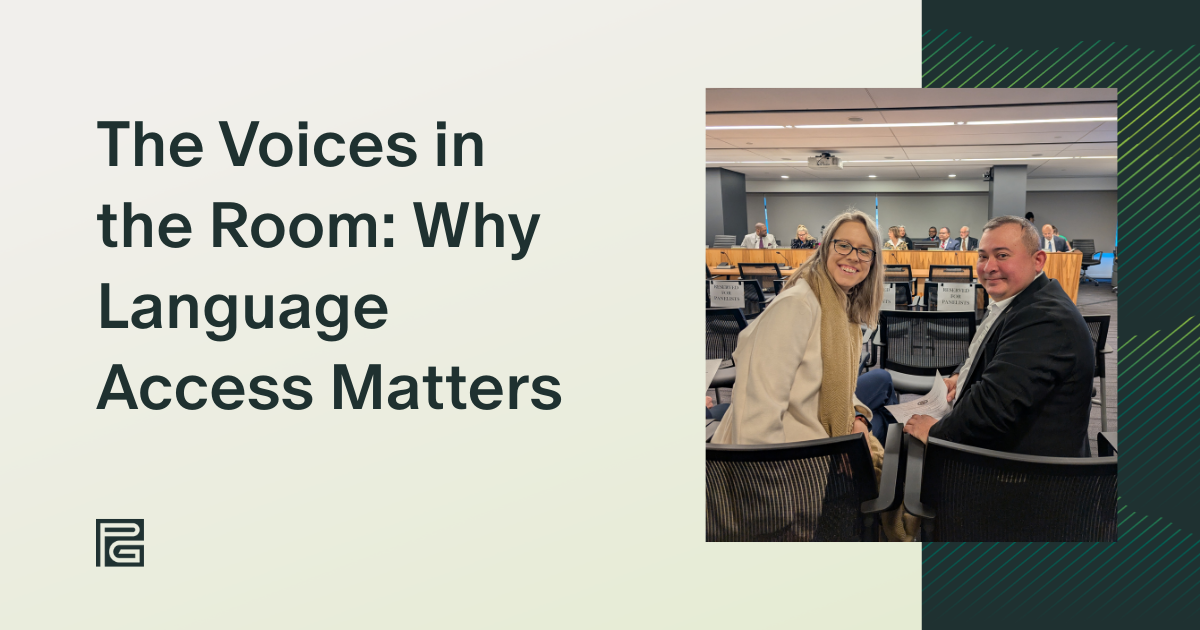
On March 25, we attended the U.S. Commission on Civil Rights (USCCR) briefing, Language Access for Individuals with Limited English Proficiency. We had read the agenda. We had seen the talking points. But nothing prepared us for the raw honesty of the testimony shared. For those who only watched the livestream, it is hard to convey how charged, human, and deeply personal the testimony felt in that room.

We didn’t testify—we were there to listen. As leaders in language operations and technology, we felt a responsibility to bear witness, reflect on what it means for our industry, and ask how we can do more.

As we sat listening, one thing was undeniably clear: Language access isn’t a nice-to-have or a bureaucratic box to check. It’s a public safety imperative. A moral obligation. And yes, a business issue.


A Personal Reflection: Clare

For me, it was deeply personal. I’m relatively new to the language access world—but I’m not new to what it feels like to be in a room where language is a barrier to belonging. As I sat, notebook in hand, memories came flooding back of the neighborhood I grew up in, where neighbors didn’t always share a language but shared everything else: meals, rides, childcare, laughter. I thought of my mom, who often stepped in to interpret for our neighbor, Aritza. She helped her navigate everything from coordinating with city maintenance workers to communicating with healthcare providers and law enforcement.

At the time, I saw it simply as neighborly support. But sitting in the hearing, I understood it differently. The burden of trying to make your world understandable without the right tools and support suddenly felt much heavier. Especially when I heard story after story of children interpreting for their parents in emergencies or translating complex forms at school. The emotional toll and the responsibility are too much for anyone, let alone a child.

As Ms. Tran reminded us during her testimony, “Interpreting is a specialized skill—one that requires training, accuracy, and cultural sensitivity. It’s not something you can ask someone to do just because they happen to speak the language.”


A Personal Reflection: Gilbert

From a basic accessibility lens, this is a failure to understand fundamental needs and requirements. If we’re not delivering the message clearly, consistently, and equitably, then we’re not solving the problem—we’re compounding it.

Poor design in communication isn’t just frustrating, it doesn’t just cost money; it’s dangerous. If you don’t build language access into civic interfaces from the start, you’re designing for failure. It’s not enough to simply translate a message. We have to deliver it in a way that is clear, unambiguous, in context, and accessible, whether that’s a posted evacuation plan, a courtroom proceeding, or a parent-teacher meeting. Language access isn’t a bolt-on feature. It has to be part of the blueprint. The consequences of mislabelling something are universally bad, and all languages and people deserve it; the collective costs are far outweighed by the modest investment in language access. It’s an investment in the community–we heard repeatedly that it’s not just about speaking their language, but in understanding their story. True access comes when communities shape the message, not just receive it.

It also struck me how often the children as interpreters came up—not just as witnesses to their parents’ struggle, but as participants, carrying burdens they should never have to bear. It’s a sign of quiet desperation when a child becomes a system’s last line of defense.


Stories of Barriers, Advocacy, and Solutions


When Translation Isn’t Enough: The Call for Meaningful Access

Mr. Lynip, a teacher and advocate in Richland School District in Columbia, South Carolina, spoke not just about tools or technology—but about the gap between communication and comprehension. And how students suffer when families are unheard.

He challenged the Commission to take seriously a term in its own mission statement: meaningful access.

“It’s not just a matter of having translated or interpreted materials. Parental voice has to be meaningful. It has to be loud enough for us to hear.”

He shared real stories of students:

  • A student delayed for over a year in receiving educational testing because the family couldn’t navigate the system.
  • A child who missed two weeks of school—not because of illness or truancy, but because her family didn’t know that having a scheduled vaccination appointment was enough to attend.
  • A young girl placed in fourth grade against her mother’s wishes—only to discover later that the child had missed the first two years of school entirely.

These weren’t translation problems. They were listening problems. Design problems. System problems.

However, Mr. Lynip also offered hope, pointing to local innovations like Healthy Learners, a program that eliminates healthcare access barriers by transporting students directly to appointments. He called for more intentional collaboration—across hospitals, schools, civic groups—to remove friction points and build systems where families are seen, heard, and served.


“She’s Only Nine Years Old”

Ms. Tran, an attorney at Community Legal Services of Philadelphia, shared her personal story and professional perspective.

As the child of Cambodian refugees, she often served as an interpreter for her parents in legal, medical, and emergency settings. One memory stood out:

“A police officer entered my family’s restaurant and asked my mother to interpret for a man outside. She explained she couldn’t leave the counter—she was the only one working. The officer pointed at me and said, ‘Well, what about her?’ My mother, in disbelief, replied, ‘No, she’s only nine years old.’”

Ms. Tran wasn’t forced to go outside that night—but she recalled many times she did interpret as a child, witnessing situations she never should have been part of.

“This experience is not atypical for children of people with limited English proficiency. It is still happening today.”

Professionally, Ms. Tran now leads language access advocacy work and represents individuals with disabilities navigating Social Security. She shared the ways in which inconsistent, unreliable interpretation services can derail an already difficult process—like the story of her client Kay, who was forced to testify in English due to audio issues with her Vietnamese interpreter. The hearing had already taken six months to schedule. Kay complied rather than risk another delay.

“The failure to provide reliable interpretation services resulted in wasted time and resources, and placed an undue burden on K—adding frustration and anxiety to an already stressful process.”

Ms. Tran’s message was clear: this is not a one-off. These are recurring systemic failures. Her recommendations emphasized the need for stronger legal protections, faster complaint resolution, and the kind of enforcement that makes civil rights real.


A Personal Mission, Made Professional

Ms. Muñoz, a compliance officer at DHR Health, didn’t just talk about policy—she talked about people. And she brought her whole self to the room.

“This is personal… My commitment to serving my community has been a lifelong hobby.”

Raised along the U.S.–Mexico border, Ms. Muñoz shared her journey—interpreting for families in her community, supporting students with disabilities, and now overseeing ADA and language access services for a healthcare system that serves nearly 2 million people.

She spoke not only about the emotional weight of language access, but about the practical infrastructure her team has put in place—bilingual staff, in-house interpreters, proficiency assessments, community education, and multi-tiered language support. Spanish-language services are built into their staffing model and budget planning.

“Language access is a fundamental part of delivering quality healthcare. Effective communication empowers patients to make informed decisions—improving both outcomes and overall well-being.”

Even in a region where Spanish is dominant, Ms. Muñoz emphasized the importance of preparing for less common languages and continually expanding access tools. Her testimony was a reminder that doing this work right takes intention, empathy, and investment. And when done right—it works.


“They Don’t Just Translate Words. They Save Lives.”

Ms. de la Iglesia, Director of Language and Accessibility Services at Mount Sinai Health System in New York City, has spent nearly two decades working at the intersection of language and care. But her testimony started with something more personal:

“As an immigrant to this country 25 years ago—without language—I experienced firsthand what it is and how it feels.”

At Mount Sinai, her team supports patients speaking over 800 languages. Her integrated, multi-modal approach includes in-person interpreters, phone and video services, embedded technology, and written translations.

“Interpreters are critical. They don’t just translate words. They save lives.”

She spoke of interpreters facilitating surgeries, transplants, and end-of-life conversations. Despite the ongoing challenges—especially for rare languages and patients with disabilities—her message was clear:

“This work speaks to our shared humanity—and our belief that every person deserves to be heard, in their own language, in their own moment.”


Designing for Dignity: Native Language Access

Ms. Allison Neswood, Senior Staff Attorney at the Native American Rights Fund and citizen of the Navajo Nation, reminded us that language access is not one-size-fits-all.
Many Native languages are unwritten, have multiple dialects, or lack direct translations for complex concepts. That demands more than forms—it demands partnership.

“When my community members need to speak about something personal or important, they shift back into Navajo.”

She urged the Commission to build systems that reflect cultural understanding, designed in collaboration with Native communities—not just for accuracy, but for dignity. Her testimony reinforced something we’ve heard across many communities:

“Language access isn’t just a service—it’s a signal of respect.”


The Business Case: Often Overlooked

Lack of language access doesn’t just harm individuals. It breaks systems. 

It increases risk. It drives up costs. It slows emergency response. It adds friction to every interaction.

At the briefing, Dr. Bill Rivers, a linguist and national leader in language access policy, laid out the real-world operational gaps that persist—especially at the local level. While legal protections are in place, implementation is inconsistent. Schools, healthcare systems, and municipal agencies are often overwhelmed, under-resourced, and facing a patchwork of languages spoken by small populations. 

“This isn’t just about refraining from discrimination—Language access is much more like provision of access under the Americans with Disabilities Act. It requires proactive action. We have to do something. That means extending resources, investing in infrastructure, and doing the hard work of designing for access.”

That “something” means building access into the design of our systems—not bolting it on as an afterthought. It means recognizing that miscommunication isn’t just inefficient—it can create risk, delays, and breakdowns in service delivery.

The industry has the capacity to meet the need—350+ languages, 24/7, often in under two minutes. But systems must be in place to take advantage of it. Without that infrastructure, even the best language providers can’t close the gap.

The reality is that when language isn’t a given, communication must be intentional.

That’s the work we do every day—creating access on purpose. And in a moment like this, when responsibility for language access is increasingly shifting to state and local levels, our role becomes even more vital.

We’re not just enabling compliance. We’re helping systems work—efficiently, equitably, and safely.


The Call Forward

We didn’t just walk away with notes. We brought the stories back to our teams, to our clients, and to our company roadmap.

We’re working with school districts, hospitals, and public agencies to build solutions that don’t just comply—they connect.

We’re building systems that reduce risk, improve trust, and reach people in the language they understand.

We’re not waiting on a perfect policy. We’re moving with clarity and urgency.

Because this work doesn’t belong to one party, one agency, or one industry. It belongs to all of us.

We’ll be listening. And we’ll keep building what’s next.

The U.S. Commission on Civil Rights briefing highlighted the real-world impact of language barriers across education, healthcare, and public services. For educators, these challenges are especially pressing. If you’re an educator located in the DMV area, join us at our second annual Language Access Symposium to explore solutions, share experiences, and collaborate on building more inclusive schools where every student and family is heard. Among others, you’ll hear from Mark Byrne, Jason Velasco, and Bill Rivers on the future of language access in K-12 education.

Why Organizations Value Asian Translation Services from a Native Speaker

The globalization of commerce has seen countries like China rise in recent years to become some of the most powerful economies in the world. Manufacturing, for example, has shifted East in a big way.

The rise of the middle class in these countries has created new markets for Western businesses and seized opportunities for organizations to enter joint ventures and other collaborative relationships with Asian companies.

The following examines the value of Asian language translation services and the importance of working with native speakers.


The Benefits of Asian Language Translation Services

There are several reasons why organizations value translation services. We’ve listed a few of the most important benefits below:


Over 200 Languages

Some companies choose to work with an individual freelancer who is a native speaker of the language they need. However, this can be risky because you’re putting all your eggs in one basket.

It is unlikely that a single person will be a native speaker of all the languages you might need. This is where working with a company that specializes in Asian language translation can be beneficial.

At Piedmont Global, we have a team of native speaker experts and can offer over 200 languages. We can help you source materials in Taiwan while helping you navigate the complexities of doing business in Japan.


Reliability

The first and most apparent benefit is reliability. When working with translations, it’s crucial to trust the person or organization you’re working with.

There are many moving parts in any translation project. Things can easily go up in smoke if the people you’re working with don’t have a strong understanding of the source language. Likewise, if the translator you’re working with doesn’t have a strong understanding of the target audience, they might not be able to properly convey the message you’re trying to communicate.


Increased Accuracy in Translations

Native speakers have a better understanding of the subtleties and nuances of their home languages. This increased understanding leads to improved accuracy in translations.

This is important because the meaning of sentences or paragraphs can easily get lost in translation. When you’re dealing with something as crucial as business communications, you can’t afford to have any inaccuracies in your translations.

As a bonus, increased accuracy can also lead to stronger relationships with your Asian business partners.


Localization

A better understanding of regional dialects is another benefit of working with a native speaker. In many countries, there can be a significant difference in the way people speak in different regions. Linguistically, some countries are considered to have many languages with a common writing system.

In the same vein, you want to respect the different cultures you’re working with and use the appropriate language when addressing them. For example, extended eye contact in the west might be seen as a sign of respect, but in some cultures in Asia, it might be interpreted as disrespectful.


Industries That Rely on Asian Translation Services

Many industries rely on Asian language translation services. Working with Piedmont Global offers numerous benefits to many different industries including education, healthcare, legal services, and more.


Manufacturing

The globalization of the manufacturing industry has led to an increased need for accurate and timely translations of technical documents. Manufacturers frequently generate complex technical documents that include manufacturing terminology, scientific information, and technical descriptions. Additionally, translations of such technical documents generate text that exceeds specified character limits. At Piedmont Global, we have a team of experienced translators familiar with the specific jargon and terminology used in the manufacturing industry. We can accommodate your specifications without compromising quality.

From MSDS/SDSs to marketing materials, our team understands the importance of accuracy in tone, meaning, and technical details. You can be confident that the translated text will convey your message effectively.  Learn more about our translation services for manufacturing.


Education

One industry that relies heavily on translation and interpretation services is education. Communication is part of daily life for students, parents, educators, and school staff. When language is a barrier, schools are unable to reach their primary goal of helping students succeed. Learn more about language access in schools.

Additionally, there has been an increase in the number of US, Canadian and European teachers moving abroad to teach English in Asia. However, these teachers often don’t have any training in the local language, which can make it difficult to communicate with their students properly. Here’s where language services come in.

We can help these teachers by providing them with translations of the key phrases and concepts they need to teach their classes. We can also help them to better understand their students by translating student work and essays. Learn more about our language services for education.


Healthcare

Another area that has come to rely heavily on translation services is the healthcare industry. There are valid reasons for this. First, there has been an increase in medical tourists going to Asia for treatment. These medical tourists often don’t speak the local language. Hospitals and clinics need to be able to communicate with them in their native language.

Another reason why the healthcare industry has come to rely on translation services is the rise of telemedicine. With telemedicine, doctors and patients can consult from different parts of the world. However, this consultation can only be effective if there is a good understanding between the doctor and the patient. Learn more about our medical and healthcare language services.


Legal

The legal industry is another field that has come to rely on Asian language translation services. That’s because there is a growing need for legal documents to be translated into Asian languages, from business contracts to artistic licenses. Immigrants who have been charged with a crime also need to understand the legal documents they are being asked to sign.


Other Industries

These are just a few industries that now rely on Asian language translation services. As you can see, there is a growing need for these services in many different fields. Governmentmedia, and the nonprofit sector are also among the many industries that have come to need these services.

We’ve also seen a growing demand for these services in the financial sector. In recent years, there has been an increase in fintech startups in Asia. These startups often need help translating their products and services into the local language.


Getting Started with Piedmont Global’s Asian Language Translation Services

Now that you know more about the benefits of working with a native speaker, you may be wondering how to get started.

If you’re looking for a reliable and experienced company to provide you with these services, we can help. From translation to interpreting and language training training, we’re here to support all of your language needs.

The first step is to request a quote and let us know what languages you need. We will then match you with one of our expert translators. Contact us today to get started.

On-Site Healthcare Interpretation During and After COVID

COVID-19 impacted every industry in some way, but the healthcare industry was forced to reshape. Interpreters in medical facilities were particularly impacted by the COVID-19 pandemic.

Traditionally, healthcare interpreters have provided on-site services to facilitate communication between patients and their families, as well as between healthcare professionals of different languages. However, COVID-19 made in-person communication unsafe.

Today, we look at the effects of COVID-19 on healthcare interpretation and how this may continue to change the landscape in the future.


Interpretation in Healthcare

First, let’s briefly review how interpretation is provided and accessed in healthcare.

In general, interpretation can be defined as converting spoken statements from one language to another. In healthcare, interpretation occurs between a patient or their family and different members of the healthcare team.

Patients who are deaf, hard of hearing, or have a limited grasp of English may require the use of an interpreter in order to communicate effectively with their healthcare team. If the patient doesn’t understand what the doctor is saying, they may be unable to make informed decisions about their care.

This miscommunication can lead to poorer health outcomes and a greater risk of complications. Likewise, if the doctor is having trouble understanding the patient’s symptoms or concerns, it can lead to misdiagnosis or delayed treatment.

Virtual Meetings and Events

Interpretation plays a vital role in virtual meetings and events, including functions such as training sessions, webinars, or conferences. While COVID-19 continues to cause cancellations of countless face-to-face meetings and events, virtual gatherings have become part of the “new normal”.


How Has COVID-19 Impacted Interpretation?

As mentioned earlier, one of the most significant changes we faced during COVID-19 was the challenge of on-site interpretation due to the need for social distancing and enhanced safety protocol at hospitals and other medical facilities.

This had a significant impact on patients’ quality of care; studies have shown that patients with access to interpretation services have better health outcomes. As the pandemic progressed and cases continued to rise, it became clear that interpretation services were still needed and that on-site interpretation was problematic. The predicament led to a shift towards virtual interpretation, which can be accomplished in three ways:


1. Over-the-Phone Interpretation (OPI)

Over-the-phone interpretation (OPI) is a common and convenient way to access interpretation services. It can be used for both scheduled and on-demand interpretation needs. With OPI, the interpreter is connected to the call via a three-way call, and they interpret what is being said between the parties on the call.

While OPI is an excellent option for many situations, it does have its limitations. For example, it may not be ideal for longer conversations or more complex topics because it can be challenging to keep track of who is saying what. Other tricky situations in which OPI may not be ideal include when one person cannot access working phones, or when a patient is hard of hearing.


2. Video Remote Interpretation (VRI)

The most popular type of virtual/remote interpretation is video remote interpretation (VRI). VRI uses video conferencing technology to connect the interpreter with the parties on the call. It allows for more natural interaction, as everyone can see each other and use body language and other nonverbal cues.

VRI is a good option for most situations, but legislation sometimes gets in the way. For example, patient-doctor confidentiality might be violated if the interpretation occurs on an unencrypted platform video conferencing platform — though some platforms like Zoom are taking the initiative to implement HIPAA modules for improved safety. It’s important to work with an interpretation provider who understands the regulations surrounding confidentiality when interpreting within healthcare.


3. Remote Simultaneous Interpretation (RSI)

Remote simultaneous interpretation (RSI) is the most advanced form of virtual interpretation. It uses specialized equipment and software to allow the interpreter to interpret in real-time without delay.

This is the closest you can get to having an on-site interpreter without actually being in the same room. RSI is ideal for events like conferences or webinars, where there are multiple speakers and a large audience.

It works by streaming the event’s audio to the interpreter, who then interprets it and streams their interpretation back to the audience.


What Are the Long-Term Outcomes of On-Site to Virtual Interpretation in Healthcare?

The answer to that question lies on a spectrum of pros and cons. On the one hand, the pandemic has forced the healthcare industry to explore new technologies and ways of working that could have lasting positive impacts. The challenges posed by COVID-19 have highlighted pre-existing problems that need to be addressed, including the use of family members as ad hoc interpreters, and even the use of minors under 18 years old as interpreters, which is illegal.

On the other hand, the pandemic has also created new challenges and put additional strain on an already overburdened healthcare system. There are pros and cons to both on-site and virtual interpretation in healthcare. Let’s take a look at some of the key points to understand the debate a little better.


What Advantages Does Virtual Remote Interpretation (VRI) Have?

While on-site interpretation is preferred in some cases, VRI has many advantages.


Accessibility

With VRI, you get extra value for the service thanks to the on-demand availability of interpreters. Unlike on-site interpretation, VRI allows people of all linguistic backgrounds to access interpreters who speak the languages they need. Even if that interpreter is across the globe, VRI makes it possible to ensure patients in need always have interpretive services available.


Cost

One advantage of VRI is that it is more cost-effective than on-site services. You don’t have to pay for the interpreter’s travel expenses, and they can often work from home. This can be a considerable saving for healthcare businesses, especially if you need to use interpretation services regularly.


Flexibility

Another advantage of VRI is that it is more flexible. It is easier to quickly find an interpreter who speaks your language when you are not restricted to those who live near you. That’s a big advantage for less common languages or businesses that need to use interpretation services on an ad-hoc basis. In areas where there is a shortage of interpreters, VRI can be a lifesaver. It can also provide interpretation services outside of regular office hours.


COVID-19 Safety

Patients with weakened immune systems are at a higher risk for contracting COVID-19—cancer patients, those receiving dialysis, and organ transplant recipients. For these patients, even a short hospital stay can be dangerous.

Many have elected to receive treatment at home instead, where they can minimize their exposure to the virus. This exodus has heightened the need for VRI in the healthcare industry, as it makes providing interpretation services while maintaining social distancing all the more possible.


Shorter Wait Times

The staff shortage plaguing the healthcare industry is another factor that has led to an increase in the use of VRI. With fewer staff members on hand, patients are often left waiting for long periods of time.

This can be frustrating and even dangerous for those who need urgent care. For example, if you only have one Spanish interpreter on-site in the hospital and several Spanish-speaking patients need interpretation services, the wait time for each patient will be significantly increased.

VRI can help to alleviate this problem by providing remote professionals, according to demand.


When is On-site Interpretation Preferred?

There are a few cases in which on-site interpretation is still the best option. These situations usually arise when the topic of discussion is very sensitive; for example, when a patient is receiving a terminal diagnosis and precise interpretation is needed. In these cases, on-site interpretation helps the interpreter maintain the patient’s attention and provide an accurate interpretation.

There are also cases where the use of video conferencing technology is not possible or practical. For example, if a patient is in a rural area with poor internet connectivity, VRI might not be possible.


How To Choose the Right Interpreter

If you’re in need of interpretation services in healthcare, choosing the right interpreter is essential. Here are a few tips:


Seek Accreditation

First, make sure that the interpreter is qualified and experienced. They should be familiar with medical terminology and the specific needs of healthcare interpretation. Medical jargon can be difficult to understand, even for experienced interpreters. So, it’s important to choose a trained and competent interpreter and, ideally, one who has a medical interpretation certification.


Look at the Virtual Setup

If you go the digital route, take a look at the virtual setup. Is the interpreter using high-quality equipment? Do they have a good internet connection? These factors can impact the quality of the interpretation. Make sure that the interpreter is comfortable with technology, and that the technology is easy for the healthcare staff and/or patients to use too.


Consider Your Needs

Finally, think about your specific needs. Maybe you’re short a few interpreters in specific languages, or perhaps you’re looking for interpreters who can work odd hours. Alternatively, you may want to back up your existing services.

For example, if you need interpretation for a Deaf patient, you’ll want to make sure that the interpreter is competent in sign language. Likewise, if you’re using VRI in a mental health setting, you’ll want to choose an interpreter who is experienced in discussing sensitive topics and handling crisis situations virtually.


The Future of Healthcare Interpretation

As the healthcare industry continues to grapple with the challenges posed by COVID-19, Virtual Remote Interpretation will help bridge the communication gap to improve the quality of care for patients all over the world.

While many healthcare providers were already providing a hybrid approach combining both on-site and VRI, we are likely to see an even greater uptick in on-site and VRI being used side-by-side to provide the best possible interpretation services. Quick and easy appointments with a remote interpreter could be used to supplement the more serious on-site appointments that are currently being used.


Piedmont Global: Healthcare Interpreters That Truly Understand Your Needs

Piedmont Global provides high-quality on-site or VRI services. We have a team of experienced and qualified interpreters who are trained to meet the specific needs of healthcare interpretation.

Additionally, we offer translation services for medical documents. This can come in handy when you need to translate a patient’s medical history, insurance information, patient portal, or patient app. We bring to the table:

  • Over 200 languages
  • A large team of interpreters
  • Prestigious awards and recognition
  • Interpretation services
  • Translation services
  • Language training

COVID-19 has had a significant impact on the interpretation industry. On-site interpretation was no longer safe during the first waves, and virtual arrangements became the new norm. The shift to virtual interpretation has led to some challenges, but it has also opened up new opportunities. With Piedmont Global, you can capitalize on those opportunities. Get in touch with our team to learn more.

Pharmaceutical Translation: Everything You Need to Know


Medications and pharmaceuticals are something we all need and make the most of. However, how are pharmaceutical translations handled? When documentation this important can have a direct impact on someone’s life, it is vital that pharmaceutical translations are handled the right way.


Choosing the right team for your pharmaceutical translations

When you’re dealing with medical translations and pharmaceutical translations, you have to make sure you work with experts in the medical industry. Translators need to have a mix of linguistic and pharmaceutical expertise so that they know how to deal with the technical terminology and industry regulations.


Regulations

When pharmaceutical companies look to expand the reach of their products, there are a number of different rules and regulations with which they have to comply. In other words, medications are required to go through an exhaustive approval process and multilingual documentation plays a vital role in that process. When you’re dealing with these regulations and regulatory agencies, you have to make sure that you meet the requirements of:

  • The Food And Drug Administration
  • The European Medicines Agency
  • Ethics Committees
  • Review Boards


Types of Pharmaceutical Translations

There are a number of different types of pharmaceutical translations that all need to be handled with the utmost attention to detail and subject matter expertise. The following services are some of the types of translations you might find yourself handling if you’re from a pharmaceutical company:

  • Glossary development
  • Document translations, including making sure they meet regulations
  • Clinical trial documentation
  • Medications
  • Medical devices
  • Source text editing
  • In-country validation
  • Back translation
  • Readability testing for patient information leaflets


Partner with Piedmont Global

As you can see, dealing with pharmaceutical translation services isn’t something that should be taken lightly. You need expertise and industry knowledge, which you can only get from a professional partner.

Piedmont Global is here to help with all of your pharmaceutical translation needs in all major world languages. We’re also here to help and advise you in which route to take to get your pharmaceuticals registered and approved abroad. Get in touch to get started.