Piedmont Global Launches New Brand Identity as the World’s Leading Strategic Globalization Organization

Rebrand reflects expanded capabilities, vertical integration, and a renewed commitment to making cross-cultural operations easier, smarter, and more human.

Arlington, Virginia — Formerly known as PGLS, Piedmont Global today announced a new brand identity and positioning as the world’s first Strategic Globalization Organization (SGO), marking its evolution from a leading language solutions provider into an embedded partner that integrates strategy, culture, and technology across the enterprise.

Inspired by its namesake — “Piedmont,” the foothill that signals the climb — the new identity reflects the company’s role in preparing organizations for pivotal moments and helping leaders scale with confidence. The rebrand also honors the language industry’s enduring relevance in a rapidly changing world, while extending its impact into broader global operations..

Piedmont Global’s SGO model combines cultural fluency, strategic insight, custom solutions, and embedded partnership to help clients seamlessly navigate cross-cultural operations across populations, systems, and markets. Whether expanding globally or serving diverse communities at home, the approach equips leaders to operate with clarity, agility, and confidence.

This is more than a new logo or look. It’s a new model for operating across borders and communities,” said Mohamed Hussein, Founder and CEO of Piedmont Global. “For too long, our industry has been seen as the last mile. Piedmont Global flips that script. We embed earlier in the value chain, aligning the people, capabilities, and strategies to unlock growth and impact. This isn’t about words or workflows anymore; it’s about transforming how organizations connect, decide, and deliver in a complex world.

With vertically integrated solutions that span advisory services, federal alignment, workforce and learning solutions, tech-enabled platforms, and market intelligence, alongside its long-standing leadership in language and cultural expertise, Piedmont Global provides end-to-end solutions that reduce risk, accelerate readiness, and strengthen connections across cultures and systems.

These capabilities represent a natural evolution of the work the company has delivered for years; the rebrand makes that expanded role official, giving enterprise and public sector organizations a trusted partner across the full spectrum of Strategic Globalization.   

Key elements of the rebrand include:

  • Transition from PGLS to Piedmont Global, reflecting expanded scope and capabilities.
  • A new visual identity expressing growth, connectivity, and limitless opportunity.
  • Service pillars uniting strategy, culture, and technology for integrated solutions.
  • Refined messaging anchored in the company’s core purpose: to make cross-cultural operations easier, smarter, and more human.
  • An updated website featuring new solutions, client success, and thought leadership on Strategic Globalization.

The new brand launches today with a phased rollout to clients and partners in the coming weeks.


About Piedmont Global

Piedmont Global is a Strategic Globalization partner for enterprises and public sector organizations, dedicated to making cross-cultural operations easier, smarter, and more human. The company offers advisory services, language and cultural expertise, workforce and learning solutions, and tech-enabled platforms—delivered as custom solutions—to help clients reduce risk, accelerate readiness, and expand their reach with confidence.

Learn more at piedmontglobal.com.


Media Contact:
Clare Schmitt

VP of Marketing and Communications  

Piedmont Global
cschmitt@piedmontglobal.com
 

Piedmont Global Launches Sept 30

The Countdown Is On.

For years, we’ve helped organizations connect more effectively, operate more efficiently, and grow more confidently.

Now, we’re stepping into what’s next.

On September 30, PGLS becomes Piedmont Global — your partner in Strategic Globalization.

This isn’t just a name change. It’s a bold shift that reflects who we’ve become, how we work, and what our partners need in a more complex, globalized world.


Why We’re Changing from PGLS to Piedmont Global

Let’s face it: today’s growth challenges don’t stop at language. And neither do we.

Your teams are navigating shifting regulations, scaling to new regions, managing multicultural workforces, and launching services across populations and systems.

Translation alone isn’t enough.

That’s why we’ve evolved into something bigger—and more aligned to what the future demands.

Piedmont Global exists to help mission-driven organizations:

  • Navigate complexity with cultural fluency
  • Scale intelligently with integrated strategy
  • Grow sustainably with custom technology and human expertise


What You Can Expect

Our work has always been grounded in purpose:

To make cross-cultural operations easier, smarter, and more human.

That won’t change.

But as Piedmont Global, we’ll be showing up in a more powerful, more intentional way—with expanded capabilities, an evolved identity, and a clearer promise:

We help you lead—globally, fluently, and confidently.

We’ll still be the partner you trust. But now, we’ll help you go further — with deeper insight, broader capabilities, and a stronger path to global success.

What’s Coming September 30

On launch day, you’ll see:

  • A new visual identity: Bold, modern, and built to reflect our global mindset
  • A fully reimagined website experience: Streamlined, strategic, and easier to navigate
  • A new way of framing our work: Clearer outcomes, smarter services, and a category-defining model for Strategic Globalization

You’ll also gain access to:

  • Our comprehensive Strategic Globalization Model
  • Resources, guides, and frameworks to operationalize growth across cultures
  • Thought leadership to help your teams build capability—not just check boxes

And more to come.

Let’s Go Further, Together

This rebrand is an evolution—one that unlocks more impact, more insight, and more possibility for the people and organizations we serve.

So stay tuned.

The future is global.

And we’re just getting started.

📅 Launch Date: September 30, 2025

🧭 Follow along for what’s next.

How to Prepare for CMS Test Calls: Boost Language Access & Star Ratings

Are your customer service representatives ready to assist limited English proficient (LEP) callers properly? Each year, the Centers for Medicare & Medicaid Services (CMS) conducts test calls that directly influence your Star Rating and your bottom line. Preparation isn’t optional. It’s essential to maintain compliance, build member trust, and maximize incentive payments and your CMS Star Rating.


What Is CMS and Why Does It Matter

The Centers for Medicare & Medicaid Services (CMS) oversees Medicare and works with states to manage Medicaid, the Children’s Health Insurance Program (CHIP), and health insurance portability standards. For health plans, CMS is both a regulator and a gatekeeper, shaping how benefits are delivered and evaluated.


Understanding CMS Star Ratings

CMS rates Medicare plans on a 1–5 star scale to assess quality and help beneficiaries make informed choices. This star rating system was established by CMS to evaluate the quality of the plans and help seniors select the most suitable option. Even so, ratings influence more than reputation. They also play a crucial role in CMS’s decisions on whether plans can continue to bill Medicare for their services. In addition:

  • Plans with 4+ stars receive a 5% quality bonus from CMS.
  • In 2023, these bonuses totaled $12.8 billion for Medicare Advantage plans.
  • Yet, average ratings have declined in recent years, reflecting the lingering effects of COVID-19 and a new methodology for calculating ratings..

A higher rating means stronger member acquisition, retention, and financial performance.


How the CMS Accuracy and Accessibility Study Impacts You

Every fall, the CMS publishes its annual Accuracy and Accessibility Study, which measures performance in assisting limited English proficient (LEP) callers. The result of this annual study plays a big role in determining the star rating a plan receives. If your team struggles to connect callers with interpreters quickly or provides inaccurate information, then the consequences are immediate: lower ratings, reduced bonuses, and potential reputational risk. This is why it is crucial to partner with a Strategic Globalization Organization like Piedmont Global. We ensure your customer service representatives are equipped with the resources they need to assist your LEP patient population.


What Happens During a CMS Test Call

CMS measures performance by conducting test calls. Test calls are made by “secret shoppers” who are limited English proficient (LEP) individuals posing as patients or family members of patients seeking information about their insurance plan benefits and coverage. A typical test call follows strict benchmarks:

  • Step 1: The caller must reach a live representative within 10 minutes (including hold time).
  • Step 2: Once connected with an interpreter, the first of three survey questions must begin within 8 minutes.
  • Step 3: Each survey question must be answered within 7 minutes, using information pulled from CMS publications (like Medicare & You 2024) and plan-specific details.

These calls are conducted annually, from February through June. During the testing period (conducted annually from February through June), any inbound call could be a test call. As an insurance provider, it is crucial to prepare your customer service team for these calls and to make sure they have quick and easy access to the appropriate resources.


CMS Test Call Assessment Criteria

The test calls conducted by CMS evaluate a number of criteria, including: 

  • Ease of navigating automated phone systems
  • Speed of reaching a live representative
  • Accuracy and completeness of answers provided
  • Availability and accuracy of interpreters in key languages: Spanish, Mandarin, Cantonese, French, Vietnamese, and Tagalog

For LEP callers, interpreter connection and communication quality are often the deciding factors.


Preparing Your Customer Service Team

Your customer service team needs to be prepared when the next test call season comes around. They need to know what metrics CMS evaluates, and more importantly, they need to know how to quickly access the appropriate resources to support LEP members effectively. Key steps include:

  • Staff Awareness: Ensure representatives are aware of the CMS test call season to plan and staff accordingly.
  • Assessment Familiarity: Educate your team on the CMS assessment criteria and the weight they carry in Star Ratings.
  • Interpreter Access: Train representatives on how to quickly connect with professional phone or video interpreters.
  • Simulation Practice: Run mock test calls so your team can practice how to interact with a professional interpreter under realistic conditions and conduct test calls of your own.

With preparation, your staff won’t just pass CMS evaluations; they’ll provide a consistently higher level of service for every member, year-round.


Final Thought: Preparation Shapes Performance

CMS test calls are not simply a compliance hurdle; they are a reflection of how well you serve your diverse member population. Plans that prioritize language access earn stronger ratings, higher incentive payments, and greater member satisfaction.

Why Technology Alone Won’t Solve Global Communication

For decades, organizations have leaned into automation, translation engines, and plug-and-play platforms to manage the complexity of global operations.

And while technology has made leaps—especially with the rise of generative AI—it’s not a silver bullet.

The truth? Without strategy, human intelligence, and cultural context, technology alone can fall short.

At Piedmont Global, we believe in something different. We believe in integrated intelligence, where humans and technology work together to enable seamless, strategic communication across borders and systems.

Here’s why that matters now more than ever.


The Problem: Technology Without Strategy Creates Global Communication Gaps

In global communication, speed without context can be dangerous.

  • A machine-translated safety manual might be “accurate” linguistically, but miss culturally appropriate terminology that resonates with workers.
  • An AI-powered chatbot might respond instantly, but lacks the nuance needed to de-escalate a sensitive customer issue in another language.
  • A global training module might work technically, but fail to connect due to localized learning styles or regional compliance frameworks.


In each case, the issue isn’t the tech itself—it’s the lack of strategic, cultural, and operational fluency around it.


The Solution: Strategic Integration of Tech + Human Expertise

The future isn’t humans vs. AI. It’s humans with AI, working in sync, by design. At Piedmont Global, we use a three-part model to ensure your solutions don’t just work—they work everywhere:

1. Custom Technology Stacks

We help you build tailored systems that integrate translation memory, AI-powered chat, eLearning localization, and multilingual CMS platforms—but only where they fit your infrastructure and workflow.

2. Cultural and Operational Intelligence

Our specialists infuse cultural context and business logic into your tech, so your communications reflect both your brand and your audiences’ expectations.

3. Embedded Human Oversight

From linguists to localization engineers to program managers, our human experts fine-tune, guide, and adapt your content at every stage—so it lands clearly, confidently, and compliantly.


What “Human + Tech” Looks Like in Practice

Let’s say a healthcare organization wants to translate appointment reminders into 12 languages.

A tech-only solution could auto-translate SMS messages—but that doesn’t account for tone, cultural preferences (e.g. formal vs. informal greetings), or message length limits in different alphabets.

We help the organization:

  • Choose the right combination of machine translation and human review
  • Create culturally appropriate templates
  • Ensure accessibility for Deaf and Hard-of-Hearing populations
  • Monitor engagement metrics and iterate for impact


The result? Scalable, human-centric communication that builds trust and improves outcomes.


Tech is a Tool. Strategy is the Differentiator.

Investing in technology is smart—but only when it’s grounded in the right systems, people, and purpose.

If you want to scale intelligently and lead confidently, you need more than automation. You need the expertise and insight to turn that automation into alignment.

That’s where Piedmont Global comes in.


Strategic Globalization Starts with the Right Stack

We don’t just help you deploy tools. We help you build capabilities—combining smart tech, cultural fluency, and embedded partnership.

Because real transformation doesn’t happen at the surface level. It happens when everything works together—intelligently, humanely, and globally.

Let’s build it.

Cultural Fluency Is A Business Advantage. Here’s How to Build It.

In a world where goods move fast, people move faster, and expectations move fastest, cultural fluency is no longer a “nice to have.” It’s a competitive edge.Regardless of whether you’re working with diverse populations locally or expanding globally, your capacity to work with cultural fluency has a direct influence on business results. It influences how your enterprise is viewed, how your message is understood, and how successfully your mission is executed.So, what exactly is cultural fluency? And how do you acquire it?
Let’s break it down.

What is Cultural Fluency?

Cultural fluency is being able to comprehend, communicate, and function effectively across cultures.

That includes:

  • Language skills, verbal and written
  • Cultural context, values, norms, and sensitivities
  • Systemic awareness, such as legal systems, organizational policies, and community standards

At Piedmont Global, we see cultural fluency as something more than just communication. It’s alignment. Intention. It’s shaping your systems and strategies with cultural insight baked in, so nothing is lost in translation and every interaction earns trust.

Why Cultural Fluency Drives Business Results

Here’s the truth: the more global and diverse your audiences are, the less one-size-fits-all solutions will suffice. Organizations that value cultural fluency acquire three significant benefits:

      1. Fewer Mistakes
        Culturally literate teams anticipate risks before they arise. They avoid messaging that is off-putting. They prevent compliance gaps that happen when context is ignored. Whether in a product launch or government service rollout, cultural insight minimizes friction and misalignment.
      2. Quicker Market Entry
        When you’re familiar with a market’s language, systems, and expectations, you can act more confidently—and faster. Cultural fluency speeds up localization, content adaptation, team onboarding, and public engagement.
      3. Deeper Trust
        Whether you’re a doctor communicating with a patient or a manufacturer collaborating with global suppliers, cultural fluency builds trust. It shows that you care about getting it right, and that you care about making people feel heard, seen, and understood.

How to Build Cultural Fluency: Three Necessary Lever

At Piedmont Global, we help organizations in developing cultural fluency through three intertwined components:

      1. Expert People
        Linguists. Strategists. Analysts. All collaborating with in-depth knowledge of local subtlety, policy ramifications, and real-world dynamics. Cultural fluency isn’t “speaking the language”—it’s knowing what’s most important in a particular context, and why.
      2. Smart Systems
        Bespoke technology stacks get cultural intelligence where you need it most—across platforms, workflows, and communications. Whether that’s an AI-powered training module or multilingual customer service flows, we enable you to scale understanding, not just services.
      3. Strategic Insight
        Market studies, compliance audits, audience analysis—we turn sophisticated data into strategic guidance so your operations aren’t just informed by culture, they’re built for it.

What Cultural Fluency Looks Like in Practice

Here’s a picture of what this looks like in the real world:

      • A health system introduces multilingual appointment reminders that are tailored to the cultural norms of patients, reducing no-shows and rescheduled appointments.
      • A federal agency reshapes its online content to mirror the life experiences and [translate:vernaculars of its Spanish-speaking members], establishing trust and boosting engagement.
      • A multinational manufacturer translates safety training videos into local languages, avoiding misunderstandings that previously led to expensive delays and hazards on the production floor.

In every instance, cultural fluency not only prevented an issue—it turned the situation into a source of performance, clarity, and growth.

Ready to Lead with Cultural Fluency?

Cultural fluency is a capability–and like any capability, it must grow with your business. The more embedded it is across your people, platforms, and processes, the more powerful and successful you become in a world that’s increasingly complex.

When you pair cultural fluency with strategic insight and custom tech, you unlock something even more powerful: Strategic Globalization. And that’s where we come in.

At Piedmont Global, we help businesses make a shift from translation to transformation by developing globalization strategies rooted in cultural intelligence.

Whether you are expanding into new markets or reimagining the way you appear in your existing ones, let us develop the systems and intelligence that enable you to lead—globally, fluently, and confidently.

Piedmont Global Achieves ISO 27001:2022 Certification

Reinforcing Globalization Strategy and Security-First Culture 

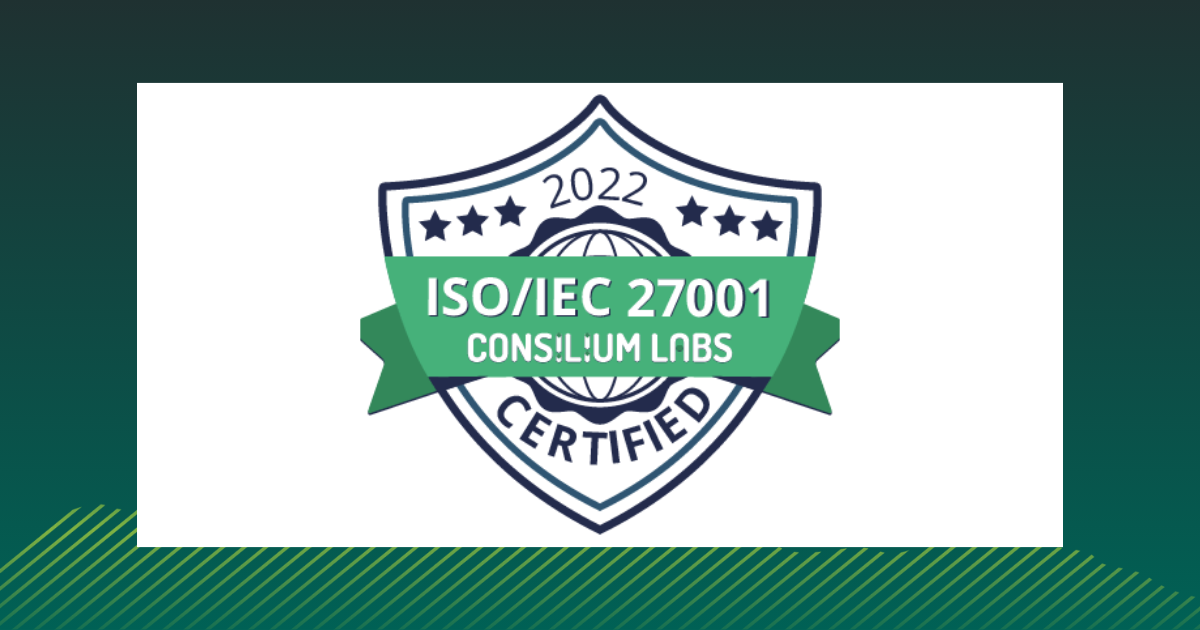
Arlington, VA — September 10th, 2025 — Piedmont Global (PGLS), a leader in Strategic Globalization services, announced it has achieved ISO 27001:2022 certification, the internationally recognized standard for Information Security Management Systems (ISMS). 

The certification covers all operations of Piedmont Global Language Solutions and its entities, and covers interpreting, translation and localization, intelligence analysis, and language training services, along with the supporting cloud-based technology infrastructure. This enterprise-wide scope ensures that every process, system, and dataset within the organization is safeguarded by a unified ISMS framework. 

Certification was granted following an independent, accredited audit verifying that Piedmont Global meets the rigorous requirements of ISO 27001:2022. The achievement reflects the company’s security-first culture and its commitment to delivering lasting value to clients through operational excellence, risk reduction, and uncompromising protection of sensitive information. 

 “Our clients operate in complex, fast-moving environments where trust and security are non-negotiable,” said Catherine Early, Director of Technology and Infrastructure at Piedmont Global. “Achieving ISO 27001:2022 certification across all operations demonstrates our organizational mindset that embeds security into everything we do. This mindset is foundational to how we deliver value that supports our clients’ success on a global scale.”

Mohamed Hussein, Founder & CEO, added: “This is a milestone in a much larger security journey. Our clients span sectors from government to healthcare to enterprise, each with unique missions and high-stakes requirements where even a single lapse can have dire consequences. A sound, globally recognized security framework ensures that we both meet client-specific needs and uphold a trusted standard that transcends industries. This achievement demonstrates that security is not just a standard to check; it is a discipline we live by. And it’s only the beginning. With additional certifications already in motion, we are continually raising the bar to ensure our clients and partners can rely on Piedmont Global as the most trusted, security-first partner in Strategic Globalization.”


What it means for Clients and Partners

 For enterprises, government agencies, and global partners, ISO 27001:2022 certification provides independent assurance that Piedmont Global (PGLS) operates under a robust and globally recognized security framework. This means: 

  • Lower risk exposure through proactive protection of sensitive data. 
  • Streamlined compliance support, helping clients meet their own regulatory requirements more efficiently. 
  • Enterprise-wide consistency, with security embedded across all processes and services. 
  • Confidence in scalability, ensuring that as client needs grow, protections remain strong and aligned with global best practices.

Ongoing Commitment 

ISO 27001:2022 certification is not a destination but a commitment to continuous improvement. Piedmont Global will continue to assess risks, strengthen security controls, and advance employee training across all regions, ensuring resilience and adaptability as the global threat landscape evolves.  

With security, innovation, and client success at the core of its globalization strategy, Piedmont Global will continue to enable organizations worldwide to communicate, operate, and grow with confidence.


About Piedmont Global

Piedmont Global is a Strategic Globalization Organization (SGO) dedicated to making cross-cultural operations easier, smarter, and more human. We help enterprises and government organizations unlock new opportunities by integrating cultural fluency, strategic insight, custom technology, and embedded partnership. From language and communication solutions to market intelligence, staff augmentation, and growth advisory, Piedmont Global equips organizations to lead — globally, fluently, and confidently. 


Media Contact

 Clare Schmitt (cschmitt@pgls.com)

VP of Marketing and Communications, Piedmont Global

The Invisible Work Behind Visible Impact: Why Outcomes Start Before the Moment They’re Measured

Success rarely happens at the moment you see it.

It happens in everything that came before.

The decision gets made in the room, but was shaped by the quality of context leading up to it. The patient recovers in the hospital, but healing begins with the feeling of being understood. The emergency is resolved, but the real work was in the systems, trust, and training that made the proper response possible.

That’s the kind of work I’ve always been drawn to: the work that lives behind the scenes but changes everything.

At Piedmont Global, we talk about this as “creating the conditions around the moment.” Because when you operate across cultures, across communities, or continents, the moment itself is only the surface. Beneath it are layers of preparation, design, intent, and alignment. And when those layers are strong, the outcomes tend to follow.


Real outcomes are shaped before the moment of action.

We see it every day with our clients. Whether you’re in healthcare, government, education, or any other industry, the pressures you face are real: demographic shifts, global volatility, evolving expectations, competing priorities. Businesses are navigating complex realities where precision and humanity coexist. These are not static systems. The organizations that succeed are those that’ve invested in more than just tools; they’ve invested in readiness.

And the most forward-looking leaders? They are already working upstream.

What does that look like in practice?

It’s not about translating words; it’s about designing systems that create understanding.

It’s not just about interpreting one call; it’s about ensuring every interaction is delivered with clarity and care.

It’s not about fixing problems in real time; it’s about reducing the need for triage in the first place.


In other words, it’s about making cross-cultural operations easier, smarter, and more human.

Too often, organizations support global operations reactively – issues are addressed as they arise, translation happens on the fly, and individuals are left to bridge cultural gaps in real time. But the real opportunity lies further upstream: in designing systems that anticipate complexity before it appears.

Upstream work matters because surface-level solutions can only go so far. When systems are built to be culturally fluent from the start, they reduce confusion, friction, and costly rework. This proactive approach turns global complexity into an operational advantage.

Central to this is Cultural Intelligence (CQ) – the capability to work effectively across cultures. It encompasses four core components: motivation, knowledge, strategy, and action. High-CQ organizations adapt communication, collaboration, and decision-making with intention and agility. The impact is measurable: greater innovation, stronger engagement, and higher customer satisfaction across regions.


This is where Strategic Globalization comes in.

It’s not just about expanding into new markets but embedding cultural intelligence into every layer of your operations. That can look like:

  • Building internal cultural intelligence hubs to share knowledge
  • Training global teams in culturally adaptive communication
  • Partnering with local consultants during go-to-market planning
  • Designing governance models that reflect regional norms


I’ve come to believe that ease is a signal of integrity. If you’ve done the work—the strategic alignment, the systems thinking, the people investment—the moment won’t feel like a scramble. It will feel like a natural next step.


That’s where we focus our energy at Piedmont Global.

Not by reacting to chaos, but by helping our clients build something durable and adaptive. We call it Strategic Globalization, not as jargon, but as a serious commitment to solving the messy, meaningful challenges of operating across cultures, whether expanding into new global markets or serving multicultural communities at home.

We help organizations create the conditions for connection, clarity, and impact. That might mean redesigning internal processes to reduce friction and improve response time. It may mean helping leadership teams align around a shared sense of purpose before embarking on a significant transformation. It could also mean training teams in cultural fluency so they can build trust across borders before the first meeting even starts.

None of this is visible at first glance. It rarely appears on a project timeline or dashboard. But it’s the invisible infrastructure behind every moment that matters – the ounce of prevention that spares you the pound of cure. Because when organizations misstep early, the costs multiply downstream. At best, things are “good enough.” At worst, they’re misaligned, delayed, or ineffective. We don’t wait for that.


At Piedmont Global, we create environments where understanding is built-in, not bolted on.

We help healthcare teams reduce clinical errors—not just by following protocols, but by understanding each patient’s cultural context.

We support governments in designing public services that feel intuitive and inclusive, because the systems behind them anticipate needs before they’re voiced.

And we empower school districts to move beyond reactive translation, building proactive systems where every student feels connected and supported from day one.

As one client recently shared after a successful expansion: “We transitioned to Piedmont Global after years with a previous vendor. They made the transition extremely easy and seamless. Before we even launched fully, they translated our website, app, webinars, and live sessions into 12+ languages, all tied to a major contract win. Throughout the process, they were responsive, adaptive, and highly strategic. They didn’t just execute, they anticipated what we’d need before we needed it.


So if you’re aiming for impact, don’t just ask what needs to happen in the moment. Ask what needs to happen before the moment.

Because how you prepare determines how you perform.

This requires a mindset shift:

  • From transactional to relational.
  • From words to systems.
  • From surface inclusion to structural belonging.


We’ve studied the gaps. We’ve felt the friction. We’ve built something better. Not louder, but deeper.

And we’ll keep building the invisible infrastructure, so that when your moment comes, everything around it is already working in your favor.

PGLS Named a Top 50 Global LSP by CSA Research

Rising in the Ranks

We’re proud to share that PGLS has been recognized as one of the Top 50 Language Service Providers in the world—ranking #23 globally and #8 in North America in CSA Research’s 2025 Global Market Study. This recognition marks a significant leap from last year’s positions of #34 globally and #13 in the region.

For over two decades, CSA Research has conducted one of the industry’s most comprehensive studies on outsourced language services and technology, using a rigorous methodology to size the market and identify the top providers. Their findings reflect more than just revenue—they’re a measure of capability, trust, and impact in a competitive global landscape.

Growth Backed by Purpose

Our rise in the rankings is the result of sustained growth, driven by a simple commitment: helping mission-driven organizations connect across cultures with clarity and confidence. From day one, our work has been about more than translation—it’s been about making global communication more human, strategic, and impactful.

In 2024, that meant helping clients like Minnesota Community Care, Fairfax County VA, and GT Independence overcome complex language, cultural, and operational barriers to achieve their mission and goals. It meant investing in the right blend of technology, cultural intelligence, and embedded human expertise. And it meant showing up as true partners—not just vendors.

A Milestone on the Road to Transformation

This recognition comes at a pivotal time. On September 30, we will officially launch our new identity. This evolution reflects the reality of the work we do today—helping organizations go beyond transactional language services to achieve scalable, strategic, and culturally fluent growth. Our mission is clear: to help you expand intelligently, connect authentically, and lead confidently in every market you enter.

The Road Ahead

Being named a top global LSP is an honor and an important milestone in our larger journey to redefine what’s possible in global expansion. We’re grateful to our clients, partners, and team for making this achievement possible, and we can’t wait to share what’s next as we step into this new chapter.

PGLS is a leading provider of global language and business solutions dedicated to unlocking the full potential of communication – empowering our clients to achieve growth, enhance experiences, and transform information into actionable insights. Committed to innovation and excellence, PGLS offers a range of services designed to meet the evolving needs of our diverse clientele. From language and communication solutions to market intelligence, staff augmentation, and growth advisory, PGLS is redefining the landscape of global business and communication, empowering organizations to succeed in a dynamic world. .