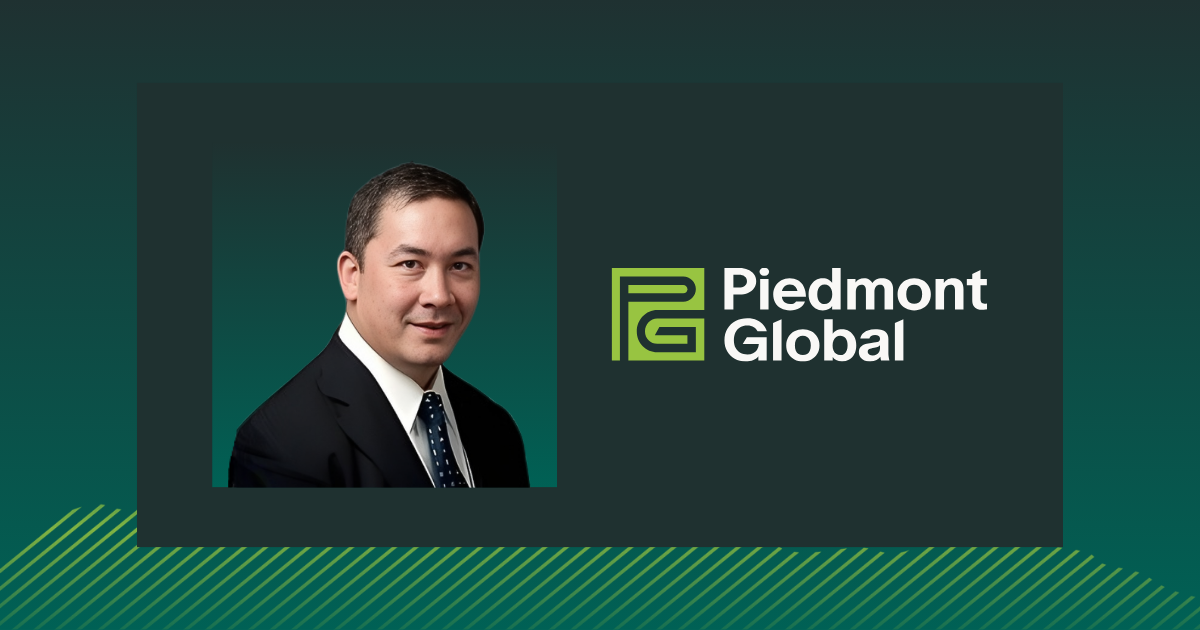
Piedmont Global Appoints Anthony “Tony” Cooch as Chief Financial Officer, Strengthening Financial infrastructure.
This appointment reinforces Piedmont Global’s commitment to building scalable financial infrastructure to support continued expansion.
Arlington, VA, March 30, 2026 — Piedmont Global, a Strategic Globalization partner helping organizations lead globally, fluently, and confidently, announced the appointment of Anthony “Tony” Cooch as Chief Financial Officer (CFO).
In his new role, Cooch will lead the company’s financial strategy and operations, driving growth, scalability, and long-term value creation.
Cooch brings more than 20 years of experience as a CPA and attorney, advising and leading finance organizations in growth-oriented companies. He has extensive expertise in mergers and acquisitions, capital structuring, and building scalable financial infrastructure.
His appointment marks another step forward as Piedmont Global continues to scale its operations and expand its global impact.
About Piedmont Global
Piedmont Global is a Strategic Globalization partner for enterprises and public sector organizations, dedicated to making cross-cultural operations easier, smarter, and more human. The company offers advisory services, language and cultural expertise, workforce and learning solutions, and tech-enabled platforms — delivered as custom solutions — to help clients reduce risk, accelerate readiness, and expand their reach with confidence. Learn more at www.piedmontglobal.com
For years, organizations have been told that “language access” is solved by buying services as needed — an interpreter here, translated documents there, maybe a localized website if expansion becomes urgent enough.
That model is no longer just outdated, it’s actively harming the end-user experience.
Patients don’t experience language in silos. Employees don’t learn in silos. Customers don’t engage in silos.
Yet, most organizations still operate with:
One vendor for interpreting
Another for translation or localization
Internal teams split between departments
And no professional solution for culturally fluent, multi-lingual video or digital content
The result? A fragmented, confusing, and often frustrating experience for the very people language services are meant to serve.
At Piedmont Global , we believe LangOps — interpretation, localization, content, and media —must operate under one roof, one strategy, and one operating system. Not as transactional services, but as a core component of a modern Strategic Global Operating System.
Let’s talk about why the old model fails — and what replaces it.
What’s Broken in the Traditional LSP Model
Transactional ≠ Strategic.
Most Language Service Providers were built to respond, not design.
You submit a request. They fulfill it. The job is closed.
But no one is accountable for:
Continuity across touchpoints
Consistency of voice, style, tone, dialect, and cultural norms
The full lifecycle of the end user’s experience
Interpretation is handled reactively. Translation is handled separately. Video and digital content are an afterthought — or worse, outsourced to agencies with no language or cultural expertise.
Internal Silos Create External Friction
Inside organizations, language access is often split:
Compliance manages interpreting
Marketing manages localization
HR or Ops manages training content
IT manages portals, chat, and automation
Each team may do its job well, but the end user feels the seams.
Different terminology. Different tone. Different cultural cues. Different levels of quality.
Language stops feeling supportive and starts feeling disjointed.
Why Culturally Fluent ≠ Translated
Translation answers the question: “What does this say in another language?”
Cultural fluency answers a different, more important one: “How should this be experienced by this person, in this moment, in this context?”
Cultural fluency accounts for:
Dialect, not just language
Tone, formality, and trust cues
Regional norms and expectations
Health literacy, education level, and context
Visual cues, pacing, and delivery style
A word-for-word translation can be technically correct and still fail, because it doesn’t resonate, reassure, or guide behavior.
That’s why translated content without cultural fluency often leads to confusion, mistrust, disengagement, and risk.
What Changes When LangOps Lives Under One Strategy
At Piedmont Global, LangOps isn’t a menu of services — it’s an operating system.
Interpretation, localization, content, and multilingual media are designed, governed, and measured together so every interaction reinforces the next.
Here’s what that looks like in the real world.
Use Case 1 | Healthcare: The Patient’s Entire Journey
A Limited English Proficient (LEP) patient doesn’t experience healthcare in episodes. They experience it as a continuum.
Day in the life
The patient schedules an appointment online
Completes intake forms
Arrives on-site and interacts with front desk staff
Meets with a clinician via onsite interpreting or OPI/VRI
Receives discharge instructions
Watches outpatient procedure videos or reads documentation
Logs into a patient portal
Calls billing or claims weeks later
In a fragmented model
Forms are translated by one vendor or an internal team member experimenting with ChatGPT
Interpreting is handled by another
Patient portals default to English
Videos are subtitled without cultural context
Billing calls rely on traditional OPI — slow, clunky, and impersonal
In an integrated LangOps model
Intake forms, portals, and written materials are localized — not just translated
Interpreting aligns in terminology and tone with written content
Videos are produced natively in the patient’s language, dialect, and cultural style
Claims and billing calls leverage simultaneous AI, allowing the patient to speak naturally while the agent hears and responds in English
The result? A patient experience that feels coherent, respectful, and human — from first click to final bill.
Use Case 2 | Manufacturing: Employees and Customers Aligned
Manufacturers often focus language access on compliance, such as OSHA videos, safety signage, and training manuals.
But language impacts both sides of the operation.
Employee Experience
Onboarding materials
Open enrollment
Safety training
Compliance videos
Spoken instructions on the floor
Written SOPs and signage
When these are inconsistently translated or poorly localized, risk increases, trust decreases, product waste increases, and customer experience and profit decrease.
Customer & Market Experience
For manufacturers selling across borders:
Websites must be localized — not mirrored
Product videos must reflect cultural norms
Marketing and advertising must be native, not literal
Technical documentation must align with local expectations
With LangOps + multi-lingual media under one strategy
Training videos are culturally fluent and role-appropriate
Spoken, written, and visual content reinforce each other
External-facing content reflects the same fluency as internal operation
Brand credibility increases — globally
Language becomes an operational advantage, not a compliance checkbox.
Interpreting as Part of an Ecosystem | Kimberly Miranda
Multi-Lingual Media & Simultaneous AI | Gilbert Segura
The Future of LangOps Is Here
Organizations that continue to treat LangOps as transactional will fall behind because their customers, patients, and employees already feel the gap.
Those who integrate interpretation, localization, and multi-lingual media under one strategy will lead with clarity, trust, and cultural intelligence.
That’s the future of LangOps. And it’s already here.
This article was originally published as part of Piedmont Global Pulse, our LinkedIn newsletter where we share timely insights and industry trends. To stay ahead of the conversation and receive future editions directly in your LinkedIn feed, subscribe to Piedmont Global Pulse.
Cookie Preferences
We use cookies to enhance your experience and deliver tailored content.
Essential cookies keep the site running smoothly. They are not used for tracking.
Your browser sent a Global Privacy Control signal, so we have recorded a Decline for you. Tools that need your consent stay disabled, and we have removed the tracking cookies we were able to.
You can change this at any time from Cookie settings in the page footer. Learn more in our
Privacy Policy
.