Rural Clinics Serve the Most LEP Patients & Get the Least Language Access Support

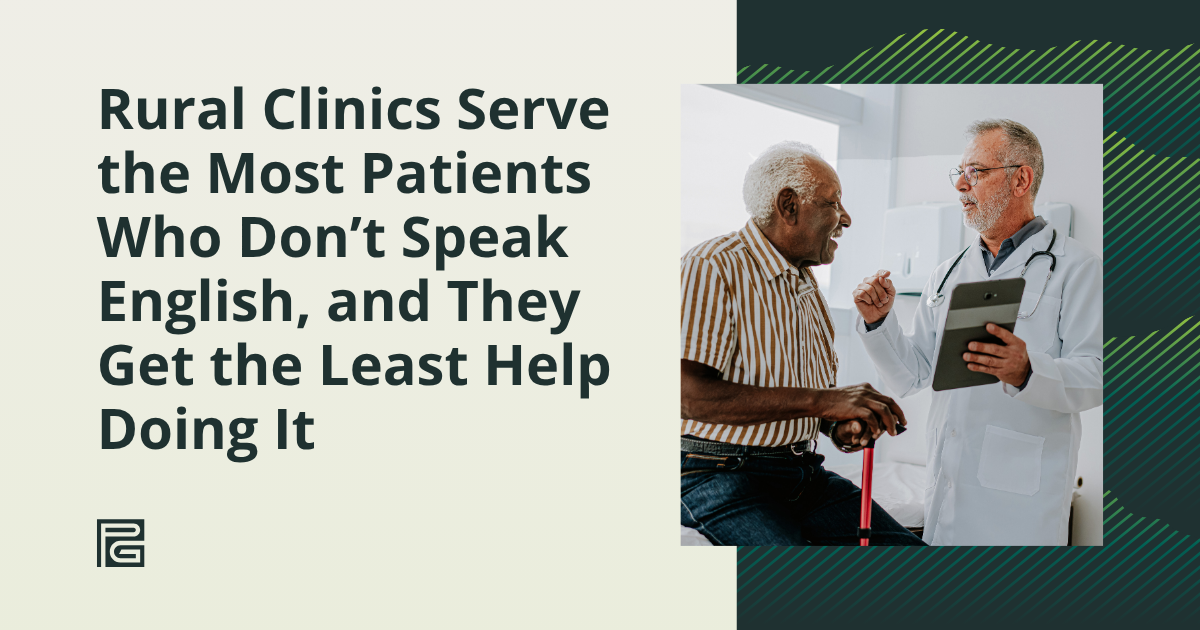
Rural Clinics Serve the Most Patients Who Don’t Speak English, and They Get the Least Help Doing It

More than 25 million people in the United States live with limited English proficiency. Rural hospitals and Federally Qualified Health Centers (FQHCs) carry a disproportionate share of that population, and they carry it with the thinnest staffing and the tightest budgets.

Here is the part that rarely gets said out loud: the problem is almost never a lack of willingness to solve the problem.

A rural clinic cannot keep a staff interpreter for every language that walks through the door. So it improvises – a phone line for one language, a video vendor for another, a bilingual medical assistant pulled off her own work, sometimes a patient’s own child. Every one of those carries a cost, and interpreting is one of the few clinical necessities that Medicaid and Medicare generally do not reimburse. You provide it because Title VI and Section 1557 require it and because it is the right thing to do, not because it pays for itself.

Where the Model Breaks

Walk a patient’s visit from the parking lot forward and the gaps land in the same places every time.

At the front desk, speed is what matters most. When a patient speaks a language the clinic can’t staff for – Somali, or Karen, a language spoken by many Burmese refugees – reaching an interpreter can mean calling one vendor, finding out they don’t cover it, then trying another and waiting on hold. While that plays out, the visit either stalls or moves ahead without a qualified interpreter, and the patient leaves without fully understanding their own care.

In the exam room, the stakes change. A medication reconciliation or a behavioral-health screen is not a place for a well-meaning family member. And after the visit, there is the part auditors care about: can you prove, encounter by encounter, that a qualified interpreter was used? For most clinics stitching vendors together, that record does not exist in one place.

None of this is a staffing failure. It is what happens when language access is bought one call and one vendor at a time.

What a Better Model Looks Like

Piedmont Global built this as one connected operation, not a single fix bolted onto the old vendor list. Our platform runs the day-to-day: one contract, one workflow, one record trail instead of a scramble of disconnected calls. Underneath it, our data intelligence work matches your interpreter and staffing plan to the languages actually walking through your door instead of last year’s grant application. And the workforce side of the model, covered further down, runs through that same operation rather than a separate hire-and-hope process.

  • One usage-based contract: You pay for the minutes you use, with no monthly platform fee and no minimum. For a clinic whose volume swings with the season, the grant cycle, and the local population, the cost tracks reality instead of a flat line you pay whether you use it or not.
  • 300+ languages including American Sign Language, on demand: Over-the-phone, video, and onsite interpreting from one network, so there is no per-language vendor to chase. ASL and Spanish run 24/7 on video; other languages vary by availability.
  • Human interpreters for the moments that demand them: Clinical and high-risk conversations route to credentialed interpreters by design. For high-volume routine calls like scheduling and eligibility, the Speech-to-Speech AI Interpreter can carry the load in Spanish and English, with your team deciding by call type what goes to a human and what does not.
  • A record you can hand to a reviewer: Every session captures interpreter credentials, language, duration, and encounter ID, exported in the formats HRSA, OCR, and the Joint Commission expect. Section 1557 evidence stops being a scramble.

One community health system that made this shift cut its annual language-access spend from roughly $3 million to under $500,000, and reduced communication-related errors in the process.

That’s the platform side of the model. The workforce side matters just as much, and it is where the provider in the room comes in.

The Provider in the Room Is Part of the Model Too

There is a workforce reality underneath all of this. Internationally trained physicians – foreign medical graduates – make up about 23% of the U.S. physician workforce, and rural, safety-net, and community settings lean on them far more heavily than that average suggests. In many low-income and rural counties, they are not a supplement to the care model. They are the care model.

A foreign medical graduate practicing as a physician or advanced practice provider (APP) often arrives with something you cannot recruit for on a spec sheet: the language and lived experience of the population the clinic serves. When a provider and patient share a language, patient trust measures higher than it does with an untrained family member interpreting, and about the same as care delivered through a professional interpreter. A Spanish-speaking family physician in an agricultural community, or an Arabic-speaking APP in a refugee-resettlement town, changes how care lands: fewer missed cues, and more of the quiet context that decides whether a treatment plan actually happens.

Here is the trap, though. When a clinic has one provider who speaks the patients’ language, that provider quietly becomes the language plan. They get pulled into other clinicians’ visits to interpret and carry a panel weighted toward every LEP patient in the building. It burns them out, it does not scale, and it is not the job you recruited a clinician to do. A bilingual provider is also not a qualified medical interpreter by default. Conversational fluency is not the same as accuracy under clinical and legal stakes, which is why provider language skills should be assessed, not assumed.

That assessment is itself a staffing decision, and it is where Piedmont Global’s work extends past the platform. Our MedConnect team places bilingual physicians, APPs, and international medical graduates in permanent roles for exactly this kind of population, so language-concordant hiring becomes something a rural system can plan for rather than something it gets lucky into. MedConnect does not replace the platform side of the model, and a bilingual hire does not discharge a Title VI or Section 1557 obligation on its own any more than a professional interpreter contract does. It is the other half of the model, not a substitute for either half.

The right model uses both, on purpose. Language-concordant providers do what only they can do: deliver care with cultural fluency already built in. The platform covers the rest – every other language in the panel, the after-hours call, the ASL request, and the moment your one Spanish-speaking physician is already in another room. That is what lets a foreign medical graduate practice at the top of their license instead of serving as the clinic’s default interpreter, and it is what makes their impact on the population durable rather than dependent on one person never taking a day off.

We Have Run This Play Before

Step back and the through-line is hard to miss. Every problem above describes a clinic keeping a critical function alive by improvising: a medical assistant pulled off her own work, a provider’s personal fluency, a patient’s teenage son translating a diagnosis in the waiting room. Healthcare has outgrown this exact pattern once already.

Twenty years ago, patient information lived the same way – paper charts in a back room, a fax to the specialist, and the one veteran nurse who knew where everything was filed. It worked until she retired. The electronic health record did not replace her judgment. It stopped the practice from depending on any single person’s memory, and it left a record you could actually stand behind.

Language access is sitting where recordkeeping sat then. A language-concordant physician is that veteran nurse: invaluable, and exactly the wrong thing to build an entire system on. The work is to put infrastructure underneath your people, so the care model holds whether or not one clinician is in the building that day.

The Honest Part

Moving off a patchwork is real work, not a switch you flip. There is change management in getting front-desk and clinical staff onto one workflow, and it is worth being clear-eyed about that going in. You lived through the EHR rollout, so you already know the shape of it – this is a far smaller lift, but it is not nothing. The alternative, though – rising volume, flat budgets, and thin documentation – is not a strategy. It is a risk you are carrying whether you name it or not.

If you run language access at a rural hospital or an FQHC, I would like to hear how you are handling the cost side of this. It is the question I get asked most, and the reimbursement gap makes it a hard one. Comment below or send me a message.

And if you want to see how Piedmont Global handles the coverage, the routing, and the reporting for a center like yours, I am glad to walk you through it.

Preston Rasmussen, Business Development Representative at Piedmont Global | Book 20 minutes.
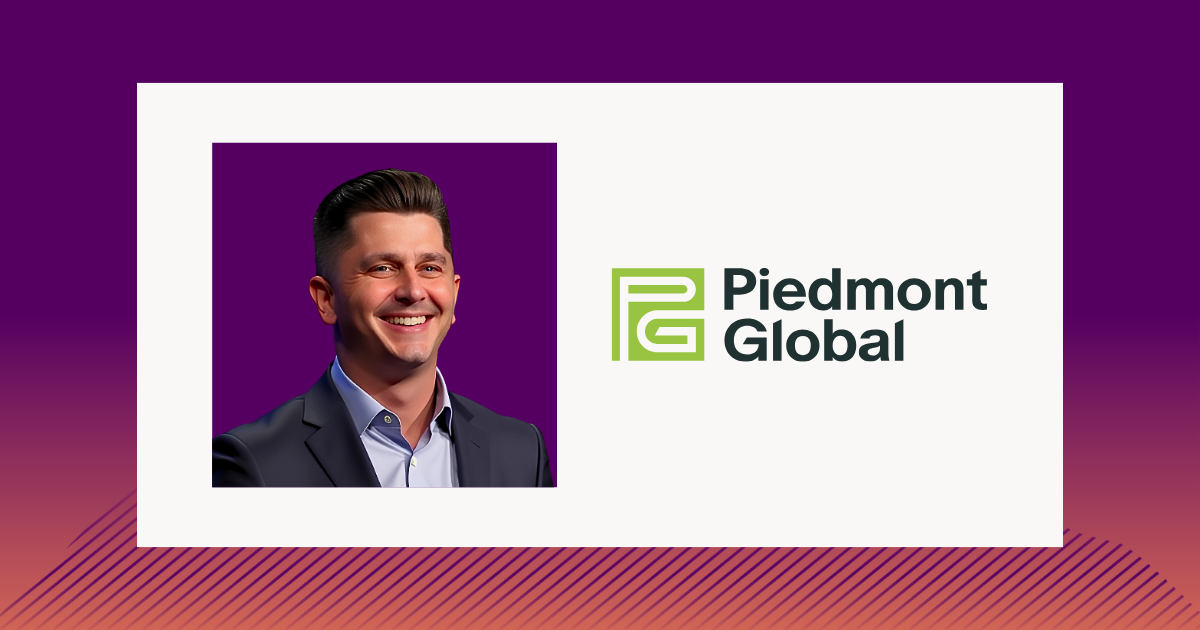
Piedmont Global Names James Rucki Director of Commercial Sales

Rucki will lead Piedmont Global’s commercial sales team as the company scales its Elite 8 solutions across industries.

Arlington, VA, August 3, 2026 – Piedmont Global, a Strategic Globalization℠ partner helping organizations lead globally, fluently, and confidently, today announced the appointment of James Rucki as Director of Commercial Sales, effective August 3. Rucki reports to Mary GrotheChief Revenue Officer, and will lead Piedmont Global’s Commercial Sales team, strengthening the company’s strategic partnerships in healthcare, manufacturing, insurance, financial services, and technology. 

Piedmont Global has established itself as a Strategic Globalization Organization (SGO) in a market that increasingly expects a single provider to bring together technology and solutions rather than a menu of disconnected, transactional language services. The appointment comes as the company expands its Elite 8 solutions and builds a unified commercial sales team.

As Director of Commercial Sales, Rucki owns the sales strategy and performance across the company’s direct commercial sales team and those of its acquired brands. He will develop new client relationships, grow existing accounts, and expand adoption of the company’s solutions. Additionally, he will equip the sales teams of Piedmont Global’s acquired brands with the company’s capabilities and architecture while preserving the brand equity that makes each one valuable to the clients it already serves.

“Rucki’s experience leading enterprise sales teams through complex buying cycles and his proven experience with acquisition integration is exactly what this stage of our growth calls for,” said Grothe, Chief Revenue Officer of Piedmont Global. “He’s building a culture of ownership, excellence, and disciplined execution, grounded in passionate problem-solving for our clients’ most complex language and cross-cultural needs. That same discipline extends to our strategic partnerships, creating new growth opportunities within existing relationships and building new ones across the portfolio.”

For Rucki, this growth starts with understanding what clients are trying to achieve and connecting them with the right capabilities across Piedmont Global’s expansive suite of cross-cultural multilingual operations.

“The opportunity at Piedmont Global is about much more than growth. It’s about helping organizations communicate, operate, and succeed across languages, cultures, and markets,” Rucki said. “My vision is to build lasting partnerships by deeply understanding our clients’ objectives and aligning the right people, expertise, and technology to help them achieve meaningful business outcomes.”

That approach also reflects a broader shift in the market, as organizations look beyond individual language services for partners that can support increasingly complex global operations.

“Piedmont Global is uniquely positioned for what’s ahead,” Rucki added. “Organizations today need more than translation – they need a strategic partner that can help them communicate effectively, navigate cultural complexity, operate confidently around the world and for domestic companies, address the diverse global landscape inside their four walls. The combination of exceptional people, deep expertise, and innovative technology creates an incredible opportunity to help our clients succeed.”

Rucki brings more than 14 years of sales leadership experience across healthcare, life sciences, technology, and enterprise SaaS, with a track record of building teams and driving growth at startup and growth-stage companies. He has helped scale one company’s revenue from $2 million to $25 million and guided another from $10 million to $20 million through an acquisition. His approach combines disciplined, metrics-driven execution with a strong focus on developing talent, strengthening team culture, and keeping customers at the center of growth.


About Piedmont Global

Piedmont Global is a Strategic Globalization Organization (SGO). Enterprises and government agencies approach us because managing operations across different languages, cultures, markets, and systems places a coordination burden on staff who already have full-time jobs, causing the organization to act as an unofficial systems integrator for its own globalization efforts, whether that’s across borders or within its own four walls. 

To address that disconnect, we manage it as a single operation, drawing on eight integrated solutions: language operations, accessibility, staffing, data services, market intelligence, BPO, content, and consulting. Any one of the eight is easy to buy from a point vendor. Getting all eight to run to one standard, under one accountable team, is the challenging part. That’s what we’re built to do. 

Behind us sit 10,000+ globalization professionals working across 300+ languages and dialects, one set of certifications and security controls (ISO 27001, 9001, 17100, and 13485), and one delivery standard. 

Founded in 2013, Piedmont Global has earned Inc. 5000 recognition for three consecutive years and works with clients across government, healthcare, education, manufacturing, energy, insurance, and financial services. Learn more at piedmontglobal.com. 


Media Contact

Mary Grothe
Chief Revenue Officer
Piedmont Global
mgrothe@piedmontglobal.com

Piedmont Global Names BenJoe Markland Chief Operating Officer

Markland’s Appointment Reinforces Piedmont Global’s Commitment to Delivering Consistent Quality, Speed, and Capacity Across Its Portfolio.  

Arlington, VA, June 15, 2026 – Piedmont Global, a Strategic Globalization℠ partner helping organizations lead globally, fluently, and confidently, announced the appointment of Benjoe Markland as Chief Operating Officer, effective June 15.

In his new role, Markland will own delivery across Piedmont Global’s business units – including interpreting, localization, staffing, and data services – along with linguist credentialing, quality management, and the operational technology that supports them.

Piedmont Global wasn’t built as a collection of separate service lines. It was designed as a unified, multi-service platform where language operations, accessibility, data services, staff augmentation, content, and consulting come together to serve healthcare, government, education, and enterprise clients.

While competitors offer a menu of disconnected services, we offer one integrated partner with multiple ways to solve a problem: one operating model, many paths to value.

At this stage, the challenge isn’t adding new capabilities – it’s connecting them, so clients have a seamless experience no matter how many of our services they use.

That’s why the role of Chief Operating Officer is so critical right now. It exists to unify our operating model through shared systems, consistent quality standards, and an integrated delivery engine.

“This is not a traditional operations job of running departments; it’s an architect’s role, responsible for building the enterprise operating system that connects everything we do from shared customer relationships, shared delivery capacity, shared go-to-market strength, and shared technology, into scalable, repeatable growth. Finding a leader who could see the platform rather than the silos was our highest bar, and Benjoe cleared it. With him leading our operations, we’re not just scaling what we do; we’re compounding what makes Piedmont Global unique,” said Mohamed Hussein, CEO of Piedmont Global.

Markland’s goal is to make that scale feel consistent to clients: the same standard of quality in every language, modality, and time zone, capacity built ahead of demand, and direct visibility into performance.

“Piedmont Global has a scale that is hard to build: over 300 languages and more than 10,000 qualified linguists. My job is to make our operations as dependable as our people are talented, with consistent quality in every language and capacity in place before a client needs it. Our clients are making decisions where getting the language wrong has real consequences. Getting it right every time is the whole job, and it is what I expect to be measured on,” said Markland, COO of Piedmont Global.

Markland brings more than 20 years of executive leadership in global business process outsourcing (BPO), information technology outsourcing (ITO), and customer experience (CX) operations. He most recently served as president and chief operating officer of Focus Services, where he managed a multi-entity P&L of more than $65 million across 13 global sites and over 25 enterprise clients. He has scaled operations across the United States, Latin America, Europe, and Asia, led the integration of multiple acquisitions, and built AI-enabled delivery systems. Markland is also fluent in Spanish and holds a Bachelor of Business Administration in Finance.

This appointment marks another step forward as Piedmont Global continues helping clients navigate global communication needs through integrated solutions.


About Piedmont Global

Piedmont Global is a Strategic Globalization Organization (SGO) dedicated to making cross-cultural operations easier, smarter, and more human for enterprises and public sector organizations. The company provides Language Operations, Accessibility & ASL, AI Risk & Intelligence Assurance, Staffing, Data Services, BPO & KPO, Content Solutions, Open-Source Intelligence (OSINT), and proprietary technology platforms, including Connexus™, an enterprise interpretation management platform, and CensIQ, a language access planning platform. Piedmont Global helps clients eliminate vendor sprawl, strengthen compliance, accelerate operational readiness, and expand their global reach with confidence. Learn more at piedmontglobal.com.


Media Contact

Mary Grothe
Chief Revenue Officer
Piedmont Global
mgrothe@piedmontglobal.com