eLearning Localization: Engaging Multilingual Learners in 7 Industries

The world is increasingly connected in commerce and trade, thanks to the internet. The global pandemic of 2019 highlighted the need for a connected global workforce. The tools developed during this time also facilitated remote meetings, work, and training. Trainers no longer needed to fly to remote offices, and employees didn’t need to spend a week in a conference room for training. COVID-19 banned travel, and like a social experiment, we learned that remote work is possible. Almost.

To adapt to technological and economic changes, distributed organizations need a robust learning strategy to develop talent and enhance performance in the new remote eLearning environment. Like Zoom meetings, eLearning existed before COVID. It lived in global organizations with remote satellite offices, often in different countries and cultures. Managing eLearning in one language is challenging, let alone in five or a dozen languages.

When it comes to multilingual learners, many organizations initiate eLearning projects without a clear global vision and strategy, often relying on outdated content that is delivered in a ‘broadcast’ manner. This approach fails to transfer knowledge to multilingual learners from diverse cultural backgrounds. Other teams sometimes lack the tools, resources, and skilled professionals to design, deliver, and manage eLearning programs—and then struggle to do this at scale.

A poorly or partially produced video will backfire without considering local attitudes. Without localization, eLearning content may be misinterpreted, misunderstood, or lost entirely in the target culture. So, which industries can benefit from localizing their eLearning content? Here are seven inter-related examples. Not every solution will fit all teams, but exploring different approaches is worthwhile.


1. Global Corporations With a Multilingual Workforce

Gallup report found that organizations that make strategic investments in employee development experience 11% greater profitability and are 2x as likely to retain their employees. However, creating a high-development culture requires more than just adding a few learning programs to the roster.

As a company grows internationally and workforces diversify, Learning and Development (L&D) professionals encounter communication differences when sharing core messaging and critical training modules. It becomes vital for eLearning courses to be made local to accommodate diverse employee demographics.

Localization ensures that training can be delivered in multiple languages at scale and guarantees that all teams, domestic or abroad, can improve through localized content in their native language. This ensures that training materials are culturally relevant, linguistically accurate, and aligned with local regulations and practices. A global talent development team must consider multilingual learners in different locations, not just one, and tailor the message to connect while still achieving the objectives and desired outcomes.


2. Educational Institutions with Multilingual Learners

According to the National Center for Education Statistics (NCES), public colleges enrolled approximately 7.5 million online students in 2022. Another 2.6 million remote learners attended private schools, including 1.8 million at nonprofit institutions and nearly 800,000 at for-profit schools. Not all of these students are local.

“If we really want to provide equal opportunities for all students, and we want underrepresented minority students to do well, we really need to pay attention to their experiences and their perspectives and give them the tools to do better.”

Universities, colleges, and schools offering online courses in learning management systems need to localize their content to accommodate international students or learners from various linguistic backgrounds. This enhances accessibility and improves learning outcomes for multilingual learners. It is also an obligation. While it may not be Title 9 or a specific mandate, there’s a need for feasibility and enabling students to learn effectively.

Making courses available to students anywhere—and translating them when there’s interest—is important. “Locale” refers to how particular words need to be in relation to the goal. For example, in one part of town, people might call it a “sandwich,” while in another part, they might call it a “hoagie” (a US English, mid-Atlantic linguistic divide). Does it matter? Sometimes it’s not relevant, but other times it can cause minor or major distractions. Most major errors are caught by a local review, there are ways to bring that upstream. Fixing and re-deploying a course after it’s already launched is a partially wasted effort.


3. Public-Sector Agencies Addressing Multilingual Constituents

Government departments or agencies involved in training initiatives, public awareness campaigns, or citizen education programs may require localization services to reach constituents in various regions or linguistic communities. Over 359 languages are spoken in the US, making it #9 globally out of 242 countries. This is far fewer than Papua New Guinea’s 840 languages but highlights our globalized nature. While we focus on the US in this example, each region has its unique challenges and opportunities.

For example, a public health campaign regarding vaccination must account for cultural beliefs about healthcare, local idioms, varying literacy levels, and language preferences for those with limited English proficiency (LEP) to achieve success. This is especially true for Black, Indigenous, and people of color (BIPOC) populations, who often harbor greater distrust and hesitancy toward vaccines. There are other policy implications that go beyond our topic—but the best solution is to embrace the diversity of the cultural divide and allow that differences will appear. If you pay attention, there is something to learn about the diverse populations that make up the patchwork of communities and can drive better engagement and response.

Localization ensures that important information is not only understood but also embraced by the community. This can lead to greater mission success with the desired outcomes of a program, whether it’s increased public knowledge, changed behaviors, or improved access to services.


4. Healthcare Providers Serving Multilingual Populations

Healthcare organizations frequently develop eLearning modules for staff training, patient education, or medical certification programs. Localizing these materials is crucial to ensure that terminology, procedures, and healthcare guidelines are accurately conveyed across different languages and cultural contexts.

For instance, consider patient education. The term “hospice,” commonly translated into Spanish as “hospicio,” often carries the negative connotation of institutionalizing a loved one. This concept is unfamiliar in Latin America, where most families care for their loved ones at home.

“Latinos often think they’re giving up on their [loved one’s] medical care, and that’s not the case. It’s bringing a holistic, compassionate form of health care focused on dignity and the patient’s wishes.”

Suzanne Sanchez, Community Liaison at Hospice of the Valley, says that while they have bilingual staff serving Spanish-speaking patients, they “don’t focus on the word, but on the feeling.” Similarly, localization goes beyond word-for-word translation to account for such cultural nuances. In all patient interactions with cultural or language barriers, there are opportunities to improve access and quality of care by providing more culturally-aware context. Better outcomes result from adapting to the patient, rather than expecting the patient to adapt to something unfamiliar.


5. Technology Companies Engaging Multilingual Learners

Approximately 16% of the world’s population speaking English, but surprisingly 52% of websites are written in English. Software companies, IT firms, and tech startups that develop eLearning software tutorials to reach global users or product training materials to engage multilingual learners often require localization services.

According to a recent study by DeepL, 75% of respondents agree that localized content significantly increases customer engagement. It also improves user experience and promotes wider adoption. People are more inclined to engage with content that resonates with their linguistic and cultural background, leading to increased user satisfaction and product success. Product teams regularly consider user personas, use cases, and the best outcomes from using a product. The language aspect shouldn’t be an afterthought if you want to capture the remaining 80% of the global market.


6. Manufacturing and Industry with Multilingual Workers

Companies in manufacturing, engineering, or industrial sectors often create eLearning courses for employee training on safety, standard operating procedures, or compliance. Did you know that, Hispanic and Latino workers are expected to comprise 78% of new workers by 2030, yet they face a 32% higher risk of fatal work injuries?

Localization ensures that safety and training resources are effectively communicated to workers across diverse linguistic backgrounds. Without multilingual and localized content, it is impossible to hold every employee to the same safety, productivity, and quality standards. Additionally, other worker populations, such as overseas subsidiaries or partners, regularly need to understand concepts that enable higher performance. While some organizations manage with bootstrapped solutions, a comprehensive strategy can significantly improve efficiency and operational excellence for multilingual learners.


7. Nonprofit Organizations Engaging Multilingual Communities

NGOs, charities, and humanitarian organizations involved in capacity-building initiatives, community development projects, or advocacy may require localized eLearning content to engage with stakeholders in different regions or language groups. Localization helps reflect local customs, values, and norms, making the content relatable and respectful to the target audience. Incorporating locally relevant images, symbols, and voices in multimedia content also boosts engagement and retention among the audience.

For example, UNICEF localizes educational materials for children in different countries, ensuring they are culturally and linguistically appropriate. The Amref Health Africa in the US uses localized eLearning content to train health workers across Africa. Their materials are tailored to the specific health needs and cultural contexts of the regions they serve. A smart strategy for localization can also stretch the effectiveness of budgets so that more impact can be achieved with less wasted effort.


Localize Your eLearning Content with Piedmont Global

Starting an eLearning localization project involves careful consideration of various factors, from advanced project management to international regulations. Piedmont Global is the preferred language partner for organizations of all sizes. Our renowned localization services, coupled with our team’s expertise, a global network of specialists, and tailored end-to-end solutions, ensure comprehensive support at every stage of the localization process. We can help craft a strategy, introduce new tools and processes, and optimize your global-to-local communication pipeline. eLearning can be complicated but getting solutions to reach multilingual learners doesn’t have to be.
5 eLearning Localization Strategies for Global Corporate Training

Rapid Growth of the Corporate eLearning Market

Did you know that in certain large organizations, up to 60% of training costs are due to travel? But the age of the traveling trainer is fading, replaced by digital self-learning as training delivery becomes more accessible across borders.

The pandemic, rise of remote work, and normalization of video calls have significantly transformed corporate training. The global corporate eLearning market is projected to reach $50 billion by 2026, growing at an annual rate of 15% from 2020 to 2026.

eLearning teams with increasingly global responsibilities must bridge language and cultural barriers. Yet, in many cases, localization strategies for global eLearning content often overlook the vast intercultural differences between headquarters and satellite offices. To speak effectively to local audiences, it is vital to transform eLearning content into a version that resonates with native speakers, rather than produce an imitation of the original.


What is Localization in Corporate eLearning?

Creating successful eLearning content for international audiences requires more than just translation. Localization is essential. It involves adapting translations to fit the culture and context of a target market, ensuring that the content feels natural and native to its audience. A robust eLearning localization strategy considers the cause and purpose behind various content elements, such as narratives, images, ideas, and overarching concepts.


Localization Strategies and Best Practices for Corporate

To help you develop impactful eLearning content, we’re sharing five strategies and technical best practices to overcome common challenges for a successful and efficient launch.


1. Engage Global Stakeholders to Inform the eLearning Content Strategy

How do you identify and incorporate the content needs of global and multilingual audiences? After all, the best content feels tailor-made – not adapted from another source.

It is important to engage global stakeholders who represent your end-users, as their feedback can be invaluable to the design and language of the eLearning content.

Even simple interactions, like greetings between colleagues, can vary widely between cultures. Collaborating with stakeholders allows timely adjustments to minor yet significant changes that could become costly fixes later.

It is essential to source at least one stakeholder from each country to capture linguistic and cultural variations. Larger countries like China may require multiple stakeholders to account for regional differences.


2. Have an Effective Feedback Loop When Creating Source Content

As part of your eLearning localization strategy, it’s important to create a detailed content outline and have it reviewed by stakeholders. This not only includes text, but audio and visual resources as well. Incorporate their feedback to develop content variations tailored for each region.

It is essential to consider the broader context, storytelling mechanisms, and subtle visual details to achieve a natural manner of speaking and engage with the audience. Remember, the goal is to ensure the audience can focus on the content without being distracted by mistranslations or cultural faux pas.


3. Work with a Language Partner with eLearning Expertise

Localizing eLearning content is a multifaceted and complex process that goes far beyond a word-for-word translation. Where typical translation projects involve linguists and quality assurance, eLearning localization requires additional experts such as narrators, graphic designers, video editors, and specialists with sharp linguistic skills. The right language partner can offer you:

  • In-house expertise with eLearning project management.
  • Multimedia content localization expertise.
  • Voiceover support, talent selection, multimedia editing, and pronunciation guides.
  • Comprehensive quality assurance.
  • Effective communication on project needs, status, and troubleshooting, with seamless collaboration between linguists and multimedia producers.


4. Leverage AI Tools to Streamline eLearning Content Production

While AI technology is not a cure-all, it can accelerate certain aspects of the localization process without compromising quality, particularly for media-rich projects.

For example, when it comes to graphics and video localization, AI can refine low-resolution files to enhance their appearance or adapt elements to align with a region’s cultural norms. This may involve substituting local signs, eliminating background noise or music from videos, or adjusting logos to accommodate global variations.

Voiceovers can improve attention and retention, particularly when combating screen fatigue caused by lengthy content. However, sourcing in-country voiceover talent can be expensive and time-consuming. AI-driven voiceover technology provides a viable alternative, but it’s crucial to have a linguist oversee the process to ensure accuracy and maintain quality.

AI plays a vital role in streamlining eLearning content production, but it’s important not to overlook the human touch. Collaborating with linguists and specialists ensures the content resonates with multilingual audiences.


5. Measure the Success of Your eLearning Content

There are multiple ways to gauge the success of your eLearning program and gather social proof for future projects:

  • Survey global users. Craft questions that ask about their user experience, perception of quality, and level of engagement.
  • Pay attention to engagement metrics. Positive engagement outcomes such as downloads, minutes watched, or quiz scores directly reflect the effectiveness of your localization efforts.
  • Rely on your language partner. They can offer metrics beyond just linguistic quality to pinpoint success factors.


Localize Global eLearning Content with Piedmont Global

Localizing global eLearning content can be daunting. As the project expands and progresses, the scope of project management will also broaden. Managing thousands of files and vast amounts of data can easily get out of hand. However, a language partner with an eLearning focus can help streamline the process by employing a systematic approach to maintain control and momentum.

At Piedmont Global, we curate an eLearning development team that encompasses diverse expertise. Our team consists of multimedia specialists, linguists, AI specialists, and project managers who work collaboratively to produce refined and localized content. From inception to completion, these teams remain consistent, ensuring seamless continuity, high quality, and efficient cost management.

Ready to get started? Get in touch to start a discussion on how to position your eLearning localization endeavors for success!

Dominican Translation: How to Find a Spanish Translator Who Understands Dominican Dialects

For anyone working, living, or visiting the Dominican Republic, it is crucial to be able to communicate effectively with other people in the region.

While the primary language spoken in the Dominican Republic is Spanish, there are many regional dialects and language variants that must be accounted for within the country. Finding a translator who understands these dialects is crucial for achieving accurate and high-quality translations.

In this article, we discuss everything you need to know about finding the ideal translator to help you understand Dominican dialects more clearly.


What is a Dialect?

dialect or regional variety is a version of a language that has key differences from the standardized version that is specific to a geographical region or group of people.

One of the most popular examples of a dialect is the American Southern dialect, which is a derivative of the English language but contains many slang words and phrases seen almost exclusively within this dialect — such as y’all, over yonder, and the ever-famous phrase, “bless your heart.”

When it comes to why understanding dialects is important, the answer is communication.

Without a proper understanding of regional dialects, language professionals would only be able to translate and interpret words written or spoken in the most grammatically-correct, standardized version of a language. With a deep understanding of different dialects associated with a language, however, a language professional can take a more nuanced approach to maintain the original meaning of a text.


How Many Languages are Spoken in the Dominican Republic

The Dominican Republic is found in the Caribbean region, with Spanish as the official national language.

In the Dominican Republic, a variation of Spanish is spoken known as Dominican Spanish. This version of Spanish is seen widely not just in its home country but also in the diaspora of Dominican immigrants living along the U.S. east coast in New York City, New Jersey, Boston, Philadelphia, and Miami.

An estimated 90% of the Dominican Republic’s population is believed to speak and/or understand Spanish — both the standardized version and the Dominican Spanish dialect.

Aside from Spanish and Dominican Spanish, two additional languages are spoken natively in the country — Haitian Creole and Samana English. Haitian Creole is spoken as a first language by more than 160,000 people, while Samana English is a variant of the English language spoken by roughly 12,000 Dominicans.

The Dominican Republic has also undergone quite a bit of colonization throughout the centuries, leading to several foreign languages becoming prominent in the country as well. These include English, French, Chinese, Italian, and Japanese.

English and French are both mandatory and taught in schools in certain parts of the Dominican Republic.


How are Dominican Dialects Translated?

Translating a Dominican dialect can be tricky, as it can be an off-shoot of a more standardized language that does not account for certain regional differences in dialect. In terms of how Dominican dialects are translated, there are a few main options to choose from.

These include:

  • Professional Translation Services: Professional translation services are almost always your best option when trying to translate a specific regional dialect. Unlike basic translation services or programs, a professional translation service can provide you with the target language fluency and regional dialect expertise needed to obtain a highly accurate translation. As such, professional translation services are recommended for all business-related translations.
  • Smart Voice Portable Translators: Smart voice portable translators are often used by international travelers and students studying abroad to help them communicate in real time with locals. With this device, a recording device records a person’s voice in one language, converts that recording into text, translates the text to a second language, and then reads back the final translation in the target language selected.
  • Online Translation Programs: Online translation programs are popular for super quick translations of single words or simple sentences. One of the most popular examples of an online translation program is Google Translate. Though these types of automated translators can offer great convenience, they do not offer the same accuracy that a professional translator can.


What is Language Localization & How Does it Relate to Dominican Dialects?

Language localization is a term used to describe the process of adjusting a translation to retain the meaning and cultural context of an original piece of text.

When performing a translation, there are several moving parts to consider. For instance, if a piece of text is written in a regional dialect, the word-for-word translation into a target language may not convey the same meaning, as certain slang words or phrases from the dialect may need different equivalent words in the target language.

Without paying careful attention to these kinds of details, a translation can end up distorted from its original meaning. To illustrate this, let’s imagine a translation is converting a Dominican Spanish document to English.

In this document — which is a business letter — the original writer includes a joke that uses keywords and phrases known to be used within a joking manner in the Dominican language. Yet, once translated to English, this joke loses some of its original meaning and ends up sounding like an insult.

A language localization expert’s job is to identify these types of details within a translation and adjust them in minor ways so that the translation is still accurate but better conveys original meaning and intent.


What to Look for in a Professional Language Translator

As mentioned, the best option for translating Dominican languages and dialects is through a partnership with a professional language translator. By working with a professional, you can achieve translations that are much more accurate and meaningful than anything a computer program could produce.

However, it is equally important to perform due diligence and research different professionals and companies before deciding on one. If you are going to pay for professional translation services, you want to be assured that the results you receive will be high quality.

Here are three key characteristics to look for in a professional language translator:

  • Regional Specialties: Regional specialties refer to a translator’s specialized areas of expertise when it comes to regional dialects and language variances. Right off the bat, one of the first things to look for is a professional translator who promotes their ability to work in specific regional specialties, as this will ensure you find someone who understands the nuances of the Dominican dialect you are working with.
  • Language Localization: As we have covered, language localization is incredibly important for conveying the right meaning through translation. When looking for a translation services professional, make sure to look for one who has experience with language localization and has taken the time to learn about the cultures whose languages they translate.
  • Language Training: In many cases, a translator or the company they work for may offer language training solutions. These can be important to take advantage of, especially if you plan to continue working in international regions, as it will give your business team the strong foundational knowledge needed to increase their fluency in specific languages.


Partner with Piedmont Global for Top-Class Language Solutions

At Piedmont Global, our team is not only fluent in more than 200 languages and regional varieties, but we are also highly experienced in working in a wide range of industries and regions all over the world.

By working with Piedmont Global, you can receive customer language solutions  — including translation, interpretation, language training, and more — that meet the exact needs of your business and team. Whether you need to communicate with clients or ensure international business partnerships run smoothly, Piedmont Global has you covered.

To get started with Piedmont Global language localization, contact us today.

Language Access in Education

We’ve all felt it before. The stress of being misunderstood, the unease of not understanding, the worry that something will go wrong because the person listening isn’t really hearing you. That feeling is an everyday reality for millions of students and their parents across America. From understanding teachers and school nurses to navigating medical emergencies and reading paperwork, school can quickly become a language minefield for anyone not fluent in English.

So, how important is language access for students in America, and how far do we have left to go before we can consider the American education system equally accessible to all?


Language Access Prioritization

The need for educational institutions to prioritize language access is growing. According to the National Center for Education Statistics, the number of English Language Learners (ELLs) has grown to more than five million over the past decade.

While 77% of ELL students speak Spanish, there are still a wide variety of language needs across the US. According to Pew Research, “in five states, a language other than Spanish was most commonly spoken at home among English learners. In Maine, for example, Somali was the most common language spoken at home. In Vermont, Nepali was.” Pew Research goes on to say, “Arabic was the second-most common language spoken at home by ELL students in 16 states and was among the five most common languages in 39 states.” The stats continue to make it clear that each institution, region, and state requires a unique approach to tackle language access difficulties.

While there is still a substantial disparity in language access in schools in the US, there is a simple solution that any school, university, or government branch responsible for education can quickly implement. But first, how do barriers to language access impact education? We explore two example scenarios below.


Epidemics & State-Wide Emergencies

While COVID-19 improved the state of multi-language communication in many ways, it also brought to light an array of painful gaps in language access across America. For example, in Virginia, an error in the government’s translation process resulted in Spanish readers being told they don’t need to vaccinate. Had a Spanish speaker familiar with medical terminology been involved in the writing or proofreading of the website, the mistake may not have occurred. Technology has provided tremendous leaps in language access. Still, for something as important as the community’s collective health during a pandemic, it’s essential governments and schools seek the input of professional translators and interpreters.

The same is true for other emergencies. While the pandemic required medical terminology, each disaster brings its complications. For example, 120 hurricanes hit Florida between 1851 and 2018, and according to Data US, 30% of Florida’s citizens are speakers of a non-English language. Schools have a duty of care to the students they’re entrusted with and must ensure they’re communicating the correct actions to each child in the case of a hurricane and other natural disasters. Communication starts with advanced preparation and strong partnerships with critical translators.


Language Service Solutions in Schools

Communication is part of daily life for students, parents, educators, and school staff. When language is a barrier, schools are unable to reach their primary goal of helping students succeed. All school’s need a trusted language services provider that offers experienced interpreters, quality translations, on-demand resources, and access to many languages.

There are countless situations when language services are needed in schools. Some common examples are:

  • Interpreters at events, conferences, and meetings
  • Translation of important documents like progress reports, calendars, and syllabi
  • Translation and interpretation through individualized education programming
  • Everyday ASL interpretation
  • Emergency situations

Whether they work in K-12, higher education, or beyond, we’ve found our clients come to us with three main difficulties that prevent them from addressing the negative impacts of poor language access:

1) They often find it challenging to find a translation and interpretation provider that speaks the languages they need. Many schools are language melting pots, and interpretation providers must talk a variety of languages to ensure students aren’t being left out. At the same time, each scenario carries its own nuances, and providers must have the training required to convey medical, educational, or scientific information correctly when the moment strikes.

2) They find it challenging to find an interpreter when they need one. Some of our current clients have struggled in the past when they’ve worked with a single interpreter, as they may not be available at a moment’s notice. When emergencies happen, it’s essential educational institutions can provide their students with interpretation or translation quickly and effectively.

3) They’ve found providers who address all their needs to be expensive. Education budgets can sometimes be tight, which is why we help all our clients find a solution that gets their students the best without going over budget.


Language Solutions for Education with Piedmont Global

At PGLS, we’re proud to offer translationinterpreting, and language training services to schools and other educational institutions in over 200 languages. We understand that each student is unique, so we pay special attention to offering services in the correct regional variety and providing subject matter experts where necessary.

Get in touch with our team to bring true language equality to your students.

Why Organizations Value Asian Translation Services from a Native Speaker

The globalization of commerce has seen countries like China rise in recent years to become some of the most powerful economies in the world. Manufacturing, for example, has shifted East in a big way.

The rise of the middle class in these countries has created new markets for Western businesses and seized opportunities for organizations to enter joint ventures and other collaborative relationships with Asian companies.

The following examines the value of Asian language translation services and the importance of working with native speakers.


The Benefits of Asian Language Translation Services

There are several reasons why organizations value translation services. We’ve listed a few of the most important benefits below:


Over 200 Languages

Some companies choose to work with an individual freelancer who is a native speaker of the language they need. However, this can be risky because you’re putting all your eggs in one basket.

It is unlikely that a single person will be a native speaker of all the languages you might need. This is where working with a company that specializes in Asian language translation can be beneficial.

At Piedmont Global, we have a team of native speaker experts and can offer over 200 languages. We can help you source materials in Taiwan while helping you navigate the complexities of doing business in Japan.


Reliability

The first and most apparent benefit is reliability. When working with translations, it’s crucial to trust the person or organization you’re working with.

There are many moving parts in any translation project. Things can easily go up in smoke if the people you’re working with don’t have a strong understanding of the source language. Likewise, if the translator you’re working with doesn’t have a strong understanding of the target audience, they might not be able to properly convey the message you’re trying to communicate.


Increased Accuracy in Translations

Native speakers have a better understanding of the subtleties and nuances of their home languages. This increased understanding leads to improved accuracy in translations.

This is important because the meaning of sentences or paragraphs can easily get lost in translation. When you’re dealing with something as crucial as business communications, you can’t afford to have any inaccuracies in your translations.

As a bonus, increased accuracy can also lead to stronger relationships with your Asian business partners.


Localization

A better understanding of regional dialects is another benefit of working with a native speaker. In many countries, there can be a significant difference in the way people speak in different regions. Linguistically, some countries are considered to have many languages with a common writing system.

In the same vein, you want to respect the different cultures you’re working with and use the appropriate language when addressing them. For example, extended eye contact in the west might be seen as a sign of respect, but in some cultures in Asia, it might be interpreted as disrespectful.


Industries That Rely on Asian Translation Services

Many industries rely on Asian language translation services. Working with Piedmont Global offers numerous benefits to many different industries including education, healthcare, legal services, and more.


Manufacturing

The globalization of the manufacturing industry has led to an increased need for accurate and timely translations of technical documents. Manufacturers frequently generate complex technical documents that include manufacturing terminology, scientific information, and technical descriptions. Additionally, translations of such technical documents generate text that exceeds specified character limits. At Piedmont Global, we have a team of experienced translators familiar with the specific jargon and terminology used in the manufacturing industry. We can accommodate your specifications without compromising quality.

From MSDS/SDSs to marketing materials, our team understands the importance of accuracy in tone, meaning, and technical details. You can be confident that the translated text will convey your message effectively.  Learn more about our translation services for manufacturing.


Education

One industry that relies heavily on translation and interpretation services is education. Communication is part of daily life for students, parents, educators, and school staff. When language is a barrier, schools are unable to reach their primary goal of helping students succeed. Learn more about language access in schools.

Additionally, there has been an increase in the number of US, Canadian and European teachers moving abroad to teach English in Asia. However, these teachers often don’t have any training in the local language, which can make it difficult to communicate with their students properly. Here’s where language services come in.

We can help these teachers by providing them with translations of the key phrases and concepts they need to teach their classes. We can also help them to better understand their students by translating student work and essays. Learn more about our language services for education.


Healthcare

Another area that has come to rely heavily on translation services is the healthcare industry. There are valid reasons for this. First, there has been an increase in medical tourists going to Asia for treatment. These medical tourists often don’t speak the local language. Hospitals and clinics need to be able to communicate with them in their native language.

Another reason why the healthcare industry has come to rely on translation services is the rise of telemedicine. With telemedicine, doctors and patients can consult from different parts of the world. However, this consultation can only be effective if there is a good understanding between the doctor and the patient. Learn more about our medical and healthcare language services.


Legal

The legal industry is another field that has come to rely on Asian language translation services. That’s because there is a growing need for legal documents to be translated into Asian languages, from business contracts to artistic licenses. Immigrants who have been charged with a crime also need to understand the legal documents they are being asked to sign.


Other Industries

These are just a few industries that now rely on Asian language translation services. As you can see, there is a growing need for these services in many different fields. Governmentmedia, and the nonprofit sector are also among the many industries that have come to need these services.

We’ve also seen a growing demand for these services in the financial sector. In recent years, there has been an increase in fintech startups in Asia. These startups often need help translating their products and services into the local language.


Getting Started with Piedmont Global’s Asian Language Translation Services

Now that you know more about the benefits of working with a native speaker, you may be wondering how to get started.

If you’re looking for a reliable and experienced company to provide you with these services, we can help. From translation to interpreting and language training training, we’re here to support all of your language needs.

The first step is to request a quote and let us know what languages you need. We will then match you with one of our expert translators. Contact us today to get started.

Translation in Manufacturing: Machine Translation vs LSPs

Manufacturing is an essential sector of the global economy, and many manufacturers are looking for ways to expand their businesses into new markets. However, language barriers can often stand in the way of success.

In today’s globalized economy, it’s more important than ever for manufacturers to be able to communicate with their suppliers and customers in multiple languages. Manufacturers who need translation services may consider the pros and cons of both publicly available machine translation (MT) and partnering with a language service provider (LSP).

In this blog post, we’ll look at each option’s pros and cons to help you decide which is right for your international business.


Language & Translation Services for Manufacturing

Before pitting our contenders against each other, let’s take a closer look at the language services landscape in manufacturing.

The demand for language services is growing rapidly as the world becomes increasingly connected. In fact, the global language services market is expected to grow by $21.67 billion by 2025.

This growth is driven by several factors, including the rise of e-commerce, the globalization of business, and the expansion of the sharing economy. These trends are particularly relevant to the manufacturing sector.

Most manufacturers use these services for:

  • Technical documentation
  • MSDS/SDS
  • Marketing and advertising
  • Text driven technology
  • Sales and customer support
  • Human resources
  • Research and development
  • Quality control
  • Logistics
  • Compliance
  • And more

Now that we know what they’re used for, let’s start by defining both types of services.


Language Service Providers (LSPs)

A language service provider is a company that provides translation and/or interpreting services. LSPs employ technical translators and interpreters who are experts in specific languages and industries. These professionals can provide high-quality translations that consider the nuances of language and culture.

LSPs also have a deep understanding of the manufacturing industry and can provide accurate technical terms within document translation requirements, such as character limits. LSPs can offer other services such as website localization or language training.


Piedmont Global

Piedmont Global provides experienced translators for over 200 languages, including Spanish, Chinese, French, and German. In addition, our team has extensive experience translating technical documents and materials for manufacturers.

We also offer a full suite of language services. Your international business can benefit from our interpretation services for business meetings, trade shows, and conferences. We also offer language training for manufacturers who want to improve their employees’ language skills.

Whether you need a one-time solution or a long-term language partner, Piedmont Global is here to help.


Machine Translation (MT)

On the other side of the equation are machine translations. MT is a technology that uses software to translate text from one language to another. Machine translation has come a long way in recent years, and it’s now possible to get immediate translations with this method.

To understand how machine translation works, it’s helpful first to understand how artificial intelligence works. AI is a technology that uses software to mimic the workings of the human brain. This software can learn and improve over time by analyzing large amounts of data.

One of the most common applications of AI is machine learning. This is a method of teaching computers to recognize patterns in data. For example, if you showed numerous pictures of cats to a machine-learning algorithm, it would eventually learn to identify cats in new pictures.

Machine translation works similarly. The software is fed a large amount of text in both languages. It then looks for patterns in the data and tries to match them. The more data the software is given, the more accurate it becomes.

The most recognized publicly available machine translation software is Google Translate. Millions of people use this software daily to rapidly translate short text.


Machine Translation vs. Language Service Providers: Tale of the Tape

While language service providers are not exempt from using machine translation, they couple more sophisticated machine translation engines with skilled human translations, ensuring a higher level of accuracy and quality control. Now that we’ve defined both machine translation and language service providers let’s look at how they compare.


Translation Accuracy

The most important factor in any translation is the final result’s accuracy. After all, the whole point of translating something is to communicate the same message in another language. If the translation is inaccurate, it will likely lead to miscommunication, which can be costly for your business.

MT engines rely on algorithms to identify patterns in data, so there is always a risk of error. In fact, it’s not uncommon for MT software to produce nonsensical results. Here is where machine translation falls short.

Machines cannot yet understand the context of what they’re translating. They can only identify individual words and phrases. Of course, the advances of GPT-3 and similar technologies are slowly changing. But for now, human translators, either on their own or with the assistance of machine translation, are still the only ones who can guarantee accurate translations.


Data Confidentiality

When working with personal or sensitive data, it’s important to consider who will have access to that information. With machine translation, you’re essentially giving your data to the software company. Their terms and conditions allow them to use it to improve their algorithms and even sell it to other global businesses. If you’re dealing with confidential data, this is not an ideal situation.

With trusted language service providers, you can be confident that your data will remain confidential. If they use machine translation to supplement their work, they’ll be using their own, highly secure systems. For example, when you work with Piedmont Global, your data is stored on our secure servers. An NDA can also be put in place to further protect your information.


Localization

Another important factor to consider is localization. Localization involves adapting a product or service to a specific region or market. It’s important because different areas have different customs, traditions, and linguistic varieties.

A classic example is Australian English vs. American English. The subtle differences between these two varieties can lead to confusion. That’s why it’s essential to use a localization service familiar with the target region.

If you’re manufacturing products in China, you’ll also need specialized knowledge of the Chinese market. There are over 1.4 billion people in China who speak dozens of languages using one main language system. Having someone from the local area who can help you navigate is essential.

Machine translation software doesn’t take localization into account. There is always a risk of cultural misappropriation, discrimination, or offense. In some cases, this can even lead to legal trouble.

That’s why it’s always best to use a human translator for localization. They will be familiar with the target region and will be able to adapt the text accordingly.


Quality Control

Quality control is another important factor to consider. This is the process of ensuring that a product or service meets specific standards. In the manufacturing world, quality control is essential. In many cases, the quality of the products you make relies on quality translations.

A single mistake in the translation can cause big problems. That’s why it’s essential to have somebody edit the text before it’s published. Machine translation software is not yet advanced enough to do this independently. In most cases, the software needs to be checked by a human before it can be considered accurate.

Certified language service providers often have humans checking the quality of their work.  Piedmont Global can utilize sophisticated machine translation coupled with human post-editing and outputs 99% accuracy in its translated documents through its proprietary quality control system, GlobalCheck®.

Learn more about Piedmont Global’s translation process.


Compliance and Expertise

In many industries, regulatory compliance is essential. That’s why many businesses lean on a certified translator familiar with your industry’s regulations.

For example, if you’re advertising medical products in the EU, you’ll need to follow the strict rules laid out by the European Medicines Agency. These rules are designed to protect consumers and ensure that only safe and effective products are sold.

Most AI will not ‘think’ about compliance, which can lead to serious problems. Human translators, on the other hand, are aware of these regulations. They can also adjust when policies change, as they often do.

In addition to compliance, you also need to consider expertise. This refers to the specialized knowledge that a person has in a certain field. In many cases, you’ll need somebody with expert knowledge to translate your text correctly.

For example, if you’re translating a complex manufacturing manual for a new machine, you’ll need somebody who is familiar with both the device and the industry terminology. Otherwise, there is a risk of making mistakes that could be dangerous or deadly.


Speed

In many cases, time is of the essence. For example, you might need to get a product to market quickly or sign a foreign contract before it expires. In these cases, you’ll need a translator who can work quickly and efficiently.

Publicly available machine translation software is often faster than human translators. The software can work 24 hours a day without taking breaks. Its computing speed isn’t restricted to ‘one brain’ but depends on the power of the computer it’s installed on.

Machine translation scores its first victory over human translators in terms of speed. However, remember that quantity does not always equal quality. In many cases, you’ll still need a human technical translator to ensure that the text is accurate.

It’s also important to consider the turnaround time. This is the amount of time that it takes to complete a project. If you pass your text through MT and need to rewrite half of it due to inconsistencies, the project will take just as long as if you had used a human translator in the first place.

Leveraging a hybrid approach that utilizes sophisticated machine translation alongside human translators can be a great way to ensure speed and quality.


Cost

Finally, the cost is another important factor to consider. In general, machine translation is cheaper than human translation. The costs associated with MT are usually just the price of the software, the computing power needed to run it, and the processing time to operate the application.

Human translation costs can vary widely. They depend on the language, the topic, the length of the text, and the expected turnaround time. Of course, freelancers often charge less than LSPs. However, LSPs usually have a team of experts who can complete the project more quickly and deliver a higher quality end-product.

Once again, you need to consider the quality of the final product. How much will a legal mistake cost you? What about leaking sensitive info? In many cases, the reputation risks associated with machine translation are not worth the savings. For this factor, consider the importance of the text in question when making your decision.


Who’s the Winner?

So, who wins the battle between machine translation and language service providers? It depends on your needs. In general, language service providers are better for businesses while publicly available machine translators are best for quick, non-business-related transactions. Language service providers leverage the power of sophisticated machine translation coupled with human translation to give your business the results needed to ensure success. Publicly available machine translators are often free and can immediately translate short texts. If accuracy and text requirements are not crucial, this method is acceptable in a pinch.


Human-Assisted Machine Translation (HAMT)

One solution that has emerged in recent years is human-assisted machine translation (HAMT). HAMT involves using both human and machine translation in the translation process.

The first step is to run the text through MT software, giving you a first draft of the text. Then, a specialized translator goes through and revises the text. This step ensures that the final product is high quality and accurate.

HAMT is an ideal compromise between machine translation and human translation. It’s faster than using only human translation, but the final product is usually better than what you would get from MT alone. Many language service providers use HAMT.


How to Choose the Right Language Service Provider

There are many LSPs to choose from. How can you be sure to select the right one for your project? Here are a few factors to keep in mind:


The Languages Offered

If you’re working on a project with several languages, look for a company that can handle all of them. Make sure that the agency can translate the languages you need. This will make coordination more accessible and ensure everyone is on the same page.

The team at Piedmont Global works in over 200 languages. We’re confident that we can handle any project, no matter how complex.


Industry Experience

Some LSPs specialize in certain industries. Make sure to ask about an agency’s experience before you decide to work with them. This can be helpful if you’re working on a project with jargon or specific terminology.

Translations in the manufacturing industry are best served with an LSP specializing in manufacturing. Piedmont Global offers expertise in the manufacturing space and can help you reach elevate your mission through our translation services.


Alternative Services

If you’re translating for another country, chances are your international business will need more than just translation services. Look for an LSP that can also help with things like market research, website localization, and SEO.

Whenever you need to visit the location in person, you should also have a reliable interpretation service to assist you. Piedmont Global offers all of these services and more. We’re your one-stop shop for everything language-related.

Finally, you might want to establish a presence somewhere permanently, where you’ll need fluent employees. Piedmont Global offers a comprehensive language training program to help employees learn a new language.


Elevate Your Global Manufacturing Operations with Piedmont Global

Whether you’re looking to expand into new markets, standardize safety protocols across your global workforce, comply with safety and privacy regulations, increase productivity in your factories, or tailor messaging to specific markets, Piedmont Global can help you customize and implement a comprehensive language strategy to help you meet your goals. Schedule a consultation with our language experts today to get started.

On-Site Healthcare Interpretation During and After COVID

COVID-19 impacted every industry in some way, but the healthcare industry was forced to reshape. Interpreters in medical facilities were particularly impacted by the COVID-19 pandemic.

Traditionally, healthcare interpreters have provided on-site services to facilitate communication between patients and their families, as well as between healthcare professionals of different languages. However, COVID-19 made in-person communication unsafe.

Today, we look at the effects of COVID-19 on healthcare interpretation and how this may continue to change the landscape in the future.


Interpretation in Healthcare

First, let’s briefly review how interpretation is provided and accessed in healthcare.

In general, interpretation can be defined as converting spoken statements from one language to another. In healthcare, interpretation occurs between a patient or their family and different members of the healthcare team.

Patients who are deaf, hard of hearing, or have a limited grasp of English may require the use of an interpreter in order to communicate effectively with their healthcare team. If the patient doesn’t understand what the doctor is saying, they may be unable to make informed decisions about their care.

This miscommunication can lead to poorer health outcomes and a greater risk of complications. Likewise, if the doctor is having trouble understanding the patient’s symptoms or concerns, it can lead to misdiagnosis or delayed treatment.

Virtual Meetings and Events

Interpretation plays a vital role in virtual meetings and events, including functions such as training sessions, webinars, or conferences. While COVID-19 continues to cause cancellations of countless face-to-face meetings and events, virtual gatherings have become part of the “new normal”.


How Has COVID-19 Impacted Interpretation?

As mentioned earlier, one of the most significant changes we faced during COVID-19 was the challenge of on-site interpretation due to the need for social distancing and enhanced safety protocol at hospitals and other medical facilities.

This had a significant impact on patients’ quality of care; studies have shown that patients with access to interpretation services have better health outcomes. As the pandemic progressed and cases continued to rise, it became clear that interpretation services were still needed and that on-site interpretation was problematic. The predicament led to a shift towards virtual interpretation, which can be accomplished in three ways:


1. Over-the-Phone Interpretation (OPI)

Over-the-phone interpretation (OPI) is a common and convenient way to access interpretation services. It can be used for both scheduled and on-demand interpretation needs. With OPI, the interpreter is connected to the call via a three-way call, and they interpret what is being said between the parties on the call.

While OPI is an excellent option for many situations, it does have its limitations. For example, it may not be ideal for longer conversations or more complex topics because it can be challenging to keep track of who is saying what. Other tricky situations in which OPI may not be ideal include when one person cannot access working phones, or when a patient is hard of hearing.


2. Video Remote Interpretation (VRI)

The most popular type of virtual/remote interpretation is video remote interpretation (VRI). VRI uses video conferencing technology to connect the interpreter with the parties on the call. It allows for more natural interaction, as everyone can see each other and use body language and other nonverbal cues.

VRI is a good option for most situations, but legislation sometimes gets in the way. For example, patient-doctor confidentiality might be violated if the interpretation occurs on an unencrypted platform video conferencing platform — though some platforms like Zoom are taking the initiative to implement HIPAA modules for improved safety. It’s important to work with an interpretation provider who understands the regulations surrounding confidentiality when interpreting within healthcare.


3. Remote Simultaneous Interpretation (RSI)

Remote simultaneous interpretation (RSI) is the most advanced form of virtual interpretation. It uses specialized equipment and software to allow the interpreter to interpret in real-time without delay.

This is the closest you can get to having an on-site interpreter without actually being in the same room. RSI is ideal for events like conferences or webinars, where there are multiple speakers and a large audience.

It works by streaming the event’s audio to the interpreter, who then interprets it and streams their interpretation back to the audience.


What Are the Long-Term Outcomes of On-Site to Virtual Interpretation in Healthcare?

The answer to that question lies on a spectrum of pros and cons. On the one hand, the pandemic has forced the healthcare industry to explore new technologies and ways of working that could have lasting positive impacts. The challenges posed by COVID-19 have highlighted pre-existing problems that need to be addressed, including the use of family members as ad hoc interpreters, and even the use of minors under 18 years old as interpreters, which is illegal.

On the other hand, the pandemic has also created new challenges and put additional strain on an already overburdened healthcare system. There are pros and cons to both on-site and virtual interpretation in healthcare. Let’s take a look at some of the key points to understand the debate a little better.


What Advantages Does Virtual Remote Interpretation (VRI) Have?

While on-site interpretation is preferred in some cases, VRI has many advantages.


Accessibility

With VRI, you get extra value for the service thanks to the on-demand availability of interpreters. Unlike on-site interpretation, VRI allows people of all linguistic backgrounds to access interpreters who speak the languages they need. Even if that interpreter is across the globe, VRI makes it possible to ensure patients in need always have interpretive services available.


Cost

One advantage of VRI is that it is more cost-effective than on-site services. You don’t have to pay for the interpreter’s travel expenses, and they can often work from home. This can be a considerable saving for healthcare businesses, especially if you need to use interpretation services regularly.


Flexibility

Another advantage of VRI is that it is more flexible. It is easier to quickly find an interpreter who speaks your language when you are not restricted to those who live near you. That’s a big advantage for less common languages or businesses that need to use interpretation services on an ad-hoc basis. In areas where there is a shortage of interpreters, VRI can be a lifesaver. It can also provide interpretation services outside of regular office hours.


COVID-19 Safety

Patients with weakened immune systems are at a higher risk for contracting COVID-19—cancer patients, those receiving dialysis, and organ transplant recipients. For these patients, even a short hospital stay can be dangerous.

Many have elected to receive treatment at home instead, where they can minimize their exposure to the virus. This exodus has heightened the need for VRI in the healthcare industry, as it makes providing interpretation services while maintaining social distancing all the more possible.


Shorter Wait Times

The staff shortage plaguing the healthcare industry is another factor that has led to an increase in the use of VRI. With fewer staff members on hand, patients are often left waiting for long periods of time.

This can be frustrating and even dangerous for those who need urgent care. For example, if you only have one Spanish interpreter on-site in the hospital and several Spanish-speaking patients need interpretation services, the wait time for each patient will be significantly increased.

VRI can help to alleviate this problem by providing remote professionals, according to demand.


When is On-site Interpretation Preferred?

There are a few cases in which on-site interpretation is still the best option. These situations usually arise when the topic of discussion is very sensitive; for example, when a patient is receiving a terminal diagnosis and precise interpretation is needed. In these cases, on-site interpretation helps the interpreter maintain the patient’s attention and provide an accurate interpretation.

There are also cases where the use of video conferencing technology is not possible or practical. For example, if a patient is in a rural area with poor internet connectivity, VRI might not be possible.


How To Choose the Right Interpreter

If you’re in need of interpretation services in healthcare, choosing the right interpreter is essential. Here are a few tips:


Seek Accreditation

First, make sure that the interpreter is qualified and experienced. They should be familiar with medical terminology and the specific needs of healthcare interpretation. Medical jargon can be difficult to understand, even for experienced interpreters. So, it’s important to choose a trained and competent interpreter and, ideally, one who has a medical interpretation certification.


Look at the Virtual Setup

If you go the digital route, take a look at the virtual setup. Is the interpreter using high-quality equipment? Do they have a good internet connection? These factors can impact the quality of the interpretation. Make sure that the interpreter is comfortable with technology, and that the technology is easy for the healthcare staff and/or patients to use too.


Consider Your Needs

Finally, think about your specific needs. Maybe you’re short a few interpreters in specific languages, or perhaps you’re looking for interpreters who can work odd hours. Alternatively, you may want to back up your existing services.

For example, if you need interpretation for a Deaf patient, you’ll want to make sure that the interpreter is competent in sign language. Likewise, if you’re using VRI in a mental health setting, you’ll want to choose an interpreter who is experienced in discussing sensitive topics and handling crisis situations virtually.


The Future of Healthcare Interpretation

As the healthcare industry continues to grapple with the challenges posed by COVID-19, Virtual Remote Interpretation will help bridge the communication gap to improve the quality of care for patients all over the world.

While many healthcare providers were already providing a hybrid approach combining both on-site and VRI, we are likely to see an even greater uptick in on-site and VRI being used side-by-side to provide the best possible interpretation services. Quick and easy appointments with a remote interpreter could be used to supplement the more serious on-site appointments that are currently being used.


Piedmont Global: Healthcare Interpreters That Truly Understand Your Needs

Piedmont Global provides high-quality on-site or VRI services. We have a team of experienced and qualified interpreters who are trained to meet the specific needs of healthcare interpretation.

Additionally, we offer translation services for medical documents. This can come in handy when you need to translate a patient’s medical history, insurance information, patient portal, or patient app. We bring to the table:

  • Over 200 languages
  • A large team of interpreters
  • Prestigious awards and recognition
  • Interpretation services
  • Translation services
  • Language training

COVID-19 has had a significant impact on the interpretation industry. On-site interpretation was no longer safe during the first waves, and virtual arrangements became the new norm. The shift to virtual interpretation has led to some challenges, but it has also opened up new opportunities. With Piedmont Global, you can capitalize on those opportunities. Get in touch with our team to learn more.

How Does ‘Gender Neutral’ Work in Different Languages?

The modern digital age has brought many new challenges, but it has also increased the speed and breadth of cultural change on a global scale like never before. While cultural and linguistic patterns are constantly evolving, the kind of monumental shift such as the complete gender neutralization of language would conceivably take hundreds (if not thousands) of years. Yet today, changing attitudes and a thirst for activism has mobilized younger generations to influence change within a few short decades. From the rise of feminism demanding less sexist language to the continuing LGBTQI+ civil rights movement highlighting the need for more inclusivity, languages around the world are beginning to address gender neutrality as it relates to language.


Spanish

As with many other languages, Spanish is gendered in its nouns and pronouns. Nouns have masculine and feminine forms—“el” for male and “la” for female. The usage depends on the context. The addition of “@” or “x” to denote linguistic inclusivity has become most prevalent within American Spanish-speaking communities. After Mexico, the US is home to the second largest Spanish-speaking population anywhere in the world. Here in the States, it is the younger generation driving social and linguistic change. The term “Latinx” is most often preferred as a more “gender-neutral” form of “Latino/Latina.” The trend is continuing to spread among younger Spanish speakers in other regions, too. Primarily through social media platforms like TikTok and Instagram, younger and more progressive populations in Latin America are also beginning to refer to their friends as “amix” rather than ‘amigo’ or ‘amiga’, making similar stylistic changes more likely to gain popularity as time goes on.

The most notable case of this shift is in Argentina with school-aged children favoring a genderless “e” over masculine or feminine word forms in their school writings. Even news media have moved towards more inclusive language in their reporting. Recently, one young person was questioned about their use of neutral language during a televised report. However, usage of these emerging terms is not yet widespread by any measurement. Unless communities agree to universally demand the change, it’s unlikely that this linguistic change would become the norm.


English

As the most used language on the internet, and heavily favored by world media, English could be considered the language that kickstarted gender neutral language trends. English syntax lacks gendered verbs and, for the most part, nouns are largely genderless. This allows a move towards gender neutral language with relative ease. English speakers’ cultural shift towards gender inclusivity predates social justice movements, such as the call or LGBTQI+ gender language neutrality.  To combat sexism and promote equality, previously gendered terms such as ‘‘actress’ have been dropped in favor of the male term ‘actor’ to refer to all genders. Many terms that were traditionally gendered such as “congressman”, “policeman,” and even “mankind” have been replaced with the more gender inclusive denotations of “legislator”, “police officer” and “humankind”.

A cultural example of this can be seen in the reworking of a famous Star Trek Mantra. The highly recognizable phrase “where no man has gone before” has become “where no one has gone before”. However,  although pronouns like “he” and “she” are sometimes replaced with neutral forms of “them”, “they” or even “it” (among many other iterations), there remains disagreement in the practicality of the usage of plural pronouns in place of singular as well as disagreement among English speakers as to what constitutes ‘official’ new language terms. While such disagreement will probably continue, it seems unlikely the demand for less gendered language will disappear any time soon.


Swedish

In the Swedish language, the noun ‘’hen’’  has come into use as an alternative for the words ‘’han’’(he) and ‘’hon’’(she), inspired by the gender neutral Finnish word ‘’han’’ (he/she). In the early 2000s, the LGBTQI+ community and some academics began using it to describe both binary and non-binary individuals alike. It gained popularity after being used in the children’s book Kivi and the Monster Dog; this usage inspired a Swedish magazine to release a whole issue using only “hen”. Despite Sweden’s largest newspaper vowing to never use the term along with the Swedish Language Council telling everyone to avoid using it, the word “hen” was subsequently added to the dictionary in 2015. The council has since changed its official position to ‘’use the term with care’’.


German

German is one of the most difficult languages in which to incorporate gender neutrality with four cases and grammatical gender applying to every word. This creates an obvious barrier to introducing new pronouns. Though challenging, this hasn’t stopped the progression of gender neutral language; the addition of underscores(_) or asterix(*) are used to include all genders in a written phrase. One might also write ‘’liebe Nachbar_innen/NachbarInnen or Nachbar*innen’’ instead of the masculine ‘’Nachbarn’’ or the feminine ‘’Nachbarinnen’’. In an effort to get around grammatical issues, speakers also convert certain nouns to verbs changing “thanks to all visitors” to ‘’thanks to everyone who visited’’ for ease.


French

In French, while ‘they’ traditionally translates to ‘’ils’’ (which refers to male and ‘’elles’’ for female),  the pronoun ‘’iel’’ is used to refer to a non-binary person. Similarly, normally masculine words end in consonants while feminine words have an additional vowel added to the end (usually e), the inclusion of a dot between the consonant and the vowel is used to include all genders.  For instance, while ‘’neighbor’’ would have to be either ‘’un voisin’’ or ‘’une voisine’’ depending on gender, one might use ‘’un.e voisin.e’’ as a gender neutral alternative.


Arabic and Hebrew

Semitic languages present a far more complex environment for gender neutral language. Most of the aforementioned languages have usable, if debated, genderless pronouns and verbs. Since the default language used in Arabic is masculine, any move towards gender inclusivity presents a challenge for Arabic speakers. However,  some younger,  less traditional Arab communities are making an effort to create more gender neutral language patterns. While terms such as “huma” or “antuma” do exist to refer to non-binary people, this is not as widely used as in other languages.


The Role of Translation Services

The solemn duty entrusted to the global translation industry is not to create new words, but to facilitate communication between groups of people and societies. e. In other words, our role is not merely to translate, but to break down language barriers. The importance of accurate translation can never be overstated, from legal translations to medical interpreting and of course the translation of vital public health information. However, proper localization is absolutely necessary to preserve the intended meaning for new language recipients. This is why professional translators must be both native speakers and deeply culturally knowledgeable of the languages they work with. This becomes especially important when considering gender in language.

Language places great influence on the attitudes and culture of native speakers. Translators will tell you that word choice is heavily dictated by the local target audience, with the potential for even a simple phrase in one language to be a huge faux pas in another. This provides linguists with an interesting task, to deduce when and how, if ever, to employ the use of new, sometimes controversial gender neutral terms in translation services. While the language industry considers language preservation incredibly important, it’s also crucial that we remain flexible and responsive to how world languages and cultures continue to evolve. With any translation, the goal is to translate the message clearly from source to target language. Get in touch with our team to learn more about our translation services.

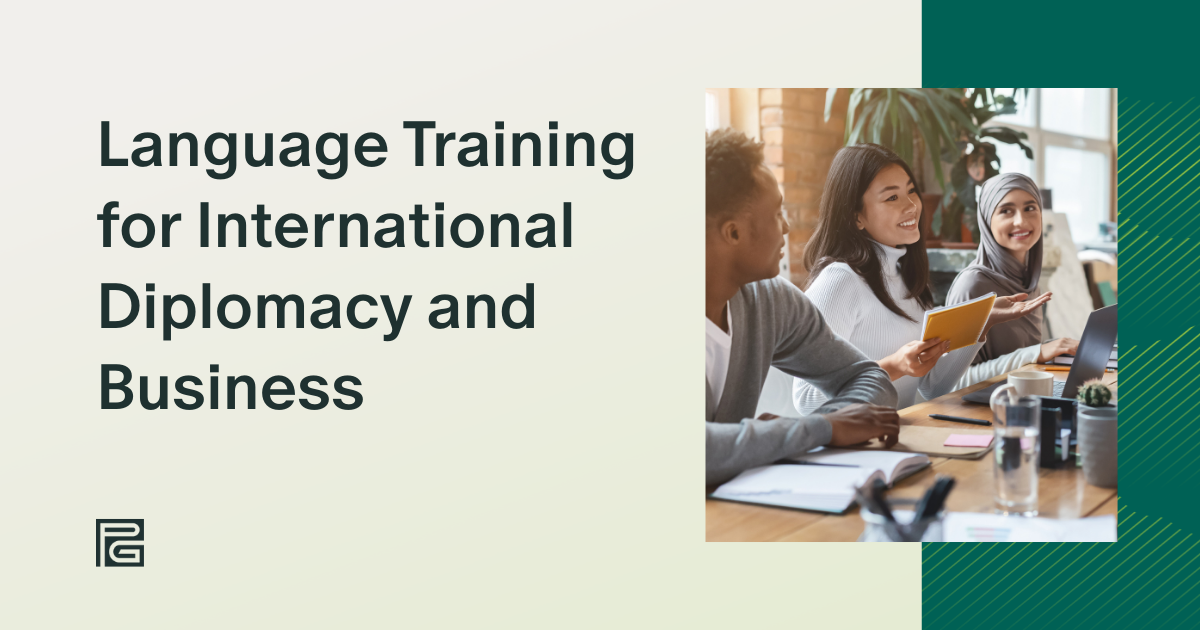
Language Training for International Diplomacy and Business

Language and Cultural Competence—Essential Elements for Effective Communication

“If you talk to a man in a language he understands, that goes to his head. If you talk to him in his own language, that goes to his heart.”


The Business of Language

The languages that we learn are more than just means of communication. Using only words, diplomats can start a war or end a hostage negotiation. Business leaders can create their vision of the world and persuade their counterparts across the boardroom table to invest in it. The Diplo Foundation, a non-profit foundation established by the governments of Malta and Switzerland, writes that this understanding of language as action, known as the Speech Act Theory, “is significant for diplomacy, since it confirms that diplomatic interventions and communications are not just a means to an end, but may be ends in themselves.”2

The same lessons must be applied in the increasingly interconnected world of international business, where language skills have proven to be just as important. Fundamentally, diplomats and business leaders “act on the world through language. It is therefore important to understand what exactly they are doing by means of the language they use.”3


Lack of Bilingualism in the US

Unfortunately in the US, when language training is mentioned, most people think back to everything that they have forgotten from their high school Spanish class. While experts estimate that approximately half of the human race is bilingual, only 20% of the American population is able to converse in two or more languages. In an online live panel discussion with The Guardian, Bill Rivers, Executive Director for the US Joint National Committee for Languages, accurately summarized the unique relationship that the US has with foreign languages: “We’ve a cultural tendency to look for quick solutions.”4

Despite today’s globalized society, there are still many factors that contribute to the lack of bilingualism here in the US, Relying too heavily on outdated foreign language workbooks, for instance, or on neural machine translation software can land you in hot water if you’re not careful. Effective, responsible language learning requires a program administered by language professionals who ensure you learn appropriate language skills coupled with poignant cultural references. If we refuse to change our monolingual attitude and fail to invest in professional language training, we will be left behind. We can no longer afford to employ these quick solutions — the stakes are just too high.


The Push for Language Training in the US — Lessons from our Past

On February 14th, 1979, Adolph “Spike” Dubs, the American Ambassador to Afghanistan was kidnapped in Kabul. He was held hostage in room 117 of the Kabul Hotel where he was ultimately killed in a 40-second shootout between the hostage-takers and the Afghan police who were acting under the direction of the Soviet embassy. As author Paul Simon wrote in his book, The Tongue-Tied American: Confronting the Foreign Language Crisis : “Before the tragic slaying, so the Washington Star reports: ‘[U.S.] Embassy officials had a brief chance to seize the initiative because they reached the hotel before Afghan police. But no one in the American party spoke fluent Dari or Pashto, the two most widely used Afghan languages, or fluent Russian.’”5

The primary function of diplomacy is communication between nations. According to the US Department of State (DOS), foreign service employees “represent the American people, advocate U.S. interests to the rest of the world and are America’s first line of defense in a complex and often dangerous world.”6 As such, language training should be seen as the most essential part of international diplomacy and international business.  “Diplomats engage in negotiations, persuasion, presentation, and communication, all of which necessitate language skills for the effective conduct of diplomatic work.”7 How can one advocate for the nation’s interests or negotiate for a preferred outcome without the basic ability to communicate across language and culture? The challenges of the 21st century require multilateral cooperation on multiple fronts — from climate change and environmental crises, to global pandemics and shocks to our interconnected economies. Without a multilingual approach, we will continue to talk past others, we will continue to fail, and will remain doomed to repeat the past.


US DOS Perspective: The Role of Language in Diplomacy

The US DOS’ perspective on the role of language in diplomacy has been evolving since the turn of the century. Dr. Gail McGinn, Senior Language Authority at the Department of Defense “recently noted the need to dramatically increase the number of personnel proficient in key languages such as Arabic, Farsi and Chinese to meet the expanding requirements for language and understanding of foreign cultures.”8 Additionally, Ruth A. Whiteside, the former director of the Foreign Service Institute, wrote in a 2008 article titled American Diplomacy and the Foreign Language Challenge:9


Language Training and Cultural Competence

Language training is more than simply learning the right words to say. It is about how we connect to others who come from a different part of the world. Language training for international diplomacy and business must take into account the cultural context of the language. In order for diplomatic training to be effective, former British diplomat Charles Crawford asserts: “Diplomats ought to know a little about the top 20 writers, poets, sports people, books, pop songs, legends, famous history moments, swearwords, jokes etc in any country they are going to.”10 This cultural competency ensures that, as British Foreign Secretary William Hague put it, diplomats and business leaders will be able to “get under the skin of a country and really understand its people.”11

In psycholinguistics, the Sapir-Whorf Hypothesis posits that the language spoken by an individual plays an important role in shaping her thoughts and actions. A significant part of learning a language involves changing the way our minds work, expanding them to include new perspectives and a new understanding of the world. If they are not careful, organizations might invest in language training that does not necessarily take the cultural context into account. It is only through intensive language training and cultural immersion that one can begin to understand the way that others think, and it is only through that understanding that we can truly break down barriers.

The following reflection of an American interpreter during his ACTFL-certified training for the Peace Corps demonstrates the need for cultural competence in language training:

During our 10-week intensive language training in Panamá, we covered cultural ideas like locus of control in collectivist vs. individualist cultures. In the latter, people believe that the individual is ultimately in charge of their own destiny, while in the former, the commonly held belief is that most things are outside of our control. I understood this concept intellectually, but there are some things that have to be experienced firsthand to be fully understood. In the afternoon, I would visit the house of one of my community counterparts, Marcelino Alabarca. We would drink coffee and engage for hours in small talk. Each day, I would attempt to schedule a time the following morning to work on his coffee farm. “Si Diós quiere,” he would respond (translated as “God willing”). After hearing this for several days without any follow through, I became frustrated. So, taking matters into my own hands, I came down to Marcelino’s house the next morning, ready to work. Marcelino sighed, “You want to go to the farm? Alright, let’s go.” “Great! I’m finally making progress!”, I thought to myself. However, when we arrived at the river, Marcelino looked at me knowingly. It had rained the previous night and the river had swollen its banks. The turbid water rushed rapidly over the stepping stones leading to the other side. There was no way to cross safely. “Si Diós quiere,” he chuckled. I learned my lesson that morning as we returned to Marcelino’s house for another cup of coffee.*

Language Service Providers (LSPs) that offer language training have an intimate understanding of the world of diplomacy for governments and international business communication. For this reason, they play a vital role in language training for diplomacy. Piedmont Global is a Strategic Globalization Organization that understands the importance of cultural competency and the critical need for specialized language training for international business.


Piedmont Global — Language Preparation for Diplomats and International Business Leaders

Piedmont Global has the experience and understanding necessary to adequately prepare diplomats and international business leaders for the challenges of our interconnected world. We have a longstanding partnership with the Defense Language Institute (DLI), the Department of Defense’s premier school for culturally-based foreign language training. We also have a longstanding partnership with the US DOS’ Foreign Service Institute (FSI), in which we train embassy staff before they are sent overseas. But our work is by no means limited to the public sector. We have extensive experience with numerous multinational corporations designing and implementing orientation and language immersion programs for new employees.

Piedmont Global offers language training in several signed languages as well as in more than 200 spoken languages, including Arabic, Chinese, Farsi, Dari, Hindi, Urdu and others deemed to be of critical-need by the US DOS. Additionally, Piedmont Global has followed the US DOS’ lead by “expand[ing] and enhanc[ing] language and area training to more advanced levels including focused targeted in-language media training and other job-specific modules designed to meet the needs of the 21st century foreign affairs professional.”12 This extensive experience has enabled us to rise to the top of elite language training programs in the US, offering a growing and robust language training program both on-site in Arlington, Virginia and online throughout the country.


Piedmont Global and ACTFL

As an active member of the American Council for the Teaching of Foreign Languages (ACTFL), we fully support the council’s advocacy for legislation that earmarks funding for the expansion of public school foreign language programs. It is vital that our children begin learning new languages at a young age if they are to achieve fluency. ACTFL proficiency guidelines remain the gold standard for understanding language fluency. Speakers at the Distinguished level demonstrate the ability to “reflect on a wide range of global issues and highly abstract concepts in a culturally appropriate manner. Distinguished-level speakers can use persuasive and hypothetical discourse for representational purposes, allowing them to advocate a point of view that is not necessarily their own… often using cultural and historical references to allow them to say less and mean more.”13 It is important to note that, as Matthew Rycroft, CEO of the U.K.’s Foreign and Commonwealth Office, pointed out, “however good diplomats are at languages, they will never be as proficient as native speakers.”14 This is a basic fact of language learning — no matter how hard you try, you can never fully get rid of your accent.

Overall, it is more important for diplomats and business leaders to have functional language skills rather than complete fluency. Speakers at the Advanced level of the ACTFL proficiency scale “engage in conversation in a clearly participatory manner in order to communicate information on autobiographical topics, as well as topics of community, national, or international interest… These speakers can also deal with a social situation with an unexpected complication.”15 Unexpected complications are commonplace in diplomatic and business settings, and the ability to stay flexible under pressure is vital. International counterparts will appreciate the effort being made to address them in their native language. Reaching across the language barrier shows a basic respect for our common humanity — refusing to make the attempt, however, reinforces cultural stereotypes about the Anglophone superiority complex, limiting and quite possibly damaging international relations.

In business as well as in diplomacy, multilateral solutions require a multilingual commitment. Invest in language training with Piedmont Global and rise to meet the challenges of an interconnected world.

Reach out to learn more about our language training solutions.


References

1 de Galbert, Pierre. “My Favorite Nelson Mandela (Mis)Quote.” Scholar.harvard.edu, 18 Feb. 2019, scholar.harvard.edu/pierredegalbert/node/632263

2, 3, 7 “Language and Diplomacy.” Language and Diplomacy | DiploFoundation, 2020, www.diplomacy.edu/language

4, 10, 14 Codrea-Rado, Anna. “Languages, Diplomacy and National Security: Five Key Issues.” The Guardian, Guardian News and Media, 5 Dec. 2013, www.theguardian.com/education/2013/dec/05/languages-for-diplomacy-key-points

5 Kuner, Christopher B. “Linguistic Equality in International Law: Miscommunication in the Gulf Crisis.” View of Linguistic Equality in International Law: Miscommunication in the Gulf Crisis, 1991, journals.iupui.edu/index.php/iiclr/article/view/17377/17505

6 “Who We Are – Careers.” U.S. Department of State, U.S. Department of State, 14 Feb. 2020, careers.state.gov/learn/who-we-are/

8, 9, 12 Whiteside, Ruth A. “American Diplomacy and the Foreign Language Challenge.” Council of American Ambassadors, 2008, www.americanambassadors.org/publications/ambassadors-review/fall-2008/american-diplomacy-and-the-foreign-language-challenge

13, 15 “ACTFL Proficiency Guidelines 2012”  American Council for the Teaching of Foreign Languages, 2012, www.actfl.org/resources/actfl-proficiency-guidelines-2012

The World’s 10 ‘Sexiest’ Languages and What They Reveal About Global Connection

Languages say more about globalization, cultural fluency, and human connection than you might think. 

Language has always had a certain power over us. Language dictates how we interact with each other, how we work together, and ultimately how we communicate with each other. Because of that, it’s no surprise that the “top 10 sexiest languages” list we created has managed to pique the interest of the internet. 

However, behind the entertainment factor of French vs. Italian vs. Portuguese, there’s something even deeper at work: What we’re actually attracted to about languages is the concept of connection itself. 

At Piedmont Global, we often say that language is the foundation of cross-cultural operations. This post takes today’s trending topic and reframes it through that lens. Below, we’ll explore how sound, culture, and perception shape our experience of global communication and ultimately, what this means for organizations expanding into new markets. 


The evolution of language

As humans, we did not reach the pinnacle because of the strength and speed of our bodies. It’s because of the ability to communicate. Communication through language has helped us transmit knowledge from generation to generation, build smart systems, and collaborate at scale. 

There are more than 7,000 known languages worldwide. They each embody a particular worldview and a particular culture which interprets the world in its own unique way. In the current state of globalization, businesses reach across many of them at the same time. 

This is where the role of strategic globalization rather than simple translation becomes critical. Language has ceased being a strictly social tool and has now become an integral part of business infrastructure. 


The World’s 10 “Sexiest” Languages through the lens of cultural fluency

Sure, this list is lighthearted, but it also offers insight into why certain languages shape global perception, branding, and culture. Let’s explore the top contenders and what they signal about global communication. 


1. Spanish

The Spanish language captivates many with its melodic flow, expressive tone, and a spectrum of regional variations.
 

Business insight: Spanish opens the door to access over 20 markets in Europe, the US, and Latin America, each of which has its own distinct culture. A company expanding into Spanish-speaking markets needs help beyond the translation — they need market-specific cultural intelligence. 


2. French

French has been linked to romance, diplomacy, and the arts because of its rich history and culture. 

Business insight: As one of the largest diplomatic and economic languages in the world, regions where French is spoken require nuanced communication strategies. This is especially in Africa, one of the world’s fastest-growing consumer markets. 


3. Italian

The Italian language’s charm lies in its rhythm and emotional resonance. 

Business insight: Italy’s cultural influence shapes design, fashion, and luxury sectors. Brands entering Italian markets must adapt things like tone, storytelling, and value propositions to cultural expectations around beauty, quality, and craft. 


4. English

A global lingua franca, English carries different associations depending on accent, region, and context. 

Business insight: English is often the operating language of global enterprises — but it’s never the only language of their workforce and/or consumers. One of the most common blind spots of globalization involves overemphasizing English as the only language. 


5. Portuguese

From Lisbon to São Paulo, Portuguese blends European roots with global influences. 

Business insight: Brazilian Portuguese in particular indicates a diverse and growing market where culturally meaningful understanding rather than simple translation can drive real engagement. 


6. Russian

Known for depth and intensity, Russian often can evoke mystery and strength. 

Business insight: Russian-speaking markets are diverse and complex regions. Localization in the Russian-speaking markets involves awareness of political context, regional variations, and business etiquette. 


7. Chinese

A tonal language with deep historical and literary roots, Mandarin is both intricate and musical. 

Business insight: In order to be relevant in the Chinese economy, organizations must be culturally fluent. This involves being sensitive to existing value systems, hierarchical structures, and symbols. 


8. Greek

One of the world’s oldest languages, the Greek language carries mythological and philosophical significance. 

Business insight: Trust, building relationships, and understanding heritage are essential factors in Greek-speaking markets that companies must consider when positioning in these markets. 


9. Arabic

The beauty of Arabic can be found in its poetic form and regional variations. 

Business insight: Companies that enter Arabic-speaking markets must be aware of the differences in the spoken dialects and cultural norms concerning formality, trust, and messaging. 


10. Hungarian

Often considered a bit of a linguistic oddity, the Hungarian language has a unique syntax and intonation. 

Business insight: Central and Eastern Europe are emerging hotbeds of technological innovation, AI development, and multi-language capability – geographic regions where culture plays a large role in engagement and customer experience.


So what makes a language ‘sexy’?

Accents? Yes. Melodic tone? Sure. But at the core, what we find “attractive” between all of these is the way they provide connection.

A language feels compelling when it:

  • evokes emotion
  • carries a strong cultural narrative
  • makes us feel understood

And that’s exactly why language is central to global business readiness and cross-cultural operations. Because each market, each customer, and each workforce responds not just to what you say, but also the way you say it, the way it feels, and the way it resonates within their unique culture.


Why This Matters for Global Organizations

The world’s Top 10 “sexiest” languages remind us of the universal truth that language unlocks the power of connection, and connection unlocks global growth.

Organizations expanding into new markets need:

  • Strategic insight → how communication aligns with expansion goals
  • Custom technology → multilingual infrastructure that scales
  • Embedded partnership → experts who guide teams across borders and cultures


In other words, they need Strategic Globalization. And that’s what we do best.

Ready to move from translation to transformation? 

Connect with our team.