Rethinking Learning: Insights from ATD 2025 and the Future of Talent Development

If there was one clear takeaway from this year’s ATD 2025 Conference, it’s this: the learning function is no longer a “nice to have.” It is the foundation of workforce transformation.

At Piedmont Global, we’re not waiting for the future—we’re building it. That mindset shaped my experience attending ATD, where learning and development (L&D) professionals, HR leaders, and technologists converged to discuss what comes next. The resounding theme? To navigate tomorrow’s work, learning must evolve beyond compliance checklists and mandatory courses. It must become immersive, personalized, strategic—and central to business outcomes.


Learning as a Strategic Lever for Change

In a world where only 26% of the skills needed in 2030 are present in today’s workforce, the traditional HR toolkit is no longer enough. Performance reviews and retroactive assessments can’t close the readiness gap. What can? Forward-thinking learning strategies that develop both competence and confidence in real time.

That’s why we’re reimagining our own approach to learning and development at PGLS. It’s not just about content—it’s about context, culture, and capability. As we design for a smarter, more adaptive workforce, our L&D program must cultivate behaviors and decision-making aligned to our values and mission. Learning is how we shape—not just support—organizational transformation.


The Build, Buy, Borrow Imperative

One of the more sobering insights from ATD: by 2030, the global workforce will be short over 85 million people with the skills needed to drive innovation and growth. Addressing this isn’t a matter of hiring faster. It requires a strategic reframe around talent—what we call the “build, buy, borrow” approach.

  • Build refers to growing capabilities internally through tailored training and coaching.
  • Buy means identifying and recruiting external talent for emerging needs.
  • Borrow acknowledges the value of strategic contractors and partners who can help you move faster without long-term overhead.

To make this model work, you need skill-level data—down to the task level, not just the job title. This is where AI and quantum labor analysis come into play. By understanding the “have, need, and want” of your workforce, HR and L&D leaders can target learning where it will move the needle, not just fill a seat.


Immersive Learning and Human Skills

One of the most exciting trends at ATD was the rise of immersive learning—using virtual reality and simulations to replicate high-stakes environments and train faster, better, and with more retention. Case studies from healthcare, defense, and corporate leadership showed that VR and simulation-based learning drastically improve retention, engagement, and speed-to-competency. According to a PwC study cited at the conference, VR learners trained four times faster than those in traditional classrooms. From leadership readiness to clinical training, the ability to “learn by doing” is driving measurable performance gains.

But speed isn’t the only metric. Quality matters. Which brings us to the growing importance of soft skills—what many now call “human skills.” Emotional intelligence. Cultural awareness. Communication. Leadership presence. Adaptability. These are no longer “soft” skills. They are business-critical and increasingly valued above technical know-how. Why? Because the landscape changes too quickly for tools and processes to be static. What endures is our ability to navigate uncertainty—and that’s where human-centered, culturally fluent learning comes in.

These skills are harder to teach—which is why experiential learning is so powerful. It allows people to practice in context, make decisions in safe environments, and build the confidence they need to thrive.


From Order-Takers to Value Creators

Too often, L&D teams are seen as service providers—executors of one-off trainings or check-the-box compliance. That’s not the model of the future. Learning professionals must become value creators, helping to align skill-building to organizational strategy, performance goals, and workforce transformation.

ATD reinforced the importance of strategic workforce planning. That means connecting L&D not just to HR, but to finance, operations, and executive leadership. It also means understanding which roles are critical—not just to today’s workflows, but to tomorrow’s growth.

This evolution requires better tools, yes—but also a mindset shift. Data has to drive decisions. And learning has to be owned not just by HR, but by every manager and leader in the organization.


Human-Centered Design and Listening at Scale

Another insight I’m bringing back from ATD is the value of human-centered design in L&D. Whether you’re building a course or a full-scale learning experience, the learner’s perspective has to be at the core. Tools like Qualtrics are helping organizations listen to employees at every stage of their journey—capturing sentiment, tracking engagement, and refining learning in real time.

The Kirkpatrick model was also emphasized as a way to measure learning effectiveness not just by test scores or attendance, but by behavior change, business impact, and ongoing engagement. When learning becomes an experience—not an event—it drives results.

This is something we’re actively applying at Piedmont Global. In 2025, we’re rolling out a new management development program focused on coaching, conversation, and community. It includes dedicated time each month for managers to develop themselves and their teams—and aligns professional development directly with performance and compensation. We’re building the future of leadership, one conversation at a time.


Why Language and Cultural Fluency Matter

As much as the ATD conference focused on tech and talent, one topic was notably underrepresented: language and culture. And yet, these are foundational to effective learning—especially in diverse, global, or multilingual workforces.

At Piedmont Global, we’ve seen firsthand how a lack of linguistic or cultural access creates friction—misunderstood expectations, uneven training results, and disengagement. That’s why we embed language and cultural fluency into every learning program we design or deliver.

eLearning isn’t effective if it’s not accessible. Immersive training won’t resonate if it’s not localized. And strategic workforce planning won’t succeed if teams don’t feel included in the journey.

That’s where we come in. As a Strategic Globalization Partner, we help organizations ensure their learning content is clear, relevant, and resonant—no matter the language, location, or audience.


Looking Ahead

My time at ATD left me more energized than ever. The world of work is changing fast, but so are the tools, strategies, and insights we can use to get ahead. We’re committed to putting learning at the heart of our workforce strategy—not just to train, but to transform.

We’re embracing new technologies like VR and AI, but we’re doing so with a human-first lens. We’re coaching our managers to lead with empathy and intentionality. And we’re building programs that reflect who our employees are—not just what we want them to know.

Because learning isn’t just how we grow skills. It’s how we grow people.


Ready to deliver impactful learning across cultures and languages?

At Piedmont Global, we partner with organizations to design and deliver culturally fluent, multilingual eLearning programs that accelerate understanding and performance across borders. Whether you need localization, interpretation, or multilingual content strategy, our team is here to support you.
Connect with our team!

2025 Language Access Symposium: Positive Parental Engagement and EL Student Outcomes

In partnership with Fairfax County Public Schools Language Services, Piedmont Global hosted its second annual Language Access Symposium on May 8. Attended by educators from various school districts within the DMV area, the event brought together language access champions for an engaging half-day of conversations and camaraderie.

The question on everyone’s mind was, “What does the future hold for language access?” Bill Rivers spoke to the legal compliance focus of language access and the importance of continued advocacy on the Hill. While multilingual families and students are still protected by the Office of Civil Rights and Title VI, advocating for the value of language access is more important than ever.

As educators continue to connect the dots between spending and efficacy, much of the discussion centered on solutions and strategies to promote English learner (EL) student growth, with a special focus on engaging parents, analyzing data for trends, and creating stories of impact.


In Review: Family Engagement and EL Student Growth

As a group of evidence-based educators, symposium attendees brought a wealth of knowledge (and experience) to the conversation about EL student outcomes.

Plenty of research indicates that when parents are involved, children do better in school: advancing in socio-emotional learningtesting higher, and exhibiting more predictable behavior. However, when it comes to the impact of parental engagement on EL student growth, available data is lacking in specifics. This may account for some of the challenges educators face when engaging with EL families.

Most school districts invest time and resources into parent engagement. However, English-speaking families often have different relationships with teachers and administrators compared to EL families. Language access is a bridge to understanding, but if interpreter resources are not easy to use or not explicitly encouraged, educators may only use them sparingly, or only in reaction to a problem that needs to be solved urgently. As a result, the only conversations between teachers and EL families might be negative or challenging: disciplinary matters, poor academic performance, or other difficult conversations.

Many agreed there is room for improvement. Alternative strategies were discussed. For example, what would prioritizing proactive, positive engagement with EL families look like? Which academic milestones or school events should trigger a conversation, and how can language access leaders encourage teachers to take the initiative?

Another symposium speaker, Jason Velasco, also spoke to AI advancements that can help school districts bolster multilingual communication in the classroom.

While the heart of parental engagement is driving connection and building trust, determining measurable impact must also be factored into the plan.


How Language Access Leaders Can Make Their Case with Data

Symposium attendees also shared best practices surrounding data and storytelling. The group discussed ways that school districts can leverage student assessments and test scores to develop insights and points of reference for supporting EL student growth.

For example, looking at local norms, such as how the district’s students are performing, and modeling EL student data against these norms establishes a baseline. These figures can be helpful in figuring out what is working for EL students and what is not.

Prior to trying anything new, educators should have these baselines handy for comparison. If improvements to EL student performance are observable after implementing changes, such as a proactive parent engagement strategy, language access leaders can clearly spell out the impact of their programs.

Measuring long-tail impacts can be challenging, which is why educators need to find the lowest-hanging fruit. Educators need to look at not just grades, but also socio-emotional learning, attendance records, behavioral incidents, and other key indicators. Much of this data is readily available and can make all the difference when needing to advocate for resources, especially when budgets are tight.


The Future of Language Access is Bright!

Al Radford, director of Public Relations and Community Relations at Manassas City Public Schools, told Piedmont Global, “I had a lot of key takeaways to bring back to my district. I learned a lot that got me excited about family engagement.” On the value of coming together, Al also said, “Community is important. It helps us to understand that none of us are islands. We don’t have to work in isolation. At the core, all of us are about providing services to our families. Being able to talk with each other and share ideas is paramount.

This group of language access leaders shares an optimistic view of the future. As more schools prioritize relationships with EL students and families and adopt language access best practices, programs can continue to expand to meet their needs and give students the best chance at success.

Piedmont Global looks forward to our next opportunity to convene the DMV’s language access community in 2026. Thank you to our attendees and to our host, Fairfax County Public Schools Language Services, for providing such a great experience.

Stay tuned for more insights and discussion about language access in K-12 schools. If you would like to host a Language Access Symposium in your region, we’d love to hear from you.

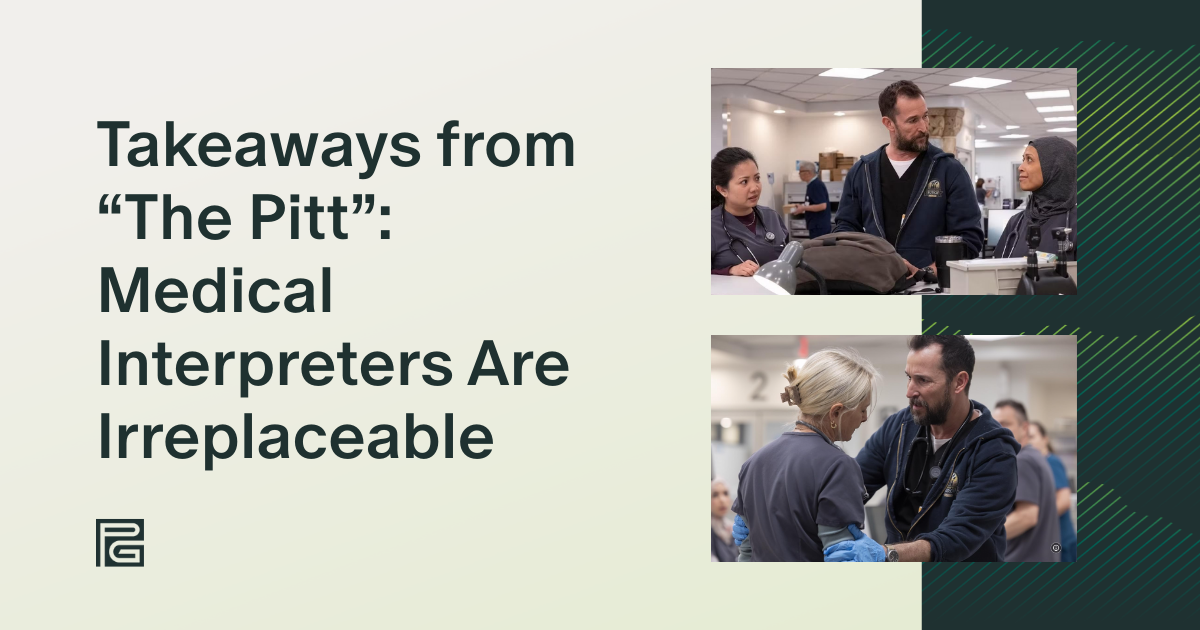
Takeaways from “The Pitt”: Medical Interpreters in Emergency Departments Are Irreplaceable

The 2025 breakout medical drama, The Pitt, received overwhelmingly positive reviews from healthcare workers for its realistic portrayal of an emergency department (ED) over a tumultuous 15-hour shift. Among the important, real-world issues presented by the show was one common scenario that every ED provider in the United States recognized.

In the series premiere, a patient arrives in an ambulance with a life-threatening injury. After Dr. Robby, a courageous attending physician played by ER’s Noah Wyle, and his team stabilize the patient, they quickly determine that no one knows what language she is speaking.

Patients with limited English proficiency (LEP) interact with healthcare systems differently than their English-speaking peers, often experiencing delayed access and worse outcomes. Medical interpreters are an integral part of the lifesaving work in EDs across the country, providing vital bridges to communication that enable providers to deliver the best possible patient care.

As linguists and partners in language access, we were thrilled to see The Pitt bring visibility to the needs of LEP patients and offer a window into the dynamic challenges faced by emergency department providers. Their commitment is nothing short of heroic. Here, we examine the impact of this LEP patient’s storyline and explore what it takes to ensure LEP patients receive support when they visit the emergency room.


There Are More Than 25 Million LEP Patients in the United States

According to the U.S. Census Bureau’s 2022 American Community Survey, more than 25 million people in the United States are limited English proficient. This population is growing, yet studies continue to show that LEP patients experience worse health outcomes on average.

Between lower rates of healthcare coverage among immigrant populations, language barriers with healthcare providers, and challenges with managing chronic conditions, LEP patients are vulnerable. When we work together to uplift the care and experiences of LEP patients in times of crisis, our neighborhoods and communities benefit exponentially.

Other studies have shown the impact of language barriers on hospital resources. Providers may feel more comfortable ordering additional tests or observing LEP patients over longer stays. These additional measures (and costs) may not be necessary if a qualified medical interpreter is available to assist with communication.


Language Access Supports LEP Patients in Emergency Rooms

Viewers and critics of The Pitt witness compassion and competence unfold in the fictional Pittsburgh Trauma Medical Center, and real-world healthcare workers say the portrayal rings true. It is the providers’ persistence and dedication that impressed audiences, while physicians and nurses found the medicine, pace, and colleague relationships to reflect their lived experiences in the ED.

Supporting LEP patients in emergency rooms requires close coordination and a clear process for locating interpreters. From our perspective, The Pitt handles this sensitive matter accurately. There isn’t much else Dr. Robby and his team can do to identify this LEP patient’s spoken language sooner, who arrives with a level one triage injury and a pain level that makes communication next to impossible. The language barrier likely goes unnoticed during the ambulance ride.

Once the patient’s condition is better managed, Dr. Robby leaves to contact language services—the correct action to take on behalf of an LEP patient. Later in the series, viewers discover that she speaks Nepali, and our heroic providers have activated a tried-and-true solution, especially for less commonly spoken languages: video remote interpreting (VRI). Viewers see the patient and providers communicate with the help of a Nepali-speaking interpreter through a portable, video-enabled device. The patient is on the road to recovery.

According to the Pew Research Center, there may be as many as 5,000 Nepali-speaking individuals in Pittsburgh, or less than 0.02% of the city’s population. While the numbers tell one story, the reality is altogether different. Regardless of national origin or size, every community needs access to emergency healthcare services. Language access significantly reduces harm, suffering, and loss of life, especially considering that VRI can provide coverage for most major languages.


Language Access in Hospitals Helps Providers Focus on the Medicine

The Pitt also reminds audiences to consider the vital role of nurses in hospital operations. Pittsburgh Trauma Medical Center clearly could not run without them.

Princess (Kristin Villanueva) and Perlah (Amielynn Abellera) perform challenging, hands-on tasks over their 15-hour shift, often sidebarring in Tagalog in moments of reprieve. Princess and Perlah offer a window into the experiences of the more than 150,000 Filipino nurses who have immigrated to the United States since 1960.

While nurses are an irreplaceable addition to any emergency department team, even multilingual nurses cannot replace the role of language access in hospitals. Between intakes and discharges, medicine management, coordinating with other departments, and plenty of other tasks, nurses’ obligations are nonstop. There is hardly room for on-call interpretation. Instead, the most effective way to support emergency department staff communication with LEP patients is through dedicated language access professionals.

Even as emotions run high and interpersonal disagreements simmer beneath the surface, The Pitt’s Dr. Robby and his staff function like a well-oiled machine. Small actions, such as calling an interpreter, can make all the difference to a patient who cannot communicate with doctors and nurses. This positive patient outcome was no accident. Viewers can assume that Pittsburgh Trauma Medical Center has a language access plan that explains how to deploy language services, lays out staff protocols, analyzes LEP patient feedback, and identifies opportunities for improvement.

In the case of their Nepali-speaking patient, Dr. Robby or Dana might consider asking the hospital’s language access manager to explore strategies for language identification before a patient reaches the ED. Perhaps the local paramedic team would benefit from a refresher training. Also, new technologies are emerging that can recognize spoken languages, reducing confusion and enabling providers to call on the right interpreter at the right time. This type of forethought streamlines patient experiences, allowing providers to remain focused on the medicine and saving lives.


Improving patient experiences with Piedmont Global interpreters

If you want to explore opportunities to support LEP patients in emergency rooms, our free eBook details the processes and considerations of building a comprehensive language access plan. As a strategic partner to hospital networks, Piedmont Global provides valuable planning assistance and VRI services in over 100 languages and regional varieties. Get in touch to learn more.

5 Tips for Successful Website Localization

When expanding into new markets, messaging can make or break your success. Translation plays an important role in global expansion, but on its own, translation is not enough to launch successfully overseas. To reach the right customers with the right content, your go-to-market plan must consider regional and cultural insights, preferences, and trends. Core to this work are website localization and website localization services that help your brand resonate in global markets.  

If you exclusively rely on translation to communicate with global customers, you might be leaving opportunities on the table. Localizing your website examines the factors influencing culture, perception, and communication, and facilitates the necessary adaptations to brand, product, and UX to truly connect with target audiences. 

Try these five tips to localize your website effectively and convert global customers. 


#1: Localize UX/UI

Successful website localization is more than just translating words and concepts. This process also considers local norms, requirements, and preferences for user experience (UX) and user interface (UI) design. For example, Arabic-speaking consumers read text from right to left, while some East Asian websites may optimize vertical content layouts. These adaptations are critical for a seamless user experience in each target market. 

Additionally, copy length and layout flexibility play a key role in ensuring localized content looks natural on every version of your site. Incorporating content localization services early in design planning ensures that visuals, UI/UX elements, and text structures support multilingual content without friction.  


The “F” pattern in the Global Market

In the Western world, most users navigate sites in an “F” pattern — scanning horizontally across top content and vertically down the left. This design convention may not hold true in other regions, making it essential for organizations to adapt website localization strategies to cultural reading patterns and expectations.  

Discussing these issues early with a trusted Strategic Globalization Organization (SGO) ensures potential UX/UI challenges are identified and addressed before costly redesigns later in the project.  


#2: Don’t take shortcuts with translations

Translation work is foundational to website localization services. A survey of over 8,000 global consumers reports that 76 percent of consumers prefer to make purchases when information is available in their language — and many will not consider buying from a site not localized into their region’s language and cultural context. 

Machine translation tools, when paired with professional oversight, can extend output efficiently. However, relying on raw machine output without contextual review can lead to errors and cultural missteps that damage credibility — which is why expert content localization services are essential to quality outcomes. 

#3: Adapt your visual language for global audiences

Audiences experience online content in unique ways largely driven by cultural norms. The differences between a U.S.-English website and a Mandarin-focused site go beyond text: they include visual presentation, color associations, imagery, and iconography. These visual elements must be adapted as part of comprehensive website localization. 

Researching visuals and symbolism in each target demographic can greatly impact engagement and perception. Ensuring your content is culturally aware of these differences is easier when planned proactively rather than retroactively.  


#4: Update your SEO strategy with local keywords

Keywords change from language to language, country to country, and even city to city. Understanding how your target market searches online and what terms they use is essential to boosting organic traffic and ensuring your localized site ranks well in local search results.  

A refined SEO approach — including localized keyword research, multilingual metadata, regional search behaviors, and local-market SEO best practices — helps your site become discoverable to the right customers in the right regions. Partnering with experts who provide localization services that include SEO can help your global web presence perform optimally.


#5: Link to popular social channels

A localized website should also connect users to the most relevant social platforms for each market. While platforms like YouTube and Instagram may dominate in the U.S., your global audiences might engage more through WeChat in China, LINE in Japan, or WhatsApp in parts of Latin America. Localizing social links — part of broader website localization services — helps maintain relevance and drive engagement outside your web property. 


Explore Professional Localization Services

Looking for a Strategic Globalization Organization (SGO) you can trust? Piedmont Global brings valuable expertise to global go-to-market planning. Our team provides end-to-end website localization services, from content extraction, translation, and engineering to post-localization testing and refinement — and we can help you extend this work into software localization services and other tailored solutions for your business. 

Experience the difference with expert global partners committed to turning translation into transformation. 

Going Global with Your Marketing Strategy: Transforming Market Research into Audience Growth

Are you tasked with developing a global marketing strategy? Whether you lead a marketing department for a growing startup or an established enterprise, elevating your brand to the global stage can unlock new opportunities. However, since global audiences have distinct cultures, they may engage with brands differently than the followers and subscribers in your home country. Marketers should approach this task with care and curiosity, backed by thorough market research.

Your global marketing strategy ought to consider how local audiences will perceive your value proposition, how your brand may need to adapt, and whether you need to hone your delivery to spark their interest. The key to all of this? Understanding local audiences before investing in content, advertising, and campaign assets protects your team’s bandwidth and budget.

If you can show up authentically when engaging with global audiences across every channel, you can count on stronger results. Here, we will discuss how to maximize audience engagement and growth, while also remaining efficient and supporting revenue.


Conduct market research for global audiences

To prime your global brand launch for success, it is important to acknowledge that there are many unknowns. What works in your home market may not be as effective in a different country. Great brands are built on awareness of and engagement with cultural preferences, trends, and tendencies, which is why you need to start with market research.

Too often, the market research phase is overlooked in favor of taking immediate action, which means teams end up relying on outdated information to build their strategy or, worse, only gain valuable cultural insights after it’s too late to use them. What’s at risk? Content that is out of touch with your audience could flop, wasting your investment, or worse, might tread on sensitive topics that inadvertently cause offense.

Which products, trends, stories, and aesthetics actually inspire your target customers? Market research will help you answer this question. Demographic data, such as age, gender identity, income, and education, and psychographic data, such as values and behaviors, paint a clear picture of who you’re trying to reach. You need to understand the emotions, events, and motivations that drive them. This information helps determine whether your existing campaign concepts already align with local preferences or whether strategic tweaks to content, framing, or messaging will enhance your pitch. This decision represents a key turning point—where intent translates to impact.

Sourcing these insights, especially from a distance, is not always straightforward. There are many avenues to approach this effort. Hiring strategic globalization consultants, building partnerships with local market researchers, and engaging local influencers can provide a strong foundation for tapping into the local scene. Copy testing and design testing should also be on the agenda. Of course, you should also plan to consume plenty of content from the local competition and adjacent industries.

Market research doesn’t just enhance your campaign success. It should also empower your team with confidence, because entering a new market with a clear, data-backed vision will increase the likelihood of executing your plan successfully.


Create a multilingual website

Once you have a strong working understanding of who you aim to reach, your next step is creating a home base for your global audience. A multilingual website is essential for a successful global launch. Creating one, however, involves much more than simply translating your existing website content into new languages.

Keywords, region-specific search engine trends, and localization of content must all be evaluated to identify the needs and wants of your new target market. Sometimes, a multilingual website may be the best approach. Yet, in geographically distant language regions, it may be beneficial to create a dedicated website, utilizing fresh market research and local customer-focused content.


Localize your content

Copywriting, an integral part of every marketing strategy, is at the heart of how you communicate with customers. As your brand’s voice, copy is vital to every successful global launch.

Today’s audiences expect their favorite brands to put out engaging stories, contribute to culture, share valuable information, and even provide entertainment. From website and social content to email campaigns and blogs, your brand’s content should always provide audiences with a new reason to trust your vision and believe in your purpose.

For global audiences, translation is not always enough; you also need to ensure you are speaking the same language. Localization is mission-critical to global content because it takes translation a step further, bringing contemporary, local value to stories and visuals. It requires the professional expertise of localization experts, who possess the market-savvy knowledge of native speakers and genuine, in-country cultural experience.

Without localization support, your content may not be useful. New audiences may perceive you as inauthentic, rather than feeling like they are part of a cultural experience. In short, failing to localize content can stand in the way of cultivating strong relationships with new customers.


Craft a global social media strategy

Social media is a vast, almost boundaryless platform for global brand building, audience development, and growth, but with these opportunities come some significant challenges. To cultivate a strong voice on social media in new regions, you need to ensure you’re equipped with cultural know-how, a strong brand identity, and agility—all of which are hallmarks of the best global brands on social.

Consider all the factors that affect how audiences interact with your social presence, from the types of social content that resonate to the voice, tone, and messages that align culturally. Algorithms continue to prioritize video, and video localization requires more than just copy rewrites. You will need models or actors who reflect the region, a graphics and editing style with local appeal, and many other touches to ensure content speaks your new audience’s visual and verbal languages.

Regardless of the platform, how you communicate with your new customer base is just as important. Localized social media content is crucial for effectively connecting with your audience. Hiring local influencers to promote your social presence lends credibility as your brand team experiments with ways to connect authentically with local audiences.


Enhancing email targeting and timing for global subscribers

At home or abroad, email marketing campaigns rely on a delicate formula. It takes time to develop engaging, informative content for your consumer base that drives positive open, read, and engagement rates.

Consider segmenting your audiences and tailoring email content to specific groups of recipients that share key characteristics. For some brands, this approach has been key in enhancing performance outcomes and sustaining audience interest.

Aside from effective targeting, timing is everything. By getting to know your global audience segments, you can identify peak times when they are most likely to read your emails and time campaigns to coincide with these windows of opportunity. The most important thing to remember is how your target demographic differs between different regions, and ensure you are marketing to each group directly.


Win global customers through marketing localization

As you prepare your business to expand overseas, marketing localization provides tailored messaging to new audiences, enhancing the efficacy of your efforts and increasing your growth opportunities. At Piedmont Global, our experienced team of strategic globalization and localization experts can help your business launch successfully in new markets, servicing over 200 languages and almost any region of the world.


Get in touch to learn more.

Language Access and Health Equity: How Working with Medical Interpreters Uplifts LEP Patient Care

When considering the intersection of language access and health equity, the American Medical Association (AMA) attests that addressing cultural and ethnic disparities in healthcare uplifts LEP experiences, contributing to better patient outcomes.  As language barriers are a compounding factor, the AMA endorses the use of interpreting services to mitigate known disparities.

Accurate communication in healthcare serves to improve quality of life and morbidity outcomes for patients. As a result, even in the face of current uncertainty, language access services in healthcare remain essential for serving multilingual or non-English-speaking patients safely, effectively, and efficiently.

Medical interpreters help bridge communication differences, and by doing so, uplift and support better outcomes for historically marginalized patients. To improve language access and health equity in your care network, it’s imperative to collaborate with a partner who shares your same passion for uplifting our communities most in need, which in turn, uplifts us all.


How Working with Medical Interpreters Improves LEP Patient Outcomes

Clinical uncertainty driven by language barriers is a common root cause of misdiagnoses, which lead to unnecessary testing and longer hospital stays. One meta-analysis of 189,119 patient records from 220 case mix groups found LEP patients experienced a 6 percent longer length of stay (LOS) than their English-proficient peers.

In contrast, when working with medical interpreters, providers can gain the clarity needed to collect symptoms, complete patient histories, and medication lists, resulting in more streamlined care.

Poor communication impacts patient outcomes and drives up costs in other ways. Prescription medication nonadherence, for example, is estimated to cost the U.S. healthcare system between $100 billion and $300 billion in direct and indirect costs each year. Trust and communication are key mitigations to patient nonadherence; when language barriers are involved, the necessity of qualified interpreters cannot be overstated.

When a health system, hospital network, or private practice collaborates effectively with medically trained linguists, administrators and providers can count on enhanced patient understanding and compliance, as well as fewer unnecessary costs.

While a language service provider (LSP) supplies medical interpreters, they also serve as cultural advisors, helping healthcare institutions address patient communication needs more comprehensively. Organizations like PGLS partner with those in healthcare to navigate state and federal requirements, meet compliance obligations, streamline costs, and augment patient care with customizable language access plans, HIPAA-compliant language access services, and expert guidance. The following are a few of our leading recommendations when working with hospitals and healthcare providers. 


Recommendations for Working with Medical Interpreters

When working with medical interpreters, process optimization and education go a long way towards better patient care. If you aim to not only meet compliance obligations but to also improve language access and health equity for LEP patients, we have three key recommendations:


#1: Language Access Mapping

Mapping the journey of an LEP patient through the healthcare system helps ensure a high standard of care across every interaction. The idea is to support language access continuity from consideration and intake all the way through post-visit care and insurance/billing.

As outlined in our healthcare language solutions, mapping helps you identify the touchpoints before, during, and after patient care that require language access. From building signage, kiosk content, and consent form translations, to follow-up appointment messaging and payments, there is often plenty of opportunity for optimization to be uncovered through this process. Wherever possible, solicit LEP patient feedback on their experiences to identify trends or frequent issue areas.


#2: Staff Training

All staff–from front desk receptionists to attending physicians—must receive training on how to meet the needs of LEP patients. This training should help establish the stakes of why language access is important, and how it helps drive health equity.

Staff training ought to cover how to identify an LEP patient’s preferred language, where relevant language access resources are located (such as translated consent forms), and how to reach an interpreter. Providers should know to notify other providers about language access needs before every new interaction, whether for a blood test, MRI, or transfer to another division. All processes need to be standardized across departments for continuity of care to help improve outcomes and decrease visits for LEP patients. 


#3: Video Remote Interpreting

Video interpreter services are an increasingly common solution in hospital settings for a number of reasons. When a patient speaks a language that is not staffed on-site, video remote interpreting (VRI) fills the gap with on-demand language access. Video interpreter services often reduce costs related to scheduling, downtime, and travel, elevating efficiency and affordability. Also, non-verbal communication can be accounted for, which improves comprehension between patient and provider as compared to over-the-phone Interpreting (OPI).

It is also worth noting that each plan has their own unique requirements for on-site interpretation, including minimum billable encounter duration, making virtual interpretation a meaningfully more affordable option, in many cases.

No matter whether your hospital opts for video or phone-based interpreting, it’s important to remind providers to use clear language to minimize confusion. Also, they will need to pause more frequently to allow for interpretation.


Overcoming Common Misconceptions about Language Access

To mitigate disparities for patients with limited English proficiencyyour staff needs to know how to activate resources and identify avoidable mistakes. Addressing common misconceptions associated with language access can help providers better support LEP patientsEven a few small changes can generate a positive impact.  


Have a Process in Place for Video Remote Interpreting

One common concern with language access is time, but video remote interpreting can be a major time-saver. When working with LEP patients, your staff should feel confident in their ability to reach, deploy, and communicate efficiently with a VRI device. Providing a well-documented process, training, and regular refreshers are key to building confidence and competency with the technology, so providers, nurses, and assistants can continue balancing the needs of other patients without interruption. 


Avoid Relying on Multilingual Family Members

Another common misconception is that multilingual family members or friends can or should interpret medical advice and treatment information on behalf of LEP patients. In this scenario, there is no way to assess the interpreting capabilities of an untrained friend or family member, and whether LEP patients are misunderstanding or receiving inaccurate information about their care plansAlso, patients may be reluctant to share sensitive medical information with their children or friendsOnly a trained medical interpreter can provide the confidential, precise, and professional level of communication necessary in a hospital setting. 


Treat Language Access as a Necessity

Some may view language access as a luxury, but consider the whole picture of the LEP patient experience. Many LEP patients have experienced generational disparities. As a result, far too many are more likely delay seeking care, avoid hospitals altogether, or struggle to follow through with medication.

Providing a bridge to clear and accurate communication breaks down these barriers. Language access builds trust, brings compassion to the practice of patient care, and can improve the quality of life for all LEP patients coming through your facility.


Partner with a HIPAA-Compliant Language Services Provider

Working with a strategic LSP can help you strengthen your language access plan to ensure accurate communication and uninterrupted care. PGLS offers consultative, HIPAA-compliant healthcare interpreting services, language access planning, and translation services. See the difference when working with PGLS: reach out to a representative today to learn more. 

The Voices in the Room: Why Language Access Matters

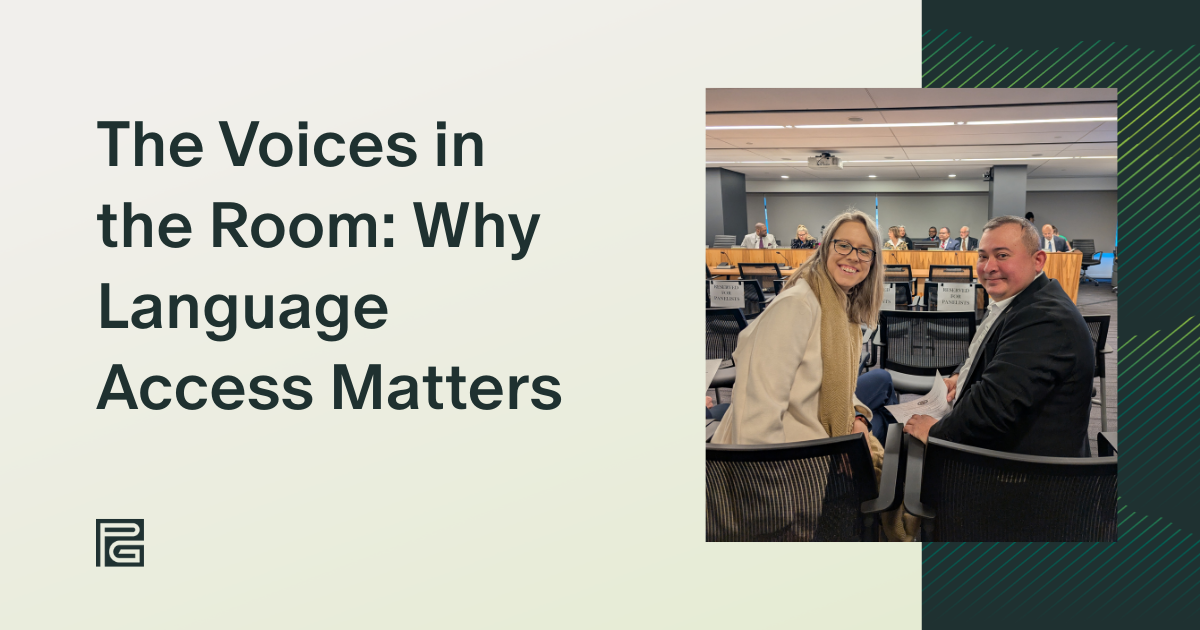
There’s clarity that only comes when you’re in the room.

On March 25, we attended the U.S. Commission on Civil Rights (USCCR) briefing, Language Access for Individuals with Limited English Proficiency. We had read the agenda. We had seen the talking points. But nothing prepared us for the raw honesty of the testimony shared. For those who only watched the livestream, it is hard to convey how charged, human, and deeply personal the testimony felt in that room.

We didn’t testify—we were there to listen. As leaders in language operations and technology, we felt a responsibility to bear witness, reflect on what it means for our industry, and ask how we can do more.

As we sat listening, one thing was undeniably clear: Language access isn’t a nice-to-have or a bureaucratic box to check. It’s a public safety imperative. A moral obligation. And yes, a business issue.


A Personal Reflection: Clare

For me, it was deeply personal. I’m relatively new to the language access world—but I’m not new to what it feels like to be in a room where language is a barrier to belonging. As I sat, notebook in hand, memories came flooding back of the neighborhood I grew up in, where neighbors didn’t always share a language but shared everything else: meals, rides, childcare, laughter. I thought of my mom, who often stepped in to interpret for our neighbor, Aritza. She helped her navigate everything from coordinating with city maintenance workers to communicating with healthcare providers and law enforcement.

At the time, I saw it simply as neighborly support. But sitting in the hearing, I understood it differently. The burden of trying to make your world understandable without the right tools and support suddenly felt much heavier. Especially when I heard story after story of children interpreting for their parents in emergencies or translating complex forms at school. The emotional toll and the responsibility are too much for anyone, let alone a child.

As Ms. Tran reminded us during her testimony, “Interpreting is a specialized skill—one that requires training, accuracy, and cultural sensitivity. It’s not something you can ask someone to do just because they happen to speak the language.”


A Personal Reflection: Gilbert

From a basic accessibility lens, this is a failure to understand fundamental needs and requirements. If we’re not delivering the message clearly, consistently, and equitably, then we’re not solving the problem—we’re compounding it.

Poor design in communication isn’t just frustrating, it doesn’t just cost money; it’s dangerous. If you don’t build language access into civic interfaces from the start, you’re designing for failure. It’s not enough to simply translate a message. We have to deliver it in a way that is clear, unambiguous, in context, and accessible, whether that’s a posted evacuation plan, a courtroom proceeding, or a parent-teacher meeting. Language access isn’t a bolt-on feature. It has to be part of the blueprint. The consequences of mislabelling something are universally bad, and all languages and people deserve it; the collective costs are far outweighed by the modest investment in language access. It’s an investment in the community–we heard repeatedly that it’s not just about speaking their language, but in understanding their story. True access comes when communities shape the message, not just receive it.

It also struck me how often the children as interpreters came up—not just as witnesses to their parents’ struggle, but as participants, carrying burdens they should never have to bear. It’s a sign of quiet desperation when a child becomes a system’s last line of defense.


Stories of Barriers, Advocacy, and Solutions


When Translation Isn’t Enough: The Call for Meaningful Access

Mr. Lynip, a teacher and advocate in Richland School District in Columbia, South Carolina, spoke not just about tools or technology—but about the gap between communication and comprehension. And how students suffer when families are unheard.

He challenged the Commission to take seriously a term in its own mission statement: meaningful access.

“It’s not just a matter of having translated or interpreted materials. Parental voice has to be meaningful. It has to be loud enough for us to hear.”

He shared real stories of students:

  • A student delayed for over a year in receiving educational testing because the family couldn’t navigate the system.
  • A child who missed two weeks of school—not because of illness or truancy, but because her family didn’t know that having a scheduled vaccination appointment was enough to attend.
  • A young girl placed in fourth grade against her mother’s wishes—only to discover later that the child had missed the first two years of school entirely.

These weren’t translation problems. They were listening problems. Design problems. System problems.

However, Mr. Lynip also offered hope, pointing to local innovations like Healthy Learners, a program that eliminates healthcare access barriers by transporting students directly to appointments. He called for more intentional collaboration—across hospitals, schools, civic groups—to remove friction points and build systems where families are seen, heard, and served.


“She’s Only Nine Years Old”

Ms. Tran, an attorney at Community Legal Services of Philadelphia, shared her personal story and professional perspective.

As the child of Cambodian refugees, she often served as an interpreter for her parents in legal, medical, and emergency settings. One memory stood out:

“A police officer entered my family’s restaurant and asked my mother to interpret for a man outside. She explained she couldn’t leave the counter—she was the only one working. The officer pointed at me and said, ‘Well, what about her?’ My mother, in disbelief, replied, ‘No, she’s only nine years old.’”

Ms. Tran wasn’t forced to go outside that night—but she recalled many times she did interpret as a child, witnessing situations she never should have been part of.

“This experience is not atypical for children of people with limited English proficiency. It is still happening today.”

Professionally, Ms. Tran now leads language access advocacy work and represents individuals with disabilities navigating Social Security. She shared the ways in which inconsistent, unreliable interpretation services can derail an already difficult process—like the story of her client Kay, who was forced to testify in English due to audio issues with her Vietnamese interpreter. The hearing had already taken six months to schedule. Kay complied rather than risk another delay.

“The failure to provide reliable interpretation services resulted in wasted time and resources, and placed an undue burden on K—adding frustration and anxiety to an already stressful process.”

Ms. Tran’s message was clear: this is not a one-off. These are recurring systemic failures. Her recommendations emphasized the need for stronger legal protections, faster complaint resolution, and the kind of enforcement that makes civil rights real.


A Personal Mission, Made Professional

Ms. Muñoz, a compliance officer at DHR Health, didn’t just talk about policy—she talked about people. And she brought her whole self to the room.

“This is personal… My commitment to serving my community has been a lifelong hobby.”

Raised along the U.S.–Mexico border, Ms. Muñoz shared her journey—interpreting for families in her community, supporting students with disabilities, and now overseeing ADA and language access services for a healthcare system that serves nearly 2 million people.

She spoke not only about the emotional weight of language access, but about the practical infrastructure her team has put in place—bilingual staff, in-house interpreters, proficiency assessments, community education, and multi-tiered language support. Spanish-language services are built into their staffing model and budget planning.

“Language access is a fundamental part of delivering quality healthcare. Effective communication empowers patients to make informed decisions—improving both outcomes and overall well-being.”

Even in a region where Spanish is dominant, Ms. Muñoz emphasized the importance of preparing for less common languages and continually expanding access tools. Her testimony was a reminder that doing this work right takes intention, empathy, and investment. And when done right—it works.


“They Don’t Just Translate Words. They Save Lives.”

Ms. de la Iglesia, Director of Language and Accessibility Services at Mount Sinai Health System in New York City, has spent nearly two decades working at the intersection of language and care. But her testimony started with something more personal:

“As an immigrant to this country 25 years ago—without language—I experienced firsthand what it is and how it feels.”

At Mount Sinai, her team supports patients speaking over 800 languages. Her integrated, multi-modal approach includes in-person interpreters, phone and video services, embedded technology, and written translations.

“Interpreters are critical. They don’t just translate words. They save lives.”

She spoke of interpreters facilitating surgeries, transplants, and end-of-life conversations. Despite the ongoing challenges—especially for rare languages and patients with disabilities—her message was clear:

“This work speaks to our shared humanity—and our belief that every person deserves to be heard, in their own language, in their own moment.”


Designing for Dignity: Native Language Access

Ms. Allison Neswood, Senior Staff Attorney at the Native American Rights Fund and citizen of the Navajo Nation, reminded us that language access is not one-size-fits-all.
Many Native languages are unwritten, have multiple dialects, or lack direct translations for complex concepts. That demands more than forms—it demands partnership.

“When my community members need to speak about something personal or important, they shift back into Navajo.”

She urged the Commission to build systems that reflect cultural understanding, designed in collaboration with Native communities—not just for accuracy, but for dignity. Her testimony reinforced something we’ve heard across many communities:

“Language access isn’t just a service—it’s a signal of respect.”


The Business Case: Often Overlooked

Lack of language access doesn’t just harm individuals. It breaks systems. 

It increases risk. It drives up costs. It slows emergency response. It adds friction to every interaction.

At the briefing, Dr. Bill Rivers, a linguist and national leader in language access policy, laid out the real-world operational gaps that persist—especially at the local level. While legal protections are in place, implementation is inconsistent. Schools, healthcare systems, and municipal agencies are often overwhelmed, under-resourced, and facing a patchwork of languages spoken by small populations. 

“This isn’t just about refraining from discrimination—Language access is much more like provision of access under the Americans with Disabilities Act. It requires proactive action. We have to do something. That means extending resources, investing in infrastructure, and doing the hard work of designing for access.”

That “something” means building access into the design of our systems—not bolting it on as an afterthought. It means recognizing that miscommunication isn’t just inefficient—it can create risk, delays, and breakdowns in service delivery.

The industry has the capacity to meet the need—350+ languages, 24/7, often in under two minutes. But systems must be in place to take advantage of it. Without that infrastructure, even the best language providers can’t close the gap.

The reality is that when language isn’t a given, communication must be intentional.

That’s the work we do every day—creating access on purpose. And in a moment like this, when responsibility for language access is increasingly shifting to state and local levels, our role becomes even more vital.

We’re not just enabling compliance. We’re helping systems work—efficiently, equitably, and safely.


The Call Forward

We didn’t just walk away with notes. We brought the stories back to our teams, to our clients, and to our company roadmap.

We’re working with school districts, hospitals, and public agencies to build solutions that don’t just comply—they connect.

We’re building systems that reduce risk, improve trust, and reach people in the language they understand.

We’re not waiting on a perfect policy. We’re moving with clarity and urgency.

Because this work doesn’t belong to one party, one agency, or one industry. It belongs to all of us.

We’ll be listening. And we’ll keep building what’s next.

The U.S. Commission on Civil Rights briefing highlighted the real-world impact of language barriers across education, healthcare, and public services. For educators, these challenges are especially pressing. If you’re an educator located in the DMV area, join us at our second annual Language Access Symposium to explore solutions, share experiences, and collaborate on building more inclusive schools where every student and family is heard. Among others, you’ll hear from Mark Byrne, Jason Velasco, and Bill Rivers on the future of language access in K-12 education.

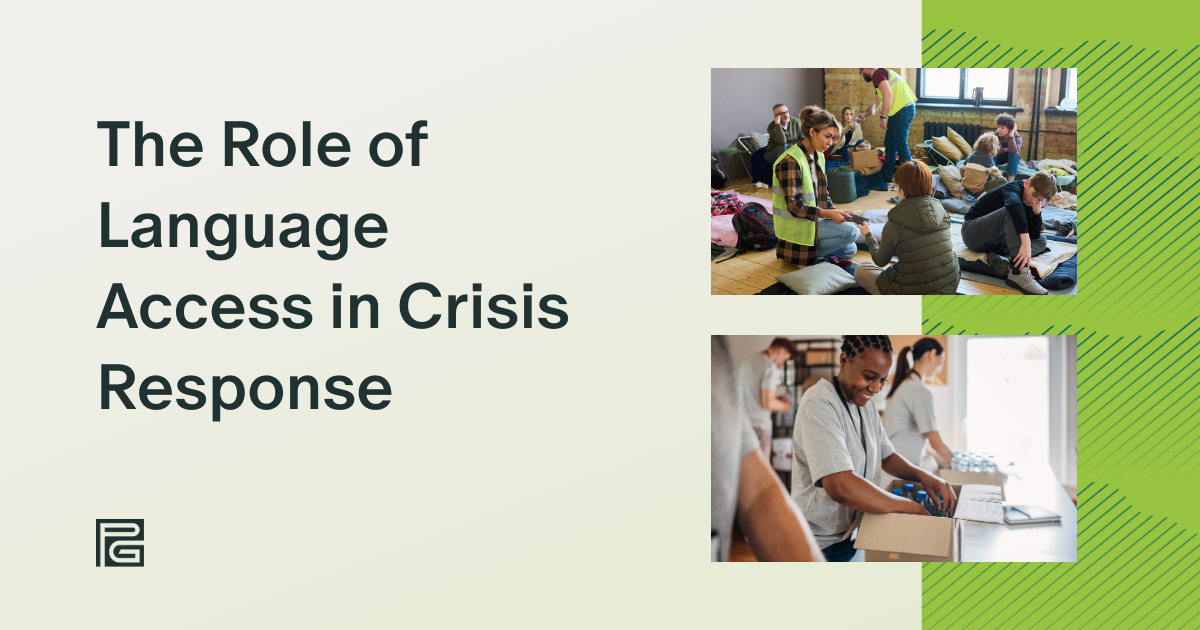
The Role of Language Access in Crisis Response: Lessons from the Field

When crises are unfolding, language barriers can be deadly. Without timely communication and comprehension, at-risk and crisis-affected populations can experience worse outcomes, and humanitarian teams are inhibited from responding comprehensively to real-time needs.

For these reasons and more, language access plays a critical role in crisis response. Nonprofits and non-governmental organizations (NGOs) working in diverse regions rely on humanitarian interpreters, cultural mediators, and translators to bridge communication differences, navigate cultural nuances, and act with sensitivity and professionalism. Here is how the essential (but often invisible) work of linguists directly supports capacity-building for teams operating in the field, along with lessons learned to enhance future crisis response.


How Language Access Acts as a Capacity-Building Tool in Crisis Response

To quote Translators without Borders: “Information in the wrong language is useless.” Effective communication, whether proactive, timely, or post-event, is the foundation of crisis response, enabling teams to act in accordance with priorities. When accurate communication is not accessible as a result of language barriers, a higher rate of fatalities, suffering, damages, and other harms is likely to occur. Language access supports the purpose of crisis response by providing the means to disseminate information, in the right languages, to save lives and protect human dignity.

Language access also aids capacity-building by empowering the people on the ground to gain a more comprehensive situational understanding, track statuses, and share actionable updates with headquarters for fundraising and mobilization. Language access enables more efficient and effective direct services delivery to aid affected communities and partner with other response agencies. Finally, language access allows field teams to identify when they need to pivot out or adapt their response approach.

For example, as it fights to maintain its independence, Ukraine has garnered broad support from the international community, and its population has suffered greatly. Humanitarian interpreters and cultural mediators from around the world have been called upon to bridge communication. CLEAR Global, an international leader that facilitates global communication, offers a toolkit to align field workers with the resources they need to communicate with Ukrainians impacted by violence.

One key finding from the toolkit is Ukraine’s broad multilingualism. According to Ukraine’s 2001 census, 20 languages are spoken within its borders. It is well known that at least one third of Ukraine’s population speaks Russian, but populations that often go overlooked include an estimated 150,000 to 400,000 Roma, who may speak Romani as a first language. Thousands more speak Crimean Tatar, Bulgarian, or Hungarian. Without this important data, aid programs may fail to reach some of Ukraine’s most vulnerable communities.

It serves as an important reminder to pursue demographic data to aid in decision-making about field staffing and language access. In many cases, high-conflict zones will affect marginalized populations who speak minority languages. While up-to-date census information is not always readily available in these situations, field teams can source real-time feedback to identify the appropriate language access resources for a given situation, leveraging virtual interpreters and mediators to bridge needs in the interim.


What Does Crisis Response Look Like without Language Access?

When crisis teams operate without the support of expert linguists that reflect a region’s diverse linguistic makeup, the reach and potential for impact are lessened. In this context, humanitarian teams would be operating based on a diminished understanding of the populations they intend to serve and support. This can be damaging to credibility and halt trust-building efforts.

Life-saving information, including medical care, trauma counseling, food distribution events, pop-up shelters, and relocation services may not reach the vulnerable groups who would benefit most. Additionally, authorities and watch groups would be limited in their access to witness testimony, which is detrimental to defending human rights or prosecuting perpetrators down the line.

Community interpreters play an important role to bridge needs when trained linguists are not available. That said, for privacy and professionalism’s sake, there are use cases where trained third parties can offer enhanced support, particularly in trauma-informed cases.


Interpreting and Translation as Harm Reduction

Trauma shuts people down. Information on war crimes and human rights attacks, such as mass killings, forced labor, child soldier enlistment, child marriage, and sexual violence, is hard to ascertain even in the best of conditions. Trauma-informed interpreting is essential in these cases and must be grounded in cultural understanding, nuance, and sensitivity. Interpreters must act in accordance with international law and local culture, navigating the very real fears of social, financial, or legal repercussions for reporting crimes. Gaining (and retaining) trust is essential.

This is why working with local humanitarian-trained linguists, whenever possible, makes a difference. This approach also contributes to harm reduction by avoiding unnecessary retraumatization due to poor communication or non-adherence to trauma-informed interpreting norms. Field teams landing in a new context may lack cultural understanding, and communities may rightfully be wary of outsiders. Local cultural mediators not only support credibility, but they also can help local citizens reach a better mutual understanding of a humanitarian field team’s presence and purpose, which can help enhance trust with crisis-affected communities.

When local linguists are not available, as is sometimes the case, be sure your approach meets affected populations on a peer level. To build credibility, responders that effectively and swiftly bridge language gaps are better positioned to earn trust by those affected by the crisis, by local authorities leading response, and by governmental, intergovernmental, or partner NGO agencies. Doing so can save more lives and begin the healing process sooner. 


Where Has Language Access Made a Difference in Crisis Response?

In conflict zones, such as the Democratic Republic of Congo, South Sudan, and Ukraine, interviewing women and children or others about human rights abuses requires culturally sensitive, effective interpreting. This approach allows crisis responders to ascertain what happened, gather defensible evidence, prepare a response, and bring perpetrators to justice. The International Criminal Court (ICC) in The Hague needs these carefully secured and preserved testimonies to prosecute war crimes, crimes against humanity, and genocide.

Language access is essential for local crises, too. The 2025 Los Angeles wildfires demonstrated an urgent need for better multilingual disaster communications. A recent study led by UCLA and the AAPI Equity Alliance found that more than 12,000 Asian Americans with limited English proficiency resided in Los Angeles County’s four evacuation zones. However, most evacuation alerts and recovery programs were provided in English and Spanish only.


Lessons Learned: Improving Language Access for Future Crisis Response

With the threat of future disasters looming large, the AAPI Equity Alliance is calling on LA County to expand multilingual disaster preparedness, with an emphasis on Chinese, Korean, Tagalog, Vietnamese, and the dozens of other Asian languages spoken in the region. Globally, as migration driven by climate change and conflict causes widespread displacement, relief agencies will need to factor in language access to enhance the effectiveness of relocation support efforts.

When the next pandemic or epidemic breaks out, deploying effective public health communications in all spoken languages will be key to avoiding contamination and saving lives. We learned key lessons this decade and the last. For example, health authorities responding to the most recent Ebola outbreak in West Africa disseminated hygiene, vaccination, and treatment information via written and oral communications in French, and later, an international form of Swahili. It was a missed opportunity to reach rural districts in their regional dialects and curb the outbreak sooner, as many communities did not understand this live-saving messaging.

Technology provides an opening to address these key learnings and enhance preparedness. Through our experiences in the field, PGLS has witnessed firsthand that commercial language technology may not work for humanitarian use cases. Current models are not necessarily available in the right variants for crisis-affected communities, rarely account for how second-language speakers use contact languages in real life, and may not be adopted due to varying tech literacy rates. More localization of the solutions must be done.

Data, inclusion of minority language speakers, and coordination with local resources can maximize the effectiveness of crisis response tech. By aligning humanitarian organizations, marginalized language speakers, and language technologists, PGLS is bringing advanced solutions to the field, including a language identifier and an on-demand translation tool for humanitarian missions.

In addition to providing scalable, tech-driven language solutions that adapt to the evolving needs of vulnerable populations, PGLS also spearheads a training program, Piedmont Academy. As part of our nonprofit foundation, PGLS Cares, Piedmont Academy embodies our human-first philosophy by empowering local interpreters and translators to handle language needs in large-scale operations. With talent and tech combined, we can improve the effectiveness of relief efforts while respecting the linguistic and cultural identity of impacted populations.

Learn more about how PGLS supports our nonprofit/NGO partners with language access services, and join us on LinkedIn to keep the conversation going.

Developing Effective Curricula for English Learner Students with Jose Torres

The Language Access Lectern | a Piedmont Global Podcast | Episode 5

Comprehensive language access is about more than interpreting services. Teachers play a crucial role in developing tailored curricula for English Learner (EL) students. K-12 Language Access Consultant Mark Byrne spoke with Jose Torres of Baltimore City Public Schools about the importance of role models in the classroom and educational materials that meet the unique needs of secondary English learners. 

You can listen to episode 5 of the Language Access Lectern here. Keep reading for a recap of Mark and Jose’s engaging conversation, which emphasizes the power of innovation in education.


Answering the Call to Serve English Learner Students

Mark: What brought you to this point in your career as an educator and advocate for English Learner students?

Jose: I’m from a migrant family. My parents and siblings all used to travel as farm workers, tomato pickers, or line pickers for whatever was in season. There were eight of us, and all of my siblings were born in different states. I guess it was instilled in me as a child that you go where the need is.

I’m a teacher and have spent well over two decades working with English learners. I’m originally from South Florida, where the predominant language is Spanish. I moved to Baltimore in 2006 because there was a demand for bilingual instructors like myself. I started working in the refugee centers and community college.

Mark: That’s a very courageous thing to do, to put yourself where you’re needed.

Jose: As the youngest of eight, my mother instilled in me from a young age that I had to finish high school and get an education. I like to tell my students my story and show that I came up in a similar situation as they did. You can do something more, but you need an education—don’t throw this opportunity away, because there is a bigger world out there.

Mark: Sometimes, we take opportunities for granted, so it’s great to hear how your family has pushed you forward. Now, you’re taking those same lessons and applying them to your students.

Jose: Back to why I moved here. I think our students from a predominantly Hispanic population need to see people in teachers’ positions because there’s that whole adage about seeing somebody who resembles me in leadership. More importantly, building those relationships with the students, and not just making it about your race or skin color, can help them make the best of their opportunities.

Mark: Self-belief is a big part of that. If you don’t believe in yourself, you’ll have a hard time running through the wall that’s blocking you.

Jose: When you don’t have much growing up, you have to make use of what is around you. I try to tell students that maybe there are financial struggles at home, parents are at work a lot, but what do you have around you? Homework assignments, projects… Don’t turn away from that. Build on them and get something out of it. When you’re older, you’ll be able to put that in your toolbox. Language acquisition is a tremendous tool.


Writing a Textbook to Meet the Needs of English Learners

Mark: Talk to me about what inspired you to put pen to paper and build a textbook to support language acquisition for English Learners.

Jose: Working in refugee centers and the community college, I was around students who resembled my parents. I saw how they would struggle, and the books we used were inadequate. I’m putting it very kindly. I remember asking the director of the college where I worked, can you get us better books? Because these books are—and I don’t mean to sound rude—but they are no good. They’re not serving the language skills these students need at the very basic level.

He kind of joked about it, saying if you don’t like these books, then make your own. Well, be careful who you say that to. I went home, thought about it…and you know what? Maybe I will write my own book.

I reached out to an old professor for advice and started experimenting. It turns out, when teaching adults phonics and the accompanying image is aimed for children, it is somewhat insulting. I started grabbing different images and noticed adult students becoming more engaged. Then, I started collecting data and linking it to assessment scores. Sure enough, when we compared those numbers with the sample groups, we could see a difference. The college was sold on it, saying I had solved one of the big issues they faced. Then, I presented it and received an achievement grant to publish and print it.

Mark: How many were you able to print at the start? What does the business of textbook publishing look like?

Jose: I showed the prototype, then the college bought hundreds of copies.


Adapting to Virtual Learning with EL Students

Mark: How many versions of the textbook have you produced over the years?

Jose: The first edition came out in 2016. We were riding on that for a few years, and then the pandemic hit. Everything stopped, and everything hit rock bottom. As instructors, we had to evolve what we were doing when school went virtual.

Mark: Education was certainly impacted by the pandemic. Do you think there are silver linings from the experience with COVID-19, or do you think or is that was lost time?

Jose: Remember what I was telling you earlier? When I was a kid, I had to make use of what I had. This is an ongoing theme that I share with my students. Having to rely on virtual classes and doing things online changed the game. The first edition book, which was great for its run, did not fit into this new online world, so I had to create a second edition that goes with virtual learning.

I decided to create a video component that goes with it. All the major activities in this textbook have video components with individual QR codes on the pages. So, if a student is going to practice pronunciation, a sentence, or a conversation, they use their smartphones, and the QR code takes them right to the video. Teachers don’t have to sit there and try to find a website or a link; they can just use that QR code.

Students can practice independently at home. A student might hit snags, and they feel like the whole class is leaving them behind. Now, with these QR codes, they don’t have to feel like they’re falling behind. They can always go back and keep working on things.

This second edition came out in 2024, so it took me about two or three years to put it together.

Mark: What would be the most inspiring piece of feedback you’ve gotten over the years?

Jose: Teachers using the book say it’s refreshing to work with materials created by a teacher who’s actually using their own stuff. A lot of times, as teachers, we get handed these books and materials from higher-ups who probably haven’t sniffed a classroom in 20 years. I’m just a working teacher in the classroom every single day, so when I hear that from other teachers, it’s nice to know. 


Listen, watch, and subscribe to The Language Access Lectern on YouTube and piedmontglobal.comLearn more about interpreting, translation, and K-12 language access planning services from Piedmont Global.

Innovation in Language Services: Acquisitions, Value Chain Consolidation, and the Influence of AI

Language service providers (LSPs) are adapting to the rapid changes in the market driven by the advent of large language models (LLMs) and the increasing commoditization of language tools beyond Google Translate. Natural language processing and Machine Translation (MT) have both seen explosive growth in the last five years, with ChatGPT-like products becoming increasingly mainstream and integrated into mainstream authoring tools, search engines, and even consumers’ phones. Technology that was standardized by a few cloud providers just a few years ago is now able to be built by smaller teams and specialized to solve specific customer needs. While the increased sophistication of LLMs had initially raised doubts, LSP industry growth now hinges on the capacity for these tools to transform the value chain.

As a result, our industry is at a turning point. Due to significant fragmentation, the top 100 LSPs account for just 20.5 percent of the industry, per Nimdzi. There is ample opportunity for consolidation. Nimdzi maintains its prediction that the LSP market will sustain a CAGR of seven percent, achieving a $95.3 billion valuation by 2028. Growth is expected to remain concentrated among the business models enjoying the highest demand: interpreting-focused firms, media localization, and those embracing tech-first solutions. Merger and acquisition (M&A) activity reflects these trends.

Given the fragmentation of the market, especially in key regions such as Africa, there is a slower than expected growth rate for providing services to a growing population and economic powerhouse. It’s not just one location, but it’s indicative of how the scattered allocation of resources in the 19th century language services model persists to this very day. With the advent of new technologies, many locales can leap-frog over the gradual and procedural advance and go straight to large language models and newer methods without the decades of investment and millions of dollars of cost.

Here are our top observations about the continued transformation of the LSP value chain, driven by AI and M&A activity.


Mergers, Acquisitions, and Funding

In 2025 and onward, the language services industry will continue to trend towards consolidation. According to Slator, the leading categories of acquisition transactions in recent years involve media localization, interpreting, and sign language accessibility services. What’s driving these purchases is the strategic expansion of in-house capabilities in the areas of increasing demand.

In-house capabilities are increasingly favored over a contracted services model. To compete, LSPs must be able to pitch more comprehensive services and maintain control over end-product consistency and costs.

With increasing merger and acquisition activity, especially among tech-first business models, the LSPs that embrace advanced solutions are positioned to thrive in the next decade. Buyers face intense cost competition. They demand agile operations and choose partners offering wider work scopes and stronger contracts. Through this strategy, technology cannot supplant the value provided by third-party LSPs, particularly when the tools can be bespoke to industries or even individual, large-volume clients.


Tech-Driven Advancements to the LSP Business Model

Generative AI has accelerated the possibilities for language services by increasing volume, capacity, and speed. The challenge is how to leverage these advancements in such a way that does not cannibalize our industry’s value proposition.

For example, large buyers have experimented with developing or purchasing MT tools that bypass LSP involvement. Between 2017 and 2018, Netflix launched Hermes, a content localization platform that onboarded freelance linguists to address the growing demand for global streaming. Netflix ultimately returned to working with its language service partners and closed the platform after just one year, but disintermediation remains a core challenge to language services.


Evolving the Value Chain through M&A

From procurement to consolidation: acquisitions are transforming the value chain to bring greater consistency and value to the end customer. By expanding in-house capabilities in media, interpretation, accessibility, and other high-growth areas, LSPs can leverage vertical integration strategy to present a richer offering to existing and new clients.

This industry has been historically slow to adapt. However, large buyers with the capacity to invest in large-scale tools continue asking themselves whether they can fulfill their language service needs internally. High-tech LSPs are the players poised to overcome this tangible threat by offering better and faster AI-driven solutions and more agility in an evolving space. Be it by buying technology or building it in house—see Amazon Web Services and Meta —there are significant investments at play that are not always external products. At many locations, making your own technical stack is an option; albeit one with technical and language difficulties.

There are some risks to this strategy. LSPs and buyers must avoid the pitfalls of buying companies and their technology without understanding capabilities, culture, and core competencies. There is the possibility of acquiring technical debt, unsupportable requirements, or proprietary talent and techniques that do not gel with the acquiring company’s approach.


Evolving the LSP Supply Chain

Evolutions in language services are much more nuanced than a race to the bottom on price. On the contrary, the conversation is largely centered on a reevaluation of supply chain management through the lens of M&A strategy. A, as well as the cost of doing business. Does it make more sense to outsource or buy and build in-house?

The LSPs that will thrive in this new era are streamlining their supply chains, reducing costs & overhead, and allocating resources to proprietary AI and advanced technology that elevate the value proposition for the end customer. The key differentiator for these tech-forward LSPs is adaptability, with the tacit understanding that the value chain must be transformed in order to sustain growth.

At Piedmont Global, we are leveraging our expertise and working with researchers to develop new and better ways to serve our customers, so they can reach their audiences, communicate across boundaries, and thrive.

Follow Piedmont Global on LinkedIn for more insights and to join the conversation.