The Invisible Work Behind Visible Impact: Why Outcomes Start Before the Moment They’re Measured

Success rarely happens at the moment you see it.

It happens in everything that came before.

The decision gets made in the room, but was shaped by the quality of context leading up to it. The patient recovers in the hospital, but healing begins with the feeling of being understood. The emergency is resolved, but the real work was in the systems, trust, and training that made the proper response possible.

That’s the kind of work I’ve always been drawn to: the work that lives behind the scenes but changes everything.

At Piedmont Global, we talk about this as “creating the conditions around the moment.” Because when you operate across cultures, across communities, or continents, the moment itself is only the surface. Beneath it are layers of preparation, design, intent, and alignment. And when those layers are strong, the outcomes tend to follow.


Real outcomes are shaped before the moment of action.

We see it every day with our clients. Whether you’re in healthcare, government, education, or any other industry, the pressures you face are real: demographic shifts, global volatility, evolving expectations, competing priorities. Businesses are navigating complex realities where precision and humanity coexist. These are not static systems. The organizations that succeed are those that’ve invested in more than just tools; they’ve invested in readiness.

And the most forward-looking leaders? They are already working upstream.

What does that look like in practice?

It’s not about translating words; it’s about designing systems that create understanding.

It’s not just about interpreting one call; it’s about ensuring every interaction is delivered with clarity and care.

It’s not about fixing problems in real time; it’s about reducing the need for triage in the first place.


In other words, it’s about making cross-cultural operations easier, smarter, and more human.

Too often, organizations support global operations reactively – issues are addressed as they arise, translation happens on the fly, and individuals are left to bridge cultural gaps in real time. But the real opportunity lies further upstream: in designing systems that anticipate complexity before it appears.

Upstream work matters because surface-level solutions can only go so far. When systems are built to be culturally fluent from the start, they reduce confusion, friction, and costly rework. This proactive approach turns global complexity into an operational advantage.

Central to this is Cultural Intelligence (CQ) – the capability to work effectively across cultures. It encompasses four core components: motivation, knowledge, strategy, and action. High-CQ organizations adapt communication, collaboration, and decision-making with intention and agility. The impact is measurable: greater innovation, stronger engagement, and higher customer satisfaction across regions.


This is where Strategic Globalization comes in.

It’s not just about expanding into new markets but embedding cultural intelligence into every layer of your operations. That can look like:

  • Building internal cultural intelligence hubs to share knowledge
  • Training global teams in culturally adaptive communication
  • Partnering with local consultants during go-to-market planning
  • Designing governance models that reflect regional norms


I’ve come to believe that ease is a signal of integrity. If you’ve done the work—the strategic alignment, the systems thinking, the people investment—the moment won’t feel like a scramble. It will feel like a natural next step.


That’s where we focus our energy at Piedmont Global.

Not by reacting to chaos, but by helping our clients build something durable and adaptive. We call it Strategic Globalization, not as jargon, but as a serious commitment to solving the messy, meaningful challenges of operating across cultures, whether expanding into new global markets or serving multicultural communities at home.

We help organizations create the conditions for connection, clarity, and impact. That might mean redesigning internal processes to reduce friction and improve response time. It may mean helping leadership teams align around a shared sense of purpose before embarking on a significant transformation. It could also mean training teams in cultural fluency so they can build trust across borders before the first meeting even starts.

None of this is visible at first glance. It rarely appears on a project timeline or dashboard. But it’s the invisible infrastructure behind every moment that matters – the ounce of prevention that spares you the pound of cure. Because when organizations misstep early, the costs multiply downstream. At best, things are “good enough.” At worst, they’re misaligned, delayed, or ineffective. We don’t wait for that.


At Piedmont Global, we create environments where understanding is built-in, not bolted on.

We help healthcare teams reduce clinical errors—not just by following protocols, but by understanding each patient’s cultural context.

We support governments in designing public services that feel intuitive and inclusive, because the systems behind them anticipate needs before they’re voiced.

And we empower school districts to move beyond reactive translation, building proactive systems where every student feels connected and supported from day one.

As one client recently shared after a successful expansion: “We transitioned to Piedmont Global after years with a previous vendor. They made the transition extremely easy and seamless. Before we even launched fully, they translated our website, app, webinars, and live sessions into 12+ languages, all tied to a major contract win. Throughout the process, they were responsive, adaptive, and highly strategic. They didn’t just execute, they anticipated what we’d need before we needed it.


So if you’re aiming for impact, don’t just ask what needs to happen in the moment. Ask what needs to happen before the moment.

Because how you prepare determines how you perform.

This requires a mindset shift:

  • From transactional to relational.
  • From words to systems.
  • From surface inclusion to structural belonging.


We’ve studied the gaps. We’ve felt the friction. We’ve built something better. Not louder, but deeper.

And we’ll keep building the invisible infrastructure, so that when your moment comes, everything around it is already working in your favor.

The Partnership Shift: How Strategic Globalization Transforms Operations

In a world where complexity is rising and connection is constant, cross-cultural leadership requires more than translation or technology. It takes a partner.

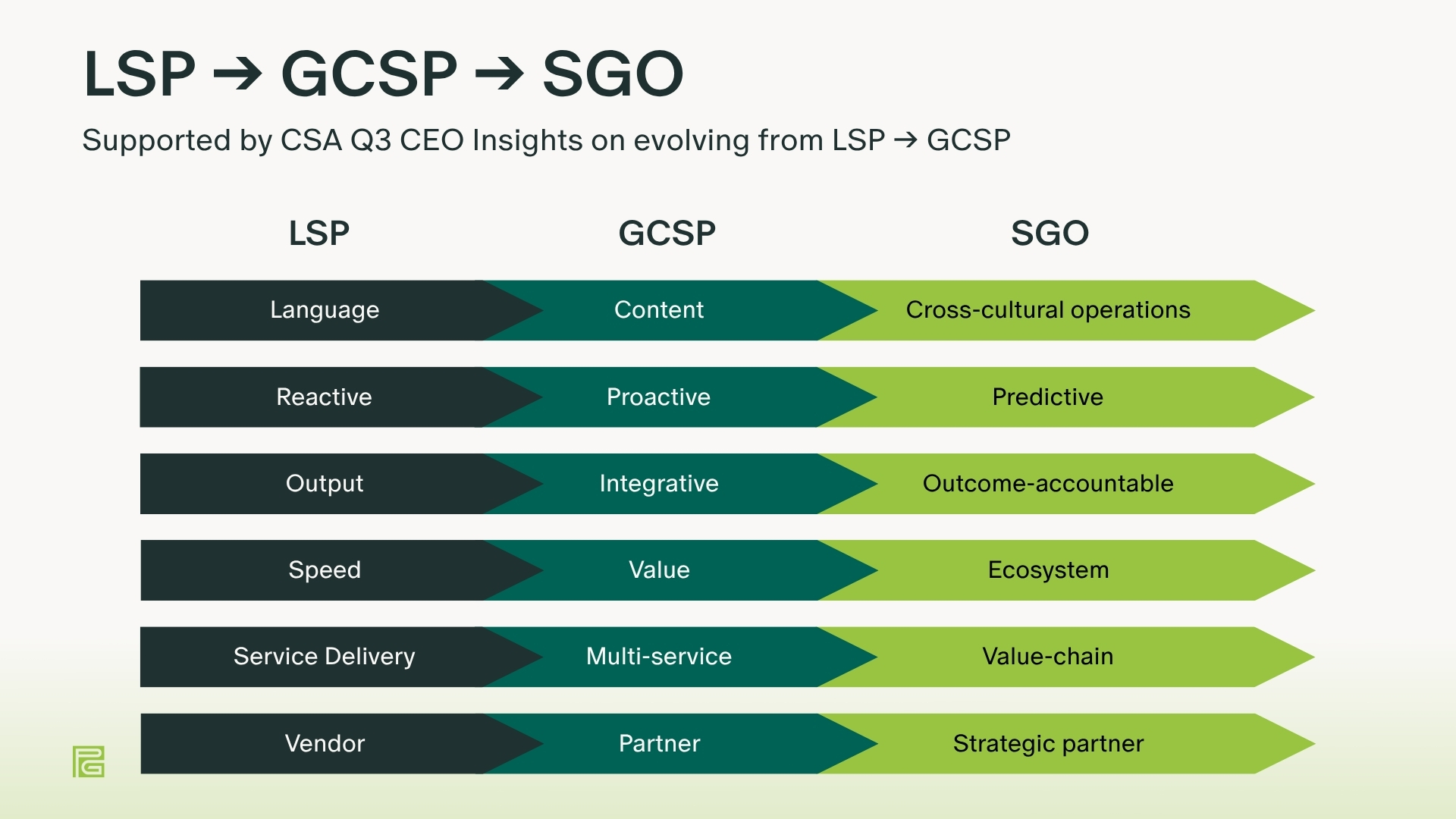
For years, organizations have outsourced interpretation, localization, or training to fill specific gaps. But in today’s operating environment, those gaps are wider, deeper and harder to navigate. That’s why forward-looking teams are seeking more than service providers and transactional vendors. They’re seeking strategic partners that can embed, evolve, and scale with them.

At Piedmont Global, we believe meaningful connection starts with strategic alignment—not transactional tasks. Here’s what it means to be a Strategic Globalization Partner—and why it matters now more than ever.


From Provider to Partner: What’s the Difference?

Service providers complete tasks. Strategic partners accelerate outcomes.

A vendor may translate a document. A partner will ask: What is this content meant to accomplish, and how do we design it to work across audiences, systems, and languages?

A vendor may provide an interpreter. A partner will ask: Who is in the room, what’s at stake in this conversation, and how do we ensure everyone is truly heard and understood—across languages and cultures?

Here’s how true strategic partners show up:

  • They understand your business strategy and align to your vision
  • They help you navigate cultural, regulatory, and operational complexity
  • They build systems and capabilities that adapt as you scale
  • They build long-term value, not just short-term project deliverables

The key difference is this: vendors solve isolated problems; partners design systems that reduce friction, increase impact, and grow with you. Vendors execute. Partners embed. And that difference is everything.


Why Strategic Globalization

Globalization isn’t new. But maintaining clarity, cohesion, and compliance across diverse audiences, markets and geographies is harder than ever.

So how we approach it must change.

Consider this:

  • Your workforce may span five continents, a dozen languages, and multiple time zones.
  • Your customer base expects personalized, seamless experiences—regardless of language, culture, or region.
  • Your compliance risks, operational systems, and community relationships are all influenced by cultural context.

And yet, many organizations still rely on siloed solutions to manage cross-cultural complexity.

That’s where Strategic Globalization comes in. It’s an integrated approach that blends:

  • Cultural Fluency: Deep knowledge and nuanced understanding of language, culture, and context
  • Custom Technology: Agile platforms and AI-enhanced workflows that adapt to your systems
  • Strategic Insight: Market intelligence, risk mitigation, and tailored growth planning

This integrated model fuels connected, scalable growth—ensuring organizations aren’t just seen and heard but trusted and understood across every audience and environment.


The Piedmont Global Approach

As a Strategic Globalization Partner, we don’t show up with a playbook and leave.

We integrate with your teams and systems. We align to your mission. We evolve with you.

Whether you’re:

  • A healthcare leader working to improve patient outcomes across language barriers,
  • A government agency trying to reach every resident with clarity,
  • Or an education provider building inclusive learning systems,

We help you build the capabilities—not just content—you need to lead across cultures.

It’s not about being everywhere. It’s about showing up the right way. With the right systems. The right context. And the right partner.


Why It Matters Now

Every organization is under pressure to do more—with fewer silos, fewer vendors, and fewer missteps. But good intentions don’t bridge cultural gaps. Systems do. Strategy does. So does alignment, agility, and cultural intelligence.

That’s what Strategic Globalization delivers.

And it’s why Piedmont Global exists: to make cross-cultural operations easier, smarter, and more human—for every team, every system, and every community.

Ready to Rethink What Partnership Can Look Like?

If your organization is evolving and growing, your support model should evolve with it. Strategic Globalization isn’t a trend. It’s a capability. And we’re here to help you build it.

Why It’s Time to Rethink Global Growth: From Translation to Transformation

In today’s hyper-connected, fast-paced world, companies aren’t just growing geographically, they’re working with diverse populations, integrating across systems, and dealing with growing cultural and operational complexity. For decades, translation has been the default solution for global communications. But stakes are rising, and speed is quickening, and it’s no longer enough.

At Piedmont Global, we believe it’s time for something more.

It’s time to move from translation to transformation.


The Global Reality Has Changed — Has Your Strategy?

There was a time when translating a website or brochure was sufficient to “go global.” But today’s organizations have a different challenge. Whether you are in healthcare, government, or education, your audiences are no longer limited by borders, and neither are your teams, vendors, or stakeholders.

Language is only one layer of what it takes to do business and scale across cultures today. Cultural expectations, regulatory landscapes, evolving tech infrastructures, and operational workflows all intersect. Growth now requires a new kind of fluency: not just in language, but in strategy, systems, and human connection.

The Weakness of Translation-Only Models

Translation is still vital, but on its own, it’s tactical. It answers the question “what words do we use?” rather than “how do we align, connect, and lead in new markets and with diverse audiences?”

When language is commodified as a transactional service, it tends to result in:

  • Disjointed customer experiences across languages
  • Delayed market entry due to lack of scalable infrastructure
  • Overlooked compliance requirements or cultural faux pas
  • Fragmented internal communication across global teams
  • Limited ROI from global marketing, training, and support programs

Translation solves for communication. Strategic Globalization solves for coordination, connection, and impact.


Strategic Globalization is a new category — and a new way forward for organizations operating across borders, systems and cultures.

More than a one-size-fits-all solution, it’s a comprehensive, scalable methodology that combines cultural fluency, human expertise, custom technology, and actionable strategy. It’s designed to assist with each phase of your growth journey, from expanding into new markets to serving diverse audiences with clarity and confidence.

It means:

  • Embedding expertise – from interpreters and localization experts to consultants and cultural advisors – directly into your workflows
  • Integrating global readiness into customer experience, compliance training, and service delivery systems through multilingual capability and support.
  • Designing programs and processes that work for every audience, across cultures and contexts.
  • Infusing cultural intelligence into marketing, HR, supply chain and technology operations
  • Aligning strategy, people, and technology to drive smarter growth and more equitable outcomes

From Vendor to Partner: A New Kind of Support

At Piedmont Global, we don’t parachute in with a playbook and then vanish. We embed. We learn your systems, get to know your audiences, and evolve with you.

This approach creates real advantages:

  • You go to market faster — without the language lag
  • Your teams remain in sync — across departments and borders
  • Your customer experience improves — in every language, for every individual
  • You minimize and mitigate risk — and meet growing compliance expectations

Our clients don’t just need words translated; they need us to build lasting capabilities that scale.


Why Now?

Because the stakes have never been higher. Organizations are being asked to do more — across more languages, cultures, and channels — with greater precision and speed than ever before.

Because employee and customer populations are more diverse. Expectations are rising. And equity matters.

Because quick fixes won’t get you to the future.

And because the organizations that rethink global growth now will be the ones that lead tomorrow.


What’s Next

As we get ready to launch our new brand identity, we’re excited to share more about how we’re redefining what it means to be a global partner. Over the next several weeks, we’ll explore the building blocks of Strategic Globalization — and how Piedmont Global is delivering smarter, more human, more scalable solutions for a changing world.

Language Barriers in Manufacturing: Why Leaders Are Investing in Language Solutions

Manufacturing today is more global, quicker, and more complicated. In this setting, clear communication isn’t an operational edge — it’s a prerequisite to safety, efficacy, and profitability. The majority of manufacturers, however, confront one continual and mostly underestimated obstacle: linguistic diversity among their workers and along their supply chains.

This article deals with how language barriers impact manufacturing companies, the dangers they pose, and the actions visionary leaders are taking to safeguard their workers, de-bottleneck operations, and ensure sustainable growth.


How Language Barriers Affect Manufacturing Operations

In business, the workforce is often made up of employees of different linguistic backgrounds — particularly where labor is in short supply or where migrant labor is employed. In addition, supply chains span continents, and there are vendors and suppliers who may not share your native language.

Wherever there are language gaps at any point during this process, the whole operation is susceptible to:

  • Misconceptions by employees regarding procedures, safety procedures, or use of equipment
  • Delays resulting from miscommunication with suppliers or logistics partners
  • Compliance risks of regulatory failure
  • Poor staff morale and retention because of feelings of exclusion or confusion


The Top 3 Risks of Language Barriers in Manufacturing


1. Safety Risks: Language Gaps Endanger Workers

Safety is the foundation of every production environment. When instructions, safety procedures, or hazard communication cannot be understood because of a language problem, the potential for accidents grows exponentially.

Main safety hazards are:

  • Misreading of machine operational instructions
  • Inability to comprehend emergency protocols
  • Inability to identify hazard signs or labels
  • Challenges in reporting close calls or incidents

According to the U.S. Bureau of Labor Statistics, language barriers in the workplace are associated with increased rates of injuries and fatalities. Language barriers were found to be a contributory cause of nearly 25% of industrial accidents among immigrant construction and factory workers.


2. Efficiency Risks: Miscommunication Disrupts Operations

Manufacturing depends on synchronization and accuracy.  Ineffective communication between workers or supply chain partners produces:

  • Missed production deadlines
  • Errors in product assembly or packaging
  • Supplier Coordination Failures
  • Material Delivery Delays

Language barriers hinder daily commerce, sap productivity, and spoil relationships throughout the supply chain.


3. Financial Risks: Language Barriers Hurt the Bottom Line

When efficiency and safety are compromised, so is your bottom line. The bottom-line costs of language disparity in manufacturing can be:

  • Injury Costs: Medical cost, workers’ compensation claims, and increased insurance premiums
  • Production Downtime: Losses due to accidents or errors
  • Supply Chain Penalties: Failure to meet delivery timescales or inaccurate orders
  • Regulatory Fines: Noncompliance with safety standards due to misunderstood protocols

For firms that operate in low-margin businesses, these types of costs can disproportionately affect profitability.


Solutions: How Manufacturers Are Overcoming Language Barriers

Progressive factory executives no longer consider language access a nice-to-have. It’s now a strategic necessity. Let’s discuss three of the ways they are overcoming this obstacle:


1. Workforce Language Training

Providing language instruction (or exposure to translated instructional content) enables workers to acquire the skills necessary to become effective workplace communicators.

  • eLearning Localization: Companies are now localizing safety training, standard operating procedures, and onboarding modules into the native languages of employees. This provides understanding and engagement.
  • On-site or distance language training: Focused English-as-a-second-language (ESL) or work-specific language training enables workers to gain confidence while improving safety and productivity.


2. Content Translation: Signage, Manuals, and Beyond

Manufacturing operations encompass an enormous range of written content — from equipment manuals and SOPs to safety signs and plant signage.

  • Technical manual translation ensures workers can operate machinery safely and efficiently.
  • Plant signage localization means that hazard warnings, directions, and emergency exits are understandable to all.
  • Translation of employee handbooks establishes expectations with clarity and assists in fostering an inclusive culture.


3. Interpretation for Real-Time Communication

Multilingual supplier chains or vendors usually require assistance with site visits, audits, or meetings.

  • Phone and video interpretation services allow teams to communicate clearly in the moment, averting costly misunderstandings.
  • On-demand interpretation aids HR discussions, safety orientations, and emergencies in which clear understanding matters most.


The Piedmont Global Approach: Helping Manufacturing Leaders Scale Language Access

At Piedmont Global, we recognize the business imperatives that manufacturing leaders confront. Our solutions are crafted to:

  • Minimize risks: From warning signs to compliance documents, our services keep you and your employees safe.
  • Increase efficiency: Localized training and correct interpretation avoid delays and rework.
  • Protect profitability: Reduce expensive mistakes, downtime, and ship on schedule with certainty.

We work alongside you as your strategic language partner, delivering comprehensive and personalized language solutions to help you connect with your audience—across any language or region.


Take the Next Step To More Efficient, Safer Operations

Language issues in manufacturing are more than a communications issue — they’re an operational risk. However, with the right partner, those issues can be transformed into competitive advantages.

Explore our comprehensive language access guide to learn more.

Download our eBook on building inclusive manufacturing operations.

Get in touch to start a conversation about scaling language solutions for your team.

Why This Is IT’s Moment: Inside Piedmont Global’s Vision for Leading Through Change

When over 4,000 technology leaders gather in Las Vegas for Info-Tech LIVE 2025, you expect bold ideas. What you might not expect is validation that the strategy your team is building under pressure is the one the industry is now racing to adopt.

For us at Piedmont Global, Info-Tech LIVE wasn’t just a conference. It was confirmation that resilience, cultural fluency, and adaptive tech aren’t just differentiators. They’re requirements.


The Theme: Transform IT. Transform Everything.

This year’s rallying cry was more than marketing. It was a call to action. Technology is no longer a backend function; it’s the connective tissue of how organizations operate, scale, and build trust in the face of global uncertainty.

The message was clear: This is IT’s moment.

At Piedmont Global, we serve mission-driven institutions where communication, precision, and people are everything. We don’t have the luxury of lagging behind trends. We build for what’s next, because the communities we serve can’t afford for us not to.


Exponential IT: Designing for Change

One of the strongest insights from the summit was the concept of Exponential IT: a shift away from rigid roadmaps toward systems that adapt in real time.

As Info-Tech’s CEO put it: “Legacy roadmaps won’t survive exponential change.”

The data backs it up. As the World Uncertainty Index climbs 481% in just six months (now 40% higher than its COVID-era peak), our systems must evolve at the same pace.

At Piedmont Global, we’ve already embraced this mindset. We’ve moved away from static infrastructure toward modular, scalable solutions. Whether it’s adjusting to new compliance frameworks, global service delivery needs, or shifting client priorities – we design to pivot, not patch.

This isn’t just smarter architecture. It’s how we create continuity in environments where reliability isn’t optional.


From Assistive to Agentic AI

Everyone’s talking about AI, but the conversation is changing.

This year, the focus shifted from assistive tools (like chatbots) to agentic AI systems that can act, learn, and make decisions with autonomy.

But this isn’t about replacing people. It’s about reducing the friction that slows them down. The question isn’t whether AI can act, it’s how well it understands context when it does.

That’s why we’re focused on embedding AI across our operations with intention:

  • AI-native workflows in interpreter scheduling and client services
  • Context-aware decision systems that reduce manual lift
  • Ethical governance frameworks that protect human oversight

When AI enhances (not replaces) human clarity, everyone wins.


Culture: Not an Add-On, but a System Requirement

The best tech fails if it can’t account for people. At Piedmont Global, we know firsthand that cultural intelligence is a functional requirement, not a bonus feature.

We don’t localize after we build. We build to localize.

This shows up in how we test user interfaces, structure onboarding, and train support teams in global environments.

This isn’t just empathy – it’s risk mitigation. Systems that understand users are less likely to break in the field.


Interpreting Data into Strategy

Data without action is just noise. One theme echoed across the conference: strategic intelligence means turning insight into behavior.

We’re revamping our internal dashboards and feedback loops to enable better decisions, faster. Whether it’s improving turnaround times or proactively identifying service gaps, we’re asking: Does this data help someone act with confidence?

That’s how trust is built, decision by decision, insight by insight.


Security That Protects People First

Cybersecurity isn’t just about locking down assets. It’s about designing systems your team can use without burnout.

One statistic resonated: 73% of security professionals report reduced stress after deploying AI-powered tools.

We’re investing in automation not just for speed, but for sustainability. From early threat detection to intelligent triage, our goal is to keep security proactive, not reactive. All without overwhelming the people who keep our systems safe.


Leadership at Every Layer

At Info-Tech LIVE, leadership wasn’t framed as a role, it was framed as a capability. The expectation? CIOs and CISOs aren’t just technologists, but translators, visionaries, and culture-shapers.

That message resonated deeply.

We’re embedding leadership development across every IT layer, from the help desk to architecture – because the challenges we face require more than technical fixes. They require people who can motivate, communicate, and adapt under pressure.

Talent is no longer a pipeline issue. It’s a system design issue.


A Strategy Validated, Not Rewritten

Info-Tech LIVE didn’t change our direction. It affirmed it.

We’re not waiting for perfect conditions. We’re building systems that thrive under real-world complexity. That means infrastructure that scales, technology that understands its users, and teams that lead with intention.

Our mission at Piedmont Global is inherently human. And that means our tech must be too.
What Happens Next?

This isn’t just a moment for IT. It’s a mandate.

We are:

  • Scaling agentic AI for operational impact
  • Redefining how IT communicates value across the organization
  • Evolving our leadership pipeline for resilience
  • Building systems that adapt as fast as the world changes

At the intersection of communication and technology, we aren’t reacting to change, we’re architecting what comes next.

The future isn’t waiting. Neither are we.

Ready to transform how your team navigates complexity?
Let’s build it, together.

Breaking the Language Barrier in Forensics: A Perspective from Techno East

Last month, I had the chance to represent Piedmont Global at Techno Security East alongside our VP of Technology, Gil Segura. When we showed up, I expected the usual: booths, badges, and maybe a few new contacts. What I didn’t expect was to leave with a crystal-clear confirmation of something we’ve been sensing for months: that forensic and law enforcement agencies are hitting a wall when it comes to multilingual data.

And no one’s really helping them fix it.

Over three days, we met with dozens of local, state, and federal law enforcement professionals. What we heard was consistent: language is becoming a bigger and bigger barrier in digital investigations. Whether it is evidence extracted from phones, audio from body cams, or interviews conducted in the field, the multilingual footprint is growing. And most agencies don’t have a plan to handle it.

That’s where our work comes in.


A Clear Gap in the Market

Despite the enormous role language plays in modern investigations, most vendors haven’t caught up. The usual suspects (I won’t name them here, but you know who they are) tend to focus on volume-based interpreting or general translation. Their government offerings are often copy-pasted from healthcare or corporate templates, not built for the complexities of forensic workflows.

What we’re doing at Piedmont Global is different.

We’re not adapting existing products for government. We’re building new solutions, designed in partnership with the very people using them: law enforcement officers, investigators, forensic analysts. That co-design approach shows up in everything from our deployment models (on-prem, on-device, no cloud required) to the way we deliver training and support.

Examples of Forensic Linguistics in Action:

  • Investigative Linguistics
    Analyzing threatening text messages or social media posts in foreign languages to identify the author and prevent future harm. Every word counts in an investigation, and linguistic accuracy is at the heart of an investigation.
  • Author Identification
    Analyzing the writing style of a ransom note in a foreign language to identify the author and their background. Language identification is vital, but the ability to identify age, gender, and other key characteristics is a true game changer.
  • Analyzing Witness Testimony
    Analyzing the language used by witnesses who speak different languages to ensure accurate and fair representation of their statements. This evidence can come in a variety of formats: (Video, Audio, Digital Content, Documents, etc.)


What We Heard at Techno East

Several clear patterns emerged from our conversations:

  • Cloud Fatigue
    Almost everyone we spoke to said the same thing: they don’t trust the cloud. Whether it’s about data sensitivity, chain of custody, or just institutional policy, cloud-based tools often get blocked before they even get piloted. Our ability to deploy secure, localized solutions was a major differentiator.
  • Demo-First Decision-Making
    This audience doesn’t want a pitch, they want to see the tool work. On-the-spot demos of our platform generated more interest in five minutes than a PDF ever could. The ability to surface multilingual evidence instantly hit home.
  • An Underserved Niche
    Everyone was dealing with language issues. No one had a vendor they trusted to solve them. The most common question we heard? “Why hasn’t anyone built something for this?”
  • The Forensics-Language Loop
    One particularly compelling insight came from a few cybercrime teams: they want to use anonymized language data to help train models for early detection, but privacy regulations make that nearly impossible. That opens the door to future R&D partnerships focused on encrypted language data training.


The Piedmont Global Advantage: Built With, Not For

At Piedmont Global, we don’t just support law enforcement — we partner with them. Some of our most exciting product features were shaped through feedback from officers, analysts, and forensic technologists. That’s not something you can bolt on after the fact.

Here’s how we’re different from the competition:

Table showing Piedmont Global's capabilities versus other vendors

This isn’t about buzzwords. It’s about building language access tools that actually work for people in the field.

Where This Goes Next

We’re already setting up follow-up meetings from Techno East. Some leads are hot, some are exploratory, but all are tied together by a clear sense of urgency. No one wants to wait 5–10 business days for a translation when there’s a case on the line. And no one wants to guess at what a suspect said in a language they don’t speak.

That’s where we come in.

We’re helping teams:

  • Reduce evidence processing time
  • Improve accuracy in multilingual investigations
  • Stay compliant with chain-of-custody and data security requirements
  • Increase community trust through clearer communication

We’re already looking forward to next year’s Techno East in Myrtle Beach. We will be attending with deeper demos, more insights, and a strengthened commitment to solving real problems for law enforcement, not just checking a box.


Final Thought

This field is changing. Investigators aren’t just solving local crimes anymore; they’re navigating global data. And that data speaks every language.

Piedmont Global is here to help make sense of it.

Connect with me to learn more about our tailored solutions to navigate your global data.

Family Engagement Drives EL Student Success: How Language Access Makes a Difference

More than 50 years of research from the U.S. Department of Education shows the irreplaceable impact of family engagement on student achievement. From higher grades and test scores to increased teacher morale and graduation rates, K-12 schools benefit from investments in family engagement.

Considering that English-learner (EL) students traditionally lag behind their peers’ academic performance, family engagement offers a bridge to better outcomes. However, most EL students have parents or caregivers who do not speak English fluently. Building and sustaining these relationships requires a strategic approach to generate measurable results.

Whether you are noticing an increase in EL students in your district or are considering how to improve outcomes for your existing EL students, family engagement must play a central role. While bridging the gap between languages and cultures can be daunting, a comprehensive K-12 language access plan identifies the necessary structure and resources to engage effectively with multilingual families.

Do you need help advocating for an increase in language access planning and resources in your district? We’ve rounded up the most common language access-related challenges facing K-12 schools today and paired them with solutions that are time-tested and supported by data. 


Challenge: Addressing Language Barriers between Teachers and Multilingual Parents/Caregivers

The majority of EL students come from households where English isn’t the primary language. Without meaningful language support, it’s much harder for schools to engage families in discussions about their child’s progress. This leaves EL students vulnerable to the adverse effects of minimal familial support, which will not help them catch up with their native English-speaking peers, who benefit from academic support at home. Also, when announcements and events are released only in English, multilingual families are excluded from socially integrating into the school community.

No matter what language is spoken at home, most parents are interested in tracking their students’ academic progress and working with teachers to support learning outcomes. Parents know their children are more likely to show better attendance, grades, and social development if they’re involved. The challenge facing K-12 schools is tackling the language and cultural barriers between them.


Solution: Factor Family Engagement into Your Interpreting and Translation Budget

To improve engagement, consider how and where schools communicate with families. Which conversations, resources, and events can lead to the greatest impact?  

Parent meetings are among the most important, high-touch opportunities to address student academic needs, so this should be one of your top priorities. If employing an on-site linguist is not an option, virtual remote interpretation is a cost-effective alternative that allows for greater flexibility and language variance. Creating a system for submitting interpreter requests in advance can help bring down costs further.

Next, official materials, such as handbooks, codes of conduct, and other essential information, should be made available in the languages spoken at home by families. Considering some of these resources are often perennial, with minor year-over-year updates, this investment can be of value for years to come.


Challenge: Ensuring EL Students with Special Needs Are Accommodated

EL students with special needs deserve additional attention to help ensure they receive adequate accommodations at school and support at home. Parents may lack the financial resources to help their children thrive inside and outside the classroom. Transparent communication with them is imperative and can significantly improve the students’ quality of life.

Special education often uses complex terms that can be hard to understand—especially for families who speak a language other than English. Multilingual parents of Deaf or hard-of-hearing students may feel excluded and overwhelmed when navigating the system.


Solution: Language Access Planning for Students with IEP and 504 Plans

In these cases, the IEP and 504 coordinators and language access coordinators need to team up. Language access planning must be inclusive of students with disabilities or special needs. Strategically considering this student population will allow educators, paraeducators, and coordinators to provide the appropriate accommodations and make informed decisions around budgets.

Since sensitive conversations, such as 504 and IEP planning sessions, chart a definitive path forward for EL students, parental involvement in the decision-making process is critical. Interpreters must be provided for these conversations to comply with Title VI non-discrimination requirements, whether for spoken language or ASL interpreting. Beyond compliance, interpreters provide much-needed precision and assurance when the stakes are high, enhancing trust in parent-teacher relationships. 


Challenge: Facing the Budget Conversation

If you’re tasked with family engagement and language access and simultaneously concerned about how to advocate for your budget, you’re not alone. It may sound simple, but framing the ask correctly is important. The administration’s job is to allocate spending to efforts that will be compliant, efficient, and beneficial to students. Your job is to help them understand why language access needs to be a priority line item. 


Solution: Align Your Ask with Data

As an advocate for EL students and families, you can help the administration see how family engagement enriches students’ academic experiences and builds trust with the community. 

The best approach to the budget conversation is to lead with data. Connect the dots between language access and family engagement, which they may (or may not) already know supports better student outcomes, test scores, teacher retention, and other key metrics.

Also, conclude with data. Demonstrate how your investment will lead to measurable outcomes aligning with your district’s priorities. Overall, budget decision-makers should walk away from your conversation understanding that in more ways than one, getting multilingual families more involved is a win for everyone. 


Challenge: Inconsistent Implementation of Existing Language Access Resources

Are you noticing inconsistencies across how different faculty members deploy language access resources? This is yet another common challenge. Between the long-term teachers with routines that are not easily disrupted, newer staff members still learning the ropes, or others who remain skeptical, uneven implementation of language access could allow EL students and families to slip through the cracks. This is especially disheartening after working hard to obtain budget and resources. 


Solution: Schoolwide K-12 Language Access Planning and Training

When training faculty on how and when to deploy language access, give them a purpose to hold onto—and focus their attention on the positive impacts. Sometimes, folks need a “why” answer before embracing change. This might seem simple, but it goes a long way toward turning skeptics into champions of language access. 

Partner with the expert PGLS team for K-12 language access planning and implementation. Learn more here and get in touch. 

Rethinking Learning: Insights from ATD 2025 and the Future of Talent Development

If there was one clear takeaway from this year’s ATD 2025 Conference, it’s this: the learning function is no longer a “nice to have.” It is the foundation of workforce transformation.

At Piedmont Global, we’re not waiting for the future—we’re building it. That mindset shaped my experience attending ATD, where learning and development (L&D) professionals, HR leaders, and technologists converged to discuss what comes next. The resounding theme? To navigate tomorrow’s work, learning must evolve beyond compliance checklists and mandatory courses. It must become immersive, personalized, strategic—and central to business outcomes.


Learning as a Strategic Lever for Change

In a world where only 26% of the skills needed in 2030 are present in today’s workforce, the traditional HR toolkit is no longer enough. Performance reviews and retroactive assessments can’t close the readiness gap. What can? Forward-thinking learning strategies that develop both competence and confidence in real time.

That’s why we’re reimagining our own approach to learning and development at PGLS. It’s not just about content—it’s about context, culture, and capability. As we design for a smarter, more adaptive workforce, our L&D program must cultivate behaviors and decision-making aligned to our values and mission. Learning is how we shape—not just support—organizational transformation.


The Build, Buy, Borrow Imperative

One of the more sobering insights from ATD: by 2030, the global workforce will be short over 85 million people with the skills needed to drive innovation and growth. Addressing this isn’t a matter of hiring faster. It requires a strategic reframe around talent—what we call the “build, buy, borrow” approach.

  • Build refers to growing capabilities internally through tailored training and coaching.
  • Buy means identifying and recruiting external talent for emerging needs.
  • Borrow acknowledges the value of strategic contractors and partners who can help you move faster without long-term overhead.

To make this model work, you need skill-level data—down to the task level, not just the job title. This is where AI and quantum labor analysis come into play. By understanding the “have, need, and want” of your workforce, HR and L&D leaders can target learning where it will move the needle, not just fill a seat.


Immersive Learning and Human Skills

One of the most exciting trends at ATD was the rise of immersive learning—using virtual reality and simulations to replicate high-stakes environments and train faster, better, and with more retention. Case studies from healthcare, defense, and corporate leadership showed that VR and simulation-based learning drastically improve retention, engagement, and speed-to-competency. According to a PwC study cited at the conference, VR learners trained four times faster than those in traditional classrooms. From leadership readiness to clinical training, the ability to “learn by doing” is driving measurable performance gains.

But speed isn’t the only metric. Quality matters. Which brings us to the growing importance of soft skills—what many now call “human skills.” Emotional intelligence. Cultural awareness. Communication. Leadership presence. Adaptability. These are no longer “soft” skills. They are business-critical and increasingly valued above technical know-how. Why? Because the landscape changes too quickly for tools and processes to be static. What endures is our ability to navigate uncertainty—and that’s where human-centered, culturally fluent learning comes in.

These skills are harder to teach—which is why experiential learning is so powerful. It allows people to practice in context, make decisions in safe environments, and build the confidence they need to thrive.


From Order-Takers to Value Creators

Too often, L&D teams are seen as service providers—executors of one-off trainings or check-the-box compliance. That’s not the model of the future. Learning professionals must become value creators, helping to align skill-building to organizational strategy, performance goals, and workforce transformation.

ATD reinforced the importance of strategic workforce planning. That means connecting L&D not just to HR, but to finance, operations, and executive leadership. It also means understanding which roles are critical—not just to today’s workflows, but to tomorrow’s growth.

This evolution requires better tools, yes—but also a mindset shift. Data has to drive decisions. And learning has to be owned not just by HR, but by every manager and leader in the organization.


Human-Centered Design and Listening at Scale

Another insight I’m bringing back from ATD is the value of human-centered design in L&D. Whether you’re building a course or a full-scale learning experience, the learner’s perspective has to be at the core. Tools like Qualtrics are helping organizations listen to employees at every stage of their journey—capturing sentiment, tracking engagement, and refining learning in real time.

The Kirkpatrick model was also emphasized as a way to measure learning effectiveness not just by test scores or attendance, but by behavior change, business impact, and ongoing engagement. When learning becomes an experience—not an event—it drives results.

This is something we’re actively applying at Piedmont Global. In 2025, we’re rolling out a new management development program focused on coaching, conversation, and community. It includes dedicated time each month for managers to develop themselves and their teams—and aligns professional development directly with performance and compensation. We’re building the future of leadership, one conversation at a time.


Why Language and Cultural Fluency Matter

As much as the ATD conference focused on tech and talent, one topic was notably underrepresented: language and culture. And yet, these are foundational to effective learning—especially in diverse, global, or multilingual workforces.

At Piedmont Global, we’ve seen firsthand how a lack of linguistic or cultural access creates friction—misunderstood expectations, uneven training results, and disengagement. That’s why we embed language and cultural fluency into every learning program we design or deliver.

eLearning isn’t effective if it’s not accessible. Immersive training won’t resonate if it’s not localized. And strategic workforce planning won’t succeed if teams don’t feel included in the journey.

That’s where we come in. As a Strategic Globalization Partner, we help organizations ensure their learning content is clear, relevant, and resonant—no matter the language, location, or audience.


Looking Ahead

My time at ATD left me more energized than ever. The world of work is changing fast, but so are the tools, strategies, and insights we can use to get ahead. We’re committed to putting learning at the heart of our workforce strategy—not just to train, but to transform.

We’re embracing new technologies like VR and AI, but we’re doing so with a human-first lens. We’re coaching our managers to lead with empathy and intentionality. And we’re building programs that reflect who our employees are—not just what we want them to know.

Because learning isn’t just how we grow skills. It’s how we grow people.


Ready to deliver impactful learning across cultures and languages?

At Piedmont Global, we partner with organizations to design and deliver culturally fluent, multilingual eLearning programs that accelerate understanding and performance across borders. Whether you need localization, interpretation, or multilingual content strategy, our team is here to support you.

Connect with our team!

2025 Language Access Symposium: Positive Parental Engagement and EL Student Outcomes

In partnership with Fairfax County Public Schools Language Services, Piedmont Global hosted its second annual Language Access Symposium on May 8. Attended by educators from various school districts within the DMV area, the event brought together language access champions for an engaging half-day of conversations and camaraderie.

The question on everyone’s mind was, “What does the future hold for language access?” Bill Rivers spoke to the legal compliance focus of language access and the importance of continued advocacy on the Hill. While multilingual families and students are still protected by the Office of Civil Rights and Title VI, advocating for the value of language access is more important than ever.

As educators continue to connect the dots between spending and efficacy, much of the discussion centered on solutions and strategies to promote English learner (EL) student growth, with a special focus on engaging parents, analyzing data for trends, and creating stories of impact.


In Review: Family Engagement and EL Student Growth

As a group of evidence-based educators, symposium attendees brought a wealth of knowledge (and experience) to the conversation about EL student outcomes.

Plenty of research indicates that when parents are involved, children do better in school: advancing in socio-emotional learningtesting higher, and exhibiting more predictable behavior. However, when it comes to the impact of parental engagement on EL student growth, available data is lacking in specifics. This may account for some of the challenges educators face when engaging with EL families.

Most school districts invest time and resources into parent engagement. However, English-speaking families often have different relationships with teachers and administrators compared to EL families. Language access is a bridge to understanding, but if interpreter resources are not easy to use or not explicitly encouraged, educators may only use them sparingly, or only in reaction to a problem that needs to be solved urgently. As a result, the only conversations between teachers and EL families might be negative or challenging: disciplinary matters, poor academic performance, or other difficult conversations.

Many agreed there is room for improvement. Alternative strategies were discussed. For example, what would prioritizing proactive, positive engagement with EL families look like? Which academic milestones or school events should trigger a conversation, and how can language access leaders encourage teachers to take the initiative?

Another symposium speaker, Jason Velasco, also spoke to AI advancements that can help school districts bolster multilingual communication in the classroom.

While the heart of parental engagement is driving connection and building trust, determining measurable impact must also be factored into the plan.


How Language Access Leaders Can Make Their Case with Data

Symposium attendees also shared best practices surrounding data and storytelling. The group discussed ways that school districts can leverage student assessments and test scores to develop insights and points of reference for supporting EL student growth.

For example, looking at local norms, such as how the district’s students are performing, and modeling EL student data against these norms establishes a baseline. These figures can be helpful in figuring out what is working for EL students and what is not.

Prior to trying anything new, educators should have these baselines handy for comparison. If improvements to EL student performance are observable after implementing changes, such as a proactive parent engagement strategy, language access leaders can clearly spell out the impact of their programs.

Measuring long-tail impacts can be challenging, which is why educators need to find the lowest-hanging fruit. Educators need to look at not just grades, but also socio-emotional learning, attendance records, behavioral incidents, and other key indicators. Much of this data is readily available and can make all the difference when needing to advocate for resources, especially when budgets are tight.


The Future of Language Access is Bright!

Al Radford, director of Public Relations and Community Relations at Manassas City Public Schools, told Piedmont Global, “I had a lot of key takeaways to bring back to my district. I learned a lot that got me excited about family engagement.” On the value of coming together, Al also said, “Community is important. It helps us to understand that none of us are islands. We don’t have to work in isolation. At the core, all of us are about providing services to our families. Being able to talk with each other and share ideas is paramount.

This group of language access leaders shares an optimistic view of the future. As more schools prioritize relationships with EL students and families and adopt language access best practices, programs can continue to expand to meet their needs and give students the best chance at success.

Piedmont Global looks forward to our next opportunity to convene the DMV’s language access community in 2026. Thank you to our attendees and to our host, Fairfax County Public Schools Language Services, for providing such a great experience.

Stay tuned for more insights and discussion about language access in K-12 schools. If you would like to host a Language Access Symposium in your region, we’d love to hear from you.

Takeaways from “The Pitt”: Medical Interpreters in Emergency Departments Are Irreplaceable

The 2025 breakout medical drama, The Pitt, received overwhelmingly positive reviews from healthcare workers for its realistic portrayal of an emergency department (ED) over a tumultuous 15-hour shift. Among the important, real-world issues presented by the show was one common scenario that every ED provider in the United States recognized.

In the series premiere, a patient arrives in an ambulance with a life-threatening injury. After Dr. Robby, a courageous attending physician played by ER’s Noah Wyle, and his team stabilize the patient, they quickly determine that no one knows what language she is speaking.

Patients with limited English proficiency (LEP) interact with healthcare systems differently than their English-speaking peers, often experiencing delayed access and worse outcomes. Medical interpreters are an integral part of the lifesaving work in EDs across the country, providing vital bridges to communication that enable providers to deliver the best possible patient care.

As linguists and partners in language access, we were thrilled to see The Pitt bring visibility to the needs of LEP patients and offer a window into the dynamic challenges faced by emergency department providers. Their commitment is nothing short of heroic. Here, we examine the impact of this LEP patient’s storyline and explore what it takes to ensure LEP patients receive support when they visit the emergency room.


There Are More Than 25 Million LEP Patients in the United States

According to the U.S. Census Bureau’s 2022 American Community Survey, more than 25 million people in the United States are limited English proficient. This population is growing, yet studies continue to show that LEP patients experience worse health outcomes on average.

Between lower rates of healthcare coverage among immigrant populations, language barriers with healthcare providers, and challenges with managing chronic conditions, LEP patients are vulnerable. When we work together to uplift the care and experiences of LEP patients in times of crisis, our neighborhoods and communities benefit exponentially.

Other studies have shown the impact of language barriers on hospital resources. Providers may feel more comfortable ordering additional tests or observing LEP patients over longer stays. These additional measures (and costs) may not be necessary if a qualified medical interpreter is available to assist with communication.


Language Access Supports LEP Patients in Emergency Rooms

Viewers and critics of The Pitt witness compassion and competence unfold in the fictional Pittsburgh Trauma Medical Center, and real-world healthcare workers say the portrayal rings true. It is the providers’ persistence and dedication that impressed audiences, while physicians and nurses found the medicine, pace, and colleague relationships to reflect their lived experiences in the ED.

Supporting LEP patients in emergency rooms requires close coordination and a clear process for locating interpreters. From our perspective, The Pitt handles this sensitive matter accurately. There isn’t much else Dr. Robby and his team can do to identify this LEP patient’s spoken language sooner, who arrives with a level one triage injury and a pain level that makes communication next to impossible. The language barrier likely goes unnoticed during the ambulance ride.

Once the patient’s condition is better managed, Dr. Robby leaves to contact language services—the correct action to take on behalf of an LEP patient. Later in the series, viewers discover that she speaks Nepali, and our heroic providers have activated a tried-and-true solution, especially for less commonly spoken languages: video remote interpreting (VRI). Viewers see the patient and providers communicate with the help of a Nepali-speaking interpreter through a portable, video-enabled device. The patient is on the road to recovery.

According to the Pew Research Center, there may be as many as 5,000 Nepali-speaking individuals in Pittsburgh, or less than 0.02% of the city’s population. While the numbers tell one story, the reality is altogether different. Regardless of national origin or size, every community needs access to emergency healthcare services. Language access significantly reduces harm, suffering, and loss of life, especially considering that VRI can provide coverage for most major languages.


Language Access in Hospitals Helps Providers Focus on the Medicine

The Pitt also reminds audiences to consider the vital role of nurses in hospital operations. Pittsburgh Trauma Medical Center clearly could not run without them.

Princess (Kristin Villanueva) and Perlah (Amielynn Abellera) perform challenging, hands-on tasks over their 15-hour shift, often sidebarring in Tagalog in moments of reprieve. Princess and Perlah offer a window into the experiences of the more than 150,000 Filipino nurses who have immigrated to the United States since 1960.

While nurses are an irreplaceable addition to any emergency department team, even multilingual nurses cannot replace the role of language access in hospitals. Between intakes and discharges, medicine management, coordinating with other departments, and plenty of other tasks, nurses’ obligations are nonstop. There is hardly room for on-call interpretation. Instead, the most effective way to support emergency department staff communication with LEP patients is through dedicated language access professionals.

Even as emotions run high and interpersonal disagreements simmer beneath the surface, The Pitt’s Dr. Robby and his staff function like a well-oiled machine. Small actions, such as calling an interpreter, can make all the difference to a patient who cannot communicate with doctors and nurses. This positive patient outcome was no accident. Viewers can assume that Pittsburgh Trauma Medical Center has a language access plan that explains how to deploy language services, lays out staff protocols, analyzes LEP patient feedback, and identifies opportunities for improvement.

In the case of their Nepali-speaking patient, Dr. Robby or Dana might consider asking the hospital’s language access manager to explore strategies for language identification before a patient reaches the ED. Perhaps the local paramedic team would benefit from a refresher training. Also, new technologies are emerging that can recognize spoken languages, reducing confusion and enabling providers to call on the right interpreter at the right time. This type of forethought streamlines patient experiences, allowing providers to remain focused on the medicine and saving lives.


Improving patient experiences with Piedmont Global interpreters

If you want to explore opportunities to support LEP patients in emergency rooms, our free eBook details the processes and considerations of building a comprehensive language access plan. As a strategic partner to hospital networks, Piedmont Global provides valuable planning assistance and VRI services in over 100 languages and regional varieties. Get in touch to learn more.