Going Global with Your Marketing Strategy: Transforming Market Research into Audience Growth

Are you tasked with developing a global marketing strategy? Whether you lead a marketing department for a growing startup or an established enterprise, elevating your brand to the global stage can unlock new opportunities. However, since global audiences have distinct cultures, they may engage with brands differently than the followers and subscribers in your home country. Marketers should approach this task with care and curiosity, backed by thorough market research.

Your global marketing strategy ought to consider how local audiences will perceive your value proposition, how your brand may need to adapt, and whether you need to hone your delivery to spark their interest. The key to all of this? Understanding local audiences before investing in content, advertising, and campaign assets protects your team’s bandwidth and budget.

If you can show up authentically when engaging with global audiences across every channel, you can count on stronger results. Here, we will discuss how to maximize audience engagement and growth, while also remaining efficient and supporting revenue.


Conduct market research for global audiences

To prime your global brand launch for success, it is important to acknowledge that there are many unknowns. What works in your home market may not be as effective in a different country. Great brands are built on awareness of and engagement with cultural preferences, trends, and tendencies, which is why you need to start with market research.

Too often, the market research phase is overlooked in favor of taking immediate action, which means teams end up relying on outdated information to build their strategy or, worse, only gain valuable cultural insights after it’s too late to use them. What’s at risk? Content that is out of touch with your audience could flop, wasting your investment, or worse, might tread on sensitive topics that inadvertently cause offense.

Which products, trends, stories, and aesthetics actually inspire your target customers? Market research will help you answer this question. Demographic data, such as age, gender identity, income, and education, and psychographic data, such as values and behaviors, paint a clear picture of who you’re trying to reach. You need to understand the emotions, events, and motivations that drive them. This information helps determine whether your existing campaign concepts already align with local preferences or whether strategic tweaks to content, framing, or messaging will enhance your pitch. This decision represents a key turning point—where intent translates to impact.

Sourcing these insights, especially from a distance, is not always straightforward. There are many avenues to approach this effort. Hiring strategic globalization consultants, building partnerships with local market researchers, and engaging local influencers can provide a strong foundation for tapping into the local scene. Copy testing and design testing should also be on the agenda. Of course, you should also plan to consume plenty of content from the local competition and adjacent industries.

Market research doesn’t just enhance your campaign success. It should also empower your team with confidence, because entering a new market with a clear, data-backed vision will increase the likelihood of executing your plan successfully.


Create a multilingual website

Once you have a strong working understanding of who you aim to reach, your next step is creating a home base for your global audience. A multilingual website is essential for a successful global launch. Creating one, however, involves much more than simply translating your existing website content into new languages.

Keywords, region-specific search engine trends, and localization of content must all be evaluated to identify the needs and wants of your new target market. Sometimes, a multilingual website may be the best approach. Yet, in geographically distant language regions, it may be beneficial to create a dedicated website, utilizing fresh market research and local customer-focused content.


Localize your content

Copywriting, an integral part of every marketing strategy, is at the heart of how you communicate with customers. As your brand’s voice, copy is vital to every successful global launch.

Today’s audiences expect their favorite brands to put out engaging stories, contribute to culture, share valuable information, and even provide entertainment. From website and social content to email campaigns and blogs, your brand’s content should always provide audiences with a new reason to trust your vision and believe in your purpose.

For global audiences, translation is not always enough; you also need to ensure you are speaking the same language. Localization is mission-critical to global content because it takes translation a step further, bringing contemporary, local value to stories and visuals. It requires the professional expertise of localization experts, who possess the market-savvy knowledge of native speakers and genuine, in-country cultural experience.

Without localization support, your content may not be useful. New audiences may perceive you as inauthentic, rather than feeling like they are part of a cultural experience. In short, failing to localize content can stand in the way of cultivating strong relationships with new customers.


Craft a global social media strategy

Social media is a vast, almost boundaryless platform for global brand building, audience development, and growth, but with these opportunities come some significant challenges. To cultivate a strong voice on social media in new regions, you need to ensure you’re equipped with cultural know-how, a strong brand identity, and agility—all of which are hallmarks of the best global brands on social.

Consider all the factors that affect how audiences interact with your social presence, from the types of social content that resonate to the voice, tone, and messages that align culturally. Algorithms continue to prioritize video, and video localization requires more than just copy rewrites. You will need models or actors who reflect the region, a graphics and editing style with local appeal, and many other touches to ensure content speaks your new audience’s visual and verbal languages.

Regardless of the platform, how you communicate with your new customer base is just as important. Localized social media content is crucial for effectively connecting with your audience. Hiring local influencers to promote your social presence lends credibility as your brand team experiments with ways to connect authentically with local audiences.


Enhancing email targeting and timing for global subscribers

At home or abroad, email marketing campaigns rely on a delicate formula. It takes time to develop engaging, informative content for your consumer base that drives positive open, read, and engagement rates.

Consider segmenting your audiences and tailoring email content to specific groups of recipients that share key characteristics. For some brands, this approach has been key in enhancing performance outcomes and sustaining audience interest.

Aside from effective targeting, timing is everything. By getting to know your global audience segments, you can identify peak times when they are most likely to read your emails and time campaigns to coincide with these windows of opportunity. The most important thing to remember is how your target demographic differs between different regions, and ensure you are marketing to each group directly.


Win global customers through marketing localization

As you prepare your business to expand overseas, marketing localization provides tailored messaging to new audiences, enhancing the efficacy of your efforts and increasing your growth opportunities. At Piedmont Global, our experienced team of strategic globalization and localization experts can help your business launch successfully in new markets, servicing over 200 languages and almost any region of the world.


Get in touch to learn more.

Language Access and Health Equity: How Working with Medical Interpreters Uplifts LEP Patient Care

When considering the intersection of language access and health equity, the American Medical Association (AMA) attests that addressing cultural and ethnic disparities in healthcare uplifts LEP experiences, contributing to better patient outcomes.  As language barriers are a compounding factor, the AMA endorses the use of interpreting services to mitigate known disparities.

Accurate communication in healthcare serves to improve quality of life and morbidity outcomes for patients. As a result, even in the face of current uncertainty, language access services in healthcare remain essential for serving multilingual or non-English-speaking patients safely, effectively, and efficiently.

Medical interpreters help bridge communication differences, and by doing so, uplift and support better outcomes for historically marginalized patients. To improve language access and health equity in your care network, it’s imperative to collaborate with a partner who shares your same passion for uplifting our communities most in need, which in turn, uplifts us all.


How Working with Medical Interpreters Improves LEP Patient Outcomes

Clinical uncertainty driven by language barriers is a common root cause of misdiagnoses, which lead to unnecessary testing and longer hospital stays. One meta-analysis of 189,119 patient records from 220 case mix groups found LEP patients experienced a 6 percent longer length of stay (LOS) than their English-proficient peers.

In contrast, when working with medical interpreters, providers can gain the clarity needed to collect symptoms, complete patient histories, and medication lists, resulting in more streamlined care.

Poor communication impacts patient outcomes and drives up costs in other ways. Prescription medication nonadherence, for example, is estimated to cost the U.S. healthcare system between $100 billion and $300 billion in direct and indirect costs each year. Trust and communication are key mitigations to patient nonadherence; when language barriers are involved, the necessity of qualified interpreters cannot be overstated.

When a health system, hospital network, or private practice collaborates effectively with medically trained linguists, administrators and providers can count on enhanced patient understanding and compliance, as well as fewer unnecessary costs.

While a language service provider (LSP) supplies medical interpreters, they also serve as cultural advisors, helping healthcare institutions address patient communication needs more comprehensively. Organizations like PGLS partner with those in healthcare to navigate state and federal requirements, meet compliance obligations, streamline costs, and augment patient care with customizable language access plans, HIPAA-compliant language access services, and expert guidance. The following are a few of our leading recommendations when working with hospitals and healthcare providers. 


Recommendations for Working with Medical Interpreters

When working with medical interpreters, process optimization and education go a long way towards better patient care. If you aim to not only meet compliance obligations but to also improve language access and health equity for LEP patients, we have three key recommendations:


#1: Language Access Mapping

Mapping the journey of an LEP patient through the healthcare system helps ensure a high standard of care across every interaction. The idea is to support language access continuity from consideration and intake all the way through post-visit care and insurance/billing.

As outlined in our healthcare language solutions, mapping helps you identify the touchpoints before, during, and after patient care that require language access. From building signage, kiosk content, and consent form translations, to follow-up appointment messaging and payments, there is often plenty of opportunity for optimization to be uncovered through this process. Wherever possible, solicit LEP patient feedback on their experiences to identify trends or frequent issue areas.


#2: Staff Training

All staff–from front desk receptionists to attending physicians—must receive training on how to meet the needs of LEP patients. This training should help establish the stakes of why language access is important, and how it helps drive health equity.

Staff training ought to cover how to identify an LEP patient’s preferred language, where relevant language access resources are located (such as translated consent forms), and how to reach an interpreter. Providers should know to notify other providers about language access needs before every new interaction, whether for a blood test, MRI, or transfer to another division. All processes need to be standardized across departments for continuity of care to help improve outcomes and decrease visits for LEP patients. 


#3: Video Remote Interpreting

Video interpreter services are an increasingly common solution in hospital settings for a number of reasons. When a patient speaks a language that is not staffed on-site, video remote interpreting (VRI) fills the gap with on-demand language access. Video interpreter services often reduce costs related to scheduling, downtime, and travel, elevating efficiency and affordability. Also, non-verbal communication can be accounted for, which improves comprehension between patient and provider as compared to over-the-phone Interpreting (OPI).

It is also worth noting that each plan has their own unique requirements for on-site interpretation, including minimum billable encounter duration, making virtual interpretation a meaningfully more affordable option, in many cases.

No matter whether your hospital opts for video or phone-based interpreting, it’s important to remind providers to use clear language to minimize confusion. Also, they will need to pause more frequently to allow for interpretation.


Overcoming Common Misconceptions about Language Access

To mitigate disparities for patients with limited English proficiencyyour staff needs to know how to activate resources and identify avoidable mistakes. Addressing common misconceptions associated with language access can help providers better support LEP patientsEven a few small changes can generate a positive impact.  


Have a Process in Place for Video Remote Interpreting

One common concern with language access is time, but video remote interpreting can be a major time-saver. When working with LEP patients, your staff should feel confident in their ability to reach, deploy, and communicate efficiently with a VRI device. Providing a well-documented process, training, and regular refreshers are key to building confidence and competency with the technology, so providers, nurses, and assistants can continue balancing the needs of other patients without interruption. 


Avoid Relying on Multilingual Family Members

Another common misconception is that multilingual family members or friends can or should interpret medical advice and treatment information on behalf of LEP patients. In this scenario, there is no way to assess the interpreting capabilities of an untrained friend or family member, and whether LEP patients are misunderstanding or receiving inaccurate information about their care plansAlso, patients may be reluctant to share sensitive medical information with their children or friendsOnly a trained medical interpreter can provide the confidential, precise, and professional level of communication necessary in a hospital setting. 


Treat Language Access as a Necessity

Some may view language access as a luxury, but consider the whole picture of the LEP patient experience. Many LEP patients have experienced generational disparities. As a result, far too many are more likely delay seeking care, avoid hospitals altogether, or struggle to follow through with medication.

Providing a bridge to clear and accurate communication breaks down these barriers. Language access builds trust, brings compassion to the practice of patient care, and can improve the quality of life for all LEP patients coming through your facility.


Partner with a HIPAA-Compliant Language Services Provider

Working with a strategic LSP can help you strengthen your language access plan to ensure accurate communication and uninterrupted care. PGLS offers consultative, HIPAA-compliant healthcare interpreting services, language access planning, and translation services. See the difference when working with PGLS: reach out to a representative today to learn more. 

The Voices in the Room: Why Language Access Matters

There’s clarity that only comes when you’re in the room.

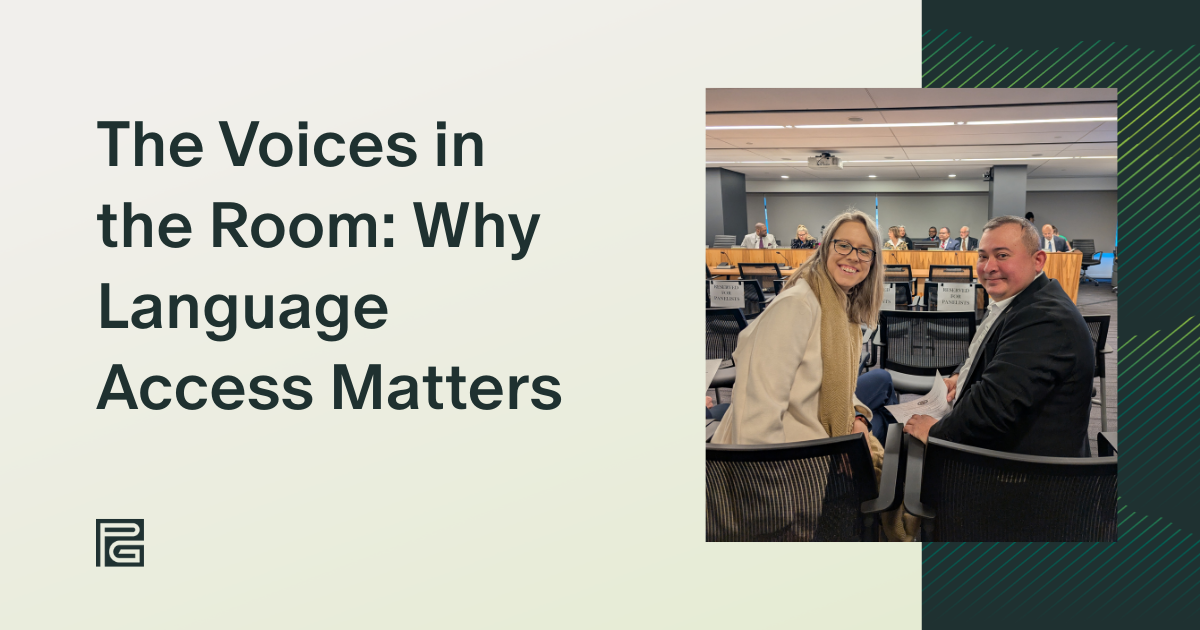
On March 25, we attended the U.S. Commission on Civil Rights (USCCR) briefing, Language Access for Individuals with Limited English Proficiency. We had read the agenda. We had seen the talking points. But nothing prepared us for the raw honesty of the testimony shared. For those who only watched the livestream, it is hard to convey how charged, human, and deeply personal the testimony felt in that room.

We didn’t testify—we were there to listen. As leaders in language operations and technology, we felt a responsibility to bear witness, reflect on what it means for our industry, and ask how we can do more.

As we sat listening, one thing was undeniably clear: Language access isn’t a nice-to-have or a bureaucratic box to check. It’s a public safety imperative. A moral obligation. And yes, a business issue.


A Personal Reflection: Clare

For me, it was deeply personal. I’m relatively new to the language access world—but I’m not new to what it feels like to be in a room where language is a barrier to belonging. As I sat, notebook in hand, memories came flooding back of the neighborhood I grew up in, where neighbors didn’t always share a language but shared everything else: meals, rides, childcare, laughter. I thought of my mom, who often stepped in to interpret for our neighbor, Aritza. She helped her navigate everything from coordinating with city maintenance workers to communicating with healthcare providers and law enforcement.

At the time, I saw it simply as neighborly support. But sitting in the hearing, I understood it differently. The burden of trying to make your world understandable without the right tools and support suddenly felt much heavier. Especially when I heard story after story of children interpreting for their parents in emergencies or translating complex forms at school. The emotional toll and the responsibility are too much for anyone, let alone a child.

As Ms. Tran reminded us during her testimony, “Interpreting is a specialized skill—one that requires training, accuracy, and cultural sensitivity. It’s not something you can ask someone to do just because they happen to speak the language.”


A Personal Reflection: Gilbert

From a basic accessibility lens, this is a failure to understand fundamental needs and requirements. If we’re not delivering the message clearly, consistently, and equitably, then we’re not solving the problem—we’re compounding it.

Poor design in communication isn’t just frustrating, it doesn’t just cost money; it’s dangerous. If you don’t build language access into civic interfaces from the start, you’re designing for failure. It’s not enough to simply translate a message. We have to deliver it in a way that is clear, unambiguous, in context, and accessible, whether that’s a posted evacuation plan, a courtroom proceeding, or a parent-teacher meeting. Language access isn’t a bolt-on feature. It has to be part of the blueprint. The consequences of mislabelling something are universally bad, and all languages and people deserve it; the collective costs are far outweighed by the modest investment in language access. It’s an investment in the community–we heard repeatedly that it’s not just about speaking their language, but in understanding their story. True access comes when communities shape the message, not just receive it.

It also struck me how often the children as interpreters came up—not just as witnesses to their parents’ struggle, but as participants, carrying burdens they should never have to bear. It’s a sign of quiet desperation when a child becomes a system’s last line of defense.


Stories of Barriers, Advocacy, and Solutions


When Translation Isn’t Enough: The Call for Meaningful Access

Mr. Lynip, a teacher and advocate in Richland School District in Columbia, South Carolina, spoke not just about tools or technology—but about the gap between communication and comprehension. And how students suffer when families are unheard.

He challenged the Commission to take seriously a term in its own mission statement: meaningful access.

“It’s not just a matter of having translated or interpreted materials. Parental voice has to be meaningful. It has to be loud enough for us to hear.”

He shared real stories of students:

  • A student delayed for over a year in receiving educational testing because the family couldn’t navigate the system.
  • A child who missed two weeks of school—not because of illness or truancy, but because her family didn’t know that having a scheduled vaccination appointment was enough to attend.
  • A young girl placed in fourth grade against her mother’s wishes—only to discover later that the child had missed the first two years of school entirely.

These weren’t translation problems. They were listening problems. Design problems. System problems.

However, Mr. Lynip also offered hope, pointing to local innovations like Healthy Learners, a program that eliminates healthcare access barriers by transporting students directly to appointments. He called for more intentional collaboration—across hospitals, schools, civic groups—to remove friction points and build systems where families are seen, heard, and served.


“She’s Only Nine Years Old”

Ms. Tran, an attorney at Community Legal Services of Philadelphia, shared her personal story and professional perspective.

As the child of Cambodian refugees, she often served as an interpreter for her parents in legal, medical, and emergency settings. One memory stood out:

“A police officer entered my family’s restaurant and asked my mother to interpret for a man outside. She explained she couldn’t leave the counter—she was the only one working. The officer pointed at me and said, ‘Well, what about her?’ My mother, in disbelief, replied, ‘No, she’s only nine years old.’”

Ms. Tran wasn’t forced to go outside that night—but she recalled many times she did interpret as a child, witnessing situations she never should have been part of.

“This experience is not atypical for children of people with limited English proficiency. It is still happening today.”

Professionally, Ms. Tran now leads language access advocacy work and represents individuals with disabilities navigating Social Security. She shared the ways in which inconsistent, unreliable interpretation services can derail an already difficult process—like the story of her client Kay, who was forced to testify in English due to audio issues with her Vietnamese interpreter. The hearing had already taken six months to schedule. Kay complied rather than risk another delay.

“The failure to provide reliable interpretation services resulted in wasted time and resources, and placed an undue burden on K—adding frustration and anxiety to an already stressful process.”

Ms. Tran’s message was clear: this is not a one-off. These are recurring systemic failures. Her recommendations emphasized the need for stronger legal protections, faster complaint resolution, and the kind of enforcement that makes civil rights real.


A Personal Mission, Made Professional

Ms. Muñoz, a compliance officer at DHR Health, didn’t just talk about policy—she talked about people. And she brought her whole self to the room.

“This is personal… My commitment to serving my community has been a lifelong hobby.”

Raised along the U.S.–Mexico border, Ms. Muñoz shared her journey—interpreting for families in her community, supporting students with disabilities, and now overseeing ADA and language access services for a healthcare system that serves nearly 2 million people.

She spoke not only about the emotional weight of language access, but about the practical infrastructure her team has put in place—bilingual staff, in-house interpreters, proficiency assessments, community education, and multi-tiered language support. Spanish-language services are built into their staffing model and budget planning.

“Language access is a fundamental part of delivering quality healthcare. Effective communication empowers patients to make informed decisions—improving both outcomes and overall well-being.”

Even in a region where Spanish is dominant, Ms. Muñoz emphasized the importance of preparing for less common languages and continually expanding access tools. Her testimony was a reminder that doing this work right takes intention, empathy, and investment. And when done right—it works.


“They Don’t Just Translate Words. They Save Lives.”

Ms. de la Iglesia, Director of Language and Accessibility Services at Mount Sinai Health System in New York City, has spent nearly two decades working at the intersection of language and care. But her testimony started with something more personal:

“As an immigrant to this country 25 years ago—without language—I experienced firsthand what it is and how it feels.”

At Mount Sinai, her team supports patients speaking over 800 languages. Her integrated, multi-modal approach includes in-person interpreters, phone and video services, embedded technology, and written translations.

“Interpreters are critical. They don’t just translate words. They save lives.”

She spoke of interpreters facilitating surgeries, transplants, and end-of-life conversations. Despite the ongoing challenges—especially for rare languages and patients with disabilities—her message was clear:

“This work speaks to our shared humanity—and our belief that every person deserves to be heard, in their own language, in their own moment.”


Designing for Dignity: Native Language Access

Ms. Allison Neswood, Senior Staff Attorney at the Native American Rights Fund and citizen of the Navajo Nation, reminded us that language access is not one-size-fits-all.
Many Native languages are unwritten, have multiple dialects, or lack direct translations for complex concepts. That demands more than forms—it demands partnership.

“When my community members need to speak about something personal or important, they shift back into Navajo.”

She urged the Commission to build systems that reflect cultural understanding, designed in collaboration with Native communities—not just for accuracy, but for dignity. Her testimony reinforced something we’ve heard across many communities:

“Language access isn’t just a service—it’s a signal of respect.”


The Business Case: Often Overlooked

Lack of language access doesn’t just harm individuals. It breaks systems. 

It increases risk. It drives up costs. It slows emergency response. It adds friction to every interaction.

At the briefing, Dr. Bill Rivers, a linguist and national leader in language access policy, laid out the real-world operational gaps that persist—especially at the local level. While legal protections are in place, implementation is inconsistent. Schools, healthcare systems, and municipal agencies are often overwhelmed, under-resourced, and facing a patchwork of languages spoken by small populations. 

“This isn’t just about refraining from discrimination—Language access is much more like provision of access under the Americans with Disabilities Act. It requires proactive action. We have to do something. That means extending resources, investing in infrastructure, and doing the hard work of designing for access.”

That “something” means building access into the design of our systems—not bolting it on as an afterthought. It means recognizing that miscommunication isn’t just inefficient—it can create risk, delays, and breakdowns in service delivery.

The industry has the capacity to meet the need—350+ languages, 24/7, often in under two minutes. But systems must be in place to take advantage of it. Without that infrastructure, even the best language providers can’t close the gap.

The reality is that when language isn’t a given, communication must be intentional.

That’s the work we do every day—creating access on purpose. And in a moment like this, when responsibility for language access is increasingly shifting to state and local levels, our role becomes even more vital.

We’re not just enabling compliance. We’re helping systems work—efficiently, equitably, and safely.


The Call Forward

We didn’t just walk away with notes. We brought the stories back to our teams, to our clients, and to our company roadmap.

We’re working with school districts, hospitals, and public agencies to build solutions that don’t just comply—they connect.

We’re building systems that reduce risk, improve trust, and reach people in the language they understand.

We’re not waiting on a perfect policy. We’re moving with clarity and urgency.

Because this work doesn’t belong to one party, one agency, or one industry. It belongs to all of us.

We’ll be listening. And we’ll keep building what’s next.

The U.S. Commission on Civil Rights briefing highlighted the real-world impact of language barriers across education, healthcare, and public services. For educators, these challenges are especially pressing. If you’re an educator located in the DMV area, join us at our second annual Language Access Symposium to explore solutions, share experiences, and collaborate on building more inclusive schools where every student and family is heard. Among others, you’ll hear from Mark Byrne, Jason Velasco, and Bill Rivers on the future of language access in K-12 education.

Measuring Success in K-12 Language Access: A Conversation with Mireya Pérez

The Language Access Lectern | a Piedmont Global Podcast | Episode 4

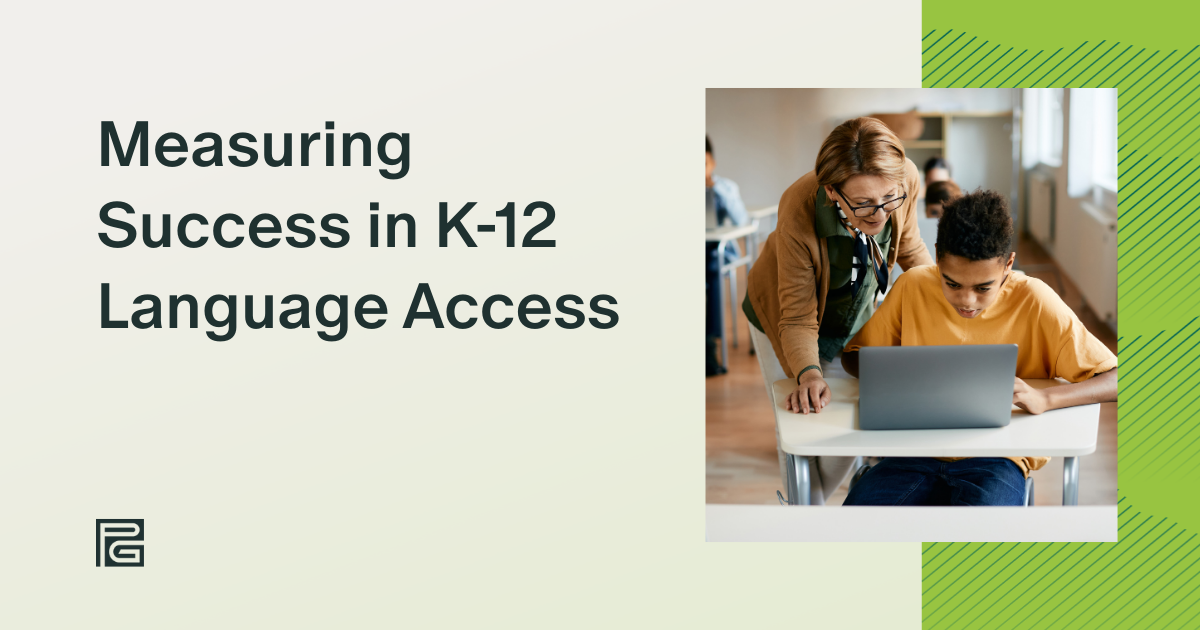
As English learner (EL) student populations continue to grow, language access remains an urgent need in K-12 classrooms. In conversation with Mireya Pérez, the interpreting services coordinator for Arlington Public Schools and founder of the Brand the Interpreter podcast, Language Access Consultant Mark Byrne unpacks how schools can improve coordination to help EL students catch up to their peers.

You can listen to the full episode here. Keep reading for a recap of Mark and Mireya’s insightful conversation, which was originally broadcast on Brand the Interpreter.


Finding Your “Why” as a Language Access Advocate

Mark: I grew up in a relatively low-income family and struggled a bit when growing up. We didn’t have a lot of opportunities to travel. When I had the opportunity to put myself through college, as part of the mission at Holy Cross, I did a cultural immersion program and found myself in Peru. It made me appreciate the sacrifices that my family made for me. After the immersion program, my language skills were sharper. Mostly, I returned with a sense of gratitude, appreciation, and respect for people and cultures.

Mireya: How did these experiences get you started with language access?

Mark: Nothing really makes me feel as good as I do about positioning language services in a K-12 setting. Language companies across the United States—and globally—don’t focus on K-12 schools as much as they should. Schools get left behind in terms of developing solutions. It’s a great opportunity to advocate for families, multilingual students, school staff, and the interpreters that we work with.

MireyaWhen individuals hear language access, they may think about public education and interpreters. We know there is a lot more involved, so I’d like to hear what you are observing, the gaps you’re noticing, and your experiences with language access in schools right now.

Mark: When we talk about language access in schools, it’s about not only expanding the service itself but expanding the knowledge behind the work. As somebody who struggled with their own education, who sat through disciplinary and special education hearings and outplacements, when it became clear you’re not going to be able to make it through the school year, I remember sitting through those meetings not processing what was happening. I’ve sat in that seat and know what it feels like. But I’m also very fortunate in not having a language gap. I had to take remedial math classes, and still went on to earn my four-year diploma and a Master’s degree after that.

When you start thinking about the experience that multilingual families have in the special education realm, engagement is so important. My family was there at all those meetings advocating on my behalf. They got me through to the next level. When there is a language gap, it can be difficult for families to advocate for their students. It’s difficult for the school staff to understand what’s happening at home. At the end of the day, we want to help as educators.

MireyaWhat else brought you to this field?

Mark: Another thing that shaped my foundation, understanding of the K-12 space, and how I view language access stems from my experience working with student data at a research and analytics firm. It gave me unique insight into how school leaders think about education and the achievement gaps across different student groups. When you look at multilingual families, you see that very few of them are achieving the student growth rates that their peers are. If we don’t grow those multilingual learners at an accelerated rate, those achievement gaps will continue to exist for years and years.

The business of schools is academic return on investment. It’s not about dollars invested for financial return, like you would think about in a business setting. It’s about dollars invested for student growth.

As I think about the language services space and how we position it, we need to bring resources, training, and an understanding of why we use these services to the end users. We also need to share that story with school leadership, school boards, leaders in the community, and stakeholders and share the impact that language services can make in a K-12 setting.


Identifying Gaps in K-12 Language Access

Mireya: In education, there are different layers of administration, and most or all of them are involved in the conversation surrounding language access. In many school districts, for example, language access is fragmented. You’ve got one piece being worked on in one department, and then you’ve got another piece of language access being worked on in a different department. In many situations, those departments don’t speak to one another. 

There are unique school districts with superintendents and board members who understand language access and all its complexities, but it’s very rare. It’s a unicorn. What have you seen in your current role in the education field and having conversations with school leadership?

Mark: I do think there is a lot of curiosity about technology, and always a focus on compliance around state and federal legislation. But language access is not equal in all 50 states. I think there’s a lot more that we can do in schools to support our multilingual families: being more considerate of tools and putting together a comprehensive plan around language access are important.

Schools have a strategic plan, and it relates to growth and buildings and creating different services within the district, but language access is (almost) never a component of that strategic plan. What you mentioned to me was that different departments are disconnected from the work they’re doing to support language access across schools, and that’s part of the conversation that I’m trying to bridge.

If the right hand doesn’t know what the left hand’s doing, then we’re going to have a hard time helping students achieve as much success as they could possibly have. That’s true whether they’re a multilingual family or if they’re a family or student who is Deaf or hard of hearing.


Measuring Success in K-12 Language Access

Mireya: How can someone that potentially does not understand language access make the connection to how it needs to work — and its value?

Mark: Academic return on investment is an important component for school leaders to understand. Measuring and quantifying how an investment is impacting students is critical. We need to understand what students can get out of it by taking a look at the data.

Also, when you’re thinking about the role of an interpreter, one of the most important things that we’re trying to do, especially within a special education setting, is establish credibility and trust with the family. As you start talking about outplacement services for families to react to and perhaps allow their students to take advantage of the best of what your district has to offer, you will need to get buy-in from that family. A conversation in broken English is not allowing them to have meaningful participation in their child’s education.

Often, school leaders like to think about the output instead of the impact. They’re concerned with lost time, as you might think about in a manufacturing setting. But when there’s a language barrier between a family and staff, that’s lost time right there.

Say a director at a school district has a family coming in and can’t figure out how to converse with them, and they’re sitting there while the director is trying to figure out a solution; that’s lost time. Consider how many EL students you have across your district and how many interactions they have, and then you start to realize how much lost time can exist and what an incredible bottleneck that is. I only bring this up to reinforce the importance of having a strategic language access plan to train and articulate the who, how, and why of servicing these families. 

Eager to learn more? Listen, watch, and subscribe to The Language Access Lectern on YouTube and piedmontglobal.comDiscover how Piedmont Global approaches interpreting, translation, and K-12 language access planning services here.

Property & Casualty Insurance: Best Practices for Serving LEP Policyholders

Of the nearly 30 million Americans identifying as limited-English proficient (LEP), 39 percent are homeowners, per Fannie Mae, and 28.7 percent regularly drive to work, per the 2023 American Community Survey. Whether you advertise to LEP policyholders or not, insurers can expect to work with customers who speak languages other than English at home and may require additional support to communicate effectively.

Claims are complex: ensuring the requirements and details are understood is paramount to success. By ensuring language access services are embedded within claims and customer service workflows, property and casualty insurers have an opportunity to convert and retain a larger share of the LEP market.

Which best practices differentiate P&C insurers from competitors that overlook this particular customer segment? We’ve rounded up actionable tips to level up multilingual service delivery, with the aim of enhancing productivity metrics and sustaining long-term policyholder retention.


Best Practices for Multilingual Claims Processing

While most policyholders chase lower costs when switching to a new insurer, a positive experience with claims can deter attrition. Clear communication could make all the difference, particularly when dealing with language barriers.

The United States LEP population continues to rise, exceeding more than 80 percent growth since 1990. Multilingualism has and will persist as a defining factor of American society, and the insurers who engage these customer segments effectively will be poised for growth.

A separate, climate-driven reality is the increased frequency, severity, and cleanup costs of natural disasters. Reviewing which years saw the largest number of natural disasters (where damages per disaster exceeded $1 billion) reveals that nine occurred in the last ten years. In response, claims adjusters have been expected to increase their velocity, while productivity and customer satisfaction metrics remain under a microscope. Streamlined processes allow these teams to work as diligently and efficiently as possible.

Considering these external factors will continue influencing the policyholder market, the following best practices offer insights to help teams optimize workflows during high volume periods and improve multilingual client service. 


Best Practice #1: Map the Claims Process for LEP Policyholders

According to SQM Group, an acceptable average wait time for customer service is 2 minutes or less. Policyholders value their time, and they expect process optimization from established companies.

With that in mind, your company has likely already mapped the claims process for continuous evaluation and improvement. However, does your team have a process map for LEP policyholders that also explains how to deploy language services? By identifying each contact point during the process and aligning it with a language access resource, claims adjusters will know how to act faster and more effectively when on the line with an LEP policyholder. 


Best Practice #2: Train Claims and Field Adjusters on Language Access

If claims adjusters and managers don’t know which questions to ask or how to access an over-the-phone (OPI) interpreter, their inquiries from multilingual policyholders will inevitably be more challenging to resolve. By helping adjusters immediately identify if a policyholder needs language access and how to take swift action to get an interpreter on the line, the first notice of loss (FNOL) and follow-up calls can proceed with greater ease.

Similarly, when field adjusters assess damages in person, equipping them with video-enabled devices for virtual remote interpreting (VRI) can enhance comprehension and ensure a swifter, more accurate resolution.


Best Practice #3: Create AHT Metrics for Multilingual Claims

Interpreting increases call times. If phone calls with LEP policyholders are measured by the same average handle time (AHT) standard as English-only calls, you might inadvertently foster an environment that disincentivizes agents to provide optimal service to multilingual customers.

Creating AHT metrics specific to LEP claims counters this effect, allowing not only for optimal service, but opportunities to make process improvements.


Best Practices for Multilingual Customer Service in P&C Insurance

According to TechTarget, the first call resolution (FCR) rate reveals much about a call center’s performance. If a customer’s needs frequently cannot be resolved at the first point of contact, your call center’s operational efficiency might be lower than it could be. An FCR below 75% indicates room for improvement.

Trained customer service representatives can deploy language services faster, reducing the need for repeat calls, abandoned inquiries, or extra time spent on the line with multilingual policyholders. Here are two key steps you can take to facilitate greater efficiency. 


Best Practice #4: Invest in a Multilingual Self-Service Library

Check the trends: which languages other than English do your customers primarily speak? Once the number of customers speaking Spanish, Mandarin, Vietnamese, French, Hmong, or other regionally specific languages reaches critical mass, it might be worth investing in translations of your self-service customer service library.

An efficient way to translate your library is to work with a language service provider specializing in insurance content. Better yet, you can count on maximum efficiency and value if they use AI-powered, linguist-supervised processes.


Best Practice #5: Train Call Center Agents on Language Access

Small changes that are broadly propagated can have a major impact on productivity and efficiency. For example, if language access resources are not readily available, or customer service agents have not received sufficient training, remedying this can support higher rates of firstcall resolution. Ensuring agents know how to deploy language services and providing them with chat-based and phone-based options for language support can and will move the needle.


Interpretation Services for P&C Insurance Companies

Often overlooked and underserved, the LEP policyholder landscape offers significant opportunities for new customer acquisition. However, to attract and retain these new customers, insurers must come prepared with a comprehensive language access plan to achieve uninterrupted service delivery when a claim or inquiry occurs.

Piedmont Global works with enterprise, mid-market, and small P&C insurance companies to elevate multilingual policyholder service, satisfaction, and retention. As your strategic partner, our services help insurers differentiate their offering and provide optimal service through: 

  • Translations, including policy documents, marketing content, chat-based support content, certified documents for court cases, and more 

Are you ready to capture a greater share of the multilingual policyholder market? Schedule a call with one of our experts today.

Language and Localization: How to Convert and Retain Global Consumers with Localized Content

Today’s leading brand marketing teams are increasingly asked to engage global audiences more effectively. It is in their interest to find the most accessible opportunities that align with budgetary requirements and can scale effectively. As digital communication and e-commerce have reduced the barriers to reaching global audiences, authentic and culturally attuned content is key to improving performance and should top the list of considerations.

In an era of noisy feeds and infinite scrolling, brands are up against a significant amount of competition in the attention economy. What drives customer engagement in your region may not translate into another culture. Translating ideas and repurposing existing concepts one-to-one is not the way to stand out.

survey by CSA Research asked English-as-a-second-language (ESL) consumers in Brazil, China, France, Germany, Japan, Russia, Spain, and Sweden to comment on shopping experiences in English. More than nine out of ten indicated they were much less likely to consider buying a product if it was neither presented in their native language nor adapted to their local preferences. One in six survey respondents would never consider investing in software if it was not offered in their native language.


Do these results surprise you?

Plenty of marketers still assume that campaigns and merchandising in English will work for the 1.46 billion people who speak English worldwide. This theory works when language and concepts rely on simple, universal themes. However, with only a fraction of these 1.46 billion people speaking English as their first language, and few campaigns clearing the bar for simplicity, failing to localize content could mean losing out on customers and engagement.

Individuals are more emotionally engaged when interacting with content in their native language. Why? Because familiarity and comfort significantly impact consumer decision-making. Translation and other language services can help bridge the language divide, but this is only the beginning of the process. To improve global reach and performance, brands need to go further, bringing localization into the global go-to-market planning process earlier.

Effective localization adapts translations to convey cultural references, idioms, design sensibilities, humor, and tone. When attempting to reach international markets, remember that translation is only the starting point, and that localization is the key differentiator to help you achieve your objectives.


What Role Does Language Play in Consumer Behavior?

Before we explore the applications of localization in global marketing and merchandising, let’s explore why language is such an important indicator of consumer behavior.  

Language shapes how individuals process and perceive information. When applied to a marketing context, language shapes consumers’ emotional connections with brands. Consider the impact if a consumer does not benefit from the ease and access provided by content in their native language. One can extrapolate the challenges to eliciting a comparable emotional response.  

For limited-English-speaking audiences, localization reduces the barriers to building a connection to and affinity for brands. This is true even if they have a working knowledge of the language.


How Localization Drives Consumer Engagement

Translation is part of the effort to connect with international customers, but localization is even more expansive. Localization enables brands to reflect locally held beliefs, traditions, context, current events, restrictions, faux pas, and humor 

Getting localization right signals to audiences that brands understand them. Brands perceived to be culturally aware tend to foster deeper emotional connections with their audiences, translating into greater, more enduring customer loyalty.  

Reporting over one billion in revenue in 2024, the cosmetic brand e.l.f., a New York-based company, is currently sold in 18 countries. e.l.f. recently launched a localized campaign called “e.l.f. von zehn” (eleven out of ten) that unites the brand’s commitment to quality with German consumers’ preferences for highly rated products. As a play on words, this campaign could only work for German-speaking audiences. Its success comes directly from a well-considered localization strategy, demonstrating the value of elevating local culture through partnerships with localization experts. 

Getting culture and localization wrong can be disastrous to engagement, sales, and retention metrics. You would not base your domestic marketing strategy on assumptions; the same must be true for international campaigns. Insufficient local market research or (sometimes) reliance on one-to-one translations of English-language materials can alienate audiences and lead to wasted investments. It is important to gain a thorough understanding of your audience’s culture and language, with the help of trusted market localization experts, to deliver relevant and engaging content that leads to increased sales and conversion.


Impact of Localization on Sales and Conversion Rates

Brands that invest in knowledge of local customs, idiomatic expressions, and societal values are rewarded with elevated trust and loyalty. Studies on neurocognitive processing support this claim, showing that the brain is more efficient at decoding familiar linguistic patterns. This heightened engagement is likely due to the cognitive ease of processing information in one’s native language.

For this reason, localization can also be a strategic investment in higher sales and conversion rates. According to Stripe, customers may abandon purchases when the checkout process is confusing. CSA Research has also consistently found that consumers in non-English-speaking regions are almost always more likely to complete a purchase when product information is available in their local language. To avoid this common pitfall, localizing your checkout workflow can improve sales and conversion rates by reducing unnecessary friction points in the customer journey.


Increase Marketing ROI with Localization

For global brands, the return on investment in localization is clear. Not only does localized marketing lead to increased brand recognition and trust, but it also drives significant improvements in sales conversions. Companies that fail to localize their marketing strategies are missing out on substantial growth opportunities, particularly in non-English-speaking regions, suggesting that brands should prioritize localization in their global expansion efforts.

Brands should not overlook this strong link between localization and long-term performance outcomes. For global brands, localization is not just a marketing tactic but a critical strategy for building trust, loyalty, and long-term growth in international markets. Customers who engage with localized content are more likely to become repeat buyers and advocates for the brand. This loyalty is tied to the emotional connection that localization fosters and the sense of respect and understanding that consumers feel when brands invest in culturally relevant communication. The correlation between localization and long-term retention is especially important for businesses looking to build lasting customer relationships in emerging markets, where brand loyalty can lead to sustained growth.

Learn more about localization from a Piedmont Global expert: contact a language access consultant today.

4 Trends for Global Go-to-Market Planning in 2025

Are you getting ready to launch a new product in more than one country? If so, global go-to-market (GTM) planning is on the agenda. Launching new products is already complex when preparing for one market, let alone many. Introduce differences in language, cultural values, and preferences, and the challenge multiplies.

Whether your brand is a small startup or an established small/medium-sized business (SMB), global GTM planning must incorporate localization as a foundational process. Localization builds a durable link between your headquarters and your global customers, enabling you to connect with new audiences authentically and maximize buzz, growth, and profitability.

All too often, localization enters the picture after a GTM strategy has been set.

This common mistake can lead to delays, lackluster launches, and failure to achieve stickiness. You can avoid these pitfalls by bringing on localization experts earlier into the process who can help you weed out mistakes long before they become disruptive. Localization experts contribute significant value by elevating brand identity and product messaging beyond one-to-one translation into a context that resonates with clearly defined, linguistically diverse audience segments.

As we review some of the most exciting and impactful trends in global go-to-market planning in 2025, we will also consider how and where localization fits into the picture. The following opportunities are proven to build awareness, desire, and demand. When combined with strategic localization, you can achieve positive cultural impact in every target market you wish to reach. 


Trend #1: Create Legitimacy with Native Content

In 2024, U.S. adults between 18 and 24 spent 186 minutes scrolling daily. For adults 65 and older, that average was 102 minutes. Social media remains among the highest-performing (albeit expensive) channels for reaching your ideal audiences. While beating the algorithms can feel like a moving target, one format continues to rise to the surface: native content.

Marketers are always looking for the perfect channel, message, and aesthetic alignment to drive impact. In the case of global GTM planning, that impact ultimately should lead to sales, so brand campaigns ought to be complemented with engaging, informative calls to action. This is precisely where native content shines. Native content often strives to answer the “what, how, and why” through a consumer lens, providing a relatable, low-friction pathway to purchase.

Strategic GTM leaders must push back against the conventional wisdom that marketing content needs to be flawlessly presented 100 percent of the time. While native video may require storyboarding, basic staging, and competent talent, it does not require elevated videography, studio lighting, or professional actors. Why? The “realer,” the better—it’s all about blending in.

Most scrollers do not appreciate their feed experience being interrupted, and the majority of user-generated content on social media is not created with sophisticated production resources. Overly polished ads can, ironically, become an eyesore, and it is all too easy for users to move on to the next post or video. You should still produce brand campaigns with refined creative and messaging, but consider how native content can reinforce your brand strategy.

Localization tip: Targeting native content to reach customers with specific attributes, including language spoken, requires authenticity. If featuring talent, they should be local. Consider creating content that speaks to the themes, expressions, sentiments, and other cultural identity markers unique to each global audience segment. One-to-one translations may not land as effectively or miss opportunities to capitalize on local trends aligning with your brand and customers. 


Trend #2: Localize Your Influencer Strategy

If the production value of social media content exists on a spectrum, with user-created content on one end and studio creative on the other, influencer-produced content falls somewhere in between. Influencer marketing offers a credible endorsement from a trusted voice, which ideally unlocks a new pool of potential customers.

In an era of noisy feeds and split-second decision-making, there is little downside to tapping into a curated corner of the internet where your target audiences are opting to spend their time. The barrier to entry, for most, is price. While the global influencer market reached an estimated valuation of $24 billion in 2024, much of this figure comes from the millions of micro-influencers with 150,000 or fewer loyal followers.

Micro-influencers do not necessarily translate to micro budgets, as many have invested time and resources into creating valuable content that keeps their users happy. Their engagement rates tend to skew higher, leading to overperforming click-through rates compared to brand-hosted sponsored content. Depending on their track record with other high-quality brands, you ought to be able to find partnership opportunities that fit your budget and expand your reach. 

Localization tip: A localized marketing expert can help you identify regional influencers with proven engagement in your niche. Some micro-influencers may offer a more approachable pricing scheme and can advise on the culture and values of their followers to ensure your messaging will resonate.


Trend #3: Persuade with Independent Research

According to Google, 53 percent of shoppers research products online before purchasing, and this may be undercounted. If you aren’t already sourcing original, third party-verified research to reinforce your product story, 2025 may be the year to start. 

Where data science, thought leadership, and marketing converge, an independent research study is an invaluable asset to a go-to-market strategy. Adding a research component to your GTM plan is not something to jump into hastily, and there are ethical and legal considerations to put first. However, if executed correctly, research can pack a powerful punch to campaign results by capturing interest, establishing trust, and driving sales. Without this asset, you run the risk of shoppers visiting competitor websites to find the answers they seek. 

How you conduct independent research will vary based on industry. A skincare brand may host a clinical trial to test product efficacy. A B2B organization may run a consumer research study to provide clients with valuable insights for their businesses. Use a reputable, independent agency should facilitate the process and certify the results, and plan for six months to a year for the project lifecycle.

Localization tip: When launching in more than one country, your product’s unique value proposition may need to be tweaked. Consulting with in-market experts in the discovery phase will help ensure the scope of product research examines the benefits, attributes, or themes that local markets are likely to find useful.


Trend #4: Close the Deal with Localized AI Chatbots

In 2023, 44 percent of shoppers used chatbots to ask questions while considering a purchase. Eighty-two percent of customers indicated they prefer interfacing with chatbots over waiting for a representative. 

Investments in awareness and engagement strategies should be matched with investments in lead nurture and conversion. An expertly deployed AI chatbot can make a difference by providing streamlined access to common pre-purchase questions about product attributes, reviews, shipping and returns, and other relevant information.  

Alignment with sales and customer service can increase the mileage of your chatbot. It should also be trained to connect customers with product FAQs, account and subscription management information, and other post-purchase advocacy content that support satisfaction and retention.

Localization tip: Since people are more likely to make purchase in the language they are comfortable with, train your chatbot to offer multilingual workflows. Your global customers will thank you.


Localize Your Go-to-Market Plan with Piedmont Global

From website, campaign, and chatbot content translation to brand, product, and marketing localization, Piedmont Global brings cutting-edge expertise to drive global growth. Reach out to a team member to learn about our innovative localization, translation, and interpreting solutions for enterprises, SMBs, and startups. 

5 Best Practices to Optimize K-12 Language Access Planning

English learner (EL) students often face achievement gaps compared to their peers. Recent National Center for Education Statistics data found that 6.1 percent of twelfth graders remained English learners through graduation. With 15 percent of first graders entering elementary school as English learners, as many as 40 percent of EL students could be slipping through the cracks.

The factors contributing to these outcomes are multivariable and complex, which means promoting language access is not the sole responsibility of one person or department. Rather, it is the responsibility of the entire school system. A cohesive language access plan is essential to helping multilingual students and families receive equitable access to opportunities. Without a plan, EL students are at risk of falling behind, parent engagement will be impacted, and school districts could someday face litigation.

We spoke with experts in K-12 language access planning to create the following best practices guide. Administrators and teachers can use these tips to map out, fund, administer, and refine a plan that works for their schools and student populations. Each best practice contributes to an overarching goal: improving outcomes for students by engaging with EL families competently and compliantly.


Best Practice #1: Identify Your Language Access Champions

It’s no secret that most K-12 professionals work long hours. To increase awareness and adoption of language access resources, you need to make the process streamlined, and you need champions committed to cultivating enthusiasm. This is true whether you are designing your first language access plan, working to improve existing policies, or expanding a plan’s scope to support more students and families.

A language access champion may help with some or all of the following: 

  • Inform parents about their rights  
  • Show parents how to request language access resources  
  • Facilitate staff adoption of language access services 
  • Answer questions and pass along staff feedback 
  • Advocate for funding

Language access champions bring energy, awareness, and follow-through to maximize the reach and impact of this important work. Your champions may be responsible for the internal adoption of policies, while others may focus on encouraging parents to take advantage of services. In either case, the best way to locate your champions is to find out who is already making an effort.

Consider hosting a training that covers how to work with interpreters, engage with technology, and understand when it is appropriate and compliant to deploy language access. The teachers and administrators who show up with enthusiasm might be open to formalizing their role as language access champions.


Best Practice #2: Quantify the Need for Language Access

In many school districts, the need for language access is underestimated. This can lead to a false assumption that a larger investment in language services is unnecessary. Instead, follow the data: often times, you will find that EL families and students are underserved. 

Quantifying the need for language access is a foundational step of language access planning. One straightforward method to gather this data is tagging EL students and families in your student information system (SIS). This process should be repeated with every new school year. 

Understanding the scope of language access needs will not only help allocate internal resources. You will also need this data to take full advantage of ESSA Title III funding for EL programming.


Best Practice #3: Identify When Professional Language Services Are Required

In certain situations, language access is not just helpful—it’s mandatory. When meetings or documents influence decisions or outcomes related to student academic performance, enrollment, safety, or disciplinary action, professional language services must play a role. Without it, there is a risk of families not fully understanding their rights, responsibilities, or the impact of a decision on their child’s education. 

Common scenarios that require professional language services include: 

  • IEP meetings 
  • 504 plan meetings 
  • Parent-teacher conferences 
  • Emergencies 
  • Disciplinary hearings and legal proceedings

Activating professional language services for any of the above scenarios should not present bottlenecks. Procedural guidance ought to cover the following proactive steps:  

  • Schedule interpretation services in advance—don’t wait until the last minute. 
  • Add 50% more time to scheduled meetings to ensure all parties have adequate time to communicate with each other. 
  • Provide interpreters with key documents in advance to prepare for the conversation. 
  • Assure families of confidentiality by confirming that interpreters adhere to FERPA regulations.

Last but not least, there is one policy every school must follow: multilingual students are not interpreters. Using students or untrained staff can compromise the accuracy of communication, jeopardize trust, and expose the school to lawsuits. 


Best Practice #4: Clarify the Role of Multilingual Staff

Multilingual staff play an essential role in schools with diverse populations, but it’s important to recognize they are not a replacement for professional linguists. 

Teachers who speak more than one language can offer valuable support for informal communication needs. In contrast, interpreters are trained to facilitate accurate, culturally competent communication in formal settings with higher stakes. 

Experienced interpreters have the knowledge and skills to handle complex educational terminology, navigate sensitive topics, and build trust with families. They have experience in situations like IEP meetings, 504 planning sessions, school board meetings, parent-teacher conferences, and disciplinary hearings, where neutrality and confidentiality are essential. 

While multilingual staff bring language skills to their classrooms, they may not have the formal training or experience to provide unbiased, accurate interpretation. It also introduces liability to the school district if a bilingual staff member handles interpreting and a misunderstanding occurs. 


Best Practice #5: Create (or Refresh) Your Language Access Plan

Recent settlements between school districts and the Department of Justice have made requirements clear: 

  • Have a consistent, accurate process for identifying families with language barriers 
  • Provide essential information to families in a language they understand 


Maintaining an up-to-date language access plan is essential to increase engagement with EL students and families and comply with anti-discrimination laws. It should detail the who, what, when, how, and why—and identify the procedures to access language services in a timely manner. 

For low-risk, informal communications, texting apps and devices can be useful. Be mindful that these tools leverage machine translation, which is not guaranteed to be accurate without expert linguist supervision. For conversations that require more nuance, persuasion, impartiality, or trust-building, your language access plan must identify how to reach a professional interpreter. They may be accessed over the phone, via a virtual platform like Zoom or Google Meet, or in some cases work onsite. Additionally, forms and handouts for parents should be translated into your district’s most commonly spoken languages. 


Partner with Piedmont Global for K-12 Language Access Planning

Ready to work on your language access plan? Whether you are starting from the beginning, making improvements, or simply looking for a language services provider with education-focused linguists, Piedmont Global can help.

Piedmont Global works with school districts across the United States to build a pathway to compliance and support better outcomes for EL students and families. For more information on creating, implementing, and optimizing your school’s language access plan, reach out to our team of experts today.

8 Tips for Utilities to Choose the Right Language Services Provider

Utilities must balance safety, cost-effectiveness, and energy efficiency in their daily operations. Partnering with a Strategic Globalization Organization (SGO) who shares these values is crucial. This collaboration can develop a multilingual communications program that drives organizational growth, enhances service delivery, and allows utilities to embrace the latest energy trends with exceptional transparency.

Choosing the right partner and adopting a strategic approach to language access are key to meeting regulations and achieving business goals. Here are some tips for selecting the right provider:


1. Evaluate the Partner’s Background and Experience in the Utilities Sector

When selecting a language services provider, consider their industry expertise, knowledge of state and federal energy regulations, and commitment to environmentally-friendly initiatives. A provider well-versed in these areas ensures compliance, offers innovative solutions, and contributes to sustainability.

Piedmont Global has extensive experience providing language solutions to utility companies such as Washington GasDominion Energy, and Northern Virginia Electric Cooperative (NOVEC), as well as government agencies and other commercial clients. We also recognize and value sustainability in the sector.


2. Consider the Partner’s Ability to Accommodate the Languages Spoken in Your Territory

Inquire about the SGO’s cultural competence in working inclusively and sensitively with Limited English Proficiency (LEP) communities. This includes their experience in effective communication, understanding cultural nuances, and providing accessible language services.

Piedmont Global frequently hires linguists who are local to the communities we serve. As a full-service SGO, we offer diverse, customizable solutions in over 200 languages and dialects. Our experts are trained in the nuances of the utilities sector and are embedded in various service territories.


3. Review the SGO’s Quality Assurance (QA) and Quality Control (QC) Processes

These processes may involve everything from vetting and training staff to proofreading multilingual content and ensuring accuracy and timeliness. Effective management ensures that the provider delivers high-quality, culturally appropriate services that meet the diverse needs of LEP communities.

Piedmont Global operates with a robust ISO 9001:2015 Certified Quality Management System (QMS) that exceeds both ISO and ASTM International standards for the provision of language services. Our pool of 5,000+ language professionals are trained in this and continually honor these standards.


4. Assess the SGO’s Commitment to Data Security Since Not all Technologies are Created Equal

From translation requests to document management services, compliance, security, and efficiency are essential. This ensures that operations are streamlined, sensitive information is safeguarded, and services are delivered promptly and accurately.

Piedmont Global takes customer privacy and data security seriously. We proudly offer NIST 800-171-compliant network infrastructure, distribute non-disclosure agreements (NDAs) to all personnel, and facilitate annual security refresher trainings.


5. Evaluate the Partner’s Ability to Ensure Timely Communication During Critical Situations

Multilingual communications must be immediate (especially in emergency or extreme weather situations). For example, during a hurricane, providing real-time updates in multiple languages ensures that all residents, including those with limited English proficiency, receive crucial information to stay safe and take necessary precautions.

Piedmont Global can accommodate fast turnarounds and offer language services in real-time. We work as efficiently as possible – and leverage technology as needed – to serve clients.


6. Consider if the SGO Can Provide Cost-Effective Language Solutions

Multilingual communications must be cost-effective and deliver measurable ROI, even for smaller utilities with tighter operating budgets. Investing in efficient language services ensures broad reach in multilingual markets and justifies the investment through clear, quantifiable benefits such as improved customer satisfaction and operational efficiency.

Piedmont Global offers a high return on investment, with translation and interpretation work that can save lives – and reduce the need for emergency services – in the energy sector.


7. Assess if the SGO Understands the Specific Needs of the Energy Utilities Industry

Multilingual communications must be tailored to the energy utilities industry. This ensures that technical terms and industry-specific information are accurately conveyed, enabling all customers to understand their energy usage, billing, and available services regardless of their language proficiency.

Piedmont Global has a deep understanding of the sector’s evolution and core variances, from regional differences to the operational nuances of different utility providers.


8. Determine if the SGO Project Management Capabilities Ensure Customized and Accurate Communication

Multilingual communications must be clear, accurate, and personalized. This improves customer satisfaction, builds trust, and improves engagement, all while meeting regulatory requirements and fostering inclusivity.

Piedmont Global offers client-centric project management and delivery, with a dedicated project manager assigned to each energy utility client. This promotes a customized approach.


Ensure Language Access With Piedmont Global

Piedmont Global is a leading provider of translation, interpretation, and language training solutions in over 200 languages and regional varieties. In emergencies or extreme weather situations, multilingual communications must be immediate. Piedmont Global can accommodate fast turnarounds and provide real-time solutions. We work efficiently and leverage technology to serve clients effectively. Contact our team to explore how our language services, tools, resources, and expertise can help energy utilities achieve their language access goals.

5 Steps to Building a Language Access Plan in the Energy Sector

The energy sector is constantly evolving—structurally, environmentally, and demographically. In the United States, approximately 3,000 electric utility companies deliver power to over 140 million customers each year. Over 68 million U.S. residents speak a language other than English at home and 29.6 million of these people have limited English proficiency (LEP).

Though utility providers value consumer experience, far too many overlook their non-English-speaking clientele. When resources and information are unavailable in a person’s spoken language, the customer struggles to read the provider’s website or communicate with a call center agent. As a result, problems around loyalty, engagement, and safety ensue.

Language access plans are integral to serving LEP communities—allowing utility companies to support their members, prioritize consumer welfare, and adequately communicate with all of their customers.


How to Develop Your Language Access Plan

Designing a language access plan requires careful coordination. Utilities should take the following steps to build their own:


1. Plan Carefully

Start by evaluating your current language access capabilities. An expert language access consultant can help evaluate your needs. If you don’t currently have a program or plan in place, identify the need based on the language requirements of the people within your service territory.

Think about the size of your energy utility, the market you serve, and the events you experience in your region. For example, providers in Florida, Mississippi, Louisiana, the Carolinas, and Georgia will need to integrate hurricane season into their language access plans. Providers always have the option to survey their community to assess demand.

Piedmont Global has extensive experience providing language solutions to utility companies like Washington GasDominion Energy, and Northern Virginia Electric Cooperative (NOVEC), as well as government agencies and other commercial clients. We deeply understand the sector’s evolution and core differences, including regional variations and the operational nuances of various utility providers.


2. Develop Localized Translation and Interpretation Services

Utility companies are more likely to reach new customers by offering translation, interpretation, and similar language access services. Consider the language needs of your primary market. The City of Minneapolis, for example, identified Spanish, Somali, Hmong, Vietnamese, Amharic, Lao, and Oromo as core languages in its 2015 Language Access Plan.

Interpretation: This is crucial for utility call centers when non-English-speaking consumers call about billing, energy plans, or emergencies. Call centers with language interpretation services see 35.67% higher FCR rates. The San Francisco Public Utilities Commission (SFPUC) offers free interpreter services for public hearings, presentations, and meetings.

Translation: Utilities must provide key documents and materials—including invoices, service notices, and safety insights with contact numbers for drilling or digging—in the languages spoken by LEP communities within their service territory. These translated materials must be free and readily available.

Localization: Energy utilities should localize all digital content, including websites, software, and user documentation. Why does this matter? A 2020 CSA Research survey found that 76% of shoppers prefer to buy from websites available in their native language. Shopping for an energy utility company is no different.


3. Train Staff to Support Consumers With LEP

Energy utilities can incentivize bilingual staff to work for their organization. Consider partnering with a designated language service provider (LSP) to improve training and support consumers with low English proficiency.

An LSP offers specialized training programs for your staff, equipping them with the skills needed to better serve diverse populations. This collaboration enhances customer satisfaction, ensures compliance with regulatory requirements, and bolsters the utility’s reputation for inclusivity and accessibility.


4. Roll Out Your Multilingual Communication Strategy

Carefully consider the timeframes, milestones, and stakeholders involved in this process.  Prioritize targeted outreach to connect with LEP customers who will benefit most from multilingual language access. Localized SMS notifications, and partnerships with government agencies, are equally effective marketing techniques.

It is crucial to roll out a thorough and effective program rather than rushing the process. Consumer safety, transparency, and access to the energy grid are paramount. This ensures that all customers, regardless of language proficiency, have the information they need to stay safe, understand their utility services, and fully participate in the benefits provided by the energy grid.


5. Focus on Continuous Improvement

Utilities should plan to monitor and evaluate the effectiveness of their language access programs. To do this, utilities may choose to collect feedback (from consumers and stakeholders), examine customer multilingual usage data, and conduct annual surveys to pinpoint areas for improvement.

Staying up-to-date on demographic changes in the service territory is essential. By monitoring shifts in the population, language services can be adjusted to meet the needs of the LEP populations being served. This proactive approach ensures that services remain relevant and effective, accommodating any new language needs that may arise as demographics evolve.


Ensure Language Access With Piedmont Global

A well-designed language access plan enables consumers with low English proficiency to communicate with customer support, ask questions confidently, and safely navigate outages and emergencies.

Piedmont Global is a leading provider of translation, interpretation, and language training solutions in over 200 languages and regional varieties. In emergencies or extreme weather situations, multilingual communications must be immediate. Piedmont Global can accommodate fast turnarounds and provide real-time solutions. We work efficiently and leverage technology to serve clients effectively. Contact our team to explore how our tools, resources, and expertise can help energy utilities achieve their language access goals.