PGLS is Awarded ISO 17100:2015 Certification

PGLS Achieves ISO 17100:2015 Certification for Translation Services

Piedmont Global Language Solutions (PGLS), a global leader in language and communication solutions, is proud to announce that its translation team has achieved ISO 17100:2015 certification. This prestigious international standard specifies the requirements for core processes, resources, and other aspects necessary for delivering high-quality translation services.

The ISO 17100:2015 certification is a testament to PGLS’s commitment to quality, consistency, and excellence in every project. This achievement reflects the company’s dedication to adhering to globally recognized best practices for translation services. By meeting these rigorous standards, PGLS ensures that its clients receive professional translation solutions that meet their unique needs.

“Achieving ISO 17100:2015 certification underscores our unwavering commitment to providing exceptional translation services to our clients. This certification not only validates our processes but also strengthens our ability to support clients in industries where accuracy and reliability are critical.”

The certification enhances PGLS’s ability to serve clients across various sectors, including government, healthcare, legal, and technical industries. By implementing ISO 17100:2015 standards, PGLS ensures:

  • Qualified Translators and Reviewers: All linguists meet strict competency and qualification requirements.
  • Robust Project Management: A streamlined process to deliver consistent, high-quality results.
  • Improved Client Communication: Clear and effective communication to understand and meet client requirements.
  • Risk Mitigation: Adherence to stringent quality control measures reduces the likelihood of errors.

Clients can trust that PGLS operates at the highest level of professional integrity, with quality at the forefront of its translation services. This milestone positions PGLS as a trusted partner for organizations seeking reliable and precise language solutions.

PGLS is a leading provider of global language and business solutions dedicated to unlocking the full potential of communication – empowering our clients to achieve growth, enhance experiences, and transform information into actionable insights. Committed to innovation and excellence, PGLS offers a range of services designed to meet the evolving needs of our diverse clientele. From language and communication solutions to market intelligence, staff augmentation, and growth advisory, PGLS is redefining the landscape of global business and communication, empowering organizations to succeed in a dynamic world. 
2025 Predictions: The Future of Language Services Will be Defined by Generative AI

As we reflect on another exciting year in the language service provider (LSP) industry, PGLS executives are also considering the future. Between the rise of generative AI, evolving geopolitics, emerging high-growth markets, and accelerating demand for scalable yet tailored solutions, we expect the year ahead to be dynamic.   

Our internal experts predict that language services will continue to evolve its all-new, AI-enabled value proposition. These tools are opening doors for LSPs to expand their offerings, from overcoming language barriers to enabling even broader strategic goals. 

Here is what our executives have to say about 2025, which they are calling the “Year of Transformation.”  


Meet the PGLS Executives

Picture of Mohamed Hussein
Mohamed Hussein – Founder & CEO
Picture of Gilberto Segura
Gilberto Segura – VP of Technology
Picture of Kenneth Anders
Kenneth Anders – VP of Operations
Picture of John Redd
John Redd – VP of Finance
Picture of Sarah Hamilton
Sarah Hamilton – VP of Human Resources


Where is the language services industry headed in 2025?

Author picture

Mohamed Hussein, on transformation
2025 will not be a typical year. Our changing industry is poised to transform the means of human connection. The ascent of speech AI technologies and native large language models (LLMs) present scaled opportunities for rich, nuanced language products—but only if expertly deployed with context-specific data.


Author picture
Gilberto Segura, on tech evolutions

The rise of agentic LLMs is transforming everyday workflows, but chatter about innovative new modalities, such as speech-to-speech or even multimodality X-to-Y combinations, such as speech-to-video, is gaining traction. Customers will continue to ask, “Which engine/model is the best?” The answer will continue to be, “The one that works best for your use case.”

Author picture

Kenneth Anders, on globalization
The demand for language services will surge as globalization accelerates and organizations seek to expand into high-growth markets. Regulatory pressures and increased public awareness around language access, especially in critical service sectors like international commerce, healthcare, and legal will continue to drive growth.


Author picture

Sarah Hamilton, on linguist talent
As much as we see the industry bracing itself for a trend towards generative AI and software solutions, the individuals performing the services in our community are always going to be needed. PGLS has always kept a human-centric approach in this industry, and this year, we are going to see a swing back to the importance and value of language service providers as individuals.


Author picture

John Redd, on mergers and acquisitions
The momentum from mergers and acquisitions (M&A) activity in 2024 should continue into 2025, and it may even accelerate. Private equity-backed companies have been buying up mid-market-sized companies to create larger LSPs, putting pressure on increasing valuations and achieving economies of scale.


Where will AI and machine translation play a role?

Author picture

Mohamed Hussein, on AI’s value proposition
This rapid paradigm shift comes with an urgent need for responsibility. As AI continues to transform our relationship to language, and to one another, increased controls regarding privacy and compliance, risk management, and intellectual property will strengthen AI’s value proposition.


Author picture

Gilberto Segura, on balance
There will continue to be tension between in-human capacity and AI-powered outputs, and both sides will press to establish a balance. In response, retrieval augmented generation (RAG) models and smaller LLMs will become more common. Certain semantic and other technologies will establish a more knowledge-based sense of veracity in LLM content, with fewer instances of hallucination, but standards for validation and accuracy must be established.


Author picture

Kenneth Anders, on human expertise
We must embrace AI as a partner rather than a threat while remaining vigilant against its misuse. In critical contexts like healthcare diagnoses or legal proceedings, human expertise is still irreplaceable. The nuances of language, tone, and cultural sensitivity require human judgment to ensure accuracy and clarity.


Author picture

Sarah Hamilton, on productivity
As in most industries, we will see an improvement in efficiency and productivity thanks to AI. This will allow our team to provide more strategic and comprehensive support to clients.


Which key challenges are PGLS clients and partners facing?

Author picture

Mohamed Hussein, on expanding partnerships
LLMs become more valuable when leveraged comprehensively across global content needs. LSPs will need to tap into this to increase their value and stickiness through more expansive global partnerships.

Author picture

Gilberto Segura, on quality
Challenges of market commoditization will force a return to quality assessment. Unsupervised AI processes can churn out translations in another language, but are they any good? The burden of proof falls on the LSP with AI services on offer.

Author picture

Kenneth Anders, on privacy and security
Under a rapid technological transition, ensuring data privacy and security will be a leading challenge. Protecting client data has to be priority number one. 

Author picture

Sarah Hamilton, on client budgets
We will continue to see a squeeze from the top when it comes to client investment in language solutions and from the bottom when it comes to the perception of language professionals that we work in a high-risk, low-yield environment.


How will PGLS solve key challenges in partnership with its clients?

Author picture
Sarah Hamilton, on differentiated solutions

The standard industry model has brought language services too late into the customer journey. We are positioning ourselves differently: playing a comprehensive part in eliminating language barriers to drive customer satisfaction and seamless access to business services. This is a win-win for our clients.

Author picture
John Redd, on comprehensive partnerships

PGLS works with our clients on a comprehensive basis because long-term relationships create optimal conditions for success. Clients are looking for companies that understand their unique requirements and industry in a way that helps them build higher-value, integrated solutions to solve emerging challenges. Deeper collaborations enable the formation of sustainable language programs that address unique language access requirements, keep technology current, and streamline costs.

Author picture

Kenneth Anders, on human connection
PGLS is committed to blending human expertise with cutting-edge technology to deliver high-quality and efficient services. We are investing in AI to enhance productivity but will always keep human connection at the core of our business to ensure quality and accuracy.


How does PGLS make a difference?

Author picture

Mohamed Hussein, on transformation
PGLS makes a difference with purpose-built solutions that blend the irreplaceable elements of human capabilities and top-shelf products. By embracing industry evolutions and retaining the best linguists and most innovative tech leaders, we are showing up in 2025 with the same commitment to excellence and a transformative vision for the future of language services.


Author picture

Kenneth Anders, on empowering clients
At PGLS, we don’t just provide services, we create solutions that empower clients to communicate effectively across languages and cultures. Our emphasis on quality, cultural competency, appropriate technology, and client partnerships is what truly makes a difference.

Author picture

Gilberto Segura, on advanced technology
PGLS has begun working on agentic language evaluation, measurement, and LLM-driven language access tools that use dynamic insights to help public and private institutions better adapt to changing populations. We are also supporting an industry effort to establish evaluation and qualitative criteria for generated content. 

Author picture

John Redd, on client relationships
As a customer-centered company, PGLS recognizes we are providing solutions to our clients as well as our clients’ end customers. Understanding the needs of all stakeholders can lead to collaborative opportunities to solve challenges comprehensively with language services.

Author picture

Sarah Hamilton, on service commitments
We are not just a service provider. We are educators through Piedmont Academy, philanthropists through Piedmont Cares, and leaders in developing product-driven solutions to help our clients and their customers enjoy seamless experiences. When we see hardship or challenges in our industry, we put all our efforts into solving them, and we do it with creativity and care.


Embracing Transformation in 2025

There is much to be excited about in the year ahead. With a roadmap defined by transformation (and perhaps a few surprises!), you won’t want to miss a moment. Subscribe to our channels —LinkedIn and the Piedmont Global Blog—to stay ahead of the curve with analysis, news, and exclusive insights. 

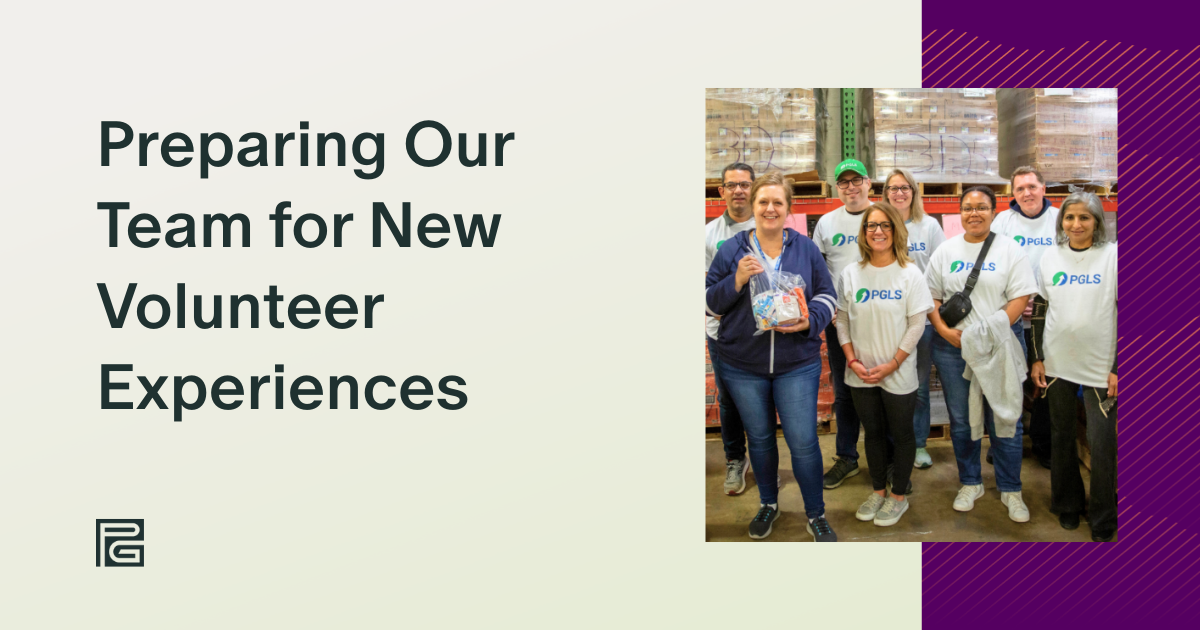
Preparing Our Team for New Volunteer Experiences: A Guide to Transformative Volunteering

While many of the cultures our global team represents are accustomed to helping others, at times we go about helping differently. This is due our varied backgrounds and life experiences. Honoring these differences, we offer multiple ways to participate through Piedmont Cares, as we believe that there is no one right to serve others. 

As we build a long-term culture of philanthropy and seek to unite global employees in efforts for social good, we’ve outlined a simple guide to help our team prepare for new experiences. Here are the principles we outline for staff as they prepare to serve others in new ways. 

Acknowledge and Respect Personal Limits

We celebrate transformative volunteerism, not performative. Our hope is that communities are transformed just as our team members lives are inspired by serving. And as we desire that volunteering be an authentic engagement, we openly declare that it’s ok to have limits. What is meaningful and comfortable to one team member may not be for another. Sometimes, there are wounds from the past that don’t let us engage with emotional or mental safety in an activity now. We hold space for those realities and tensions. We respect individuals’ choices about if and how to engage in activities. 

Reflect on Your Reasons for Volunteering

We encourage team members to prepare for experiences by checking their own motives for engagement.  

Why Are You Volunteering?

Are you animated by a desire to give back and a curiosity for learning about others’ experiences? Or are you participating out of a sense of obligation or corporate expectation? We applaud the former and try to remove any pressure for the latter. The philanthropic culture we seek to build—of genuine care and concern for others—encourages genuine, self-directed engagement. 

Stay Mission-Focused When Volunteering Feels Challenging

One barrier we’ve heard to volunteering is the vulnerability of unfamiliar experiences. Some team members have transparently shared they feel ill equipped to face new, hard realities for the first time. These concerns are valid, and we emphasize that discomfort is a natural part of growth.  

Service Over Discomfort

We encourage our team that when volunteering, the best strategy to manage discomfort in the moment is to stay focused on the mission. Whether the mission is to package food for insecure households, teach new skills to new neighbors, or hand out meals and supplies to those experiencing homelessness—whatever the mission, focus on it over self. Service comes first knowing there is a space for honest emotions right after. 

Reflect and Learn from Volunteer Experiences

Whether it’s a positive, uplifting experience or a humbling, challenging one, we encourage team members to reflect and process what they lived and what they have learned or how they have been impacted.

Growth Through Reflection

For some, this might mean celebrating a service goal exceeded as a volunteer team. For others, it might be to acknowledge a tie to a painful moment in the past or a sobering new reality in the present. Our philanthropic commitment is human first, alwayswhich also applies to team members’ volunteer experiences. Our corporate culture of learning and improvement encourages us to reflect deeply toward growth in everything we do. 

Let Volunteering Expand Your Capacity to Serve

We view volunteering as an opportunity to foster individual and team growth. We grow as individuals and as a collective when we live and reflect on experiences rooted in humanity and community—especially in a business such as oursTherefore, in preparing our team for new experiences, we encourage them from the beginning to allow the experience to change them.  

Pushing the Boundaries of What is Possible

Through volunteering, we hope our team gains a greater understanding of a people group or a new personal commitment to participate in social change. Our hope is that our teams’ capacity to show up for each other, for clients, and for our local and global communities expands as a result of volunteering. Limits are removed and together, we push the boundaries of what is possible. 

Building a Global Culture of Social Impact

Volunteerism is not just about giving back; it’s about growing as individuals and as a team. At PGLS, we believe in the power of service to foster connection, learning and transformation. By equipping our global team with the right tools and mindset, we aim to create lasting social impact—together. 

Leadership Insight: Emerging Trends in Global Communication for 2025

As globalization drives international business, the language services industry is evolving rapidly. By 2025, businesses will be forced to navigate increasingly complex multilingual environments where communication technologies are pivotal in facilitating cross-border interactions. Five emerging trends in global communication, particularly in language services, offer a data-driven analysis of what businesses can expect moving forward. 

Key Takeaways:

  • AI and machine learning are set to revolutionize the language services industry, but human translators will remain crucial for high-context scenarios. 
  • Multilingual digital communication is becoming essential for global business success with almost 50% of internet content generated in non-English languages. 
  • The global speech recognition market is expected to reach $53.67 billion by 2030, making voice technologies key to breaking language barriers. 
  • Cultural intelligence and authenticity will become a differentiator for global brands.

1. AI and Machine Learning Revolutionizing Language Services

AI and machine learning (ML) are transforming language services at an unprecedented rate. By 2025, the machine translation market alone is expected to hit $1.58 billion. The compound annual growth rate of over 13% percent during 2020-2025 highlights the growing reliance on automated translation solutions. 

One of the key advancements in this space is Neural Machine Translation (NMT), which delivers more accurate and context-aware translations than its predecessors. The rise of Google’s NMT and DeepL are examples of how businesses are turning to AI-powered solutions for real-time, scalable translation services.  

Despite the advancements in NMT, businesses recognize the limitations of fully automated solutions. Studies suggest that while many companies are leveraging AI to enhance efficiency, they also still rely on human linguists for post-editing to ensure quality, accuracy, and cultural intelligence. This hybrid approach combines the efficiency of machine translation with the human expertise, striking a balance that is particularly important for sectors like legal, healthcare, and finance.   

As we approach 2025, experts expect the combination of AI and human collaboration to become the industry standard. The interplay between technology and human expertise ensures that language services remain efficient, but also deeply attuned to cultural nuances essential for communication across diverse markets.

2. Surge in Multilingual Digital Communication

As digital transformation accelerates, multilingual communication in digital spaces will be indispensable. The global e-commerce market is projected to reach $7.4 trillion by 2025, according to Statista, with more than 80 percent of this growth coming from non-English-speaking countries. This means businesses will need to offer multilingual support not just on their websites but across all digital touchpoints. These include social media, customer support, and e-commerce platforms. 

In 2024, almost 50 percent of the internet’s content was generated in languages other than English and that number is expected to continue to continue to increase. For companies to compete in the global marketplace, the growth of non-English content will require a shift in communication strategies. Businesses will need to focus on localized customer experiences, integrating language services into their broader marketing and customer service strategies. 

The third edition of the “Can’t Read, Won’t Buy” study from CSA Research found that 72 percent of customers are more likely to purchase products or services if the information is available in their native language. The same study found that 40 percent of shoppers will not make a purchase in other languages. This indicates a significant revenue opportunity for companies that prioritize multilingual digital communication. We expect this percentage to rise further by 2025 as consumers continue to demand personalized, native-language content. 

3. Advancements in Speech Recognition and Voice Technologies

Voice technology is rapidly advancing, driven by breakthroughs in natural language processing (NLP). By 2025, the global market for speech recognition technologies is expected to reach $53.67 billion by 2030 with a CAGR of 14.6 percent, according to Grand View Research. These tools are becoming a game-changer for businesses that operate across languages, allowing for seamless real-time communication in international settings. 

Companies like Google and Microsoft are leading the charge with advanced voice recognition software capable of transcribing and translating spoken language in real time. By 2025, we expect these technologies to be integral to business meetings, customer interactions, and even product accessibility. The ability to provide real-time language support via voice technology will help businesses break down communication barriers and reach a broader audience. 

4. Cultural Intelligence as a Key Differentiator

As businesses become more globalized, cultural intelligence will provide a foundation for authentic brand communication in new markets. A study by a University of Maryland professor found that the individuals who adapt effectively to culturally diverse situations achieve better outcomes in negotiations. The art of persuasion relies on an understanding of audiences that extends beyond the surface. Meaning, brands bidding for international buyers must do more than translate content superficially to reach diverse markets. 

Instead, committing to cultural authenticity in 2025 will set apart the winners and losers in their bids for consumer trust. Accenture’s 2024 Life Trends Survey found that 59.9 percent of respondents are questioning the authenticity of online content more than ever. This highlights the growing demand for culturally relevant communication that demonstrates empathy and understanding of localized audiences. Generative AI will be used as a scaling tool to produce brand content. To overcome skepticism and earn buyer trust, this content will need to be managed closely by in-market cultural experts. 

Businesses must also go beyond literal translations to develop communication strategies that account for local customs, values, and even taboos. Failure to do so risks alienating international audiences. For example, Coca-Cola is well-known for their culturally adaptive global campaigns, emphasizing localized storytelling while maintaining consistent brand values. Since 2021, teams worldwide have adapted its global tagline, ‘Real Magic,’ to reflect local linguistic and cultural differences. By 2025, entering or expanding in international markets must get creative to communicate brand values effectively while also meeting consumers where they are (and avoiding embarrassing taboos and faux-pas).

5. Human-Centric Approach to Language Services

While AI and automation will continue to dominate the conversation, human translators and interpreters remain indispensable, particularly in industries requiring high levels of precision.

By 2025, we expect the demand for specialized, human-centric language services to rise in fields like international diplomacy, legal contracts, and intellectual property. These are areas where even the most sophisticated AI can struggle to account for nuance, intent, and cultural context. Human translators bring the cultural knowledge and ethical judgment that AI cannot yet replicate. This makes them invaluable for sensitive or complex content. 

Conclusion: Preparing for Global Communication in 2025

The future of global communication is both exciting and challenging. As we approach 2025, businesses must prepare to navigate an increasingly multilingual, digitally connected world. From AI-driven translation tools to culturally adaptive marketing strategies, the companies that embrace these emerging trends will not only keep up with the global market but lead it. 

To thrive in this environment, companies should: 

  • Invest in AI and machine learning technologies while maintaining a strong human element in translation. 
  • Focus on culturally adaptive communication strategies that go beyond basic localization. 
  • Integrate multilingual support across all digital channels to engage with global audiences. 
  • Leverage voice recognition technologies for seamless, real-time multilingual communication. 


By staying ahead of these trends, businesses can position themselves to succeed in the increasingly complex and dynamic world of global communication.

The Business of Language Access in K-12 Schools: Driving Engagement and Student Growth

Language services like translation and interpretation are often used as tools to promote understanding between two partiesHowever, in a K-12 settinglanguage access plays a much larger role, impacting the quality of education and creating opportunities for meaningful participation in students’ academic journeys. When school districts eliminate bottlenecks related to language access, they are doing more than sharing information – They empower parents to engage actively in their child’s education. This ultimately drives student growth and allows school staff to take a more proactive approach to serving multilingual families.


Why is Language Access Important in K-12 Schools?

Facilitating multilingual communication is no easy task for a school district. So why do we work so hard to communicate with families in their native languages? 

  • To better understand one another… ok  
  • Compliance with state and federal law… sure 
  • To be respectful of one’s culture… of course  
  • Creating more inclusive schools… definitely


All of this is important, but most schools don’t fully grasp the transformative impact that language services can have in a K-12 setting. If schools focused on the impact of language services instead of just the output, I believe that language services would be viewed not just as a support function, but as essential tools for driving parent engagement and improving student outcomes. 
 

I work with school leaders across the country, who are responsible for supporting multilingual learners. When I ask them why they want to bring in more resources to support multilingual communication I get the type of responses I listed above. These are all great reasons to promote language access in K-12 schools but the best reason for implementing an effective language access plan is because it drives student growth. 


The ROI of Language Services in K-12 Schools

ROI, or return on investment, means something different in K-12 schools. In the private sector, dollars are invested with the expectation that there will be a monetary return on that investment. In schools, dollars are invested with the expectation that those dollars will drive student growth. In terms of ROI, there is a strong case to be made that putting an organization wide emphasis on increasing parent/student engagement is among the most cost-effective strategies for driving student growth.  This investment is not so much about dollars as it is about establishing a culture wherein inclusivity is a core value.  

There is much to gain by leveraging parent engagement as a tool for student success. Students who have engaged parents are more likely to attend school, participate in extracurricular activities, achieve grade level proficiency and ultimately graduate. Language services can be a catalyst for sparking this engagement among multilingual families by allowing them to have meaningful participation in their child’s education.  

It’s crucial for schools to be strategic in how they communicate with multilingual families and not be hesitant to involve professional interpretation or translation services when appropriate. Often, school staff struggle with the challenge of facilitating communications with multilingual families, because they don’t fully understand the purpose of these communications. School staff need to understand the many benefits that multicultural communications can have on student outcomes.  It’s so important that these staff members to be reminded that the role of translation or interpretation services is so much more than allowing for two parties to understand one another but also to help establish trust between families and educators. When families and staff collaborate to find strategies that will help improve student outcomes it can have a tremendous impact on the student and ultimately, allow the schools to better serve their multilingual communities. 


Strategic Language Access Plans: From Registration to Graduation

From registration to graduation, multilingual families need linguistic support to equitably access the best that your district has to offer. Failing to put together a comprehensive language access plan can create inefficiencies that result in a lot of wasted time, time that could be better spent helping students succeed. At a time when there are so many resources available to support multicultural communications, more professional development and training for school staff is needed in order to help them choose the appropriate technology or select the most appropriate resource to facilitate communications with multilingual families.   

When you look at all the different people who could potentially interact with a multilingual student you can begin to see how much potential there is for time to be lost when responding to the linguistic needs of a child. How does the school nurse respond when they need to call home on behalf of a student, but the family doesn’t speak English? What about staff members who are responsible for extracurricular events? How do they communicate with parents? What about Campus Police? What happens when a multilingual family attends a Parent/Teacher Conference without having scheduled an interpreter?  

As you start to reflect on all the instances where a language barrier could lead to lost time, I hope  you will consider the importance of having a strategic language access plan that can be rolled out across the district to help staff effectively manage communication with multilingual families, ensuring that students and families receive the support they need.


Avoiding the Burden of Unavailable Language Services

When these types of multilingual supports are unavailable it can have a negative impact on both the family and school staff who are then left scrambling to accommodate communications, often in inefficient ways. Both school staff and the families feel the burden when they are unable to remove language barriers that are preventing effective communication. By implementing multilingual communication supports, schools can operate more efficiently, focusing more of their attention on students and families’ success and less on solving the challenge of connecting with the appropriate modality of interpretation or accessing translated content to support the family in need. 


Embracing Modern Tools for Multilingual Support

School leaders tasked with supporting a multilingual student population have faced the challenge of language barriers for centuries. In the modern era, we have more tools and technologies in place to support multilingual communications than ever before. Machine translation, AI, Remote interpretation, and handheld translation devices have made accessing linguistic support in real time a reality. With so many resources available, it’s crucial for districts to implement a strategic language access plan and equip school leaders with the tools they need to champion language access in their schools.  


Making the Business Case for Language Access

I am fortunate to work with some of the most sophisticated multilingual departments in K-12 schools across the country. Even some of the most devoted multilingual departments can struggle with formulating a language access plan and advocating for more resources to support multilingual families. My advice to these departments is simple: focus on the impact, not just the output. Tell your story about how you support the multilingual community and how your efforts lead to improved student outcomes. Once you can connect the impact to the dollars invested you can start making a business case for additional resources and supports for multilingual families.  

At the end of the day, schools are responsible for growing their students academically.  Creating programs, processes and supports for multilingual learners represent a great opportunity to foster student growth across the district and create a culture of inclusivity while allowing these multilingual families to benefit from the best of what their district has to offer.

Contact us today to schedule a consultation.

The Role of Language Services in Public Safety and Security

Effective communication is a cornerstone of public safety and security, which means language access planning must play a central role in agency operations. Operating without a language access plan exposes public safety leaders, agents, and the limited English-speaking public to significant risks. For example, a University of Washington study found the dispatch time for emergency aid increases when a language barrier is present in a medical emergency. 

According to the U.S. Census Bureau, over 350 languages are spoken in American households, and nearly 25 million individuals are classified as limited-English proficient (LEP). As the United States becomes more linguistically diverse, public safety agencies must contend with increasing incidents related to language barriers between law enforcement, emergency response, and the public. While diversity brings unique challenges, it also offers opportunities to build stronger community relationships through more inclusive communication strategies. 

Agencies not investing in language access capacity are gambling with the public’s trust. Even a basic miscommunication can worsen outcomes for limited-English-speaking individuals. In many cases, the failure to address language barriers may even violate individual civil rights. For these reasons and more, language services, including translation and interpreting, play an increasingly vital role in public safety, security, and community relations. 


Language Access, Law Enforcement, and Public Safety

A language access strategy supports better safety outcomes when the public interacts with police officers and other emergency service providers. Linguistic and cultural barriers can contribute to unnecessary escalation, leading to avoidable injuries or even fatalities. Proactively incorporating language services minimizes these risks, ensuring clearer communication in otherwise tense scenarios. 

For law enforcement agents, the stakes of effective communication are equally high. Police officers frequently encounter LEP individuals in high-pressure situations where precision and clarity are critical. Officers often rely on “command Spanish,” a series of basic arrest or situational commands that help officers establish control. Command Spanish should never replace the role of a trained interpreter who can ensure all parties may communicate and understand each other. Ad-hoc interpreters, such as family members, can also lead to misunderstandings and should not be the only resource, especially in arrest cases. 

Ensuring access to language services is not only a tool for agency effectiveness. It is also a legal requirement. Under Title VI of the Civil Rights Act of 1964, public safety agencies receiving federal funding must facilitate meaningful access to individuals who do not speak English proficiently. Similarly, under the Americans with Disabilities Act (ADA), accommodations must be provided to blind, Deaf, hard of hearing individuals, and others with communication barriers due to disability. Failing to meet these standards can result in significant legal or financial repercussions for law enforcement agencies.


Language Access and Emergency Preparedness

Whether it’s an evacuation notice during a natural disaster or instructions from law enforcement, disaster communications save lives when urgency and severity are communicated effectively. Linguistic isolation leads to reduced messaging effectiveness. The time to address language barriers is not while a disaster is unfolding—don’t wait until mid-hurricane season to start planning your community language access plan. Instead, proactive planning helps agencies respond to developing events and issue disaster communications in real time, so residents of all affected regions can take appropriate, possibly life-saving actions.  

In 2006, many Latino residents of New Orleans never evacuated as Hurricane Katrina bore down on the city. Only a small share of warnings about the storm were broadcast in Spanish, which limited the community’s awareness of the storm’s severity. Many were unable to evacuate before it was too late. The aftermath of the storm brought hard lessons, and while it is encouraging to observe a more concerted effort by the Federal Emergency Management Agency (FEMA) and its regional partners to prioritize language access, inclusive emergency communications still have a long way to go, particularly on local and regional levels.


FEMA Study: Household Preparedness

A recent FEMA study looked deeply into community differences in household disaster preparedness, and the results highlight LEP households’ experiences with disaster response in their communities. Non-English-speaking households reflected the highest perception of disaster risks (90 percent) of any group, significantly outpacing the perceived risk among primarily English-speaking households (75 percent). LEP households were also more likely to have assembled disaster supplies (52 percent versus 47 percent) and learned their evacuation routes (44 percent versus 30 percent) than English-speaking households. 

While community preparedness is an important step in disaster response, the FEMA study results may reflect a need for more inclusive communications. Doing so can help re-instill faith among LEP communities that they will be taken care of in an emergency. 


How Language Access Improves Disaster Response

After the immediate danger has passed, the need for language services doesn’t end. Public safety agencies must ensure that recovery efforts are inclusive of LEP communities.  

Today, FEMA offers translated materials, multilingual hotlines, and on-site interpreters to help all community members, regardless of language, to access the support they need to rebuild their lives. It marks an improvement, but LEP individuals still face significant barriers when seeking temporary housing, medical care, and financial support, often relying on community groups for advocacy and post-disaster resources.


Security and Crisis Management: Preparing for Diverse Audiences

Security management at large-scale public events, such as international conferences or political protests, requires extensive planning and preparedness. In these scenarios, communication needs to be swift, clear, and inclusive of all languages spoken by attendees. Effective communication can prevent confusion, panic, and harm, whether it’s instructions for crowd control or evacuation protocols during an emergency. 

During large sporting events like the Super Bowl or international gatherings like the United Nations General Assembly, security teams rely on translated materials and real-time interpretation services to manage crowd safety. 

In times of civil unrest, such as public protests, the ability to communicate in multiple languages can help de-escalate tense situations. Law enforcement agencies must bring in trained interpreters and multilingual officers to convey crowd control instructions during large demonstrations, reducing the likelihood of misunderstandings or violence. 


The Cost of Not Providing Language Access

Public safety agencies that do not have access to language support or do not deploy it when it’s needed may struggle to engage with certain communities effectively. The results include delays in emergency response, misunderstandings in crisis situations, and mistrust in law enforcement. 

Although many major cities have developed language access plans for their communities, such as San Francisco, Seattle, and New York City, rural or suburban areas do not always have these resources in place. Regardless of location, operating without a comprehensive language access plan can have severe consequences. 

Forming a language access plan before disaster strikes can be a matter of life or death for your LEP neighbors. Adequate language access planning also prevents costly mistakes.  

A victim of assault, who was arrested after her abuser called in a false report, successfully sued the San Francisco Police Department (SFPD) for refusing her request for an interpreter. She was arrested and separated from her children for one month. Her settlement amount was undisclosed. 

In another case, a Deaf woman received a settlement after suing the city of Aiken, South Carolina. She was arrested at a Walmart for missing some items while completing self-checkout. Officers refused to provide her with an interpreter at the time of arrest.


Building Trust through Language Access

One of the most powerful outcomes of integrating language services into public safety efforts is the trust it builds between agencies and the communities they serve. LEP individuals, particularly those in immigrant communities, are often hesitant to engage with public safety officials due to fears of being misunderstood or facing legal repercussions. 

However, when language barriers are addressed, it creates a more inclusive and cooperative environment. For example, when law enforcement officers provide interpreters during interactions with LEP individuals, whether during interviews, legal explanations, or de-escalation efforts, they can help foster a sense of safety and inclusion. This, in turn, encourages greater collaboration between community members and law enforcement. 


The Future of Public Safety: Language Services as a Core Service

As our communities become more linguistically diverse, the demand for language services in public safety will continue to grow. The need to provide language access spans a wide range of situations, from daily law enforcement interactions to large-scale emergencies and disaster recovery. Public safety agencies must make language services a core component of their operations, ensuring that every individual, regardless of language, can access the help they need when it matters most. 

Incorporating language services into public safety is not just a legal requirement or a matter of compliance. It’s about saving lives, building trust, and creating safer, more inclusive communities for everyone. By prioritizing language access, public safety agencies create stronger community relationships, ensuring no one is left behind in times of crisis. 

Creating Comprehensive Support Systems for Multilingual Students and Families with Tim Fournier

The Language Access Lectern | a Piedmont Global Podcast | Episode 2

In the latest episode of The Language Access Lectern, host Mark Byrne speaks with Tim Fournier, a Spanish language interpreter and student support specialist for Baldwin Community Schools. Tim brings 30 years of experience working with multilingual students and families and emphasizes the critical role of language services in facilitating communication and fostering inclusion for multilingual families in schools.

You can listen to the episode here. Continue reading for an engaging summary of Mark and Tim’s conversation, including Tim’s top strategies for creating comprehensive support systems for multilingual students and families in K-12 schools. 

Language Access Services in Rural School Districts

Mark: Tell us about your background as an educator.

Tim: I retired as a principal two years ago. I’ve since been contracted in a district in “up-north Michigan,” a small, rural district with a diverse population. During my 30 years in bilingual programs, we didn’t have a sustained, committed interpreter service. That’s looked down on as an extravagance, even though you and I know how essential it is to serve our multilingual students and families.

Mark: Say more about the impact that language services can have on multilingual families and what that means for participation, social-emotional learning, student growth, grade level proficiency, and other important metrics. How do you see those conversations taking place in schools?

Tim: It has evolved so much over the last 30 years. There is a dearth of quality support and resources for ML families and students on both coasts. One of the biggest battles in northern Michigan for people in my current position are the principals, the board members, and the superintendent, who don’t often see the urgency because they may only have a small minority of ML families and students. But you and I know, no matter what size your multilingual population is, the urgency exists.

Earlier in the spring, I worked with an EL family that had recently arrived. After getting through the linguistic barrier, you could see how ready this child was for kindergarten. His parents and caregivers provided him with the resources to prepare for school. The only thing he lacked was English fluency. His mom and dad didn’t have English fluency either. The teachers did not understand how they were going to teach this child.

Mark: I would give him two years until he’s flying circles around the other kids in the classroom.

Tim: Or until the end of the semester. Skills and concepts go from one code to the next. Once we broke through that language barrier, this kid was flying forward. This child and his parents were especially comforted that the district cared for their child’s success by providing someone who could support them linguistically and academically. We wouldn’t have known this if we didn’t have someone who could provide a bridge to their language and culture. 

Wrap-Around Services for EL Students and Families

Mark: How else has language access impacted EL students and families?

Tim: In one instance, a student needed significant dental treatments. You can imagine the impact that had on their learning. We were able to attend to that right away. We call that wrap-around services, and it’s a big part of our work as bilingual educators. When we talk about impact, it’s not just about getting them through their IEP (individualized education plan). It’s not just filing a document and getting a plan together. It’s often that immediate stuff, where a child and their family are floundering in the system, helping them not only find success but to see the system as friendly to them, too.

Mark: So you guys are able to build trust with families right off the bat by providing the means of communication so they can meaningfully participate in education and elsewhere.

Tim: We have helped families who have recently arrived to prepare for Michigan winters, for example. Now, they’ve mastered the everyday life and all that work that comes with moving to a new country.  

Community Cooperation to Support EL Students and Families

Mark: What can English-speaking students and families do to help multilingual students and families in their school districts?

Tim: My wife is a school psychologist in District 70, and they have some community-led programs that focus on getting more engagement with Spanish-speaking communities. They have parents who advocate for more Spanish-speaking families to attend events and board meetings. Also, getting back to the original nature of bilingual immersion programs, that aren’t solely attended by English-native-speaking students and led by English-native-speaking educators, can lead to authentic cultural and linguistic exchange.

The Importance of Building Trust with Multilingual Families

Mark: Talk to me about some of the challenges or bottlenecks that exist within a rural school district trying to tackle language access.

Tim: Where I work, Lake County, is one of the most rural and poorest counties in the state. If you’re in a county like this, they depend on tourism for three months out of the summer, when people come up to fish or go on vacation.

During the 2020 lockdowns, parents overwhelmingly wanted the schools to close, but we had to find a way to get them laptops. In many cases, the households lacked an internet connection. We bought hotspots. And meals. We drove down windy forest roads to get to people. The lockdown enabled us to see what our families are dealing with. When we came back to school, we tried to address their needs better. One way being better transportation opportunities for us to meet with our families without them always having to come into town. If we truly are about our families, we have to be about addressing the barriers not just to their learning but also in other areas, such as healthcare.

Mark: How do you build trust and promote engagement with ML families?

Tim: In our case, the biggest issue is not only the funding but getting the talent that can gain an intimate understanding of families and their needs, so the schools can respond accordingly. It’s on us to try to break down the barriers and get families to trust us. Often, that occurs during the tough times.

It’s not expecting to be the savior or swoop in. It’s about building rapport in your first months of service and getting to know people. I know it’s cliche, but it’s all about the relationship. In my experience, it’s living in the community. I know that’s difficult for a lot of educators because housing can be tough, but if you can at least live nearby and be very visible. Attend ball games. Home visits are essential. I know it sounds silly, but being there to cheer kids on as they arrive in the car line or bus line makes a difference. Our jobs are hard, and it’s hard to put on that face and be authentic about it, but if you remember your why, it goes a long way.  

Listen, watch, and subscribe to The Language Access Lectern on YouTube and piedmontglobalLearn more about Piedmont Global interpreting, translation, and language training services for K-12 schools here 

ChatGPT
Perplexity
Claude Claude
Google AI
Grok