Newsletter Series: Why Strategic Global Operations Is Reshaping How Organizations Scale

This article was originally published as part of Piedmont Global Pulse, our LinkedIn newsletter where we share timely insights and  industry trends. To stay ahead of the conversation and receive future editions directly in your LinkedIn feed, be sure to subscribe to Piedmont Global Pulse.


Why Strategic Global Operations Is Reshaping How Organizations Scale

Listen in as Mary Grothe, Chief Revenue Officer at Piedmont Global, shares her insights on January 22’s newsletter.


For the last several years, organizations have been solving global challenges one request at a time. And “global” no longer means what it used to.

For some organizations, globalization shows up across borders — serving international customers, managing multilingual operations, or scaling teams across regions.

For others, globalization is happening inside their four walls.

Different environments. Same pressure.

A translation request here. An accessibility accommodation there. A staffing gap. A compliance concern. Another vendor added to the mix.

On the surface, things appear to be “working.” Underneath, leaders feel the friction.

Costs are rising. Risk is harder to see. Outcomes are harder to measure. And teams are stuck reacting instead of operating strategically.

If you’ve ever thought, “We’re not a global company — so why does this feel so complex?” You’re asking the right question.

Because today, global operations aren’t defined by geography. They’re defined by people, systems, access, and execution — and nearly every organization is navigating that reality, whether they realize it or not.


The problem isn’t language. It’s fragmentation.

Most organizations don’t have a translation problem. They don’t have an accessibility problem. They don’t have a staffing problem.

They have an operational clarity problem.

Language, accessibility, content, staffing, compliance, and data all live in different silos — owned by different teams, managed by different vendors, measured in different ways.

The result?

  • Disconnected decision-making
  • Inconsistent experiences for employees and customers
  • Higher compliance risk
  • Slower execution
  • And leadership teams are forced into constant tradeoffs

What leaders are feeling today isn’t inefficiency — it’s structural misalignment. And the market has finally reached a tipping point where that misalignment can’t be ignored.


Why Strategic Global Operations had to exist

Strategic Global Operations (SGO) was not created as a framework or a rebrand. It emerged because organizations changed faster than the industry supporting them.

Global operations no longer happen “over there.” They happen inside organizations — every day.

In hospitals and clinics, in classrooms and universities, in manufacturing plants, in call centers, and across public agencies and institutions.

Language access, cultural fluency, accessibility, content, and staffing are no longer edge cases. They are core operating requirements.

SGO exists to unify what has been fragmented. It connects:

  • Strategy and execution
  • Systems and people
  • Compliance and experience
  • Cost control and outcomes

Not by adding more layers — but by designing operations intentionally, from the start.


The market forced a new model

For years, organizations were forced to stitch together solutions:

  • One vendor for translation
  • Another for accessibility
  • Another for staffing
  • Another for content
  • Another for data

Each solved a narrow problem. None solved the whole. Leaders were left managing the gaps.

SGO is our response to what the market demanded but never received: A single operating model that treats global execution as a strategic function — not a collection of tasks.

This is not about doing more. It’s about finally doing things in the right order.


Introducing the Elite 8: a unified operating system

At the core of Strategic Global Operations is what we call the Elite 8 — eight interconnected solution areas designed to work as a system, not standalone services. They include:

Each addresses a critical operational need. Together, they eliminate fragmentation.

This is not a menu of offerings. It’s an operating system for scale — designed to reduce risk, improve outcomes, and bring clarity to complex environments.

Over the coming months, we’ll explore each of these areas in depth — why they exist, the problems they solve, and how they apply across each specific industry use case.


What this means for leaders

For executives and operators, SGO changes the conversation. It means:

  • Fewer vendors and clearer accountability
  • Better visibility into cost, performance, and risk
  • Consistent experiences for employees, patients, students, and customers
  • Operations that can scale without breaking
  • AI and predictive data to get ahead of critical decision-making

Whether you lead in healthcare, education, manufacturing, contact centers, or the public sector, the challenge is the same:

How do we operate globally, compliantly, and human-centered — without creating chaos?

SGO is the answer to that question.


What’s coming in 2026

This newsletter marks the beginning of a deliberate, monthly deep dive into Strategic Global Operations. Here’s what’s ahead:

  • February: LangOps + Content — where execution breaks down
  • March: Data Services — turning complexity into intelligence
  • April: Consulting — designing systems that actually scale
  • May: Accessibility — building access by design (National Accessibility Month)
  • June: OSINT — turning global signals into strategic foresight
  • July: Staffing — The right people, in the right roles

Each month, we’ll focus on one core pillar — grounded in real market signals, real operational challenges, and real outcomes.


Stay connected

If this resonates, follow:

→ Our newsletter for monthly insights

→ Our LinkedIn for research-driven thought leadership

→ Our Instagram for a behind-the-scenes look at who we are and how we work

Strategic Global Operations isn’t a trend. It’s the next evolution of how organizations operate and compete.

And at Piedmont Global, we’re proud to be building it — intentionally, transparently, and in partnership with the organizations shaping the future.
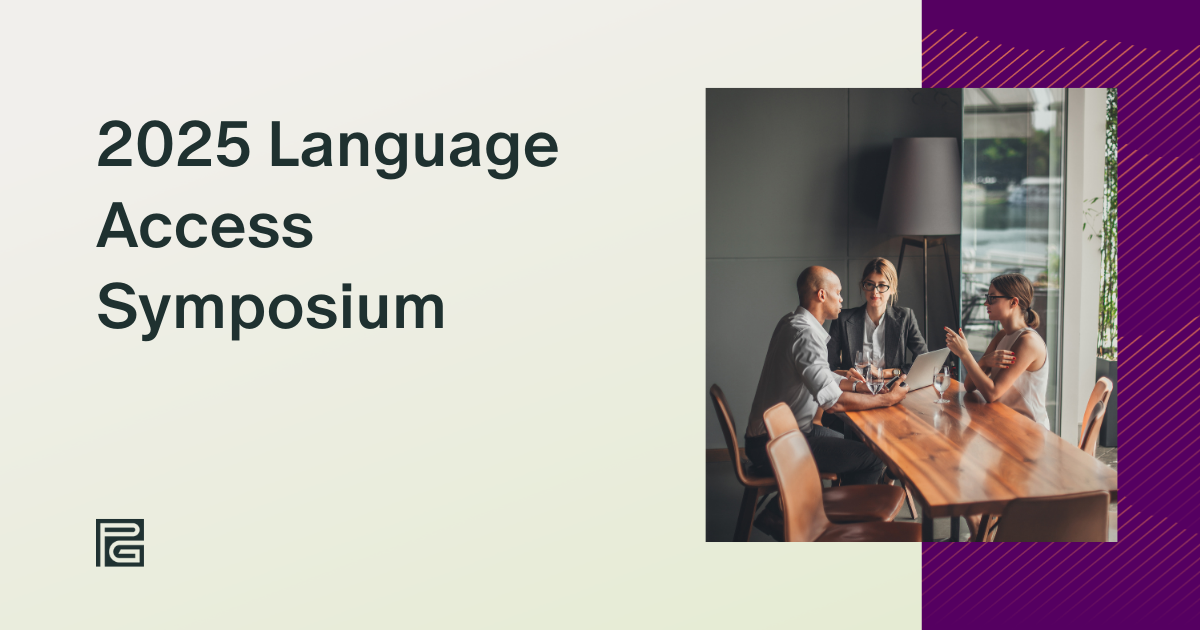
2025 Language Access Symposium: Positive Parental Engagement and EL Student Outcomes

In partnership with Fairfax County Public Schools Language Services, Piedmont Global hosted its second annual Language Access Symposium on May 8. Attended by educators from various school districts within the DMV area, the event brought together language access champions for an engaging half-day of conversations and camaraderie.

The question on everyone’s mind was, “What does the future hold for language access?” Bill Rivers spoke to the legal compliance focus of language access and the importance of continued advocacy on the Hill. While multilingual families and students are still protected by the Office of Civil Rights and Title VI, advocating for the value of language access is more important than ever.

As educators continue to connect the dots between spending and efficacy, much of the discussion centered on solutions and strategies to promote English learner (EL) student growth, with a special focus on engaging parents, analyzing data for trends, and creating stories of impact.


In Review: Family Engagement and EL Student Growth

As a group of evidence-based educators, symposium attendees brought a wealth of knowledge (and experience) to the conversation about EL student outcomes.

Plenty of research indicates that when parents are involved, children do better in school: advancing in socio-emotional learningtesting higher, and exhibiting more predictable behavior. However, when it comes to the impact of parental engagement on EL student growth, available data is lacking in specifics. This may account for some of the challenges educators face when engaging with EL families.

Most school districts invest time and resources into parent engagement. However, English-speaking families often have different relationships with teachers and administrators compared to EL families. Language access is a bridge to understanding, but if interpreter resources are not easy to use or not explicitly encouraged, educators may only use them sparingly, or only in reaction to a problem that needs to be solved urgently. As a result, the only conversations between teachers and EL families might be negative or challenging: disciplinary matters, poor academic performance, or other difficult conversations.

Many agreed there is room for improvement. Alternative strategies were discussed. For example, what would prioritizing proactive, positive engagement with EL families look like? Which academic milestones or school events should trigger a conversation, and how can language access leaders encourage teachers to take the initiative?

Another symposium speaker, Jason Velasco, also spoke to AI advancements that can help school districts bolster multilingual communication in the classroom.

While the heart of parental engagement is driving connection and building trust, determining measurable impact must also be factored into the plan.


How Language Access Leaders Can Make Their Case with Data

Symposium attendees also shared best practices surrounding data and storytelling. The group discussed ways that school districts can leverage student assessments and test scores to develop insights and points of reference for supporting EL student growth.

For example, looking at local norms, such as how the district’s students are performing, and modeling EL student data against these norms establishes a baseline. These figures can be helpful in figuring out what is working for EL students and what is not.

Prior to trying anything new, educators should have these baselines handy for comparison. If improvements to EL student performance are observable after implementing changes, such as a proactive parent engagement strategy, language access leaders can clearly spell out the impact of their programs.

Measuring long-tail impacts can be challenging, which is why educators need to find the lowest-hanging fruit. Educators need to look at not just grades, but also socio-emotional learning, attendance records, behavioral incidents, and other key indicators. Much of this data is readily available and can make all the difference when needing to advocate for resources, especially when budgets are tight.


The Future of Language Access is Bright!

Al Radford, director of Public Relations and Community Relations at Manassas City Public Schools, told Piedmont Global, “I had a lot of key takeaways to bring back to my district. I learned a lot that got me excited about family engagement.” On the value of coming together, Al also said, “Community is important. It helps us to understand that none of us are islands. We don’t have to work in isolation. At the core, all of us are about providing services to our families. Being able to talk with each other and share ideas is paramount.

This group of language access leaders shares an optimistic view of the future. As more schools prioritize relationships with EL students and families and adopt language access best practices, programs can continue to expand to meet their needs and give students the best chance at success.

Piedmont Global looks forward to our next opportunity to convene the DMV’s language access community in 2026. Thank you to our attendees and to our host, Fairfax County Public Schools Language Services, for providing such a great experience.

Stay tuned for more insights and discussion about language access in K-12 schools. If you would like to host a Language Access Symposium in your region, we’d love to hear from you.

Empowering Deaf and Hard of Hearing Communities

Effective ASL Communication for a More Inclusive Society

“The soup of the day is a French Onion Soup, and the chef’s special is Steak Tartare. How does that sound to you, ma’am?” The waiter locked eyes with his mother, who had been nodding along absent-mindedly. The spotlight was on her now, and her smile faded. “What?” She replied, “Oh, don’t worry, someone will have to explain it to me.” She replied.

Cullen’s mother is almost completely deaf due to Meniere’s Disease, an imbalance of fluid in the inner ear that causes hearing loss and vertigo. She gets by with the help of hearing aids and lip reading. She can understand the tones of some people’s voices, but some are out of her audible range, like Cullen’s sister voice when she gets really upset. Cullen’s mother is one of the millions of Americans affected by severe hearing loss and she often finds herself in situations like this.1

The Deaf and Hard of Hearing communities are extremely diverse with wide variation in the degree and cause of hearing loss. According to the National Institute on Deafness and Other Communication Disorders (NIDCD), about 15% of adults in the US report some trouble hearing. The largest cause of hearing loss is aging, with 33.2% of those surveyed listing getting older as the primary cause of hearing loss. About 4.7% of those who had trouble hearing were born with complete hearing loss. The CDC conducts extensive research on deafness as a medical phenomenon. However, the broad range of different cases reported calls for follow-up research on how best to communicate with the different segments of the population. Each of these groups experiences their hearing loss differently and should receive the individualized help that they need and deserve.


American Sign Language (ASL) Data in the US

If you study the United States Census Bureau’s findings released in October 2015 that summarize languages spoken in the home, you will learn a great deal about the linguistic and cultural makeup of the nation. For example, there are 166,826 people in the US who speak Navajo in the home, and 708,966 people whose first language is Italian. One thing you will not learn, however, is how many people in the US communicate primarily using American Sign Language (ASL).

Shockingly, the United States Census Bureau does not collect language data on the nation’s Deaf and Hard of Hearing communities. In fact, according to Mitchell et al. of Gallaudet University (the premier university for Deaf and Hard of Hearing communities), the most commonly-cited number for the population of ASL speakers (408,000) comes from the 1974 National Census of the Deaf Population (NCDP). Although deeply flawed, and woefully outdated, the 1974 NCDP remains the only large-scale study ever conducted on the signing abilities of the Deaf and Hard of Hearing communities in the US.


The Marginalized Deaf and Hard of Hearing Communities

One factor that contributes to this dearth of demographic data is that the nation fails to recognize the distinction between deafness as a medical condition and the use of ASL as a linguistic and cultural phenomenon. It is not commonly understood, for instance, that the overwhelming majority of deaf and hard of hearing people who lose their hearing later in life choose not to learn American Sign Language, while many hearing family members of people who are deaf grow up learning to communicate fluently in ASL. However, the biggest reason that limited reliable (and current) data exists for the ASL community might be that the nation as a whole, has traditionally chosen not to study it.

Although the US does not actively study ASL as a linguistic phenomenon, the 2014 Centers for Disease Control/National Center for Health Statistics (CDC/NCHS) National Health Interview Survey does reveal interesting information collected from individuals who are either deaf or experience varying degrees of hearing loss.


Federal and State Laws

Despite the lack of research into the use of ASL, the federal government has gone to great lengths in its efforts to support the Deaf and Hard of Hearing communities. In fact, a 2016 report funded by the US Department of Education noted that 7.1% of deaf and hard of hearing individuals are employed by the government, military, and related administration offices. The federal government also hires full-time staff as well as contractors to support deaf and hard of hearing employees.

The Americans with Disabilities Act (ADA) further strengthens these efforts by mandating that “title II entities (State and local governments) and title III entities (businesses and nonprofit organizations that serve the public) must communicate effectively with people who have communication disabilities.”2 The goal is to ensure that communication with Deaf and Hard of Hearing communities is equally as effective as communication with all others. However, the key to effective communication is first understanding the diverse needs of Deaf and Hard of Hearing communities. Thankfully, the ADA lists various auxiliary aids and services that must be provided when necessary including the use of Computer Assisted Real-Time Transcription (CART) services, Video Remote Interpreting (VRI), and in-person ASL interpreters.


The Challenges We Face as a Society

Despite these well-intentioned government regulations, the millions of Americans with hearing loss and the estimated 408,000 who primarily communicate using ASL are too often overlooked by – or seen as a burden on – the hearing society. What we fail to realize is that when we marginalize the Deaf and Hard of Hearing communities, society at large suffers in various ways including negative impacts to the healthcare system and to the economy at large.

In an article written for the National Institutes of Health (NIH), Annie G. Steinberg, MD, et al. found that deaf people continue to report difficulties accessing health care even after the passage of the ADA in 1990. Deaf and hard of hearing individuals reported that “communication difficulties were ubiquitous” and that “fear, mistrust, and frustration were prominent in participants’ descriptions of health care encounters.”3

Healthcare Reluctance

  • The reluctance to engage in preventative health care due to fear of a visit to the doctor’s office can have deleterious effects on overall healthcare costs. This is especially true when patients wait until they experience an emergency to seek help. According to the American Psychological Association (APA), the barriers faced by the Deaf and Hard of Hearing communities “directly translate to inadequate assessment, limited access to treatment, insufficient follow-up and poorer outcomes. For example, in the deaf population compared with the hearing population there are lower rates of individuals accessing preventative services, worse cardiovascular health outcomes and higher rates of obesity.”4
  • In their 2016 report Deaf People and Employment in the United States, the National Deaf Center (NDC) underscores the economic disparities that are experienced by deaf people. Only 48% of deaf individuals are employed, compared to 72% of hearing individuals. However, the most fascinating aspect of this study is that deaf individuals who are actively in the labor force have similar rates of part-time and full-time work and earn on average roughly the same as hearing individuals, with deaf individuals earning on average $52,650 per year and hearing individuals earning $52,980. When we eliminate the barriers to entry caused by the marginalization of Deaf and Hard of Hearing communities, deaf individuals can succeed and contribute fully to society.


An Inclusive Society is a Prosperous Society

In an article for Greater Good Magazine, Katherine Phillips, professor of leadership and ethics at UC Berkeley, states that “the first thing to acknowledge about diversity is that it can be difficult.”5 However, as individuals and as a society, the only way that we learn and grow is by challenging ourselves and breaking free of our comfort zones. “Diversity enhances creativity,” Phillips continues, “it encourages the search for novel information and perspectives, leading to better decision making and problem solving.

Diversity can improve the bottom line of companies and lead to unfettered discoveries and breakthrough innovations. Even simply being exposed to diversity can change the way you think.” Through the inclusion of Deaf and Hard of Hearing communities, we can broaden our perspective as a society and find innovative solutions to intractable problems. Here are some effective ways organizations can help to close the communication gap and create a more inclusive experience for all.


ASL

The National Institute on Deafness and Other Communication Disorders defines ASL as “a complete, natural language that has the same linguistic properties as spoken languages, with grammar that differs from English.” The Institute goes on to explain that “ASL is expressed by movements of the hands and face. It is the primary language of many North Americans who are deaf and hard of hearing, and is used by many hearing people as well.”6


VRI

Video Remote Interpreting, or VRI, is a type of sign language interpreting offered by an interpreter who typically uses a headset to hear what the hearing person is saying. “As the hearing person speaks, the interpreter signs everything said to a web camera.”7 The person who is deaf or hard of hearing can then sign back via the camera, allowing the interpreter to voice the interpretation back to the hearing individual.


CART

Communication Access Real-time Translation, or CART, enhances communication for deaf and hard of hearing individuals. As the CART operator types spoken words in shorthand into a specialized machine, the machines’s software converts this shorthand into standard English resulting in almost simultaneous captions. These captions are then projected onto a screen or sent to a recipient’s computer or smartphone.

By removing barriers for Deaf and Hard of Hearing communities, we ensure equitable access to health care and better health care outcomes for all. We increase participation in the labor force, giving everyone a chance to share their strengths and build a better society, and we also challenge ourselves to learn from diverse perspectives. As a society we must begin to understand that we only rise when we rise together.

Fortunately, Piedmont Global understands the importance of effective communication and the benefits of building a stronger, more connected community. Our expertise and years of experience offering professional language services for the Deaf and Hard of Hearing communities has positioned us as a strong advocate for a more inclusive and innovative society.


The Piedmont Global Multifaceted Approach to Language Services for the Deaf and Hard of Hearing Communities

Piedmont Global takes a multifaceted approach to services for the diverse Deaf and Hard of Hearing communities All of our professional ASL interpreters have many years of experience, are certified by the top accreditation organizations, such as the Registry of Interpreters for the Deaf (RID), and National Interpreter Certification (NIC), and have additional specialized training in a variety of fields.

Piedmont Global is honored to regularly assist deaf and hard of hearing individuals at the VA Medical Center in Washington, DC. ASL interpreters can be provided both in-person or through Piedmont Global’s VRI services, a simple, reliable and cost-effective solution to meet both spoken and sign language interpretation needs. Additionally, Piedmont Global offers world-class CART services, available both on-site and remotely. Also known as ‘“real-time captioning”, CART is the system that converts speech to text, used by court reporters, closed captioners, voice writers, and others to provide language access to the Deaf and Hard of Hearing communities.

The National Court Reporters Association (NCRA) describes CART services as “the instant translation of the spoken word into English text using a stenotype machine, notebook computer and real-time software.”8 These services make an incredible difference in the lives of deaf and hard of hearing individuals, helping them bridge the gap between the hearing and deaf worlds.

Empower Deaf and Hard of Hearing communities by partnering with Piedmont Global. Reach out today, and together, we will shape a more inclusive future for all.


References

  1. Excerpt shared by an experienced Spanish-English interpreter

  2. ADA – Effective Communication (31 Jan. 2014).

  3. Steinberg, Annie G, et al. “Health Care System Accessibility: Experiences and Perceptions of Deaf People.” Journal of General Internal Medicine, Blackwell Science Inc, Mar. 2006.

  4. Pick, Lawrence. “Health Care Disparities in the Deaf Community.” American Psychological Association, Nov. 2013.

  5. Phillips, Dr. Katherine W. “How Diversity Makes Us Smarter.” Greater Good, 18 Sept. 2017.

  6. American Sign Language.” National Institute of Deafness and Other Communication Disorders, U.S. Department of Health and Human Services, 15 July 2020.

  7. What Is Video Remote Interpreting?.” University of Washington DO-IT Center.

  8. Communication Access Realtime Translation (CART).” National Association of the Deaf, 2020.

Additional References