Piedmont Global appoints Mary Grothe as Chief Revenue Officer

Piedmont Global appoints Mary Grothe as Chief Revenue Officer, accelerating strategic growth and global partnerships

This appointment underscores Piedmont Global’s commitment to scaling cross-cultural impact through an integrated, outcomes-driven revenue strategy.

Arlington, VA, October 28, 2025 — Piedmont Global, a Strategic Globalization partner helping organizations lead globally, fluently, and confidently, announced the appointment of Mary Grothe as its first Chief Revenue Officer (CRO).

In her new role, Grothe will lead the company’s global revenue strategy and report directly to CEO Mohamed Hussein.

“We’re excited to welcome Mary to Piedmont Global,” said Mohamed Hussein, CEO of Piedmont Global. “She has a proven track record of driving growth and building high-performing teams, capabilities which will be critical to us as we sharpen our go-to-market strategy and strengthen our position as the leading Strategic Globalization partner.”

Grothe brings more than 15 years of experience in sales leadership, revenue transformation, and customer-centric growth. Known for building high-performance teams and scaling systems that align purpose with performance, she will play a central role in advancing Piedmont Global’s mission to make cross-cultural operations easier, smarter, and more human. She is also the founder of Sunday Salmon, a nonprofit and restaurant in Colorado dedicated to feeding communities through the power of food and connection.

“I’m honored to step into this role at such an exciting inflection point for Piedmont Global,” said Mary Grothe, CRO. “Our clients are navigating complex global realities, and my focus is on helping them lead globally, confidently and fluently, connecting every part of our revenue engine to deliver meaningful outcomes.”

Grothe’s appointment reinforces Piedmont Global’s momentum as it continues expanding its global impact and client partnerships.


About Piedmont Global

Piedmont Global is a Strategic Globalization partner for enterprises and public sector organizations, dedicated to making cross-cultural operations easier, smarter, and more human. The company offers advisory services, language and cultural expertise, workforce and learning solutions, and tech-enabled platforms—delivered as custom solutions—to help clients reduce risk, accelerate readiness, and expand their reach with confidence. Learn more at www.piedmontglobal.com


Media Contact:

Clare Schmitt
VP of Marketing and Communications
Piedmont Global
cschmitt@piedmontglobal.com

The Making of an SGO: Building the Next Era of Cross-Cultural Operations

Originally presented at CSA Research 2025


The moment behind the moment

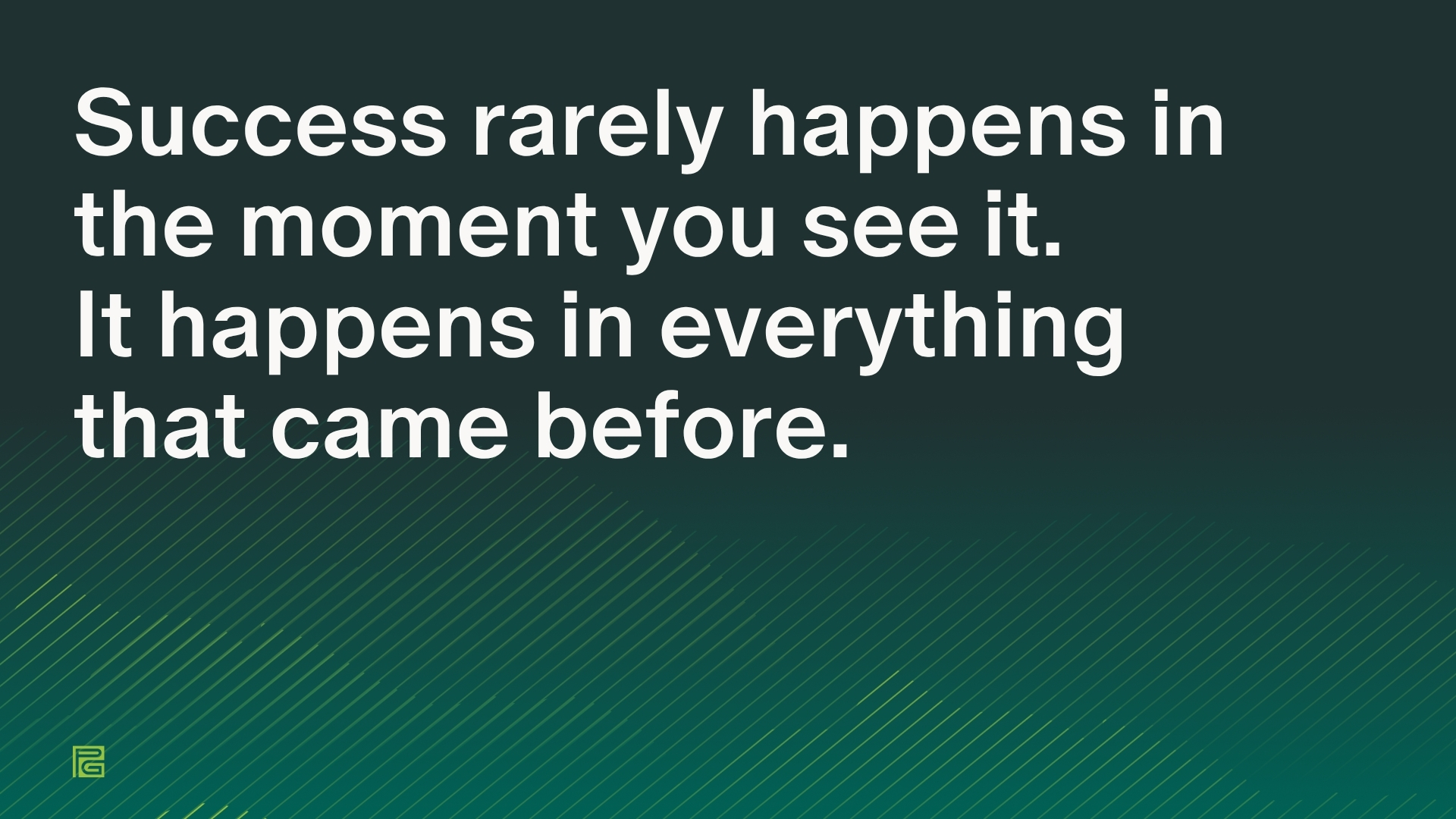
Success rarely happens in the moment you see it.
It happens in everything that came before. When you see a company rebrand, a new category announcement, or a market breakthrough, it looks like a single defining moment. But behind that moment are years of invisible work — reflection, risk, reinvention, and resolve.

At Piedmont Global, that work began with a single realization: we could no longer grow by doing more of the same.

The industry we inherited was a $50 billion marketplace of language and content providers — all chasing the same contracts, competing on speed and price. To lead beyond that ceiling, we had to redefine what business we were in.

We stopped asking, “How fast can we deliver?” and started asking, “How far can this scale?”


Making of an SGO - Building the Next Era of Cross Cultural Operations

From vendor to operator

That mindset shift expanded not just our capabilities, but the very market we serve.
When you operate as a Strategic Globalization Organization (SGO), you step beyond translation and content into adjacent, higher-value domains — consulting, accessibility, staffing, data, open-source intelligence, and operations.

The total addressable market doesn’t stop at $50 billion anymore. It’s north of a trillion.
That’s the difference between a vendor and an operator of global systems.

Strategic Globalization isn’t about what you sell.
It’s about what you enable — growth, connection, and clarity across borders, languages, and cultures.


The forks in the road

Every founder faces a few critical decisions:

  • Stay a vendor or become a partner?
  • Compete on price or redefine value?
  • Chase logos or build proof?

We chose the harder path — to influence upstream strategy before fulfilling downstream needs.
To be a lighthouse, not a land grab.
To build proof before we asked for praise.

That conviction shaped our core belief: ecosystems over isolated nodes, judgment over automation, partnership over provision.
Our edge isn’t any single tool or service.
It’s how we assemble the right solution for every context — a system that learns, scales, and lasts.


Rebrand ≠ marketing. It’s infrastructure.

When we decided to rebrand as Piedmont Global, it wasn’t cosmetic — it was architectural.
We rebuilt how we think, hire, deliver, measure, and govern.

We didn’t rename the company.
We re-engineered it.

The transformation took nearly two years and started with a simple question: “What would it look like if our brand reflected the way our clients already experienced us — embedded, strategic, aligned?”

The answer was a new model: the Strategic Globalization Organization.


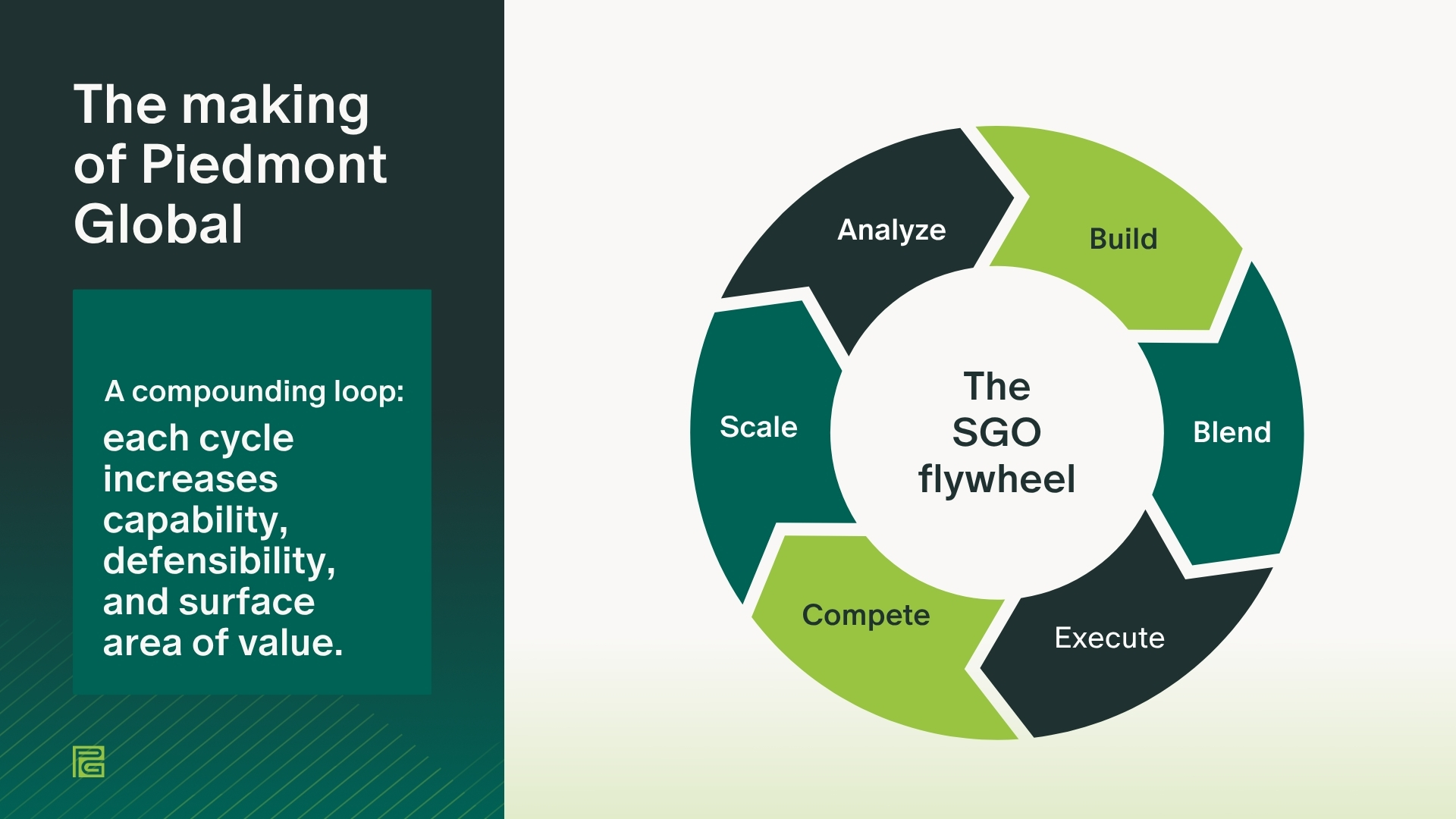
The SGO flywheel

At the center of our operating model is a compounding loop — the SGO Flywheel:

Acquire → Build → Expand → Execute → Compete → Analyze → Repeat

Each cycle increases capability, defensibility, and the surface area of value. It’s how we keep climbing — iteration over perfection. This rhythm ensures that every investment strengthens the next, every lesson builds resilience, and every outcome sharpens the system. SGOs are not static; they are self-improving organisms.

Making of an SGO - Building the Next Era of Cross Cultural Operations_2

Risks and rewards

Redefining a category comes with trade-offs:

  • You’ll be misunderstood before you’re respected.
  • You’ll face resistance before alignment.
  • You’ll trade short-term comfort for long-term clarity.

That’s the tax on originality — and it’s worth paying. Because when you stay disciplined and let your lighthouse speak, the market eventually catches up. Durable growth follows durable conviction.


The SGO mindset

Becoming an SGO is as much a mindset as it is a model.

It requires:

  • Risk appetite to step where others haven’t
  • Independence to make hard calls
  • Curiosity to explore new disciplines
  • Resilience to climb again when it gets steep
  • Vision that outpaces fear
  • Structure that scales complexity
  • Courage to rewrite your own rules

As I often say, AI won’t kill our industry — complacency will. The future belongs to those who integrate across culture, data, and human judgment — the ones conducting the orchestra, not singing in the background.


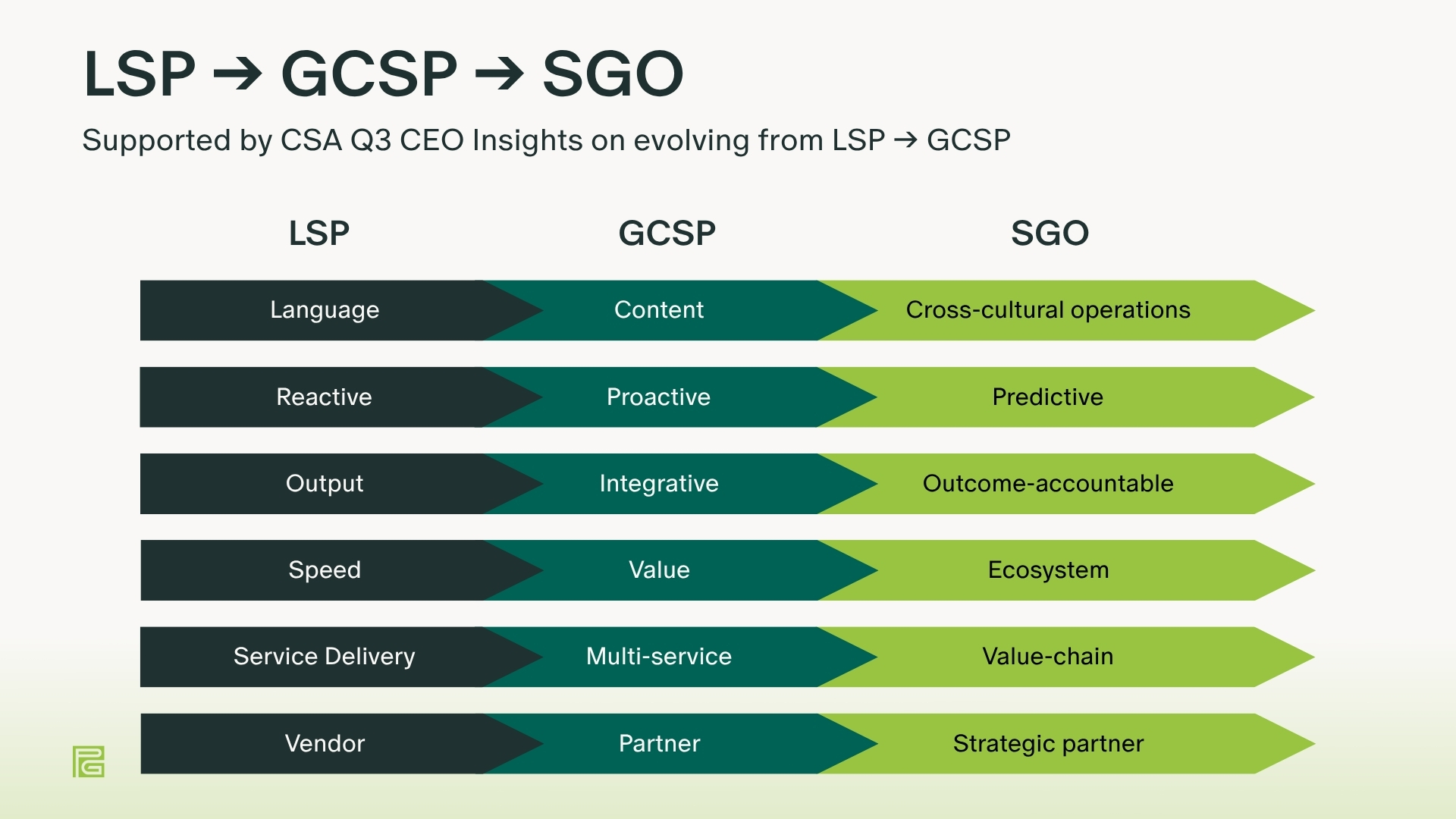
From LSP to SGO: the evolution of an industry

Strategic Globalization is the next logical evolution — from translating words to orchestrating systems that drive outcomes across borders. We don’t just help organizations speak globally. We help them operate globally.

Making of an SGO - Building the Next Era of Cross Cultural Operations_3

Proof before praise

When we began, there was no blueprint. No one was asking for an SGO. But conviction has to come before validation. We built the model before the market believed in it — because legacy is earned through measurable impact, not invoices. Leadership isn’t about waiting for recognition. It’s about proving what’s possible, then inviting others to climb with you.


The climb ahead

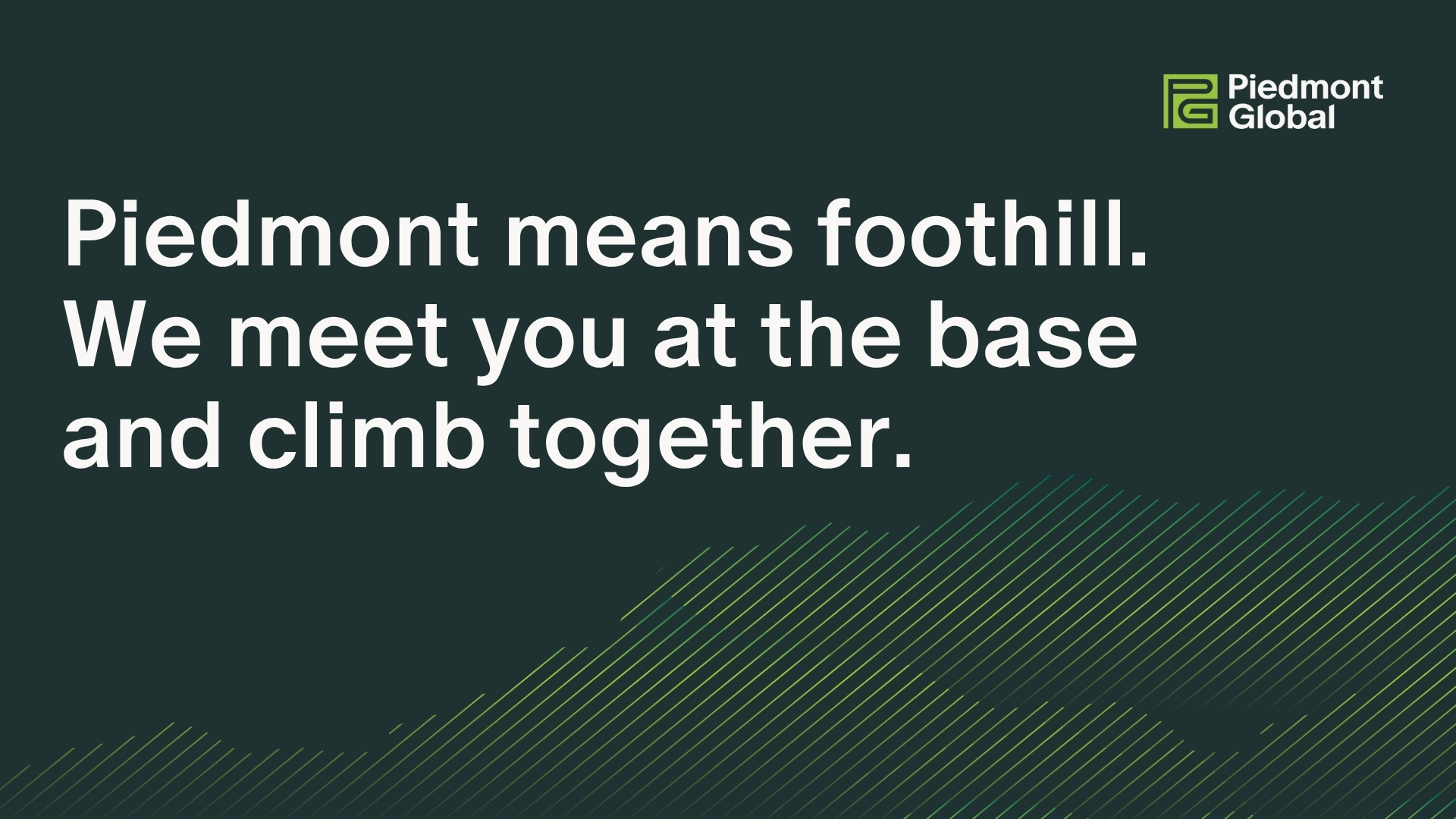
Piedmont means foothill — the place every climb begins. Strategic Globalization isn’t a destination; it’s a discipline. You climb, rest, build, and climb again. That’s how SGOs — and new categories — are made.

Making of an SGO - Building the Next Era of Cross Cultural Operations graphic


How to start building your own SGO

If you’re a leader wondering how to begin, start here:

  1. Start with purpose — not product. Know why you exist before deciding what you sell.
  2. Move upstream. Get closer to client strategy, not just service delivery.
  3. Design ecosystems — not transactions. Solve for the entire value chain.
  4. Build for resilience. Systems, people, and values that flex and endure.
  5. Keep climbing. Reinvention isn’t a campaign; it’s a habit.

The future belongs to those who create it. And the next era of cross-cultural operations is already underway.


About Piedmont Global

Piedmont Global is the world’s first Strategic Globalization Organization (SGO) — helping enterprises communicate with intelligence, scale with intention, and operate with cultural fluency. We integrate human expertise, technology, and strategic insight to make cross-cultural operations smarter, easier, and more human.

Learn more about the SGO Model and how we’re shaping the future of global operations.

Strategic Globalization: A Global Operations Framework for Smarter Enterprise Growth

Globalization is not new—but operating on a global scale is being radically transformed. The world’s top organizations are no longer mere seekers of new markets. They’re operating in a world that is marked by complexity: dispersed teams, multi-layer regulatory structures, new technologies, and customers who demand customization on a big scale.

For decades, “going global” used to mean adding other languages, locations, and suppliers. But success these days depends on something greater: instant connectivity of people, systems, and strategies across borders.

At Piedmont Global, we call this evolution Strategic Globalization—a framework that makes communication, compliance, and culture a single operating model. It’s how forward-thinking organizations are attaining scalability without complexity, resilience without brittleness, and expansion that becomes natural rather than piecemeal.


The new reality of global operations

Global expansion used to imply physical presences—new offices, vendors, and home-grown hires. It is now digital, distributed, and data-centric. But enterprise systems for the most part were built for a prior era of globalization—linear, siloed, and sluggish.

This gap causes problems:

  • Breakdowns in communication within international teams and local markets
  • Regulatory risk as content and data travel across borders
  • Cultural mismatch that erodes customer confidence

Companies aren’t able to deal with these issues simply by using translators or local project managers. They require a method of operation that clarifies rather than confuses.

Strategic Globalization meets that demand. It combines language, technology, and culture into a single smart system—making growth a matter of coordination.


From localization to Strategic Globalization

Localization once solved a tactical problem: how to make content clear in new markets. But as businesses changed, so did people’s expectations. Today, speed, compliance, and customer experience are as critical as getting the translation right.

That’s where traditional localization falls short—it reacts after the fact. Strategic Globalization flips the equation. It ensures that language, access, as well as intelligence are factored in at the beginning of every workflow.

Rather than bringing in outside vendors to localize content after it’s developed, Strategic Globalization integrates multilingual planning upfront. The end result? Each and every project—training module, compliance document, customer communication—is ready for its global audience when it goes live.


The four pillars of Strategic Globalization

Strategic Globalization is built on four connected pillars that transform complexity into capability:

1. Cultural Fluency

Beyond proficiency in languages, cultural fluency allows organizations to communicate authentically across communities and contexts. It’s the way international brands make sure communication doesn’t come across as unfamiliar. Cultural fluency:

  • Aligns messaging with local cultures and expectations
  • Decreases the risk of cultural missteps
  • Builds trust and credibility across diverse markets

2. Custom Solutions

True scalability requires systems that support strategy—not vice versa. Piedmont Global’s approach focuses on tech-enabled, not tech-dependent solutions that integrate seamlessly with existing enterprise platforms.

From AI-driven translation management to automated accessibility audits, technology becomes an enabler of connection, not a barrier to it.

3. Strategic Insight

Global operations generate a lot of data. The challenge isn’t access—it’s interpretation.

Strategic Globalization employs language abilities and data analysis to translate information into insights so leaders can make informed decisions with context and clarity.

4. Embedded Partnership

Unlike transactional vendors, embedded partners evolve with you. They align with your mission, adapt to your systems, and expand capabilities as you grow.

This pillar is where our brand’s strengths come alive: structure, stability, and trusted leadership delivered through collaboration.

Together, these four pillars form an architecture where communication strengthens every system, shapes every decision, and sustains every outcome.


Why it matters now

Globalization used to be a choice—now it’s a necessity. But scaling without structure creates vulnerability:

  • Language is rarely ahead of strategy
  • Accessibility is viewed as compliance rather than connection
  • Technology choices disregard important human context

Strategic Globalization fixes these tensions through preparedness in all aspects of international business operations, and in a world where markets shift overnight, clarity becomes a competitive advantage.


What Strategic Globalization looks like in action

Imagine a multinational healthcare company serving patients in multiple languages and regulatory regions. Each market had its own translators, its own training documentation, and its own compliance tools. Inadvertently, despite good intentions, there is duplication of efforts as well as regulatory risk.

In one modeled scenario, organizations applying Piedmont Global’s Strategic Globalization framework achieved:

  • Centralized and streamlined language and accessibility operations
  • Compliance content pipelines were automated for accuracy
  • Cultural consulting informed local patient outreach campaigns

Within six months, the organization is forecasted to reduce turnaround time by 68%, improve compliance accuracy to 99%, and achieve measurable increases in patient trust scores.

The takeaway: Strategic Globalization simplifies global operations and amplifies their impact.

In other industries:

  • Entire school districts engage and serve multilingual learners and their families
  • Government agencies strengthen public services and emergency response systems
  • Manufacturers adopt it to align safety documentation across borders

Wherever communication meets complexity, Strategic Globalization makes success inevitable


The future of fluent global operations

As artificial intelligence speeds up global communication, human knowledge is still what makes a difference. AI can understand language, but only humans can understand the nuances of culture, context, and the benefits of considering them from the start.

In the next decade, Strategic Globalization will evolve into the standard operating system for global enterprise leadership.

You can expect to see:

  • Language infrastructure managed like IT infrastructure
  • Cultural fluency metrics appearing on executive dashboards
  • Partnership ecosystems replacing vendor lists

Enterprises that adapt and adopt this mindset will scale faster—and smarter. They’ll be the organizations and teams able to operate confidently in any market, language, or moment.

Globalization once measured success by how far an organization could go. Strategic Globalization redefines success by how well it connects.

When communication becomes infrastructure, when culture becomes capability, and when partners become embedded extensions of your team, growth no longer feels chaotic—it feels inevitable.

That’s the power of Strategic Globalization: a system built not just to expand, but to lead.


Ready to transform complexity into clarity?

→ Talk to our team about building your Strategic Globalization roadmap.

www.piedmontglobal.com/contact