The Voices in the Room: Why Language Access Matters

There’s clarity that only comes when you’re in the room.

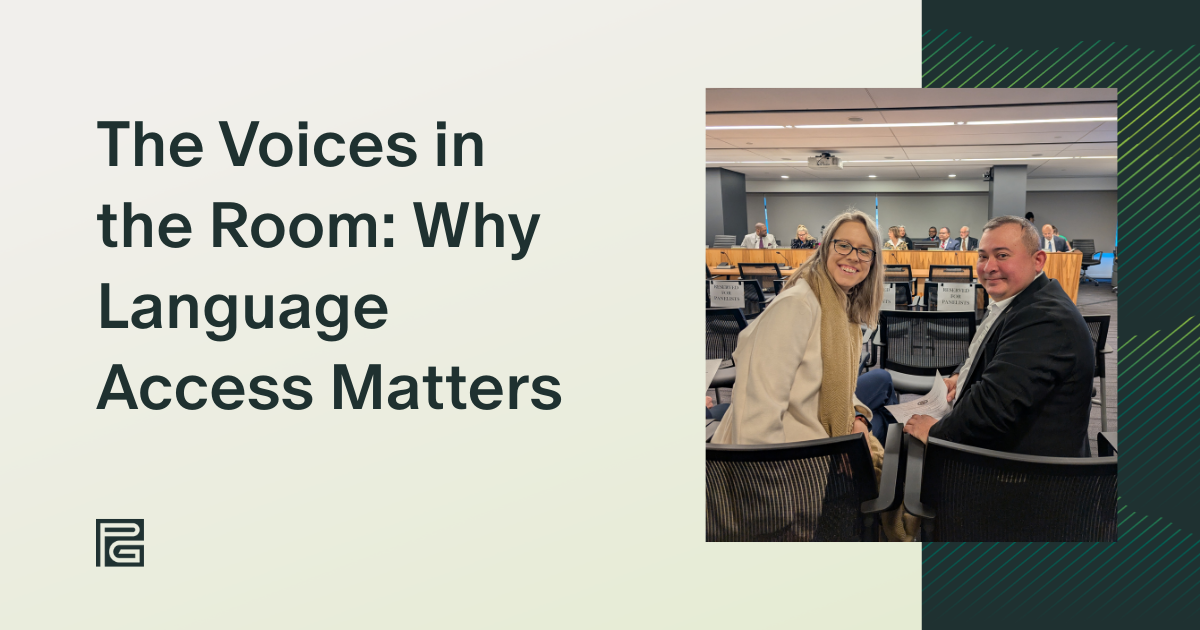
On March 25, we attended the U.S. Commission on Civil Rights (USCCR) briefing, Language Access for Individuals with Limited English Proficiency. We had read the agenda. We had seen the talking points. But nothing prepared us for the raw honesty of the testimony shared. For those who only watched the livestream, it is hard to convey how charged, human, and deeply personal the testimony felt in that room.

We didn’t testify—we were there to listen. As leaders in language operations and technology, we felt a responsibility to bear witness, reflect on what it means for our industry, and ask how we can do more.

As we sat listening, one thing was undeniably clear: Language access isn’t a nice-to-have or a bureaucratic box to check. It’s a public safety imperative. A moral obligation. And yes, a business issue.


A Personal Reflection: Clare

For me, it was deeply personal. I’m relatively new to the language access world—but I’m not new to what it feels like to be in a room where language is a barrier to belonging. As I sat, notebook in hand, memories came flooding back of the neighborhood I grew up in, where neighbors didn’t always share a language but shared everything else: meals, rides, childcare, laughter. I thought of my mom, who often stepped in to interpret for our neighbor, Aritza. She helped her navigate everything from coordinating with city maintenance workers to communicating with healthcare providers and law enforcement.

At the time, I saw it simply as neighborly support. But sitting in the hearing, I understood it differently. The burden of trying to make your world understandable without the right tools and support suddenly felt much heavier. Especially when I heard story after story of children interpreting for their parents in emergencies or translating complex forms at school. The emotional toll and the responsibility are too much for anyone, let alone a child.

As Ms. Tran reminded us during her testimony, “Interpreting is a specialized skill—one that requires training, accuracy, and cultural sensitivity. It’s not something you can ask someone to do just because they happen to speak the language.”


A Personal Reflection: Gilbert

From a basic accessibility lens, this is a failure to understand fundamental needs and requirements. If we’re not delivering the message clearly, consistently, and equitably, then we’re not solving the problem—we’re compounding it.

Poor design in communication isn’t just frustrating, it doesn’t just cost money; it’s dangerous. If you don’t build language access into civic interfaces from the start, you’re designing for failure. It’s not enough to simply translate a message. We have to deliver it in a way that is clear, unambiguous, in context, and accessible, whether that’s a posted evacuation plan, a courtroom proceeding, or a parent-teacher meeting. Language access isn’t a bolt-on feature. It has to be part of the blueprint. The consequences of mislabelling something are universally bad, and all languages and people deserve it; the collective costs are far outweighed by the modest investment in language access. It’s an investment in the community–we heard repeatedly that it’s not just about speaking their language, but in understanding their story. True access comes when communities shape the message, not just receive it.

It also struck me how often the children as interpreters came up—not just as witnesses to their parents’ struggle, but as participants, carrying burdens they should never have to bear. It’s a sign of quiet desperation when a child becomes a system’s last line of defense.


Stories of Barriers, Advocacy, and Solutions


When Translation Isn’t Enough: The Call for Meaningful Access

Mr. Lynip, a teacher and advocate in Richland School District in Columbia, South Carolina, spoke not just about tools or technology—but about the gap between communication and comprehension. And how students suffer when families are unheard.

He challenged the Commission to take seriously a term in its own mission statement: meaningful access.

“It’s not just a matter of having translated or interpreted materials. Parental voice has to be meaningful. It has to be loud enough for us to hear.”

He shared real stories of students:

  • A student delayed for over a year in receiving educational testing because the family couldn’t navigate the system.
  • A child who missed two weeks of school—not because of illness or truancy, but because her family didn’t know that having a scheduled vaccination appointment was enough to attend.
  • A young girl placed in fourth grade against her mother’s wishes—only to discover later that the child had missed the first two years of school entirely.

These weren’t translation problems. They were listening problems. Design problems. System problems.

However, Mr. Lynip also offered hope, pointing to local innovations like Healthy Learners, a program that eliminates healthcare access barriers by transporting students directly to appointments. He called for more intentional collaboration—across hospitals, schools, civic groups—to remove friction points and build systems where families are seen, heard, and served.


“She’s Only Nine Years Old”

Ms. Tran, an attorney at Community Legal Services of Philadelphia, shared her personal story and professional perspective.

As the child of Cambodian refugees, she often served as an interpreter for her parents in legal, medical, and emergency settings. One memory stood out:

“A police officer entered my family’s restaurant and asked my mother to interpret for a man outside. She explained she couldn’t leave the counter—she was the only one working. The officer pointed at me and said, ‘Well, what about her?’ My mother, in disbelief, replied, ‘No, she’s only nine years old.’”

Ms. Tran wasn’t forced to go outside that night—but she recalled many times she did interpret as a child, witnessing situations she never should have been part of.

“This experience is not atypical for children of people with limited English proficiency. It is still happening today.”

Professionally, Ms. Tran now leads language access advocacy work and represents individuals with disabilities navigating Social Security. She shared the ways in which inconsistent, unreliable interpretation services can derail an already difficult process—like the story of her client Kay, who was forced to testify in English due to audio issues with her Vietnamese interpreter. The hearing had already taken six months to schedule. Kay complied rather than risk another delay.

“The failure to provide reliable interpretation services resulted in wasted time and resources, and placed an undue burden on K—adding frustration and anxiety to an already stressful process.”

Ms. Tran’s message was clear: this is not a one-off. These are recurring systemic failures. Her recommendations emphasized the need for stronger legal protections, faster complaint resolution, and the kind of enforcement that makes civil rights real.


A Personal Mission, Made Professional

Ms. Muñoz, a compliance officer at DHR Health, didn’t just talk about policy—she talked about people. And she brought her whole self to the room.

“This is personal… My commitment to serving my community has been a lifelong hobby.”

Raised along the U.S.–Mexico border, Ms. Muñoz shared her journey—interpreting for families in her community, supporting students with disabilities, and now overseeing ADA and language access services for a healthcare system that serves nearly 2 million people.

She spoke not only about the emotional weight of language access, but about the practical infrastructure her team has put in place—bilingual staff, in-house interpreters, proficiency assessments, community education, and multi-tiered language support. Spanish-language services are built into their staffing model and budget planning.

“Language access is a fundamental part of delivering quality healthcare. Effective communication empowers patients to make informed decisions—improving both outcomes and overall well-being.”

Even in a region where Spanish is dominant, Ms. Muñoz emphasized the importance of preparing for less common languages and continually expanding access tools. Her testimony was a reminder that doing this work right takes intention, empathy, and investment. And when done right—it works.


“They Don’t Just Translate Words. They Save Lives.”

Ms. de la Iglesia, Director of Language and Accessibility Services at Mount Sinai Health System in New York City, has spent nearly two decades working at the intersection of language and care. But her testimony started with something more personal:

“As an immigrant to this country 25 years ago—without language—I experienced firsthand what it is and how it feels.”

At Mount Sinai, her team supports patients speaking over 800 languages. Her integrated, multi-modal approach includes in-person interpreters, phone and video services, embedded technology, and written translations.

“Interpreters are critical. They don’t just translate words. They save lives.”

She spoke of interpreters facilitating surgeries, transplants, and end-of-life conversations. Despite the ongoing challenges—especially for rare languages and patients with disabilities—her message was clear:

“This work speaks to our shared humanity—and our belief that every person deserves to be heard, in their own language, in their own moment.”


Designing for Dignity: Native Language Access

Ms. Allison Neswood, Senior Staff Attorney at the Native American Rights Fund and citizen of the Navajo Nation, reminded us that language access is not one-size-fits-all.
Many Native languages are unwritten, have multiple dialects, or lack direct translations for complex concepts. That demands more than forms—it demands partnership.

“When my community members need to speak about something personal or important, they shift back into Navajo.”

She urged the Commission to build systems that reflect cultural understanding, designed in collaboration with Native communities—not just for accuracy, but for dignity. Her testimony reinforced something we’ve heard across many communities:

“Language access isn’t just a service—it’s a signal of respect.”


The Business Case: Often Overlooked

Lack of language access doesn’t just harm individuals. It breaks systems. 

It increases risk. It drives up costs. It slows emergency response. It adds friction to every interaction.

At the briefing, Dr. Bill Rivers, a linguist and national leader in language access policy, laid out the real-world operational gaps that persist—especially at the local level. While legal protections are in place, implementation is inconsistent. Schools, healthcare systems, and municipal agencies are often overwhelmed, under-resourced, and facing a patchwork of languages spoken by small populations. 

“This isn’t just about refraining from discrimination—Language access is much more like provision of access under the Americans with Disabilities Act. It requires proactive action. We have to do something. That means extending resources, investing in infrastructure, and doing the hard work of designing for access.”

That “something” means building access into the design of our systems—not bolting it on as an afterthought. It means recognizing that miscommunication isn’t just inefficient—it can create risk, delays, and breakdowns in service delivery.

The industry has the capacity to meet the need—350+ languages, 24/7, often in under two minutes. But systems must be in place to take advantage of it. Without that infrastructure, even the best language providers can’t close the gap.

The reality is that when language isn’t a given, communication must be intentional.

That’s the work we do every day—creating access on purpose. And in a moment like this, when responsibility for language access is increasingly shifting to state and local levels, our role becomes even more vital.

We’re not just enabling compliance. We’re helping systems work—efficiently, equitably, and safely.


The Call Forward

We didn’t just walk away with notes. We brought the stories back to our teams, to our clients, and to our company roadmap.

We’re working with school districts, hospitals, and public agencies to build solutions that don’t just comply—they connect.

We’re building systems that reduce risk, improve trust, and reach people in the language they understand.

We’re not waiting on a perfect policy. We’re moving with clarity and urgency.

Because this work doesn’t belong to one party, one agency, or one industry. It belongs to all of us.

We’ll be listening. And we’ll keep building what’s next.

The U.S. Commission on Civil Rights briefing highlighted the real-world impact of language barriers across education, healthcare, and public services. For educators, these challenges are especially pressing. If you’re an educator located in the DMV area, join us at our second annual Language Access Symposium to explore solutions, share experiences, and collaborate on building more inclusive schools where every student and family is heard. Among others, you’ll hear from Mark Byrne, Jason Velasco, and Bill Rivers on the future of language access in K-12 education.

The Role of Language Access in Crisis Response: Lessons from the Field

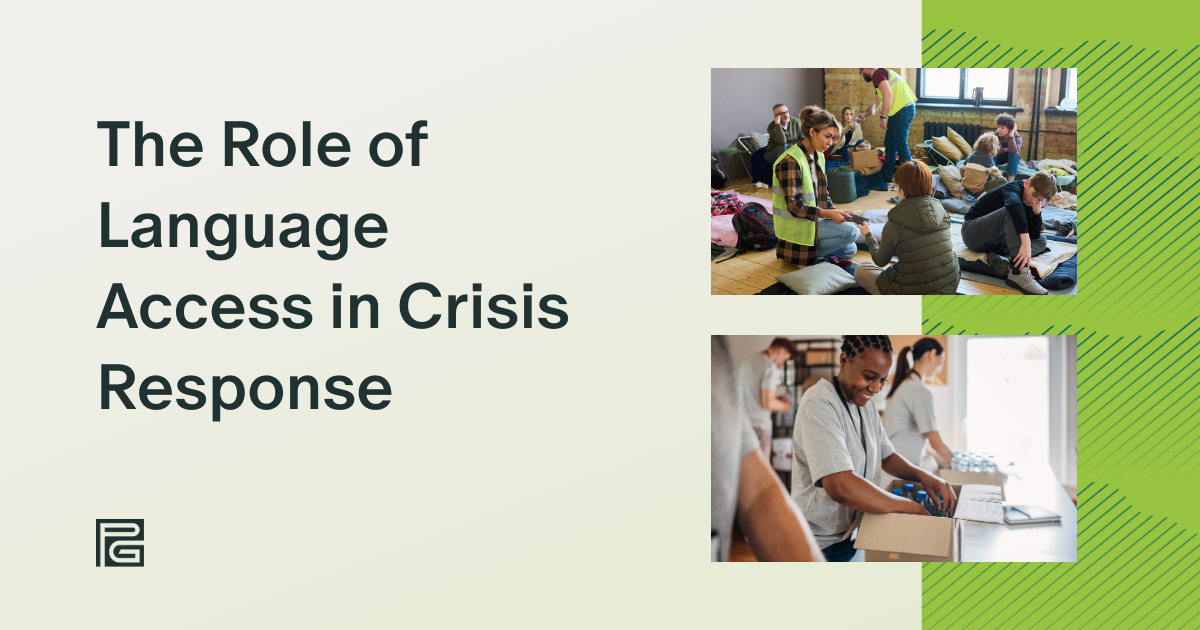
When crises are unfolding, language barriers can be deadly. Without timely communication and comprehension, at-risk and crisis-affected populations can experience worse outcomes, and humanitarian teams are inhibited from responding comprehensively to real-time needs.

For these reasons and more, language access plays a critical role in crisis response. Nonprofits and non-governmental organizations (NGOs) working in diverse regions rely on humanitarian interpreters, cultural mediators, and translators to bridge communication differences, navigate cultural nuances, and act with sensitivity and professionalism. Here is how the essential (but often invisible) work of linguists directly supports capacity-building for teams operating in the field, along with lessons learned to enhance future crisis response.


How Language Access Acts as a Capacity-Building Tool in Crisis Response

To quote Translators without Borders: “Information in the wrong language is useless.” Effective communication, whether proactive, timely, or post-event, is the foundation of crisis response, enabling teams to act in accordance with priorities. When accurate communication is not accessible as a result of language barriers, a higher rate of fatalities, suffering, damages, and other harms is likely to occur. Language access supports the purpose of crisis response by providing the means to disseminate information, in the right languages, to save lives and protect human dignity.

Language access also aids capacity-building by empowering the people on the ground to gain a more comprehensive situational understanding, track statuses, and share actionable updates with headquarters for fundraising and mobilization. Language access enables more efficient and effective direct services delivery to aid affected communities and partner with other response agencies. Finally, language access allows field teams to identify when they need to pivot out or adapt their response approach.

For example, as it fights to maintain its independence, Ukraine has garnered broad support from the international community, and its population has suffered greatly. Humanitarian interpreters and cultural mediators from around the world have been called upon to bridge communication. CLEAR Global, an international leader that facilitates global communication, offers a toolkit to align field workers with the resources they need to communicate with Ukrainians impacted by violence.

One key finding from the toolkit is Ukraine’s broad multilingualism. According to Ukraine’s 2001 census, 20 languages are spoken within its borders. It is well known that at least one third of Ukraine’s population speaks Russian, but populations that often go overlooked include an estimated 150,000 to 400,000 Roma, who may speak Romani as a first language. Thousands more speak Crimean Tatar, Bulgarian, or Hungarian. Without this important data, aid programs may fail to reach some of Ukraine’s most vulnerable communities.

It serves as an important reminder to pursue demographic data to aid in decision-making about field staffing and language access. In many cases, high-conflict zones will affect marginalized populations who speak minority languages. While up-to-date census information is not always readily available in these situations, field teams can source real-time feedback to identify the appropriate language access resources for a given situation, leveraging virtual interpreters and mediators to bridge needs in the interim.


What Does Crisis Response Look Like without Language Access?

When crisis teams operate without the support of expert linguists that reflect a region’s diverse linguistic makeup, the reach and potential for impact are lessened. In this context, humanitarian teams would be operating based on a diminished understanding of the populations they intend to serve and support. This can be damaging to credibility and halt trust-building efforts.

Life-saving information, including medical care, trauma counseling, food distribution events, pop-up shelters, and relocation services may not reach the vulnerable groups who would benefit most. Additionally, authorities and watch groups would be limited in their access to witness testimony, which is detrimental to defending human rights or prosecuting perpetrators down the line.

Community interpreters play an important role to bridge needs when trained linguists are not available. That said, for privacy and professionalism’s sake, there are use cases where trained third parties can offer enhanced support, particularly in trauma-informed cases.


Interpreting and Translation as Harm Reduction

Trauma shuts people down. Information on war crimes and human rights attacks, such as mass killings, forced labor, child soldier enlistment, child marriage, and sexual violence, is hard to ascertain even in the best of conditions. Trauma-informed interpreting is essential in these cases and must be grounded in cultural understanding, nuance, and sensitivity. Interpreters must act in accordance with international law and local culture, navigating the very real fears of social, financial, or legal repercussions for reporting crimes. Gaining (and retaining) trust is essential.

This is why working with local humanitarian-trained linguists, whenever possible, makes a difference. This approach also contributes to harm reduction by avoiding unnecessary retraumatization due to poor communication or non-adherence to trauma-informed interpreting norms. Field teams landing in a new context may lack cultural understanding, and communities may rightfully be wary of outsiders. Local cultural mediators not only support credibility, but they also can help local citizens reach a better mutual understanding of a humanitarian field team’s presence and purpose, which can help enhance trust with crisis-affected communities.

When local linguists are not available, as is sometimes the case, be sure your approach meets affected populations on a peer level. To build credibility, responders that effectively and swiftly bridge language gaps are better positioned to earn trust by those affected by the crisis, by local authorities leading response, and by governmental, intergovernmental, or partner NGO agencies. Doing so can save more lives and begin the healing process sooner. 


Where Has Language Access Made a Difference in Crisis Response?

In conflict zones, such as the Democratic Republic of Congo, South Sudan, and Ukraine, interviewing women and children or others about human rights abuses requires culturally sensitive, effective interpreting. This approach allows crisis responders to ascertain what happened, gather defensible evidence, prepare a response, and bring perpetrators to justice. The International Criminal Court (ICC) in The Hague needs these carefully secured and preserved testimonies to prosecute war crimes, crimes against humanity, and genocide.

Language access is essential for local crises, too. The 2025 Los Angeles wildfires demonstrated an urgent need for better multilingual disaster communications. A recent study led by UCLA and the AAPI Equity Alliance found that more than 12,000 Asian Americans with limited English proficiency resided in Los Angeles County’s four evacuation zones. However, most evacuation alerts and recovery programs were provided in English and Spanish only.


Lessons Learned: Improving Language Access for Future Crisis Response

With the threat of future disasters looming large, the AAPI Equity Alliance is calling on LA County to expand multilingual disaster preparedness, with an emphasis on Chinese, Korean, Tagalog, Vietnamese, and the dozens of other Asian languages spoken in the region. Globally, as migration driven by climate change and conflict causes widespread displacement, relief agencies will need to factor in language access to enhance the effectiveness of relocation support efforts.

When the next pandemic or epidemic breaks out, deploying effective public health communications in all spoken languages will be key to avoiding contamination and saving lives. We learned key lessons this decade and the last. For example, health authorities responding to the most recent Ebola outbreak in West Africa disseminated hygiene, vaccination, and treatment information via written and oral communications in French, and later, an international form of Swahili. It was a missed opportunity to reach rural districts in their regional dialects and curb the outbreak sooner, as many communities did not understand this live-saving messaging.

Technology provides an opening to address these key learnings and enhance preparedness. Through our experiences in the field, PGLS has witnessed firsthand that commercial language technology may not work for humanitarian use cases. Current models are not necessarily available in the right variants for crisis-affected communities, rarely account for how second-language speakers use contact languages in real life, and may not be adopted due to varying tech literacy rates. More localization of the solutions must be done.

Data, inclusion of minority language speakers, and coordination with local resources can maximize the effectiveness of crisis response tech. By aligning humanitarian organizations, marginalized language speakers, and language technologists, PGLS is bringing advanced solutions to the field, including a language identifier and an on-demand translation tool for humanitarian missions.

In addition to providing scalable, tech-driven language solutions that adapt to the evolving needs of vulnerable populations, PGLS also spearheads a training program, Piedmont Academy. As part of our nonprofit foundation, PGLS Cares, Piedmont Academy embodies our human-first philosophy by empowering local interpreters and translators to handle language needs in large-scale operations. With talent and tech combined, we can improve the effectiveness of relief efforts while respecting the linguistic and cultural identity of impacted populations.

Learn more about how PGLS supports our nonprofit/NGO partners with language access services, and join us on LinkedIn to keep the conversation going.

Developing Effective Curricula for English Learner Students with Jose Torres

The Language Access Lectern | a Piedmont Global Podcast | Episode 5

Comprehensive language access is about more than interpreting services. Teachers play a crucial role in developing tailored curricula for English Learner (EL) students. K-12 Language Access Consultant Mark Byrne spoke with Jose Torres of Baltimore City Public Schools about the importance of role models in the classroom and educational materials that meet the unique needs of secondary English learners. 

You can listen to episode 5 of the Language Access Lectern here. Keep reading for a recap of Mark and Jose’s engaging conversation, which emphasizes the power of innovation in education.


Answering the Call to Serve English Learner Students

Mark: What brought you to this point in your career as an educator and advocate for English Learner students?

Jose: I’m from a migrant family. My parents and siblings all used to travel as farm workers, tomato pickers, or line pickers for whatever was in season. There were eight of us, and all of my siblings were born in different states. I guess it was instilled in me as a child that you go where the need is.

I’m a teacher and have spent well over two decades working with English learners. I’m originally from South Florida, where the predominant language is Spanish. I moved to Baltimore in 2006 because there was a demand for bilingual instructors like myself. I started working in the refugee centers and community college.

Mark: That’s a very courageous thing to do, to put yourself where you’re needed.

Jose: As the youngest of eight, my mother instilled in me from a young age that I had to finish high school and get an education. I like to tell my students my story and show that I came up in a similar situation as they did. You can do something more, but you need an education—don’t throw this opportunity away, because there is a bigger world out there.

Mark: Sometimes, we take opportunities for granted, so it’s great to hear how your family has pushed you forward. Now, you’re taking those same lessons and applying them to your students.

Jose: Back to why I moved here. I think our students from a predominantly Hispanic population need to see people in teachers’ positions because there’s that whole adage about seeing somebody who resembles me in leadership. More importantly, building those relationships with the students, and not just making it about your race or skin color, can help them make the best of their opportunities.

Mark: Self-belief is a big part of that. If you don’t believe in yourself, you’ll have a hard time running through the wall that’s blocking you.

Jose: When you don’t have much growing up, you have to make use of what is around you. I try to tell students that maybe there are financial struggles at home, parents are at work a lot, but what do you have around you? Homework assignments, projects… Don’t turn away from that. Build on them and get something out of it. When you’re older, you’ll be able to put that in your toolbox. Language acquisition is a tremendous tool.


Writing a Textbook to Meet the Needs of English Learners

Mark: Talk to me about what inspired you to put pen to paper and build a textbook to support language acquisition for English Learners.

Jose: Working in refugee centers and the community college, I was around students who resembled my parents. I saw how they would struggle, and the books we used were inadequate. I’m putting it very kindly. I remember asking the director of the college where I worked, can you get us better books? Because these books are—and I don’t mean to sound rude—but they are no good. They’re not serving the language skills these students need at the very basic level.

He kind of joked about it, saying if you don’t like these books, then make your own. Well, be careful who you say that to. I went home, thought about it…and you know what? Maybe I will write my own book.

I reached out to an old professor for advice and started experimenting. It turns out, when teaching adults phonics and the accompanying image is aimed for children, it is somewhat insulting. I started grabbing different images and noticed adult students becoming more engaged. Then, I started collecting data and linking it to assessment scores. Sure enough, when we compared those numbers with the sample groups, we could see a difference. The college was sold on it, saying I had solved one of the big issues they faced. Then, I presented it and received an achievement grant to publish and print it.

Mark: How many were you able to print at the start? What does the business of textbook publishing look like?

Jose: I showed the prototype, then the college bought hundreds of copies.


Adapting to Virtual Learning with EL Students

Mark: How many versions of the textbook have you produced over the years?

Jose: The first edition came out in 2016. We were riding on that for a few years, and then the pandemic hit. Everything stopped, and everything hit rock bottom. As instructors, we had to evolve what we were doing when school went virtual.

Mark: Education was certainly impacted by the pandemic. Do you think there are silver linings from the experience with COVID-19, or do you think or is that was lost time?

Jose: Remember what I was telling you earlier? When I was a kid, I had to make use of what I had. This is an ongoing theme that I share with my students. Having to rely on virtual classes and doing things online changed the game. The first edition book, which was great for its run, did not fit into this new online world, so I had to create a second edition that goes with virtual learning.

I decided to create a video component that goes with it. All the major activities in this textbook have video components with individual QR codes on the pages. So, if a student is going to practice pronunciation, a sentence, or a conversation, they use their smartphones, and the QR code takes them right to the video. Teachers don’t have to sit there and try to find a website or a link; they can just use that QR code.

Students can practice independently at home. A student might hit snags, and they feel like the whole class is leaving them behind. Now, with these QR codes, they don’t have to feel like they’re falling behind. They can always go back and keep working on things.

This second edition came out in 2024, so it took me about two or three years to put it together.

Mark: What would be the most inspiring piece of feedback you’ve gotten over the years?

Jose: Teachers using the book say it’s refreshing to work with materials created by a teacher who’s actually using their own stuff. A lot of times, as teachers, we get handed these books and materials from higher-ups who probably haven’t sniffed a classroom in 20 years. I’m just a working teacher in the classroom every single day, so when I hear that from other teachers, it’s nice to know. 


Listen, watch, and subscribe to The Language Access Lectern on YouTube and piedmontglobal.comLearn more about interpreting, translation, and K-12 language access planning services from Piedmont Global.

Innovation in Language Services: Acquisitions, Value Chain Consolidation, and the Influence of AI

Language service providers (LSPs) are adapting to the rapid changes in the market driven by the advent of large language models (LLMs) and the increasing commoditization of language tools beyond Google Translate. Natural language processing and Machine Translation (MT) have both seen explosive growth in the last five years, with ChatGPT-like products becoming increasingly mainstream and integrated into mainstream authoring tools, search engines, and even consumers’ phones. Technology that was standardized by a few cloud providers just a few years ago is now able to be built by smaller teams and specialized to solve specific customer needs. While the increased sophistication of LLMs had initially raised doubts, LSP industry growth now hinges on the capacity for these tools to transform the value chain.

As a result, our industry is at a turning point. Due to significant fragmentation, the top 100 LSPs account for just 20.5 percent of the industry, per Nimdzi. There is ample opportunity for consolidation. Nimdzi maintains its prediction that the LSP market will sustain a CAGR of seven percent, achieving a $95.3 billion valuation by 2028. Growth is expected to remain concentrated among the business models enjoying the highest demand: interpreting-focused firms, media localization, and those embracing tech-first solutions. Merger and acquisition (M&A) activity reflects these trends.

Given the fragmentation of the market, especially in key regions such as Africa, there is a slower than expected growth rate for providing services to a growing population and economic powerhouse. It’s not just one location, but it’s indicative of how the scattered allocation of resources in the 19th century language services model persists to this very day. With the advent of new technologies, many locales can leap-frog over the gradual and procedural advance and go straight to large language models and newer methods without the decades of investment and millions of dollars of cost.

Here are our top observations about the continued transformation of the LSP value chain, driven by AI and M&A activity.


Mergers, Acquisitions, and Funding

In 2025 and onward, the language services industry will continue to trend towards consolidation. According to Slator, the leading categories of acquisition transactions in recent years involve media localization, interpreting, and sign language accessibility services. What’s driving these purchases is the strategic expansion of in-house capabilities in the areas of increasing demand.

In-house capabilities are increasingly favored over a contracted services model. To compete, LSPs must be able to pitch more comprehensive services and maintain control over end-product consistency and costs.

With increasing merger and acquisition activity, especially among tech-first business models, the LSPs that embrace advanced solutions are positioned to thrive in the next decade. Buyers face intense cost competition. They demand agile operations and choose partners offering wider work scopes and stronger contracts. Through this strategy, technology cannot supplant the value provided by third-party LSPs, particularly when the tools can be bespoke to industries or even individual, large-volume clients.


Tech-Driven Advancements to the LSP Business Model

Generative AI has accelerated the possibilities for language services by increasing volume, capacity, and speed. The challenge is how to leverage these advancements in such a way that does not cannibalize our industry’s value proposition.

For example, large buyers have experimented with developing or purchasing MT tools that bypass LSP involvement. Between 2017 and 2018, Netflix launched Hermes, a content localization platform that onboarded freelance linguists to address the growing demand for global streaming. Netflix ultimately returned to working with its language service partners and closed the platform after just one year, but disintermediation remains a core challenge to language services.


Evolving the Value Chain through M&A

From procurement to consolidation: acquisitions are transforming the value chain to bring greater consistency and value to the end customer. By expanding in-house capabilities in media, interpretation, accessibility, and other high-growth areas, LSPs can leverage vertical integration strategy to present a richer offering to existing and new clients.

This industry has been historically slow to adapt. However, large buyers with the capacity to invest in large-scale tools continue asking themselves whether they can fulfill their language service needs internally. High-tech LSPs are the players poised to overcome this tangible threat by offering better and faster AI-driven solutions and more agility in an evolving space. Be it by buying technology or building it in house—see Amazon Web Services and Meta —there are significant investments at play that are not always external products. At many locations, making your own technical stack is an option; albeit one with technical and language difficulties.

There are some risks to this strategy. LSPs and buyers must avoid the pitfalls of buying companies and their technology without understanding capabilities, culture, and core competencies. There is the possibility of acquiring technical debt, unsupportable requirements, or proprietary talent and techniques that do not gel with the acquiring company’s approach.


Evolving the LSP Supply Chain

Evolutions in language services are much more nuanced than a race to the bottom on price. On the contrary, the conversation is largely centered on a reevaluation of supply chain management through the lens of M&A strategy. A, as well as the cost of doing business. Does it make more sense to outsource or buy and build in-house?

The LSPs that will thrive in this new era are streamlining their supply chains, reducing costs & overhead, and allocating resources to proprietary AI and advanced technology that elevate the value proposition for the end customer. The key differentiator for these tech-forward LSPs is adaptability, with the tacit understanding that the value chain must be transformed in order to sustain growth.

At Piedmont Global, we are leveraging our expertise and working with researchers to develop new and better ways to serve our customers, so they can reach their audiences, communicate across boundaries, and thrive.

Follow Piedmont Global on LinkedIn for more insights and to join the conversation.

Certified Medical Interpreters vs. AI Translation: What Hospitals Need to Know

Before language access was standard practice, limited-English proficient (LEP) patients were found to have longer hospital stays than English-speaking peers who underwent similar procedures and surgeries. Today, language access supports timelier care and more equivalent outcomes. As hospitals continue to drive improvements for LEP patients, can emerging tools such as AI translation be used to bridge communication differences?

AI exhibits significant potential to impact the changing landscape of patient care. In some applications, such as in medical and pharmaceutical research, AI has already led to positive outcomes. However, this technology also has its limitations and remains far from supplanting the role of physicians and nurses in diagnostics and treatment.

The same is true for certified medical interpreters. When evaluating AI tools for language access in a hospital setting, administrators have to weigh the ethics and the possibility of risk. There are a few use cases where AI can offer a scaled solution for language access, particularly when translation services are needed. This does not mean AI is equivalent to the capabilities of human-powered language services, especially for sensitive, confidential conversations with providers.

According to our assessment, certified medical interpreters for hospitals will remain irreplaceable for the foreseeable future. Here’s why.


Healthcare AI: Opportunities and Limitations

AI in healthcare presents opportunities to help patients on a larger scale. At the same time, these tools are in their early stages and may introduce new variables that are not well-controlled. Where and when is this emerging tech appropriate for use in a patient-facing setting?

Healthcare administrators are already using AI to streamline repetitive, high-volume tasks, such as billing, insurance, scheduling, and compliance assessments, so long as tools meet HIPAA and privacy requirements. Public health researchers have leveraged AI successfully to screen patient data for early detection or risk factors of certain cancers. Clinicians are increasingly finding value in AI tools that surface data and trends that might go overlooked, which can be useful when making diagnostic and treatment decisions. In drug research and development, AI also has shown promise for identifying new therapy targets and flagging possible adverse interactions.

With these exciting advancements in mind, it is important to consider AI’s limitations. Not enough randomized clinical trials have been conducted to validate the applications of this emerging technology in clinical practice. Further, independent research has found widespread biases towards ethnic and racial minorities in training data, algorithms, and the design of AI tools, which would create more harm than good if replicated on a mass scale. This reality underscores the importance of caution when introducing AI tools into healthcare. Clinicians must remain the primary decision-makers about diagnosis and treatment.


Certified Medical Interpreters vs. AI in Healthcare: The Use Case Matters

These insights about healthcare AI can be applied to the context of language access in patient care. Technology has aided in the expansion of language access in hospitals, primarily through virtual remote interpreting (VRI), where LEP patients can see and listen to their interpreter through a device, and the interpreter can see and hear both the provider and patient. By connecting in minutes rather than waiting for an on-site interpreter to become available, more patients and languages are served. AI-powered, human-supervised translation can also be leveraged effectively to benefit patients, especially for scaled, repeated projects, such as translating consent forms, patient summaries, and other important documents.

When communicating with LEP patients, however, the role of certified medical interpreters cannot be replaced with AI tools. The precision, cultural competence, and sensitivity required of medical interpreting exceed AI’s capabilities. If providers have to rely on an imperfect AI tool for conversations with LEP patients, particularly considering AI cannot pick up on non-verbal cues, they become exposed to risk. Missing information from a patient’s history, medication list, or current symptoms may lead to misdiagnosis, adverse outcomes, exposure to malpractice or discrimination lawsuits, or even HIPAA violations if the technology is not compliant.

When integrating new technology into patient care, the use case matters. Just because AI can surface data about patient cases does not mean it should be relied on for diagnoses. Similarly, AI-powered voice interpreting tools may be able to facilitate superficial understanding in low-stakes situations, but that does not mean they are ready to supplant the nuance, capabilities, and judgment of trained interpreters. The risk of errors—and the impact of those errors—are simply too high. Your language access plan should identify clear boundaries for when the use of these tools is permitted or prohibited.


Hospital Risk Management: Evaluating AI Tools for Language Access

When creating a hospital language access plan, the role of risk management is to assess and mitigate liability, whether through compliance with non-discrimination laws or ensuring providers are able to communicate effectively with patients. For example, most language access plans already prohibit using patients’ family members as interpreters due to most providers’ inability to assess whether information is being relayed accurately. Also, many LEP patients may be hesitant to share private medical information with family members or friends, especially considering adults who may rely on their children to interpret for them.

Most AI tools will raise red flags with risk management, and for good reason. AI algorithms process large volumes of data to produce the deep insights the technology promises. If the platform is not HIPAA-compliant, ensuring that patient data is not processed outside of the hospital’s data environment, risk management cannot allow it.

Additionally, there is the issue of transparency. A significant challenge is the black-box nature of many AI algorithms. AI models are more likely to make an error, rather than identify they do not know something with certainty, further compounding the challenge. Healthcare providers and risk management professionals alike often struggle to understand how these systems reach their conclusions, leading to hesitancy in trusting and implementing AI-driven recommendations.

If you intend to incorporate AI tools into your language access plan, working with a HIPAA-informed partner can help drive success. Ideally, your partner will strike a balance with investments in emerging technology that are advancing hospital language access capabilities while remaining transparent about the limits of its applications to patient care. They should also be able to provide solutions that align with HIPAA requirements.


Evolving Your Hospital’s Language Access Plan

The National Health Law Program analyzed medical malpractice claims involving language barriers that may have led to patient harm. Across 35 claims, insurance carriers paid a collective $2,289,000 in damages or settlements and $2,793,800 in legal fees. The group estimates language access issues comprise 2.5 percent of malpractice lawsuits. This cost far exceeds the expense of investing in language access services, especially considering the efficiencies of video remote interpreting (VRI).

Your language access plan likely already accounts for the risks associated with malpractice lawsuits. Does it also provide strategies to address the risks introduced by AI?

Piedmont Global can help evolve your hospital’s language access plan. Through a consultative approach, our hands-on team can help you identify care gaps in the LEP patient journey, assess and mitigate risk, and clarify technology’s role in language access. You can count on our world-class team of translators and interpreters to handle healthcare-related content with sensitivity, accuracy, and cultural awareness. In over 200 languages and regional varieties, we facilitate patient-provider communication in their preferred language remotely, over-the-phone, over video, and on-site so they can understand and make informed decisions about their care.

Contact us today to learn more, and download our free eBook to create a language access plan for your hospital.