Measuring Success in K-12 Language Access: A Conversation with Mireya Pérez

The Language Access Lectern | a Piedmont Global Podcast | Episode 4

As English learner (EL) student populations continue to grow, language access remains an urgent need in K-12 classrooms. In conversation with Mireya Pérez, the interpreting services coordinator for Arlington Public Schools and founder of the Brand the Interpreter podcast, Language Access Consultant Mark Byrne unpacks how schools can improve coordination to help EL students catch up to their peers.

You can listen to the full episode here. Keep reading for a recap of Mark and Mireya’s insightful conversation, which was originally broadcast on Brand the Interpreter.


Finding Your “Why” as a Language Access Advocate

Mark: I grew up in a relatively low-income family and struggled a bit when growing up. We didn’t have a lot of opportunities to travel. When I had the opportunity to put myself through college, as part of the mission at Holy Cross, I did a cultural immersion program and found myself in Peru. It made me appreciate the sacrifices that my family made for me. After the immersion program, my language skills were sharper. Mostly, I returned with a sense of gratitude, appreciation, and respect for people and cultures.

Mireya: How did these experiences get you started with language access?

Mark: Nothing really makes me feel as good as I do about positioning language services in a K-12 setting. Language companies across the United States—and globally—don’t focus on K-12 schools as much as they should. Schools get left behind in terms of developing solutions. It’s a great opportunity to advocate for families, multilingual students, school staff, and the interpreters that we work with.

MireyaWhen individuals hear language access, they may think about public education and interpreters. We know there is a lot more involved, so I’d like to hear what you are observing, the gaps you’re noticing, and your experiences with language access in schools right now.

Mark: When we talk about language access in schools, it’s about not only expanding the service itself but expanding the knowledge behind the work. As somebody who struggled with their own education, who sat through disciplinary and special education hearings and outplacements, when it became clear you’re not going to be able to make it through the school year, I remember sitting through those meetings not processing what was happening. I’ve sat in that seat and know what it feels like. But I’m also very fortunate in not having a language gap. I had to take remedial math classes, and still went on to earn my four-year diploma and a Master’s degree after that.

When you start thinking about the experience that multilingual families have in the special education realm, engagement is so important. My family was there at all those meetings advocating on my behalf. They got me through to the next level. When there is a language gap, it can be difficult for families to advocate for their students. It’s difficult for the school staff to understand what’s happening at home. At the end of the day, we want to help as educators.

MireyaWhat else brought you to this field?

Mark: Another thing that shaped my foundation, understanding of the K-12 space, and how I view language access stems from my experience working with student data at a research and analytics firm. It gave me unique insight into how school leaders think about education and the achievement gaps across different student groups. When you look at multilingual families, you see that very few of them are achieving the student growth rates that their peers are. If we don’t grow those multilingual learners at an accelerated rate, those achievement gaps will continue to exist for years and years.

The business of schools is academic return on investment. It’s not about dollars invested for financial return, like you would think about in a business setting. It’s about dollars invested for student growth.

As I think about the language services space and how we position it, we need to bring resources, training, and an understanding of why we use these services to the end users. We also need to share that story with school leadership, school boards, leaders in the community, and stakeholders and share the impact that language services can make in a K-12 setting.


Identifying Gaps in K-12 Language Access

Mireya: In education, there are different layers of administration, and most or all of them are involved in the conversation surrounding language access. In many school districts, for example, language access is fragmented. You’ve got one piece being worked on in one department, and then you’ve got another piece of language access being worked on in a different department. In many situations, those departments don’t speak to one another. 

There are unique school districts with superintendents and board members who understand language access and all its complexities, but it’s very rare. It’s a unicorn. What have you seen in your current role in the education field and having conversations with school leadership?

Mark: I do think there is a lot of curiosity about technology, and always a focus on compliance around state and federal legislation. But language access is not equal in all 50 states. I think there’s a lot more that we can do in schools to support our multilingual families: being more considerate of tools and putting together a comprehensive plan around language access are important.

Schools have a strategic plan, and it relates to growth and buildings and creating different services within the district, but language access is (almost) never a component of that strategic plan. What you mentioned to me was that different departments are disconnected from the work they’re doing to support language access across schools, and that’s part of the conversation that I’m trying to bridge.

If the right hand doesn’t know what the left hand’s doing, then we’re going to have a hard time helping students achieve as much success as they could possibly have. That’s true whether they’re a multilingual family or if they’re a family or student who is Deaf or hard of hearing.


Measuring Success in K-12 Language Access

Mireya: How can someone that potentially does not understand language access make the connection to how it needs to work — and its value?

Mark: Academic return on investment is an important component for school leaders to understand. Measuring and quantifying how an investment is impacting students is critical. We need to understand what students can get out of it by taking a look at the data.

Also, when you’re thinking about the role of an interpreter, one of the most important things that we’re trying to do, especially within a special education setting, is establish credibility and trust with the family. As you start talking about outplacement services for families to react to and perhaps allow their students to take advantage of the best of what your district has to offer, you will need to get buy-in from that family. A conversation in broken English is not allowing them to have meaningful participation in their child’s education.

Often, school leaders like to think about the output instead of the impact. They’re concerned with lost time, as you might think about in a manufacturing setting. But when there’s a language barrier between a family and staff, that’s lost time right there.

Say a director at a school district has a family coming in and can’t figure out how to converse with them, and they’re sitting there while the director is trying to figure out a solution; that’s lost time. Consider how many EL students you have across your district and how many interactions they have, and then you start to realize how much lost time can exist and what an incredible bottleneck that is. I only bring this up to reinforce the importance of having a strategic language access plan to train and articulate the who, how, and why of servicing these families. 

Eager to learn more? Listen, watch, and subscribe to The Language Access Lectern on YouTube and piedmontglobal.comDiscover how Piedmont Global approaches interpreting, translation, and K-12 language access planning services here.

Property & Casualty Insurance: Best Practices for Serving LEP Policyholders

Of the nearly 30 million Americans identifying as limited-English proficient (LEP), 39 percent are homeowners, per Fannie Mae, and 28.7 percent regularly drive to work, per the 2023 American Community Survey. Whether you advertise to LEP policyholders or not, insurers can expect to work with customers who speak languages other than English at home and may require additional support to communicate effectively.

Claims are complex: ensuring the requirements and details are understood is paramount to success. By ensuring language access services are embedded within claims and customer service workflows, property and casualty insurers have an opportunity to convert and retain a larger share of the LEP market.

Which best practices differentiate P&C insurers from competitors that overlook this particular customer segment? We’ve rounded up actionable tips to level up multilingual service delivery, with the aim of enhancing productivity metrics and sustaining long-term policyholder retention.

Best Practices for Multilingual Claims Processing

While most policyholders chase lower costs when switching to a new insurer, a positive experience with claims can deter attrition. Clear communication could make all the difference, particularly when dealing with language barriers.

The United States LEP population continues to rise, exceeding more than 80 percent growth since 1990. Multilingualism has and will persist as a defining factor of American society, and the insurers who engage these customer segments effectively will be poised for growth.

A separate, climate-driven reality is the increased frequency, severity, and cleanup costs of natural disasters. Reviewing which years saw the largest number of natural disasters (where damages per disaster exceeded $1 billion) reveals that nine occurred in the last ten years. In response, claims adjusters have been expected to increase their velocity, while productivity and customer satisfaction metrics remain under a microscope. Streamlined processes allow these teams to work as diligently and efficiently as possible.

Considering these external factors will continue influencing the policyholder market, the following best practices offer insights to help teams optimize workflows during high volume periods and improve multilingual client service. 

Best Practice #1: Map the Claims Process for LEP Policyholders

According to SQM Group, an acceptable average wait time for customer service is 2 minutes or less. Policyholders value their time, and they expect process optimization from established companies.

With that in mind, your company has likely already mapped the claims process for continuous evaluation and improvement. However, does your team have a process map for LEP policyholders that also explains how to deploy language services? By identifying each contact point during the process and aligning it with a language access resource, claims adjusters will know how to act faster and more effectively when on the line with an LEP policyholder. 

Best Practice #2: Train Claims and Field Adjusters on Language Access

If claims adjusters and managers don’t know which questions to ask or how to access an over-the-phone (OPI) interpreter, their inquiries from multilingual policyholders will inevitably be more challenging to resolve. By helping adjusters immediately identify if a policyholder needs language access and how to take swift action to get an interpreter on the line, the first notice of loss (FNOL) and follow-up calls can proceed with greater ease.

Similarly, when field adjusters assess damages in person, equipping them with video-enabled devices for virtual remote interpreting (VRI) can enhance comprehension and ensure a swifter, more accurate resolution.

Best Practice #3: Create AHT Metrics for Multilingual Claims

Interpreting increases call times. If phone calls with LEP policyholders are measured by the same average handle time (AHT) standard as English-only calls, you might inadvertently foster an environment that disincentivizes agents to provide optimal service to multilingual customers.

Creating AHT metrics specific to LEP claims counters this effect, allowing not only for optimal service, but opportunities to make process improvements.

Best Practices for Multilingual Customer Service in P&C Insurance

According to TechTarget, the first call resolution (FCR) rate reveals much about a call center’s performance. If a customer’s needs frequently cannot be resolved at the first point of contact, your call center’s operational efficiency might be lower than it could be. An FCR below 75% indicates room for improvement.

Trained customer service representatives can deploy language services faster, reducing the need for repeat calls, abandoned inquiries, or extra time spent on the line with multilingual policyholders. Here are two key steps you can take to facilitate greater efficiency. 

Best Practice #4: Invest in a Multilingual Self-Service Library

Check the trends: which languages other than English do your customers primarily speak? Once the number of customers speaking Spanish, Mandarin, Vietnamese, French, Hmong, or other regionally specific languages reaches critical mass, it might be worth investing in translations of your self-service customer service library.

An efficient way to translate your library is to work with a language service provider specializing in insurance content. Better yet, you can count on maximum efficiency and value if they use AI-powered, linguist-supervised processes.

Best Practice #5: Train Call Center Agents on Language Access

Small changes that are broadly propagated can have a major impact on productivity and efficiency. For example, if language access resources are not readily available, or customer service agents have not received sufficient training, remedying this can support higher rates of firstcall resolution. Ensuring agents know how to deploy language services and providing them with chat-based and phone-based options for language support can and will move the needle.

Interpretation Services for P&C Insurance Companies

Often overlooked and underserved, the LEP policyholder landscape offers significant opportunities for new customer acquisition. However, to attract and retain these new customers, insurers must come prepared with a comprehensive language access plan to achieve uninterrupted service delivery when a claim or inquiry occurs.

Piedmont Global works with enterprise, mid-market, and small P&C insurance companies to elevate multilingual policyholder service, satisfaction, and retention. As your strategic partner, our services help insurers differentiate their offering and provide optimal service through: 

  • Translations, including policy documents, marketing content, chat-based support content, certified documents for court cases, and more 

Are you ready to capture a greater share of the multilingual policyholder market? Schedule a call with one of our experts today.

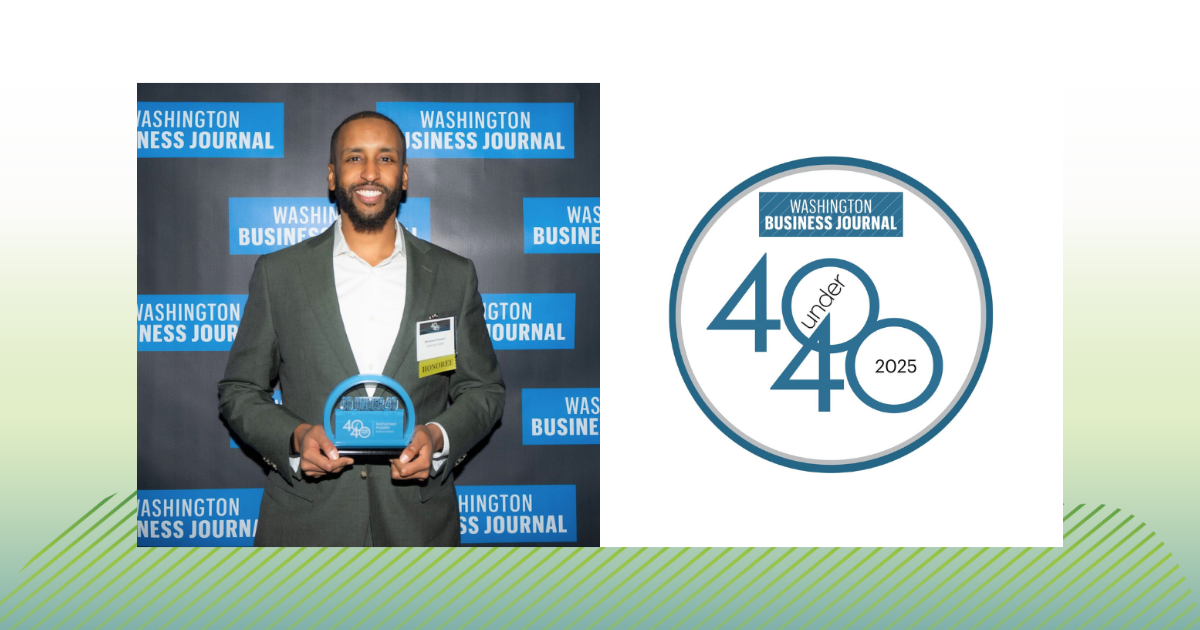
PGLS CEO Mohamed Hussein Named Washington Business Journal’s 2025 40 Under 40 Honoree

Arlington, VA – Piedmont Global Language Solutions (PGLS) is proud to announce that CEO Mohamed Hussein has been named a 2025 honoree on the Washington Business Journal’s prestigious 40 Under 40 list. This annual award recognizes young leaders who have made significant strides in driving innovation, shaping industries, and creating lasting impacts in their communities.

Mohamed’s selection for this distinguished honor highlights his unwavering commitment to leadership, vision, and impact. Under his guidance, Piedmont Global has grown from a startup to one of the fastest-growing language services companies, revolutionizing the way organizations communicate across industries and borders.

“Being named to this list is a true honor, and I am incredibly humbled. This recognition reflects the hard work of my entire team, and I’m so proud of the meaningful work we’re doing at Piedmont Global to bridge cultures, drive innovation, and create opportunities for individuals and organizations worldwide.”

As a self-made entrepreneur, philanthropist, and visionary leader, Mohamed has built a company that not only delivers exceptional language and business solutions but also contributes to improving critical areas like healthcare, education, and public safety. His ability to blend a passion for making a difference with a deep commitment to excellence has shaped PGLS into a leader in the language services space.

“Mohamed’s leadership goes beyond growing a successful business. It’s about making a real difference in the world. He leads with humility, integrity, and an unwavering commitment to impact, which inspires everyone around him. This recognition is well-deserved and a testament to his extraordinary leadership.”

Celebrating a decade of growth, Piedmont Global continues to be recognized in the industry by providing solutions that improve patient experiences, expand access to essential services, and help organizations break down language barriers globally. Mohamed’s vision is not just shaping the future of language services but redefining how companies create opportunities for collaboration and change in an increasingly interconnected world.

To read more about Mohamed’s journey and his impact, visit Washington Business Journal’s feature.

PGLS is a leading provider of global language and business solutions dedicated to unlocking the full potential of communication – empowering our clients to achieve growth, enhance experiences, and transform information into actionable insights. Committed to innovation and excellence, PGLS offers a range of services designed to meet the evolving needs of our diverse clientele. From language and communication solutions to market intelligence, staff augmentation, and growth advisory, PGLS is redefining the landscape of global business and communication, empowering organizations to succeed in a dynamic world.

Humor, Culture, and Streaming: How Comedy Translation and Localization Shape Culture Worldwide

As a complex phenomenon that every society shares—but creates and experiences differently—humor is among the most difficult content for translators to adapt successfully into other languages.

What makes the task of translating comedy so challenging? In addition to a required fluency in the source and target languages, the linguist must possess a deep working knowledge of how audiences perceive, understand, and enjoy humor. Writing jokes comes with a particular set of rules and skills, where comedic impact, context, and nuance must take precedence over the specificity of the source text. The end result may have a completely different meaning, but ultimately what matters most is fidelity to the characters, context, and audience.

The process of adapting translations to align with local preferences and culture is known as localization. Since exported comedy content is rendered culturally relevant through localization, there is no global standard governing the creative decisions that shape a translated comedy project. As a result, a significant degree of variance can exist due to the decisions of different linguists.

Additionally, just because linguists can skillfully translate romantic comedies and sitcoms does not mean they are equipped for dark humor, standup, parody, or other comedic forms. In all, measuring success can be difficult.

With the steep rise in global streaming services and the demand for content in local languages, comedy localization has become a competitive and coveted offering. Let’s review how the top streaming services are tackling this challenge to satisfy their growing global subscribership.

Rising Demand for Comedy Localization

Only in the last decade has the demand for comedy localization become so urgent. About 101 of Netflix’s 300 million subscribers are located in Europe, the Middle East, and Africa (EMEA), one of the most linguistically diverse regions in the world. Amazon Prime counts on an estimated 200 million subscribers worldwide, of which approximately 88 million live outside the United States. By 2029, subscription video on demand (SVOD) is predicted to reach 1.8 billion global subscribers.

The explosion of global SVOD content has placed a spotlight on the fast-growing field of media localization. With the rise of new technologies that support large-scale translation, such as machine translation (MT) and generative AI, linguistically diverse audiences have questions about how streaming services localize content, whether through subtitles (subbing) or replacement audio in the target language (dubbing), to land jokes effectively. How much tech involvement is appropriate to balance scalability and comedic impact?

Machine Translation and Comedy Subtitling

Netflix released some fascinating data in 2023. TV streamers collectively watched over 93 billion hours of Netflix in the first half of 2023. With 4,500 of its shows available globally, Netflix stated its top-watched languages were English, Korean, Japanese, Spanish, Portuguese, German, French, Italian, Arabic, and Russian.

To localize this many shows, the scalability of subtitling is a crucial factor. At the same time, giving up creative license to a third party can be of concern to comedians and show creators who want to maintain ownership over their work. Tech integration is inevitable, but the finished product has to be guided by many experienced, trusted experts.

Machine translation is one such tool that brings speed and scale to translation services through linguistic databases and algorithms. Of course, MT processes have their limits and cannot fully grasp context, idiomatic language, and cultural nuances. This is especially true for comedic content, where jokes and expressions are grounded in collective experiences, situational awareness, historical references, and irreverence.

Machine translation post-editing (MTPE) is a human-led process where linguists review and refine machine-translated text to secure a closer alignment with the source material. In, the case of comedy subtitling, while MT may be used to kick off the project, MTPE, creative consultations, and additional interventions are required to achieve a high-quality finished product.

Without this important work, global viewers may struggle to connect with the content. At the same time, if subtitling is poorly executed, viewers may also become frustrated and lose interest. Netflix, Prime Video, and other global streamers must walk a fine line between investing in quality and leveraging scale to develop and delight their audiences.

The Evolving Role of AI in Comedy Dubbing

Some streamers prefer to watch dubbed content, as it allows them to focus on the action instead of reading the subtitles. For the professionals responsible for generating dubs, the process often comes with significant constraints to protect the viewer’s experience. The aim is to match dubbed voices to the original actors’ lip movements as closely as possible to minimize distractions to the viewing experience. However, these constraints can result in greater context loss compared to subtitling.

Historically, dubbing has counted on interpreters with a voice-acting background. In comedy, where delivery, timing, and intonation can determine whether a joke lands or falls flat, choices here can be as important as decisions made about the script itself.

Today, technology interventions powered by generative AI are challenging the industry with new opportunities and ethical dilemmas. For example, YouTube recently rolled out automated dubbing from English into French, German, Hindi, Indonesian, Italian, Japanese, Portuguese, and Spanish, plus “experimental languages that might contain errors.” However, users noted the voices sounded robotic and unnatural, sometimes selecting voices that did not represent the original speaker. YouTube has acknowledged that the tool is still in its early stages.

Media and Comedy Localization: Shaping Global Culture

It is fascinating to consider the impacts that media localization and comedy translation can have on global culture.

Decisions about whether to localize a joke or maintain fidelity to the original joke depend on a number of factors. In sketch comedy shows such as Saturday Night Live, where the storyline tends to be topical to current events, it might not make sense to localize the content, even if it is not particularly relevant in the target audience’s location. The linguists have to trust that SNL watchers outside the United States have a vested interest in American politics and popular culture.

In popular sitcoms that feature an emphasis on wit, wordplay, and identity-based humor, the task of localization is even more difficult. Famously, Seinfeld has been one of the more challenging television shows to localize in select markets for this reason. One-to-one translations of the jokes simply do not make sense in other languages, and the reliance on wordplay made adaptation without recasting the long-running character arcs a significant undertaking.

The philosophical question can come down to understanding the particulars of specific target audiences. Are viewers tuning into a foreign show in the interest of a new and authentic cultural experience? Or, do they expect to enjoy comedy realigned to their tastes? Viewers may be smart enough to recognize “bad” translations and dubs, but they also can tell when their local preferences have been recognized. This effort goes a long way.

Decisions made here have an impact on profits by way of views, subscriber growth, and retention. At the same time, these creative decisions also have the potential to generate fandoms, buzz, loyalty, and cultural affinities. As linguists and consumers of streaming content, we at PGLS will continue observing how streaming houses continue to push boundaries and strike a delicate balance between authenticity, feasibility, and audience satisfaction.

Language and Localization: How to Convert and Retain Global Consumers with Localized Content

Today’s leading brand marketing teams are increasingly asked to engage global audiences more effectively. It is in their interest to find the most accessible opportunities that align with budgetary requirements and can scale effectively. As digital communication and e-commerce have reduced the barriers to reaching global audiences, authentic and culturally attuned content is key to improving performance and should top the list of considerations.

In an era of noisy feeds and infinite scrolling, brands are up against a significant amount of competition in the attention economy. What drives customer engagement in your region may not translate into another culture. Translating ideas and repurposing existing concepts one-to-one is not the way to stand out.

survey by CSA Research asked English-as-a-second-language (ESL) consumers in Brazil, China, France, Germany, Japan, Russia, Spain, and Sweden to comment on shopping experiences in English. More than nine out of ten indicated they were much less likely to consider buying a product if it was neither presented in their native language nor adapted to their local preferences. One in six survey respondents would never consider investing in software if it was not offered in their native language.


Do these results surprise you?

Plenty of marketers still assume that campaigns and merchandising in English will work for the 1.46 billion people who speak English worldwide. This theory works when language and concepts rely on simple, universal themes. However, with only a fraction of these 1.46 billion people speaking English as their first language, and few campaigns clearing the bar for simplicity, failing to localize content could mean losing out on customers and engagement.

Individuals are more emotionally engaged when interacting with content in their native language. Why? Because familiarity and comfort significantly impact consumer decision-making. Translation and other language services can help bridge the language divide, but this is only the beginning of the process. To improve global reach and performance, brands need to go further, bringing localization into the global go-to-market planning process earlier.

Effective localization adapts translations to convey cultural references, idioms, design sensibilities, humor, and tone. When attempting to reach international markets, remember that translation is only the starting point, and that localization is the key differentiator to help you achieve your objectives.


What Role Does Language Play in Consumer Behavior?

Before we explore the applications of localization in global marketing and merchandising, let’s explore why language is such an important indicator of consumer behavior.  

Language shapes how individuals process and perceive information. When applied to a marketing context, language shapes consumers’ emotional connections with brands. Consider the impact if a consumer does not benefit from the ease and access provided by content in their native language. One can extrapolate the challenges to eliciting a comparable emotional response.  

For limited-English-speaking audiences, localization reduces the barriers to building a connection to and affinity for brands. This is true even if they have a working knowledge of the language.


How Localization Drives Consumer Engagement

Translation is part of the effort to connect with international customers, but localization is even more expansive. Localization enables brands to reflect locally held beliefs, traditions, context, current events, restrictions, faux pas, and humor 

Getting localization right signals to audiences that brands understand them. Brands perceived to be culturally aware tend to foster deeper emotional connections with their audiences, translating into greater, more enduring customer loyalty.  

Reporting over one billion in revenue in 2024, the cosmetic brand e.l.f., a New York-based company, is currently sold in 18 countries. e.l.f. recently launched a localized campaign called “e.l.f. von zehn” (eleven out of ten) that unites the brand’s commitment to quality with German consumers’ preferences for highly rated products. As a play on words, this campaign could only work for German-speaking audiences. Its success comes directly from a well-considered localization strategy, demonstrating the value of elevating local culture through partnerships with localization experts. 

Getting culture and localization wrong can be disastrous to engagement, sales, and retention metrics. You would not base your domestic marketing strategy on assumptions; the same must be true for international campaigns. Insufficient local market research or (sometimes) reliance on one-to-one translations of English-language materials can alienate audiences and lead to wasted investments. It is important to gain a thorough understanding of your audience’s culture and language, with the help of trusted market localization experts, to deliver relevant and engaging content that leads to increased sales and conversion.


Impact of Localization on Sales and Conversion Rates

Brands that invest in knowledge of local customs, idiomatic expressions, and societal values are rewarded with elevated trust and loyalty. Studies on neurocognitive processing support this claim, showing that the brain is more efficient at decoding familiar linguistic patterns. This heightened engagement is likely due to the cognitive ease of processing information in one’s native language.

For this reason, localization can also be a strategic investment in higher sales and conversion rates. According to Stripe, customers may abandon purchases when the checkout process is confusing. CSA Research has also consistently found that consumers in non-English-speaking regions are almost always more likely to complete a purchase when product information is available in their local language. To avoid this common pitfall, localizing your checkout workflow can improve sales and conversion rates by reducing unnecessary friction points in the customer journey.


Increase Marketing ROI with Localization

For global brands, the return on investment in localization is clear. Not only does localized marketing lead to increased brand recognition and trust, but it also drives significant improvements in sales conversions. Companies that fail to localize their marketing strategies are missing out on substantial growth opportunities, particularly in non-English-speaking regions, suggesting that brands should prioritize localization in their global expansion efforts.

Brands should not overlook this strong link between localization and long-term performance outcomes. For global brands, localization is not just a marketing tactic but a critical strategy for building trust, loyalty, and long-term growth in international markets. Customers who engage with localized content are more likely to become repeat buyers and advocates for the brand. This loyalty is tied to the emotional connection that localization fosters and the sense of respect and understanding that consumers feel when brands invest in culturally relevant communication. The correlation between localization and long-term retention is especially important for businesses looking to build lasting customer relationships in emerging markets, where brand loyalty can lead to sustained growth.

Learn more about localization from a Piedmont Global expert: contact a language access consultant today.

ChatGPT
Perplexity
Claude Claude
Google AI
Grok